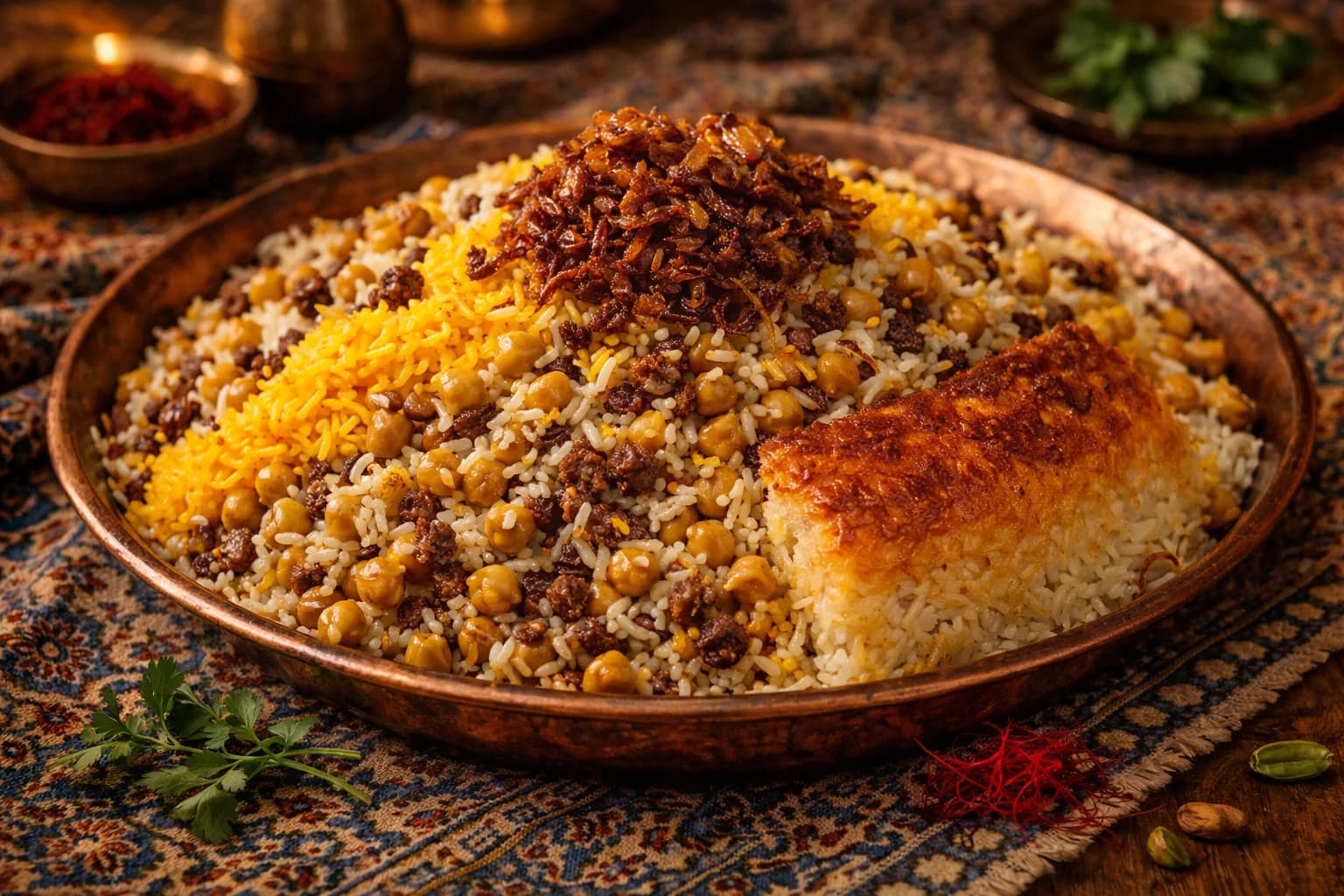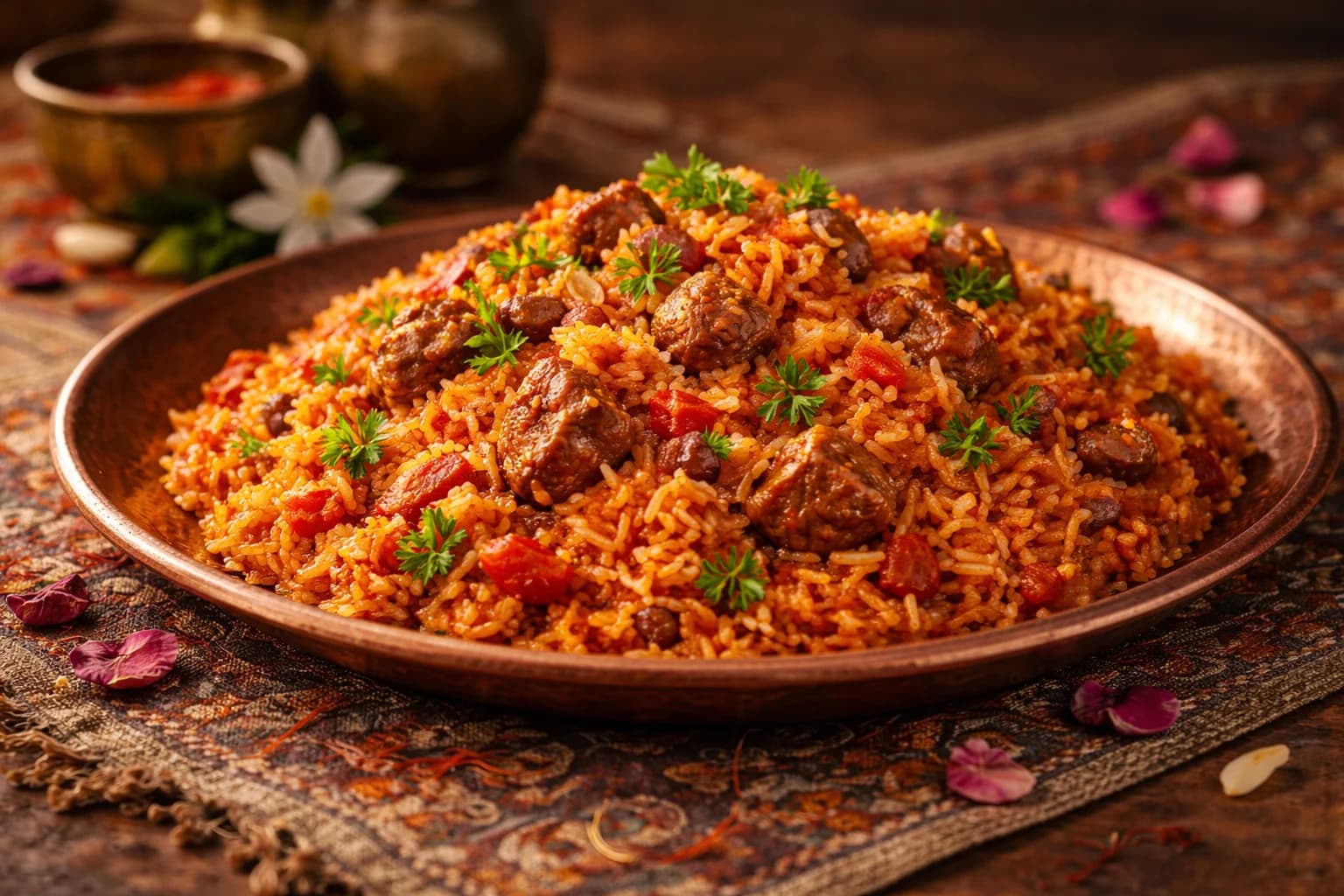

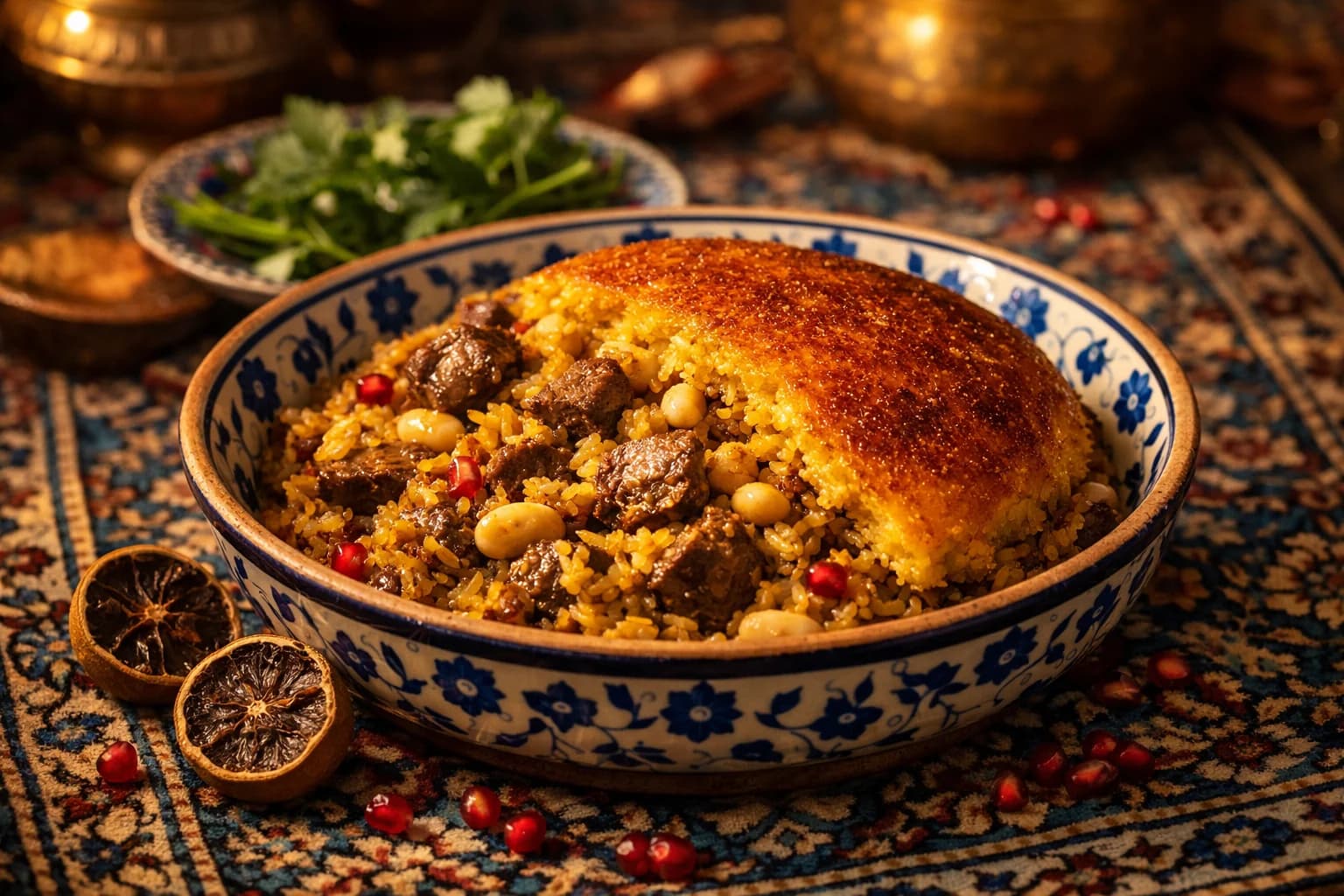
Dampokhtak (Persian One-Pot Rice with Meat and Beans)

Dampokhtak (Persian One-Pot Rice with Meat and Beans)

دم‌پختک

The ultimate Persian one-pot meal—tender meat, creamy beans, and aromatic rice cooked together in their own juices, developing deep, melded flavors impossible to achieve any other way. This ancient dish predates the elaborate polo technique and remains beloved for its simplicity and soul-satisfying heartiness. Everything cooks together, everything flavors everything else, and a glorious tahdig forms on the bottom.

ricePrep: 20 minCook: 150 mineasyServes 6

Cultural Note

Dampokhtak represents the oldest form of Persian rice cooking—before the elaborate polo technique developed, this is how rice was prepared. Everything goes in one pot and cooks together, developing flavors that meld in ways impossible with layered dishes. It's peasant food in the best sense: economical, nourishing, requiring minimal attention once started. Many families still prefer it for everyday eating, reserving polo for special occasions.

Critical Moments

  • Beans soaked properly
  • Meat and beans nearly tender before adding rice
  • Correct liquid level when adding rice
  • Recognizing crater stage
  • Lowest heat for final steaming
1
PREP5 min

Soak beans overnight

Place dried beans in a large bowl, cover with plenty of cold water. Soak for at least 8 hours or overnight. Drain and rinse. If using canned beans, skip this step—add them later in cooking.

Beans have doubled in size
TouchBeans are plump but still firm

Critical Step

Unsoaked dried beans take forever to cook and may never become tender. For a one-pot dish, the beans must be soaked so they cook in the same timeframe as the meat.

Quick soak: cover with boiling water, let sit 1 hour. Not as good as overnight but works.
2
PREP5 min

Wash the rice

Wash rice 3-4 times until water runs mostly clear. Set aside. No soaking needed for dampokhtak.

Water mostly clear
3
PREP2 min

Prepare dried limes

Pierce each dried lime several times with a sharp knife or skewer. This allows the tangy flavor to release into the dish during cooking.

Small holes visible in each lime
SmellTangy, fermented citrus aroma released
TouchLimes are hard and hollow
Don't skip the piercing—unpierced limes barely release their flavor
4
COOK10 min

Brown the meat

Heat oil in a large heavy-bottomed pot over medium-high heat. Pat meat dry. Brown meat pieces on all sides in batches, about 8 minutes total. Remove to a plate.

Deep brown crust on all sides
Medium-High190°C / 375°F
SmellBrowning meat
SoundActive sizzling
Good browning = deep flavor. Don't crowd the pot.
5
COOK11 min

Build the aromatics

Add diced onion to the pot. Cook until golden, about 8 minutes. Add turmeric, cinnamon, cumin, salt, and pepper. Stir for 30 seconds. Add tomato paste and cook 2 minutes until darkened.

Onions golden; tomato paste brick-red
Medium175°C / 350°F
SmellToasted spices and caramelized tomato paste
SoundSizzling
Cooking the tomato paste removes raw taste
6
COOK70 min

Combine meat, beans, and liquid

Return browned meat to pot. Add soaked drained beans (if using canned, add later) and pierced dried limes. Add 600ml water or stock. Bring to a boil, reduce heat to low, cover, and simmer for 60-75 minutes until meat and beans are nearly tender.

Meat is nearly fork-tender; beans are almost done but still slightly firm
LowGentle simmer
SmellRich, tangy braise developing
SoundGentle bubbling
TouchMeat yields to a fork with slight resistance; beans are almost creamy

Critical Step

The meat and beans need to be nearly tender before adding rice—they won't cook much more once rice goes in. If using canned beans, add them in the last 15 minutes of this stage.

If too much liquid has evaporated, add more. You need enough to cook the rice.
Checkpoint: Test meat and beans. Both should be nearly tender. Liquid should be flavorful—taste and adjust salt.
7
COOK5 min

Add rice

Add washed rice to the pot, spreading it evenly over the meat and beans. Add remaining 200ml water (or enough so liquid barely covers rice). Add saffron water if using. Do NOT stir—the rice should sit on top. Increase heat to bring to a boil.

Rice layer sitting on top of meat and beans; liquid just covering
HighBring to boil
SoundBubbling as it returns to boil

Critical Step

Don't stir after adding rice—the layers should remain somewhat distinct. The rice cooks by absorbing the flavorful braising liquid.

The liquid level should just barely cover the rice. Too much = mushy; too little = crunchy uncooked rice on top.
8
COOK7 min

Initial boil until water absorbs

Let boil uncovered for 5-8 minutes until most visible water is absorbed and you see small holes forming on the rice surface (crater stage).

Craters/holes forming on rice surface; no pooling water
Boil, reducing as water absorbs
SmellRice cooking with meat juices
SoundBubbling decreasing as water absorbs

Critical Step

The crater stage indicates it's time to reduce heat and steam. This is the same indicator as in kateh.

9
COOK45 min

Steam on lowest heat

Wrap lid with a clean kitchen towel. Place tightly on pot. Reduce heat to absolute lowest setting. Cook for 40-50 minutes without lifting lid. The rice will steam and a tahdig will form on the bottom.

Cannot see—trust the process
LowLowest setting
SmellRice steaming; after 30+ min, slight tahdig aroma
SoundVery quiet—occasional gentle sounds. No aggressive crackling.

Critical Step

Low heat allows everything to meld while forming tahdig. Too high = burnt bottom, undercooked top.

10
FINISH12 min

Rest and serve

Remove from heat. Let rest with lid on for 10 minutes. Remove lid. The rice will have absorbed the meat and bean flavors. Gently mix the layers when serving, or serve with layers visible. Scrape up the tahdig from the bottom—it will be thick and intensely flavorful.

Tender rice infused with meat juices; pieces of meat and beans throughout; thick, dark tahdig on bottom
SmellIncredible melded aroma—meat, beans, rice, dried lime all as one
SoundTahdig scraping
TouchRice is tender and flavorful; meat falls apart; beans are creamy; tahdig is thick and chewy
The tahdig will have bits of bean and meat stuck to it—this is part of its glory

Resting Required

10 min - Allows flavors to settle and tahdig to release
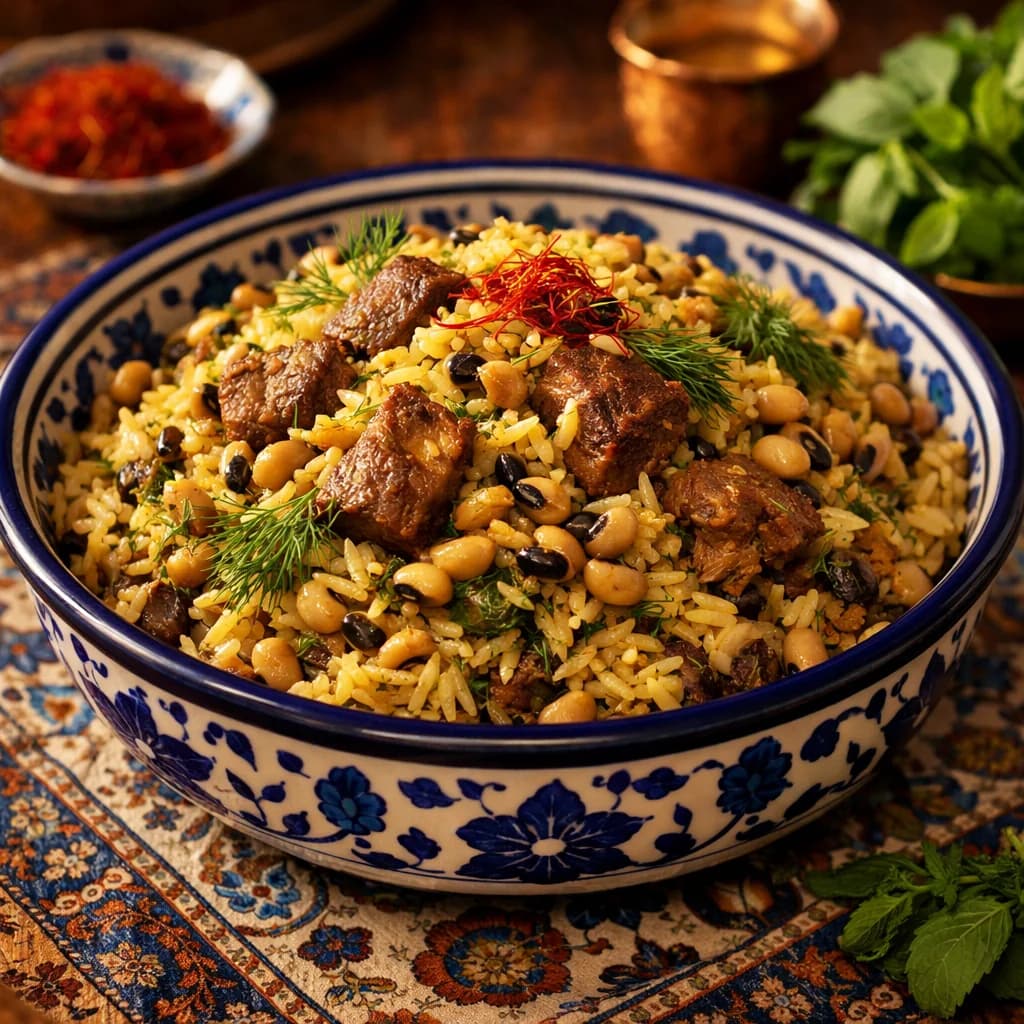
Extras

Equipment

large heavy potkitchen towelstandard

Make Ahead

  • This dish reheats beautifully—some say it's better the next day.
  • Keeps refrigerated for 4-5 days.
  • Freezes for 3 months.

Reheat in covered pot over low heat with splash of water.

Or microwave in portions.

Tahdig won't stay crispy but dish remains delicious.

Serve With

Sides

  • Mast-o-khiar
  • Torshi
  • Fresh herbs
  • Raw onion slices

Drinks

  • Doogh
  • Black tea

Substitutions

dried beansAny white bean, pinto bean, or even chickpeas work. Canned beans are convenient—add near end of meat cooking.
dried limesEssential for authentic flavor. If unavailable, use 2 tbsp lime juice + 1 tsp sugar added at end—not the same but approximates the tang.
lambBeef stew meat, bone-in chicken, or goat all work. Bone-in adds more flavor.

Scaling

Scales well but requires proportionally larger pot. The long cooking time means large batches are efficient. This is traditional 'feed a crowd' food. Freezes excellently.

Source

Traditional · Ancient Persian home cooking

One of the oldest Persian rice preparations, predating the polo technique. 'Dampokhtak' means 'steam-cooked' and describes any dish where ingredients cook together by absorption and steaming. Every region has variations.

Related Recipes