
Kateh (Persian Absorption-Method Rice)

Kateh (Persian Absorption-Method Rice)

کته

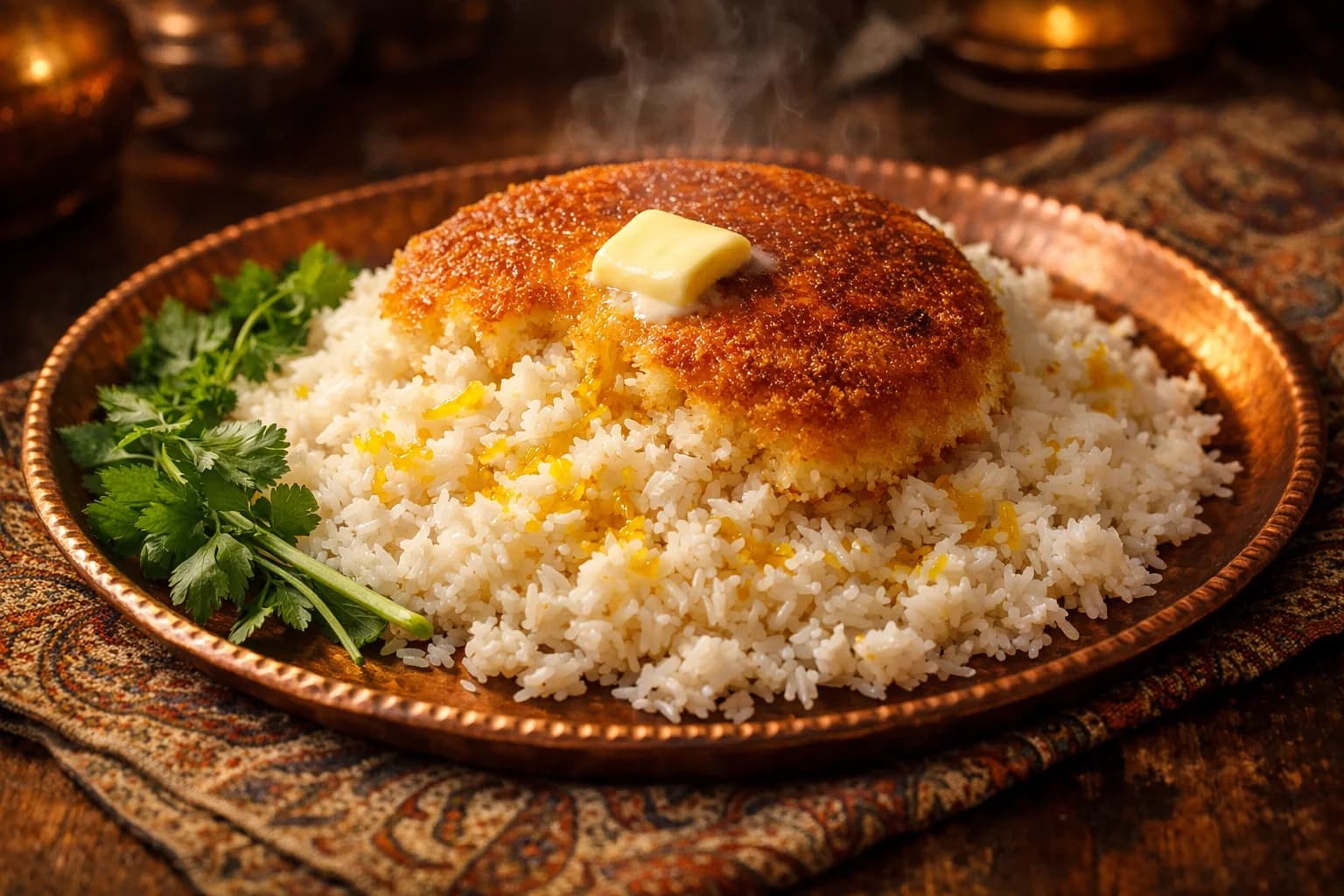
The simpler, homier cousin of chelow—rice cooked by the absorption method in one pot, producing tender, slightly sticky grains with a gloriously thick, chewy-crispy tahdig. Popular in northern Iran especially Gilan and Mazandaran, kateh is everyday comfort food that requires less attention than the parboil-steam method. The tahdig here is legendary—thick, golden, and intensely satisfying.

ricePrep: 10 minCook: 50 mineasyServes 4

Cultural Note- Gilan

Kateh is the soul food of northern Iran, where the humid Caspian climate and local rice varieties make it the natural cooking method. Unlike the elaborate chelow served at celebrations, kateh is humble daily sustenance—the rice that feeds families on ordinary days. Northern Iranians are fiercely proud of their kateh and consider the thick, chewy tahdig superior to the crispy polo tahdig. The dish represents a completely different philosophy: less fuss, more comfort, equally delicious.

Critical Moments

  • Correct water ratio (1:1.5 rice to water)
  • Recognizing the crater stage
  • Lowest possible heat for steaming phase
  • Not lifting lid during cooking
1
PREP5 min

Wash the rice

Place rice in a bowl. Fill with cold water, swirl with your hand, and drain. Repeat 3-4 times until water is mostly clear. Unlike polo, kateh rice doesn't need to be washed as thoroughly—some starch helps the grains stick together slightly.

Water is mostly clear but slight haziness is fine
Kateh is more forgiving than polo—the grains are meant to be slightly sticky, so perfect washing isn't critical
2
PREP2 min

Optional: Brief soak

For slightly fluffier kateh, soak the washed rice in fresh water for 30 minutes. Drain before cooking. This step is optional—traditional kateh often skips soaking entirely.

Rice grains slightly swollen if soaked
Skipping the soak gives denser, stickier rice—preferred by many. Soaking gives slightly fluffier results. Both are authentic.
3
PREP2 min

Bloom saffron (if using)

Grind saffron with a pinch of sugar. Steep in 2 tbsp hot water for at least 15 minutes.

Golden-red liquid
SmellSaffron aroma
Saffron is optional for everyday kateh but nice for a slightly elevated version
4
COOK2 min

Combine rice, water, and seasonings

In a non-stick pot, combine drained rice, 720ml water (should cover rice by 2-3cm), salt, and 2 tbsp oil (or butter). If using saffron, add 1 tbsp saffron water. Stir once to distribute evenly.

Rice evenly distributed in pot; water covering rice by about 2cm

Critical Step

The water ratio is crucial for kateh. Too much water = mushy rice. Too little = burnt bottom and undercooked top. The 1:1.5 ratio (rice to water by volume) is the standard.

The water should cover the rice by about 2cm (one finger joint). Adjust slightly based on your rice variety and age.
5
COOK5 min

Bring to boil

Place pot over high heat. Bring to a boil, stirring once or twice to prevent sticking. Let boil uncovered for 3-5 minutes until most of the water is absorbed and you see small holes (like craters) forming on the surface.

Water level drops; small holes/craters appear on rice surface; very little standing water visible
HighFull boil initially
SmellRice cooking
SoundActive bubbling transitioning to quieter as water absorbs

Critical Step

The crater stage indicates the water has been absorbed and it's time to reduce heat. Missing this moment leads to burnt rice or undercooked top.

Watch carefully—the transition from 'water visible' to 'craters forming' happens quickly
Checkpoint: Small holes visible across surface; no pooling water when pot is tilted
6
COOK1 min

Add remaining oil for tahdig

Drizzle remaining 1 tbsp oil (and remaining saffron water if using) around the edges and over the top of the rice. This helps form the tahdig.

Oil pooling at edges and seeping down
SoundSlight sizzle as oil hits hot pot edges
The oil at the edges is what creates the thick, chewy tahdig characteristic of kateh
7
COOK40 min

Wrap lid and steam on lowest heat

Wrap the pot lid with a clean kitchen towel (tie corners on top away from heat). Place tightly on pot. Reduce heat to absolute lowest setting. Cook for 35-45 minutes without lifting the lid.

Cannot see—lid must stay on
LowLowest setting possible
SmellRice steaming; after 25+ min, slight toasty tahdig aroma
SoundVery quiet—occasional gentle hiss. If you hear crackling, heat may be too high

Critical Step

Low heat allows the rice to steam gently while the bottom slowly forms a thick tahdig. High heat burns the bottom before the top cooks. The towel absorbs condensation.

Trust the process. Set a timer. The tahdig will be thicker and chewier than polo tahdig—this is correct and desirable.

Common Mistakes

  • Heat too high (burns before top cooks)
  • Lifting lid (releases steam)
  • Not enough time (undercooked, no tahdig)
8
FINISH7 min

Rest before serving

Remove from heat. Keep lid on and let rest for 5-10 minutes. This allows the tahdig to contract from the pot sides.

Still covered
SmellToasted rice aroma intensifies
SoundOccasional crackling as tahdig settles
Longer resting = easier tahdig release
9
FINISH5 min

Serve with tahdig

Remove lid. The rice will be tender and slightly sticky—not as fluffy as chelow. Spoon rice onto plates. To remove tahdig: run a spatula around the edges, then either flip the pot onto a plate or use a spatula to lift out the thick golden-brown tahdig in pieces.

Tender, cohesive rice; thick, golden-brown tahdig (much thicker than polo tahdig)
SmellToasted, nutty tahdig aroma
SoundTahdig releasing with scraping sound
TouchRice is tender and slightly sticky; tahdig is thick (5-8mm), chewy-crispy
Kateh tahdig is meant to be thick and chewy, not thin and crispy like polo tahdig. This is its character and charm.

Resting Required

7 min - Allows tahdig to contract for easier release
Extras

Equipment

non-stick potkitchen towelstandard

Make Ahead

  • Kateh keeps better than chelow due to its denser texture.
  • Can be kept warm for 30+ minutes.
  • Refrigerates well for 3 days.

Reheat in covered pot with splash of water over low heat.

Or microwave with damp paper towel.

Tahdig softens but rice stays good.

Serve With

Sides

  • Mirza ghasemi (classic northern pairing)
  • Baghala ghatogh
  • Torshi
  • Mast-o-khiar
  • Any khoresh

Drinks

  • Black tea
  • Doogh

Substitutions

rice varietyNorthern Iranian rice (domsiah, tarom, hashemi) is traditional and gives the best sticky-tender texture. Basmati works but will be slightly fluffier. Short-grain rice is not traditional but creates very sticky kateh.
oil vs butterBoth are authentic. Butter is richer; oil is more common for everyday cooking.

Scaling

Scales easily—maintain 1:1.5 rice to water ratio. Larger quantities need slightly longer cooking and lower heat. The thick tahdig is a feature, not a bug—it's prized in northern Iran.

Source

Regional · Northern Iranian (Caspian) home cooking

The traditional everyday rice of Gilan and Mazandaran provinces. While chelow is for special occasions, kateh is what families eat daily. The technique is ancient and simpler than the parboil-steam polo method.

Related Recipes