
Critical Moments
- •Using generous saffron—essential for color and flavor
- •Adding cherries late to preserve color and shape
- •Balancing sweet and sour—taste and adjust carefully
Bloom the saffron
Grind saffron threads with a pinch of sugar using a mortar and pestle until powdered. Transfer to a small bowl, add 4 tbsp hot (not boiling) water, cover, and steep for at least 30 minutes. This dish requires generous saffron—don't reduce the amount.
Critical Step
Saffron is essential to this dish—it provides the golden undertone that contrasts beautifully with the ruby cherries and adds its distinctive flavor. This is not a dish to make without good saffron.
Pit the cherries
Pit all sour cherries using a cherry pitter, olive pitter, or the tip of a chopstick. Work over a bowl to catch the precious juice—it will be added to the stew. If using frozen cherries, thaw completely and reserve all juice.
Common Mistakes
- •Discarding the juice (adds flavor and color)
- •Leaving pits in (unpleasant surprise when eating)
- •Crushing cherries (should remain whole for presentation)
Prepare the meatball mixture (if using meatballs)
Grate the small onion and squeeze out excess liquid. Combine ground meat with grated onion, turmeric, ½ tsp salt, and a pinch of pepper. Mix thoroughly with your hands for 2-3 minutes until cohesive. Form into small balls about 2.5cm (walnut-sized)—you should get about 24-30 meatballs.
Common Mistakes
- •Not squeezing onion liquid (soggy meatballs)
- •Under-mixing (meatballs fall apart)
- •Making meatballs too large (don't cook evenly)
Brown the meatballs (or chicken)
Heat oil or butter in a large skillet over medium-high heat. Brown meatballs in batches, turning to color all sides, about 5-6 minutes total. They don't need to be cooked through—they'll finish in the sauce. If using chicken pieces, brown on all sides, about 8 minutes. Remove and set aside.
Sauté the onion for sauce
In a large heavy pot, heat remaining oil or butter over medium heat. Add diced onion and cook until softened and light golden, about 8-10 minutes. This sauce uses a lighter onion base than most khoresh—don't caramelize deeply.
Add spices, liquid, and meatballs
Add cinnamon and cardamom (if using), stir for 30 seconds. Add water or stock, half the bloomed saffron, remaining salt, and pepper. Bring to a simmer. Gently add browned meatballs (or chicken). Cover and simmer for 25 minutes (meatballs) or 35 minutes (chicken) until meat is cooked through.
Add cherries and sugar
Add pitted cherries and their collected juice to the pot. Add sugar—start with 80g and adjust. Gently stir to distribute cherries without breaking them or the meatballs. Add remaining saffron water. Simmer uncovered for 15-20 minutes.
Critical Step
Adding cherries toward the end preserves their shape and fresh flavor. The sugar amount is crucial—start with less and adjust. Every batch of cherries has different tartness.
Common Mistakes
- •Adding all sugar at once (may become too sweet)
- •Stirring too vigorously (breaks cherries and meatballs)
- •Cooking cherries too long (lose color and become dull)
Balance the sweet-sour flavor
Taste the sauce carefully. It should be noticeably tart with balancing sweetness—neither should dominate. Adjust: add more sugar (1 tbsp at a time) if too sour, add lemon juice (1 tsp at a time) if too sweet. The sauce should make your mouth water—bright, complex, and balanced.
Critical Step
The sweet-sour balance is the soul of this dish. Persian palates typically prefer it slightly tart rather than sweet. The sauce should be complex and bright, making you want another bite.
Common Mistakes
- •Making it too sweet (loses the sophisticated edge)
- •Under-salting (salt helps balance and brings flavors together)
- •Over-reducing (sauce becomes jammy instead of glossy)
Rest and garnish
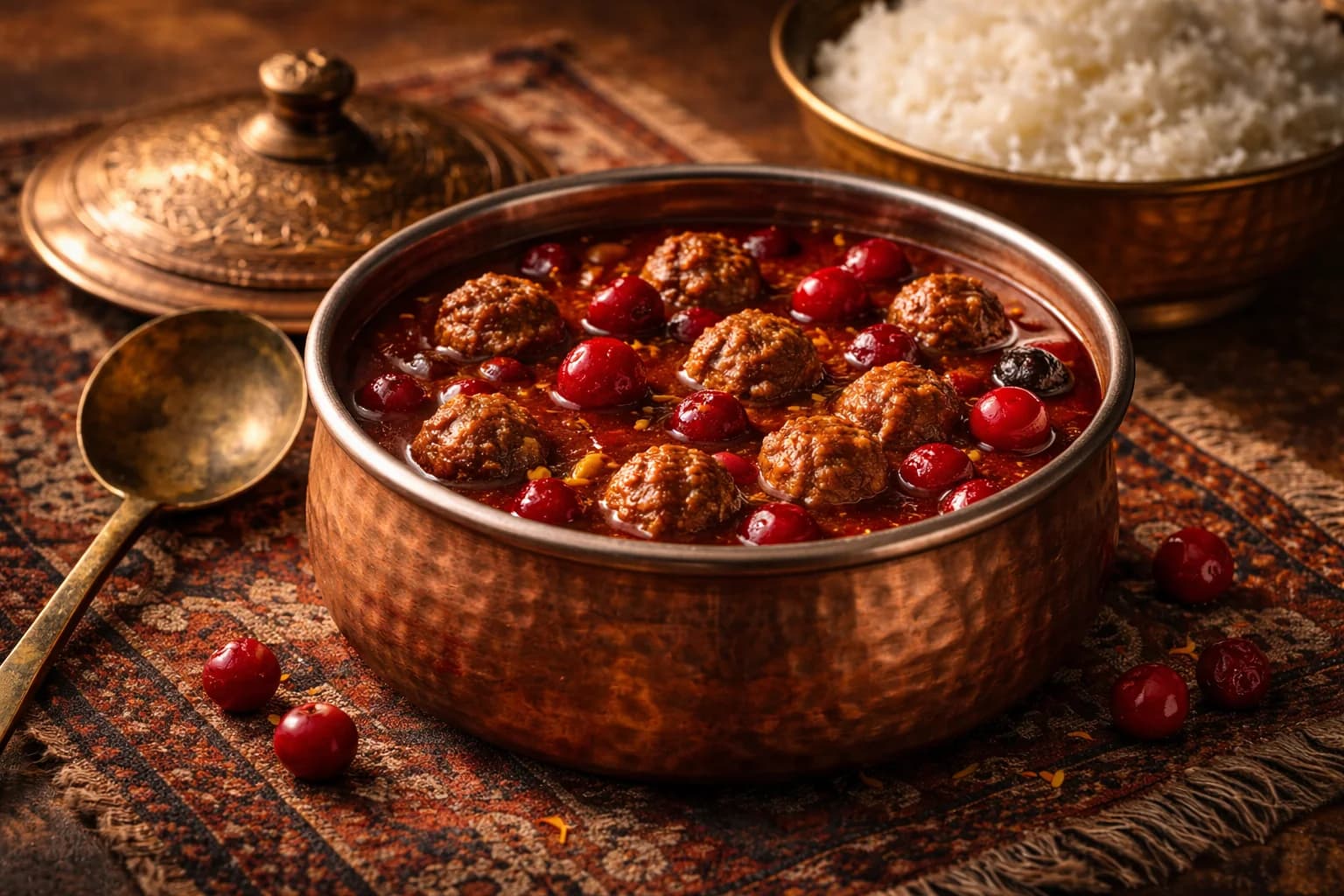
Remove from heat and let rest covered for 10 minutes. Transfer to a serving dish, arranging meatballs or chicken pieces attractively with cherries visible. Drizzle any remaining sauce over the top. Garnish with toasted slivered almonds and pistachios.
Serve
Serve immediately over chelow (plain Persian rice) with tahdig. The contrast of the jewel-toned stew against white rice is spectacular. This dish is best served the day it's made when colors are brightest.
Resting Required
10 min - Allows flavors to harmonize and sauce to settle