
Critical Moments
- •Skimming the broth thoroughly at the start
- •Maintaining very low simmer for 2.5-3 hours
- •Ensuring all components are completely tender before mashing
Soak the legumes
Place chickpeas and white beans in separate bowls (they may cook at different rates). Cover each with cold water by at least 8cm. Soak for 8-12 hours or overnight. Drain and rinse before using.
Prepare the meat and vegetables
Cut lamb into large pieces (8-10cm), keeping bones in. Quarter the onion. Quarter the tomatoes. Peel and quarter the potatoes (keep in cold water until ready to use). Pierce each dried lime 3-4 times with a sharp knife.
Common Mistakes
- •Cutting meat too small (falls apart too much)
- •Forgetting to pierce dried limes (flavor won't release)
Build the pot
In a large heavy pot, layer ingredients: place lamb and lamb fat (if using) at the bottom. Add soaked chickpeas and white beans. Nestle in onion quarters and pierced dried limes. Add turmeric, salt, and pepper. Pour in water to cover everything by about 5cm.
Bring to boil and skim
Place pot over high heat and bring to a boil. As it heats, gray foam (scum) will rise to the surface. Skim this off with a spoon and discard. Continue skimming until liquid is relatively clear.
Critical Step
Skimming removes impurities and excess fat that would make the broth cloudy and greasy. This step is essential for a clean-tasting final broth.
Common Mistakes
- •Skipping the skimming (cloudy, greasy broth)
- •Stirring vigorously while skimming (redistributes scum)
Long, slow simmer
Once skimmed, reduce heat to very low. Cover pot with lid slightly ajar. Simmer gently for 2 hours, checking occasionally to ensure liquid level stays adequate (add hot water if needed).
Critical Step
Low and slow is the soul of abgoosht. High heat toughens meat. The long simmer extracts collagen from bones, creating silky, rich broth. This cannot be rushed.
Add potatoes and tomatoes
After 2 hours, add quartered potatoes and tomatoes to the pot. If liquid has reduced significantly, add hot water to maintain level. Continue simmering for another 45-60 minutes.
Final cooking and checking
The stew is ready when: lamb falls off the bone easily, chickpeas and beans are completely tender (no chalkiness), potatoes are soft throughout. Taste broth and adjust salt—it should be well-seasoned and tangy from the dried limes.
Critical Step
Under-cooked legumes or tough meat ruins the dish. Everything must be completely tender for proper mashing. The dried limes should be very soft—their tang should permeate the broth.
Common Mistakes
- •Under-cooking legumes (chalky texture in final mash)
- •Under-salting broth (tastes flat)
- •Not enough dried lime tang (add another pierced lime if needed)
Separate broth and solids
Using a slotted spoon, carefully transfer all solids to a large bowl or platter. Remove and discard bones (or save for stock). Keep the dried limes—they can be mashed in or served alongside for those who want extra tang. Keep broth warm in the pot.
Mash the solids (goosht koobideh)
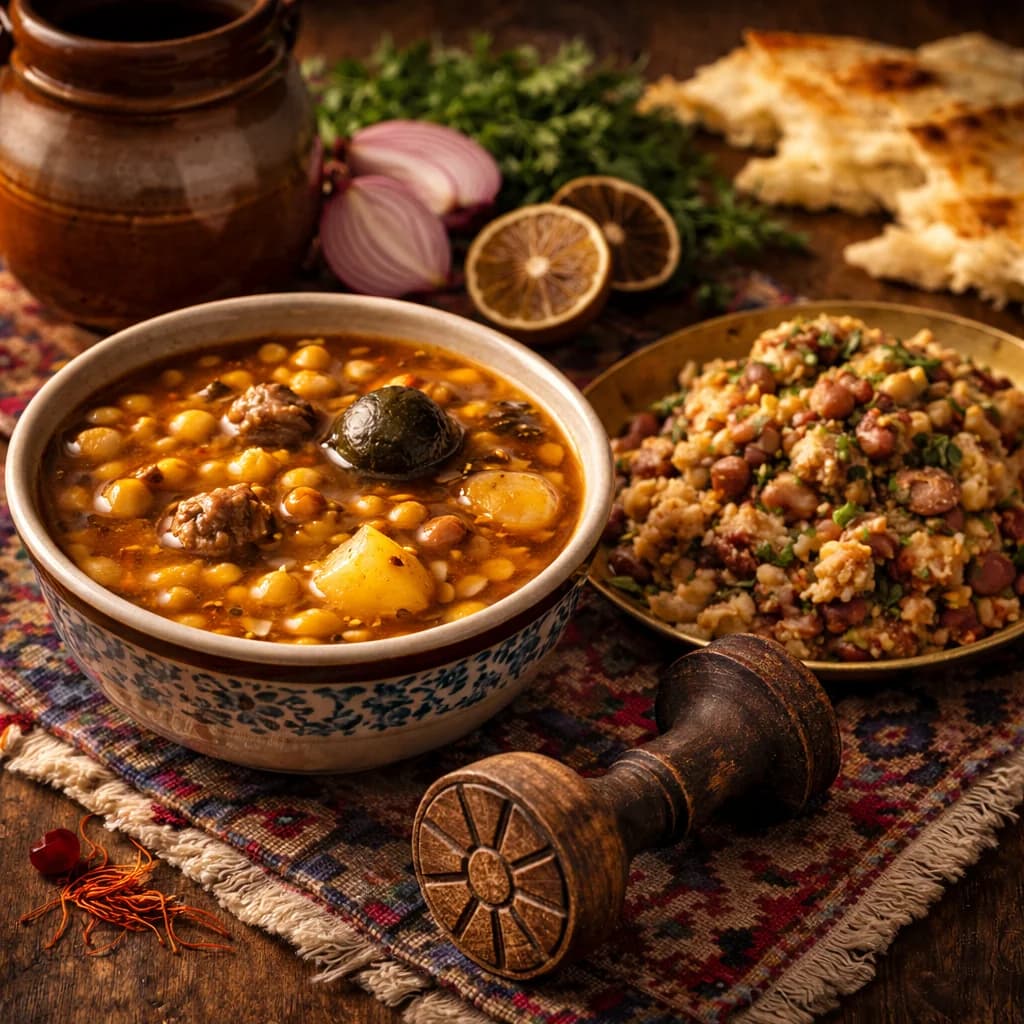
Using a goosht-koob (traditional masher), large fork, or potato masher, mash the solids together until you have a rough, spreadable paste. The texture should be rustic—not smooth like hummus, but cohesive. Some prefer it chunkier, others smoother. Taste and add salt if needed.
Critical Step
The goosht koobideh texture is personal preference but it must be mashable. If you're struggling to mash, the components weren't cooked long enough.
Serve in two stages
Stage 1 (Ab): Ladle hot broth into small bowls. Tear pieces of sangak or lavash bread and float them in the broth. Sip and eat the soaked bread. Stage 2 (Goosht): Spread the mashed goosht koobideh onto bread, add fresh herbs, raw onion, and torshi. Eat as open-faced sandwiches.