
Critical Moments
- •Adding quince at the beginning—it needs full cooking time
- •Watching and achieving the amber color transformation
- •Gentle handling of quince for final presentation
Soak legumes overnight
Place chickpeas and white beans in separate bowls, cover with cold water by 8cm, and soak 8-12 hours or overnight. Drain and rinse before using.
Prepare the quince
Peel quince with a vegetable peeler (the skin is tough). Quarter and remove the hard core with seeds. Cut each quarter into 2-3 thick wedges. Immediately place in a bowl of cold water with a squeeze of lemon juice to prevent browning.
Critical Step
Quince oxidizes quickly and turns brown when exposed to air. The acidulated water prevents this and keeps the wedges pale for their beautiful color transformation during cooking.
Common Mistakes
- •Cutting wedges too thin (will disintegrate)
- •Not keeping in acidulated water (browns before cooking)
- •Discarding the cores—they contain pectin that helps thicken the broth naturally
Layer the pot with quince early
Place lamb pieces in a large pot. Add drained chickpeas, white beans, quartered onion, and pierced dried limes. Drain quince wedges and add them now—they need the full cooking time to transform. Add turmeric, cinnamon, salt, and pepper. Cover with water by 5cm.
Critical Step
Unlike most fruits, quince MUST go in at the start. It needs 2.5-3 hours to fully soften and develop its signature amber color. Adding late results in hard, pale quince.
Bring to boil and skim
Bring to a boil over high heat. Skim the gray foam that rises to the surface, continuing for 10-15 minutes until broth is relatively clear.
Long simmer—watch the quince transform
Reduce heat to very low. Cover with lid slightly ajar. Simmer gently for 2.5 hours. Check occasionally for liquid level and to observe the quince's color transformation—this is the magic of the dish.
Critical Step
The slow color transformation of quince is a chemical reaction that requires time and gentle heat. Rushing results in pale, hard fruit. The amber-pink color indicates the quince is properly cooked.
Add potatoes and tomato
After 2 hours (when quince is rosy), add quartered potatoes and tomato. Add sugar if desired to enhance quince sweetness. Continue simmering for another 45-60 minutes.
Check doneness
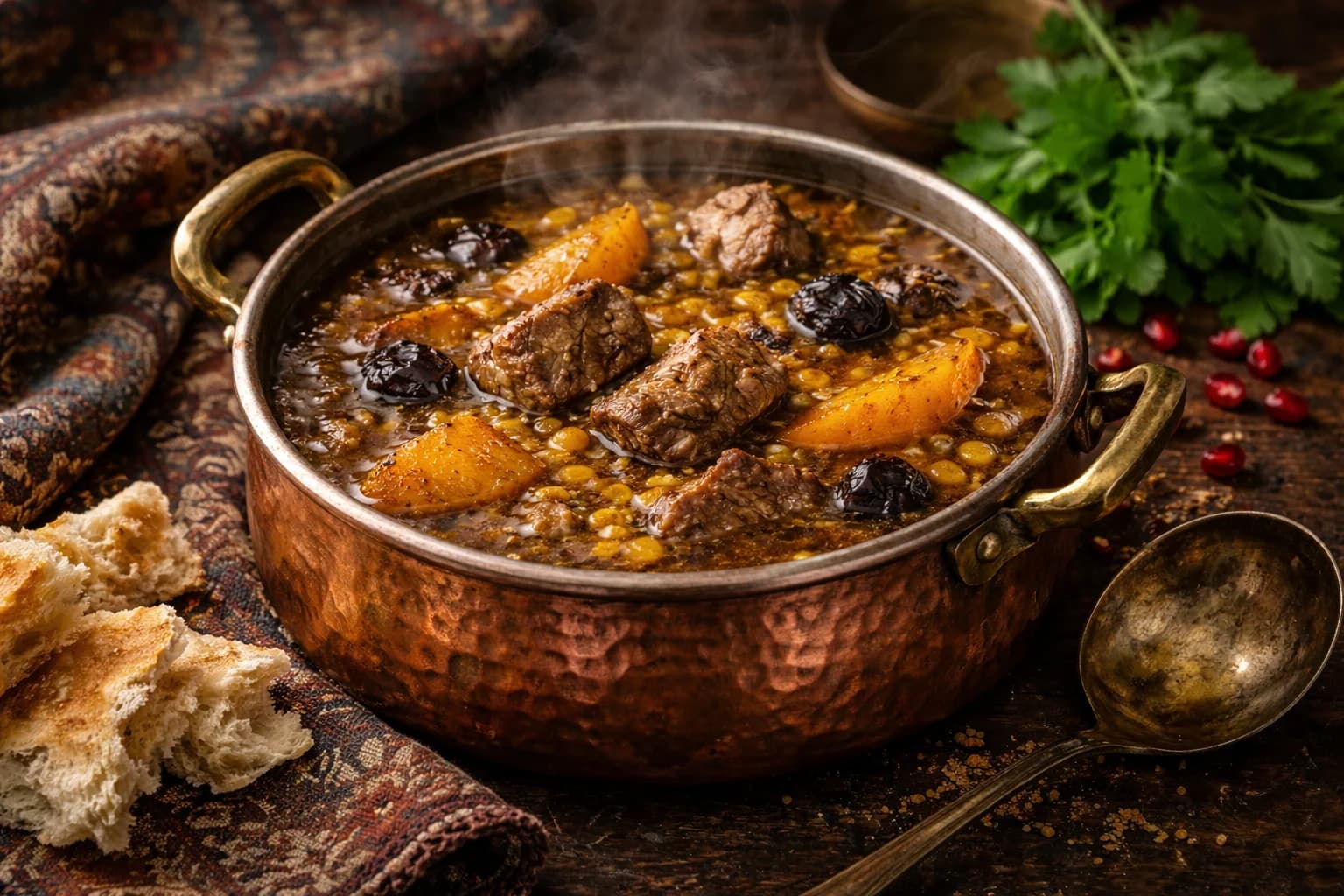
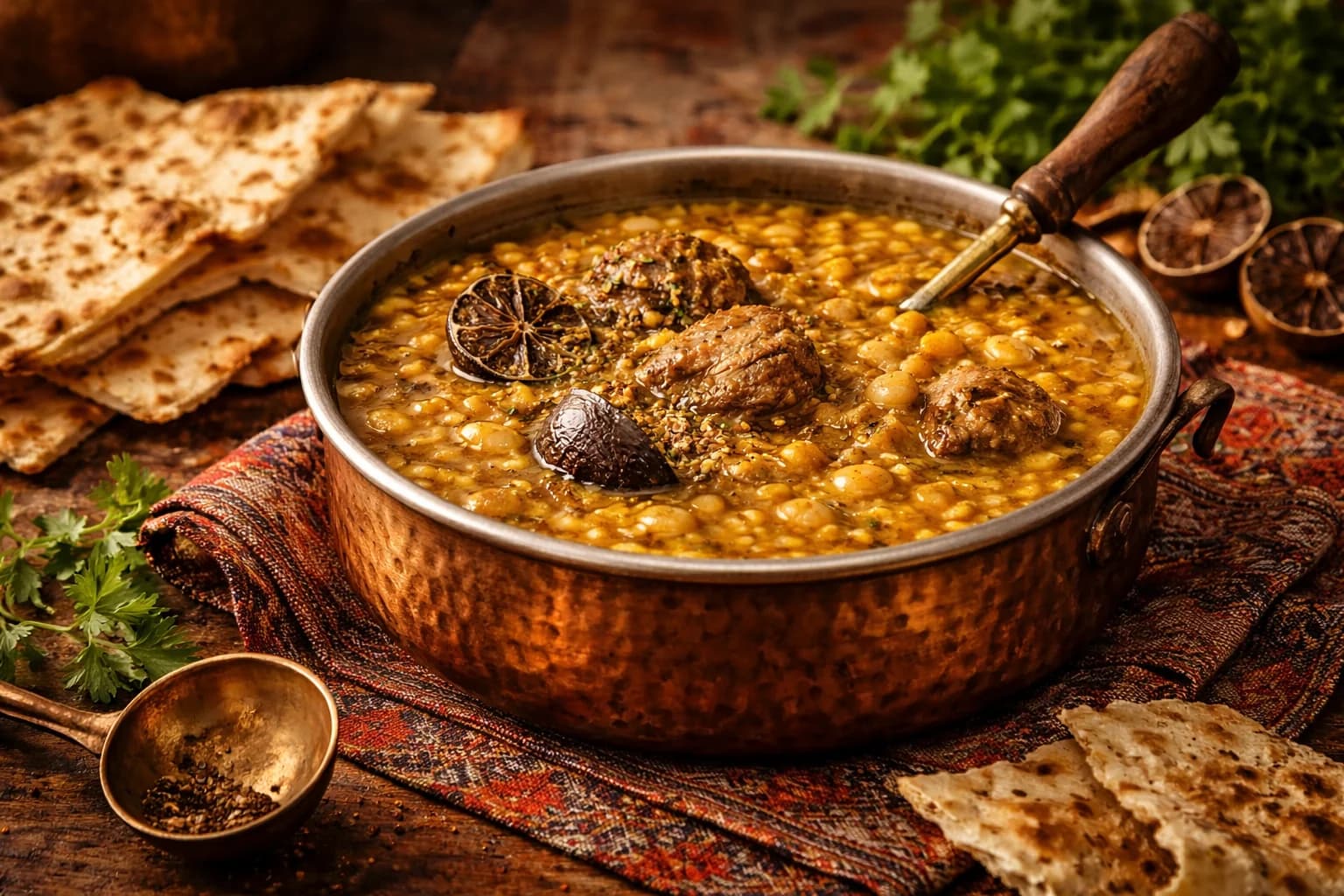
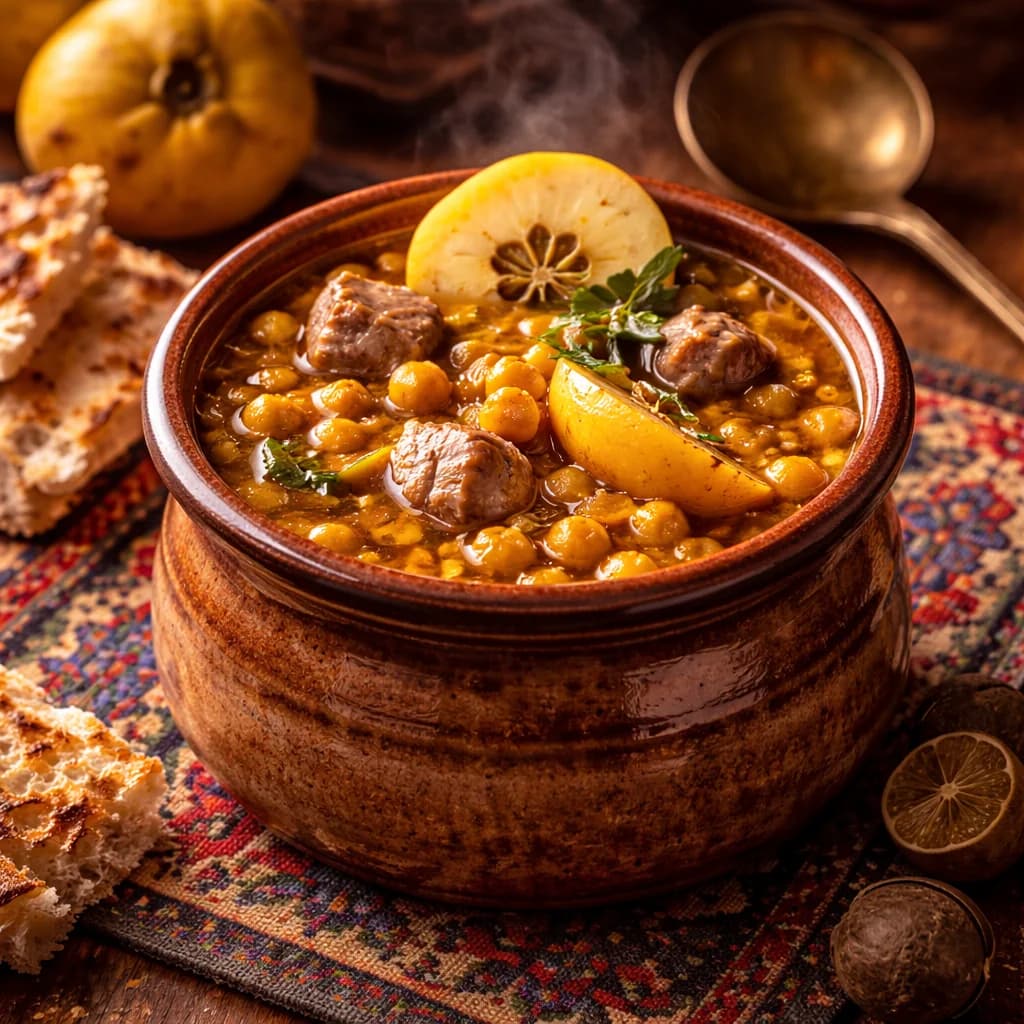
Test all components: lamb falling off bone, chickpeas and beans completely tender, potatoes soft, and—most importantly—quince deep amber and yielding easily when pierced. Taste broth and adjust seasoning.
Critical Step
If quince is still pale or hard, continue cooking. The color and texture transformation is the whole point of this variation.
Separate and serve with care for quince
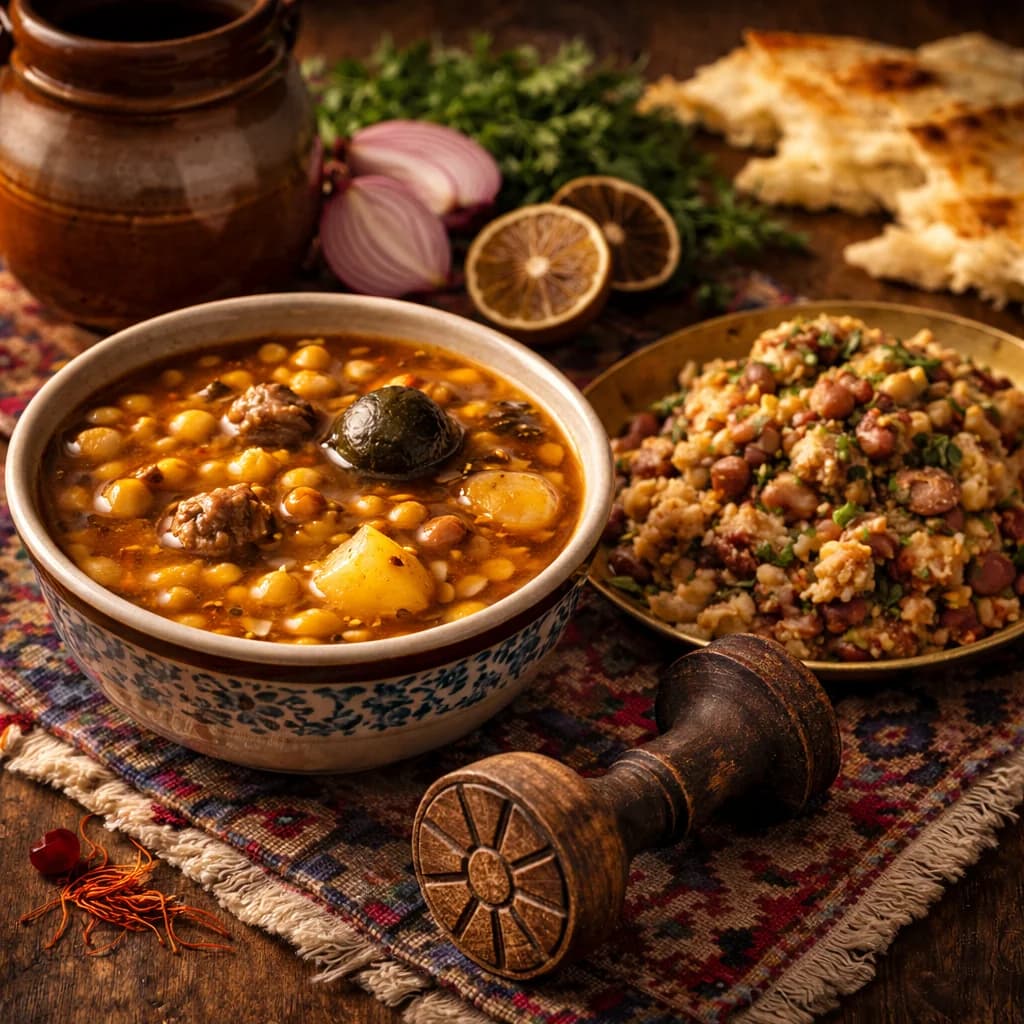
Carefully transfer solids to a bowl, handling quince gently to keep wedges intact. For this version, many families mash the meat and legumes but keep some quince wedges whole on top for presentation. Serve broth first with bread, then mashed solids topped with beautiful quince wedges.