
Anbeh Polo (Persian Mango Rice)

Anbeh Polo (Persian Mango Rice)

انبه پلو

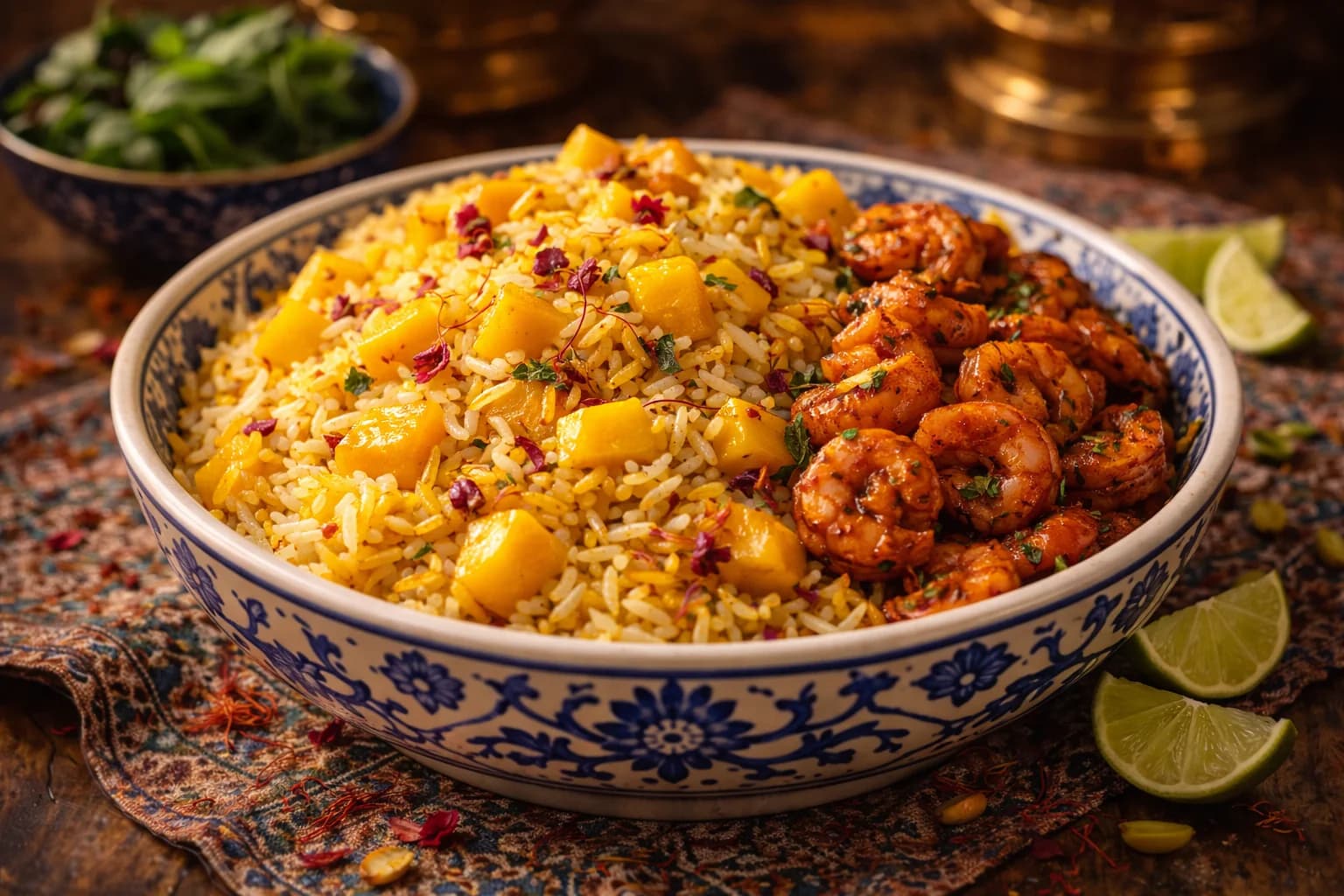
A rare tropical gem from southern Iran where mangoes grow abundantly—fragrant basmati rice layered with sweet-tart mango pieces, warming spices, and often paired with spiced shrimp or fish. This regional specialty showcases Persian cuisine's adaptability, incorporating tropical fruit with traditional techniques. The result is exotic, aromatic, and utterly unique among Persian rice dishes.

ricePrep: 30 minCook: 75 minintermediateServes 6

Cultural Note- Hormozgan

Anbeh polo represents the fascinating regional diversity of Persian cuisine. In the southern provinces along the Persian Gulf—Hormozgan, Bushehr, and parts of Sistan-Baluchestan—mangoes have been cultivated for centuries, likely introduced through ancient maritime trade with India. The local cuisine adapted Persian rice techniques to incorporate this tropical fruit, creating dishes unknown in Tehran or other northern cities. This is authentic Persian food, just from a less-documented tradition.

Critical Moments

  • Mangoes firm enough to hold shape
  • Mango sautéed until glazed but still intact
  • Shrimp removed while still slightly underdone
  • Proper parboiling of rice
1
PREP15 min

Wash and soak the rice

Place rice in a large bowl. Wash 5-6 times until water runs mostly clear. Dissolve 2 tbsp salt in 2L lukewarm water, add rice, soak for at least 1 hour.

Water nearly clear; soaked grains elongated
TouchSoaked rice is fragile
While waiting: Prepare mango and shrimp while rice soaks
2
PREP5 min

Bloom the saffron

Grind saffron with pinch of sugar. Steep in 4 tbsp hot water for at least 30 minutes.

Deep ruby-red liquid
SmellHoney-floral saffron
3
PREP10 min

Prepare the mangoes

Peel mangoes and cut flesh into 2cm cubes, avoiding the fibrous area near the pit. You should have about 500g mango cubes. Slightly underripe mangoes hold their shape better during cooking.

Uniform golden-orange mango cubes
SmellFragrant, tropical mango aroma
TouchFirm flesh that yields slightly to pressure

Critical Step

Mango ripeness matters—too ripe and they'll become mushy; too unripe and they'll be sour and hard. Slightly underripe (firm but fragrant) is ideal.

Kent, Ataulfo (honey), or Tommy Atkins mangoes work well. Very fibrous varieties can be stringy.
4
COOK7 min

Sauté the mango

Melt 30g butter in a skillet over medium heat. Add mango cubes, sugar, lime juice, and a pinch of salt. Sauté gently for 5-6 minutes until mango is glazed and slightly softened but still holds its shape. Add 1 tbsp saffron water. Remove from heat.

Mango pieces are glossy, golden, and slightly caramelized at edges; still holding cube shape
Medium175°C / 350°F
SmellSweet caramelized mango with lime and saffron
SoundGentle sizzling
TouchCubes are softened but intact—not mushy

Critical Step

The mango must hold its shape—overcooked mango becomes puree and makes the rice soggy. Stop while cubes are still distinct.

The lime juice balances sweetness and helps preserve the mango's structure
Checkpoint: Mango cubes should maintain their shape when stirred
5
COOK12 min

Prepare the shrimp (if using)

Season shrimp with turmeric, cumin, coriander, fenugreek (if using), salt, pepper, and chili flakes (if using). Heat 40ml oil in a large skillet over high heat. Add sliced onion, cook until golden. Add garlic, cook 30 seconds. Add shrimp in single layer, sear 1-2 minutes per side until pink and just cooked. Add 2 tbsp saffron water. Remove immediately—shrimp will continue cooking.

Shrimp are pink with golden spots; curled into C-shape (not O—that's overcooked)
High200°C / 400°F—hot for searing
SmellSeared seafood with cumin and garlic—southern Iranian aromatics
SoundActive sizzling
TouchShrimp are firm but still slightly translucent in center

Critical Step

Shrimp overcook easily and become rubbery. They'll continue cooking in the rice, so remove while slightly underdone. C-shape = perfect; O-shape = overcooked.

Don't crowd the pan—sear in batches if needed for proper browning
6
COOK7 min

Parboil the rice

Bring 3L water with 2 tbsp salt to rolling boil. Drain soaked rice, add to boiling water. Boil 5-7 minutes until al dente.

Rice grains elongated; water starchy
HighRolling boil
SmellClean rice aroma
SoundActive boiling
TouchAl dente—soft outside, tiny firm core

Critical Step

Proper parboiling for fluffy rice.

7
COOK2 min

Drain the rice

Immediately drain rice. Rinse briefly with lukewarm water. Shake gently to drain.

Separate, fluffy grains
TouchGrains distinct and light
8
COOK8 min

Prepare tahdig and layer

In a non-stick pot, combine 60ml oil with 2 tbsp saffron water. Mix 2 cups parboiled rice with 1 tbsp saffron water, spread on bottom for tahdig. Layer remaining rice with mango: rice, then scattered mango cubes with their glaze, then rice. Add shrimp pieces between layers if using (or serve on top). Build into pyramid. Poke 5-6 steam vents.

Layered pyramid with golden mango visible between rice layers
SmellSaffron, tropical mango, cumin from shrimp
Reserve some mango and shrimp for garnish. Don't layer mango too thickly—distribute evenly.
9
COOK50 min

Steam the rice

Melt remaining 20g butter, mix with remaining saffron water, drizzle over rice. Place over medium-high heat uncovered 3-4 minutes until steam rises. Wrap lid with towel, place tightly. Reduce to lowest heat. Steam 45-50 minutes.

Steam rising initially; then covered
Initial high 3-4 min, then lowest
SmellRice steaming with tropical mango; tahdig forming
SoundInitial sizzle, then quiet

Critical Step

Proper steaming for fluffy rice and crispy tahdig.

10
FINISH8 min

Rest and unmold

Remove from heat, rest 5 minutes with lid on. Fluff rice gently, allowing mango to show throughout. Spoon onto platter. Unmold tahdig.

Fluffy saffron rice studded with golden mango cubes; crispy tahdig
SmellAromatic rice with tropical fruit
SoundTahdig releasing
TouchFluffy rice; soft sweet mango; crispy tahdig
11
FINISH

Garnish and serve

Top rice with reserved mango cubes and shrimp. Drizzle remaining saffron water for golden streaks. Serve with lime wedges on the side—a squeeze of fresh lime before eating brightens all the flavors.

Exotic presentation—golden rice with tropical mango and pink shrimp; lime wedges alongside
The lime wedges are essential—fresh lime juice before eating is traditional for southern seafood rice dishes.

Resting Required

5 min - Allows tahdig to release cleanly
Extras

Equipment

large potnon-stick potlarge skilletfine mesh strainerkitchen towelstandard

Make Ahead

  • Cut mango ahead but don't cook.
  • Shrimp can be seasoned ahead.
  • Rice must be made fresh.
  • Assemble and cook just before serving.

Not recommended—mango texture suffers and shrimp overcooks.

Best served fresh.

Serve With

Sides

  • Mast-o-khiar
  • Shirazi salad
  • Fresh herbs
  • Torshi-ye sir (garlic pickle)

Drinks

  • Doogh
  • Fresh lime juice drink
  • Black tea

Substitutions

mangoMust use firm, slightly underripe mangoes. Peaches or nectarines (firm) could substitute for different but pleasant result. Canned mango is too soft.
shrimpAny firm white fish works. Lobster tail is luxurious. Can omit entirely for vegetarian version.
southern spicesThe cumin-heavy, garlic-forward profile is authentic for southern Iran. Fenugreek adds authenticity but can be omitted.

Scaling

Rice scales normally. Mango and seafood scale proportionally. Best made during mango season (summer) with firm, slightly underripe mangoes that hold their shape.

Source

Regional · Southern Iranian (Persian Gulf) cooking

A specialty of Hormozgan and Sistan-Baluchestan provinces where mangoes have been cultivated for centuries. Less known outside the region but beloved locally.

Related Recipes