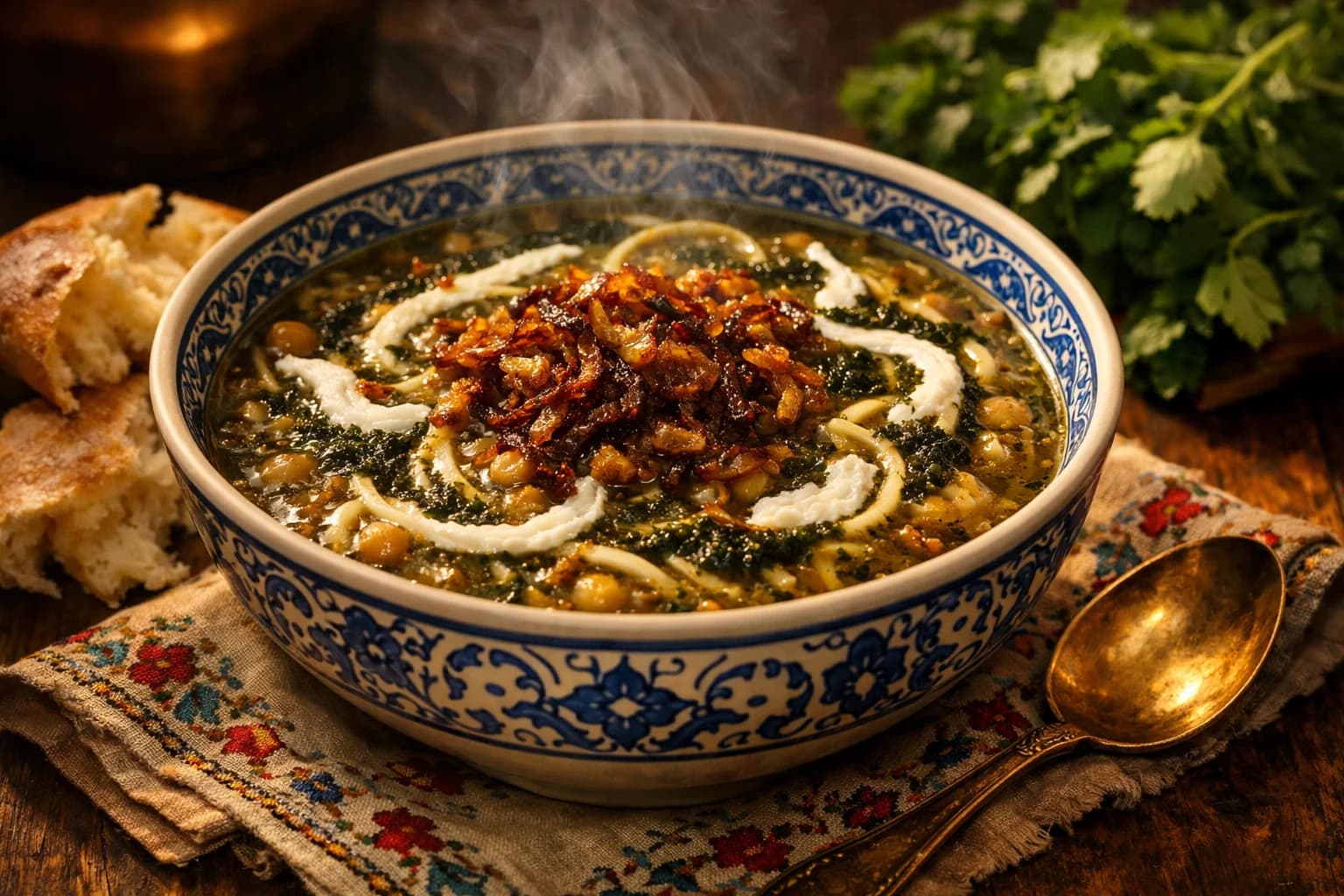

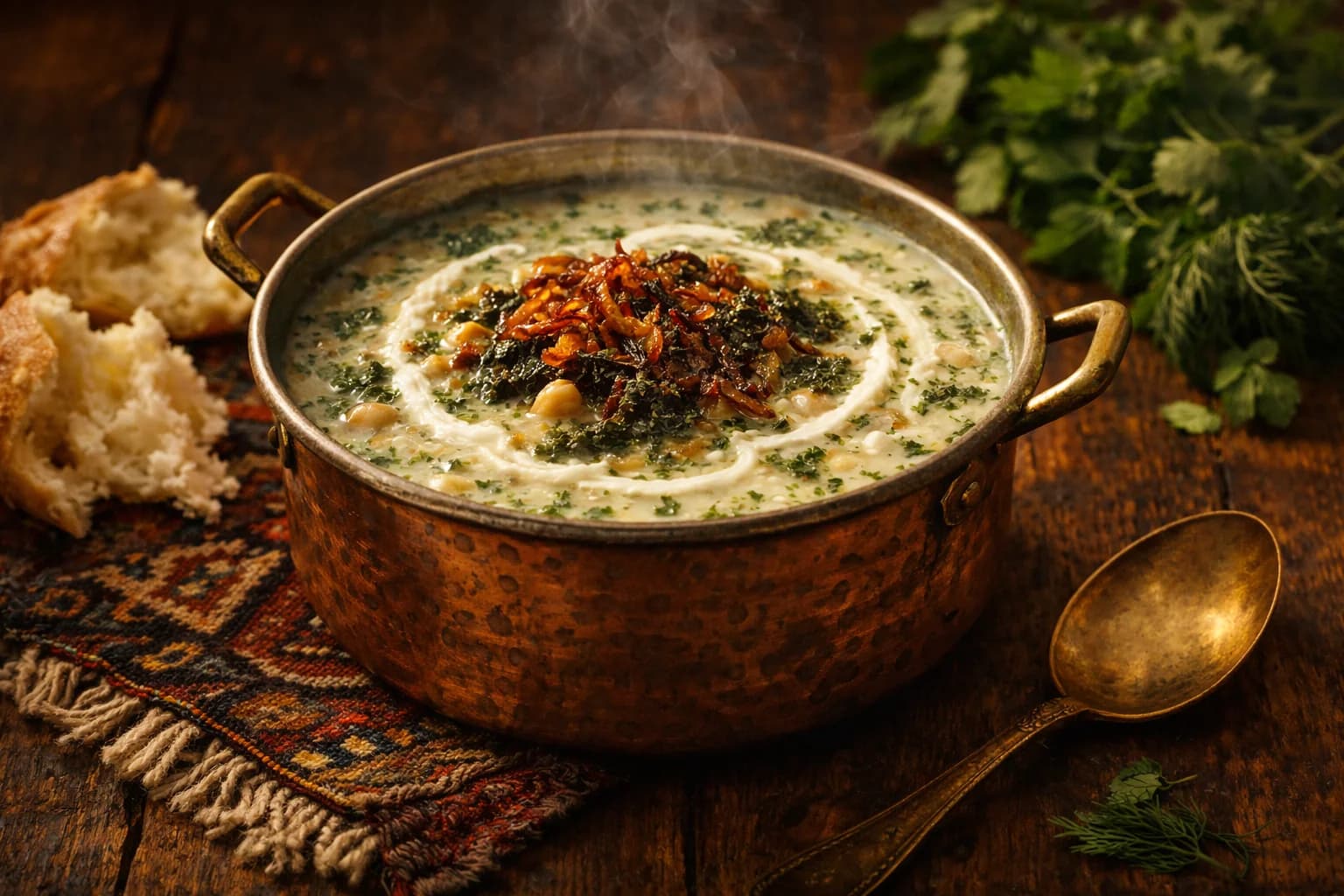
Ash-e Doogh (Persian Yogurt Soup)

Ash-e Doogh (Persian Yogurt Soup)

آش دوغ

A unique and ancient soup from Azerbaijan—tangy, creamy, and herb-laden, with a base of fermented yogurt (doogh) that creates a flavor unlike any other. Chickpeas, rice, and a wealth of fresh herbs swim in the pale, creamy broth, finished with fried onions and dried mint. This distinctive soup showcases the Persian love of sour flavors and the ingenious use of fermented dairy. It's comfort food for those who know it, and a revelation for those discovering it for the first time.

soupPrep: 30 minCook: 90 minintermediateServes 8

Cultural Note- Azerbaijan

Ash-e doogh is a distinctive specialty of the Azerbaijan region of Iran, where Turkish and Persian culinary traditions blend. The use of fermented dairy as a soup base is characteristic of this region's cuisine. 'Doogh' refers to the fermented yogurt drink, which gives this soup its characteristic tangy flavor. The soup is cooling in summer yet comforting in winter—its tanginess is believed to aid digestion. For those unfamiliar with sour/tangy soups, ash-e doogh can be surprising, but it wins converts quickly with its unique, addictive flavor.

Critical Moments

  • Stabilizing yogurt with flour and egg (prevents curdling)
  • Never boiling—maintain bare simmer only
  • Constant stirring to prevent scorching
  • Proper consistency (creamy, not gluey)
  • Adequate salt to balance tanginess
1
PREP2 min

Soak the chickpeas (night before)

The night before, place chickpeas in a bowl and cover with plenty of cold water—at least three times their volume. Soak for at least 8 hours or overnight.

Chickpeas covered with water
TouchDried chickpeas, hard
If short on time, use canned chickpeas—add them later in cooking since they're already cooked.
2
PREP55 min

Cook the chickpeas

Drain and rinse the soaked chickpeas. Place in a pot with fresh water, bring to a boil, then simmer for 45-60 minutes until tender. Drain and set aside. Alternatively, if using canned chickpeas, simply drain and rinse.

Chickpeas are tender when pierced
MediumSimmer
SmellCooking chickpeas
SoundGentle simmering
TouchTender when bitten—no chalkiness
Cooking chickpeas separately ensures they're fully tender before combining with the yogurt base.
While waiting: Prepare herbs and yogurt mixture while chickpeas cook
3
PREP20 min

Prepare the herbs

Wash all herbs thoroughly in several changes of water. Drain well and chop finely. Combine all chopped herbs in a large bowl. You should have roughly 500g of chopped herbs.

Large quantity of finely chopped green herbs
SmellFresh, herbaceous aroma
TouchFinely chopped, relatively dry
4
PREP5 min

Prepare the stabilized yogurt base

In a large bowl, whisk together the yogurt, flour, and beaten egg until completely smooth with no lumps. This mixture prevents the yogurt from curdling when heated. Gradually whisk in the water until smooth.

Smooth, pourable pale mixture with no lumps
SmellTangy yogurt
SoundWhisking
TouchCompletely smooth—no flour lumps

Critical Step

The flour and egg stabilize the yogurt, preventing it from curdling when heated. If lumpy, the soup will have an unpleasant texture. Whisk thoroughly until perfectly smooth.

Sift the flour to prevent lumps. Whisk the flour and egg into the yogurt before adding water for easier incorporation.

Common Mistakes

  • Lumpy mixture (whisk more thoroughly)
  • Skipping stabilizers (yogurt will curdle)
  • Adding hot liquid too fast (causes curdling)
5
COOK9 min

Sauté the aromatics

In a large stockpot, heat 45ml oil over medium heat. Add the diced onion and cook for 6-8 minutes until softened and lightly golden. Add garlic and turmeric, cook for 1 minute until fragrant.

Onions golden and soft; yellow from turmeric
Medium165°C / 325°F
SmellSautéing onions with turmeric
SoundSizzling
TouchOnions are soft
6
COOK10 min

Add the yogurt base

Reduce heat to medium-low. Slowly pour the stabilized yogurt mixture into the pot while stirring constantly. Continue stirring as you bring the mixture to a gentle simmer. Never let it boil vigorously—maintain a bare simmer.

Creamy, pale mixture barely simmering with small bubbles at edges
Medium-LowBare simmer only—do not boil
SmellTangy yogurt warming
SoundVery gentle bubbling—not vigorous
TouchSmooth, creamy liquid

Critical Step

Yogurt curdles if boiled. Keep at a bare simmer—small bubbles breaking gently at the surface, not a rolling boil. Constant stirring during heating prevents scorching and curdling.

Stir constantly as you heat. Once simmering, stir frequently throughout cooking. If the soup starts to look grainy, it's getting too hot—reduce heat immediately.

Common Mistakes

  • Heating too quickly (curdles)
  • Boiling (curdles and separates)
  • Not stirring (scorches on bottom)
7
COOK18 min

Add rice and chickpeas

Add the washed rice and cooked chickpeas to the pot. Stir well. Continue simmering gently for 15-20 minutes until the rice is almost tender, stirring frequently to prevent sticking.

Rice grains swelling; chickpeas visible throughout
Medium-LowBare simmer
SmellTangy soup with rice cooking
SoundGentle bubbling
TouchRice is becoming tender but still has bite
Stir frequently—the rice can stick to the bottom. Add more water if the soup becomes too thick.
8
COOK18 min

Add the herbs

Add all the chopped herbs to the pot. Stir well to distribute throughout the soup. Continue simmering gently for another 15-20 minutes until the herbs are tender and the rice is fully cooked. Season with salt and pepper.

Soup is pale green from herbs; thick, creamy consistency with visible chickpeas and rice
Medium-LowBare simmer
SmellTangy, herbaceous, complex
SoundGentle bubbling
TouchThick and creamy; rice and herbs are tender
The soup should be thick but still pourable. Add water if too thick. Taste and season assertively—the tanginess needs salt to balance.
9
COOK5 min

Adjust consistency and final seasoning

The soup should be creamy and thick but still fluid. Thin with water if needed. Taste and adjust salt—the tanginess requires good seasoning. The soup should taste tangy, herbaceous, and well-balanced.

Creamy pale green soup with proper spoonable consistency
SmellTangy, fresh, herbaceous
SoundThick bubbling
TouchCoats a spoon; pourable but substantial

Critical Step

Proper consistency and seasoning are essential. Too thick is gluey; too thin is watery. The tanginess should be pleasant and balanced by salt, not sour and sharp.

This soup thickens as it sits. If making ahead, expect to thin with water when reheating.
10
TOPPING15 min

Fry the onion topping

Heat 30ml oil in a skillet over medium-high heat. Add the thinly sliced onion and fry for 12-15 minutes until deeply golden and crispy. Remove to paper towels.

Deep golden-brown, crispy onion strands
Medium-High175°C / 350°F
SmellCaramelized onions
SoundSizzling
TouchCrispy when cooled
11
TOPPING2 min

Fry the mint in butter

Melt butter in a small skillet over medium heat. Add the dried mint and swirl for 30-45 seconds until fragrant. Remove from heat immediately.

Golden butter with green mint flecks
Medium150°C / 300°F
SmellAromatic mint butter
SoundGentle sizzling
TouchLiquid butter infused with mint
Don't let the mint burn—it goes from fragrant to bitter quickly.
12
FINISH3 min

Serve with toppings

Ladle the hot soup into bowls. Top each bowl with a mound of crispy fried onions in the center and drizzle the mint butter over the top. Serve immediately.
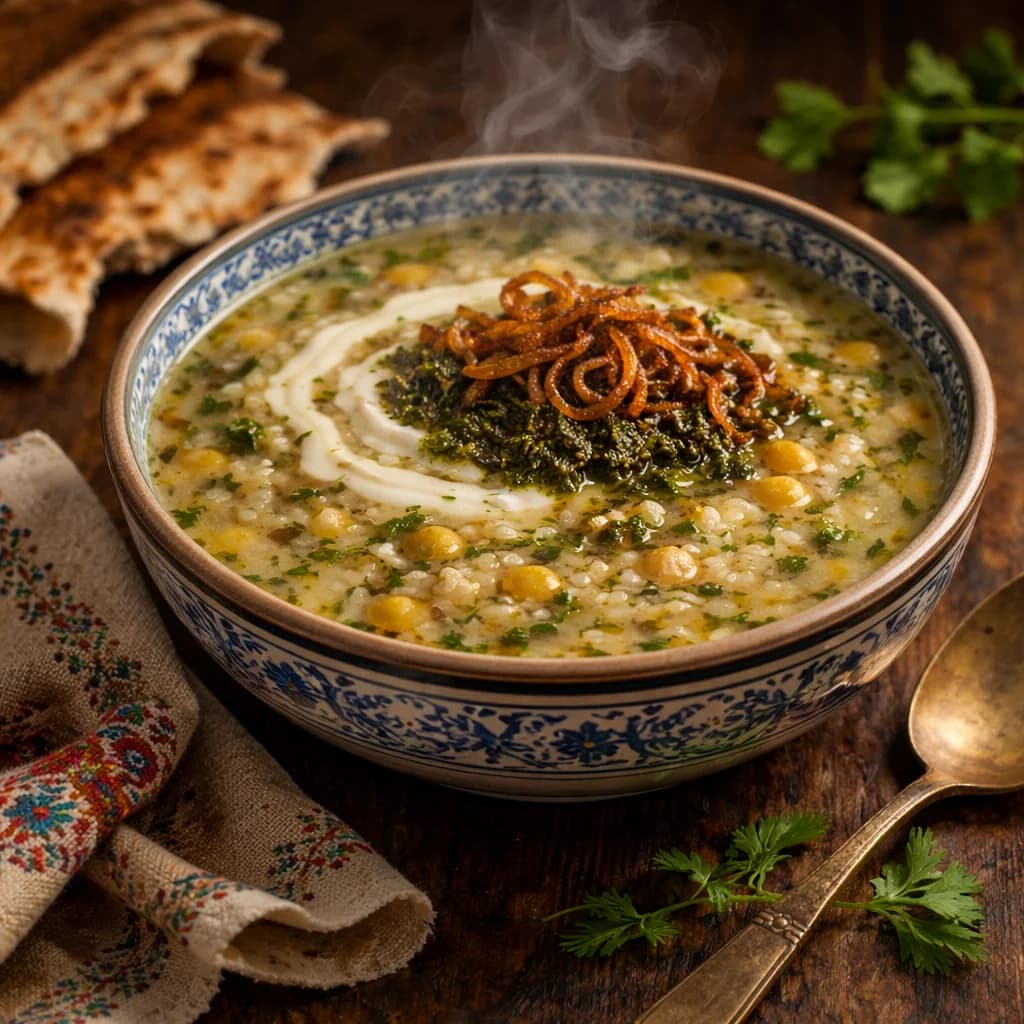
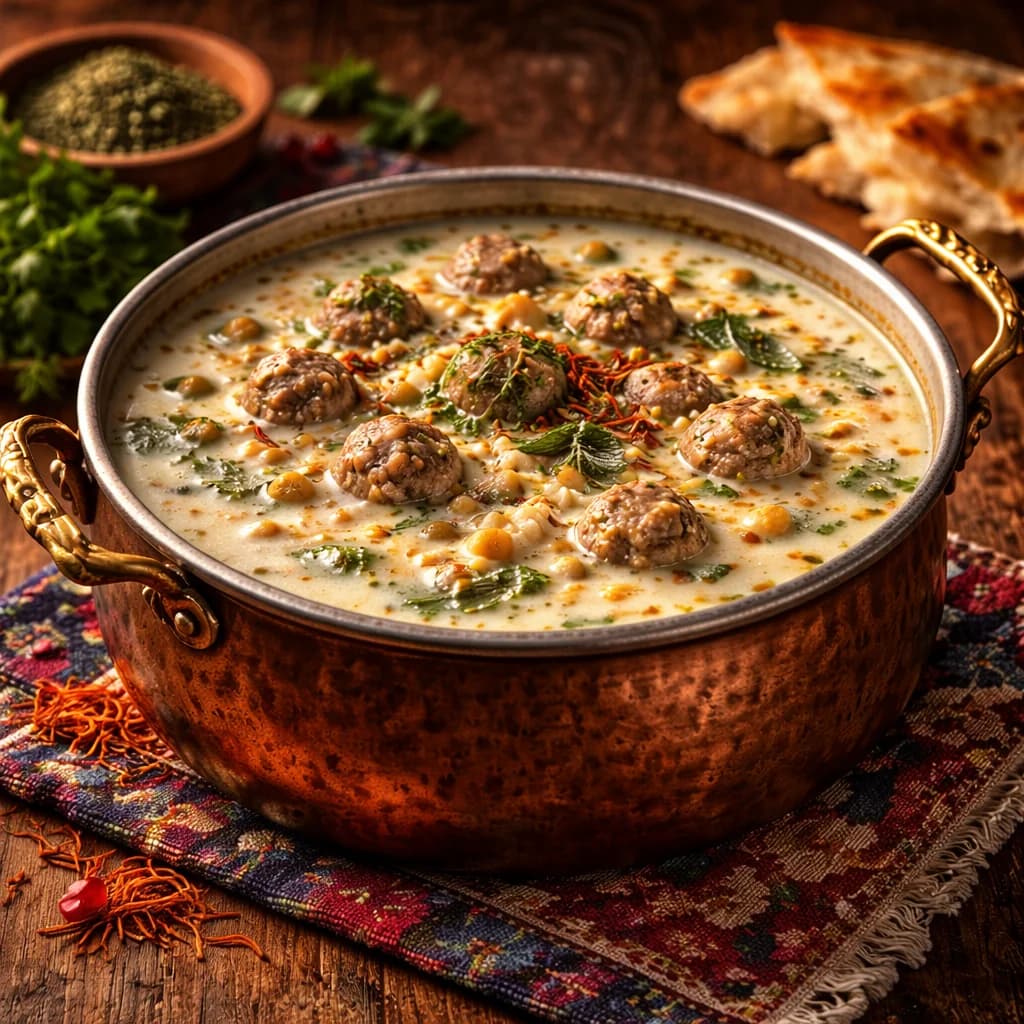
Pale green creamy soup topped with golden crispy onions and green-flecked mint butter
SmellMint butter hitting warm tangy soup
SoundSubtle sizzle
TouchCreamy soup with crunchy onion contrast
Each spoonful should include some soup, onions, and mint butter. The contrast of creamy, tangy soup with crunchy, sweet onions is essential.

Extras

Equipment

large stockpotlarge skilletmixing bowlwhiskstandard

Make Ahead

  • Can be made 2-3 days ahead and refrigerated.
  • Reheat very gently over low heat, stirring constantly—never boil.
  • Will thicken significantly when cold; thin with water.
  • Add fresh toppings when serving.

Reheat gently over low heat, stirring frequently.

Add water to thin.

Never boil or it may curdle.

Fresh toppings essential.

Serve With

🍚Not typically served with rice—complete meal on its own

Sides

  • Fresh bread (lavash, sangak)
  • Sabzi khordan
  • Torshi (pickles)

Drinks

  • Doogh (naturally—same base!)
  • Black tea

Substitutions

yogurtFull-fat plain yogurt is essential—low-fat curdles more easily. Greek yogurt works but may need more water. Actual doogh (yogurt drink) can be used as the base.
chickpeasCanned chickpeas work well—add with the herbs since they're already cooked.
fresh herbsFrozen Persian herb mix can substitute. The key herbs are parsley, cilantro, dill, and chives—don't substitute with just one herb.
flourRice flour works for gluten-free. Cornstarch can substitute (use less—about 2 tbsp).

Scaling

Scales well for larger gatherings. The key is maintaining the proper balance of yogurt to herbs. This soup is forgiving and communal—traditionally made in large batches. Leftovers keep well refrigerated.

Source

Traditional · Traditional Azerbaijani-Persian cuisine

A specialty of the Azerbaijan region of northwestern Iran, where dairy-based soups are more common. Also found in the Republic of Azerbaijan and parts of Turkey. The use of fermented dairy creates its distinctive tangy character.

Related Recipes