
Critical Moments
- •Soaking grape leaves to reduce saltiness
- •Partially cooking split peas (not fully)
- •Rolling snug but not too tight
- •Achieving proper sweet-sour balance in braising liquid
- •Low, slow cooking until rice is fully cooked
Prepare the grape leaves
If using jarred grape leaves, remove them from the jar and carefully separate the leaves—they're delicate. Rinse in cold water to remove excess brine. Place in a large bowl and cover with boiling water. Let soak for 20-30 minutes to soften and reduce saltiness. Drain and rinse again. If using fresh grape leaves, blanch in boiling water for 2-3 minutes until pliable, then rinse in cold water.
Critical Step
Proper preparation of grape leaves is essential. Unsoaked jarred leaves are too salty and stiff. The hot water soak removes excess brine and softens them for rolling.
Common Mistakes
- •Not soaking long enough (too salty, too stiff)
- •Tearing leaves when separating (be gentle)
- •Using leaves straight from jar (overwhelmingly salty)
Prepare the split peas
Rinse the split peas and place in a small pot. Cover with water, bring to a boil, then simmer for 15-20 minutes until partially cooked—tender but still holding their shape. They'll finish cooking in the dolmeh. Drain and set aside.
Prepare the filling
Heat 30ml oil in a skillet over medium heat. Add the diced onions and cook for 8-10 minutes until softened and lightly golden. Add turmeric and cook 1 minute. Transfer to a large mixing bowl. Add the rinsed rice (uncooked), partially cooked split peas, ground meat (if using), all the chopped herbs, cinnamon, cumin (if using), salt, and pepper. Mix thoroughly with your hands until everything is evenly combined.
Critical Step
The filling must be thoroughly mixed so every dolmeh has the same flavor. The rice is added raw—it will cook during braising, absorbing the delicious liquid.
Prepare the grape leaves for rolling
Lay out the soaked grape leaves on a clean work surface. Remove any thick stems by cutting a small V-shape at the base of each leaf where the stem meets the leaf. Lay each leaf flat, smooth side down (vein side up). Sort leaves by size—larger ones for rolling, smaller or torn ones for lining the pot.
Roll the dolmeh
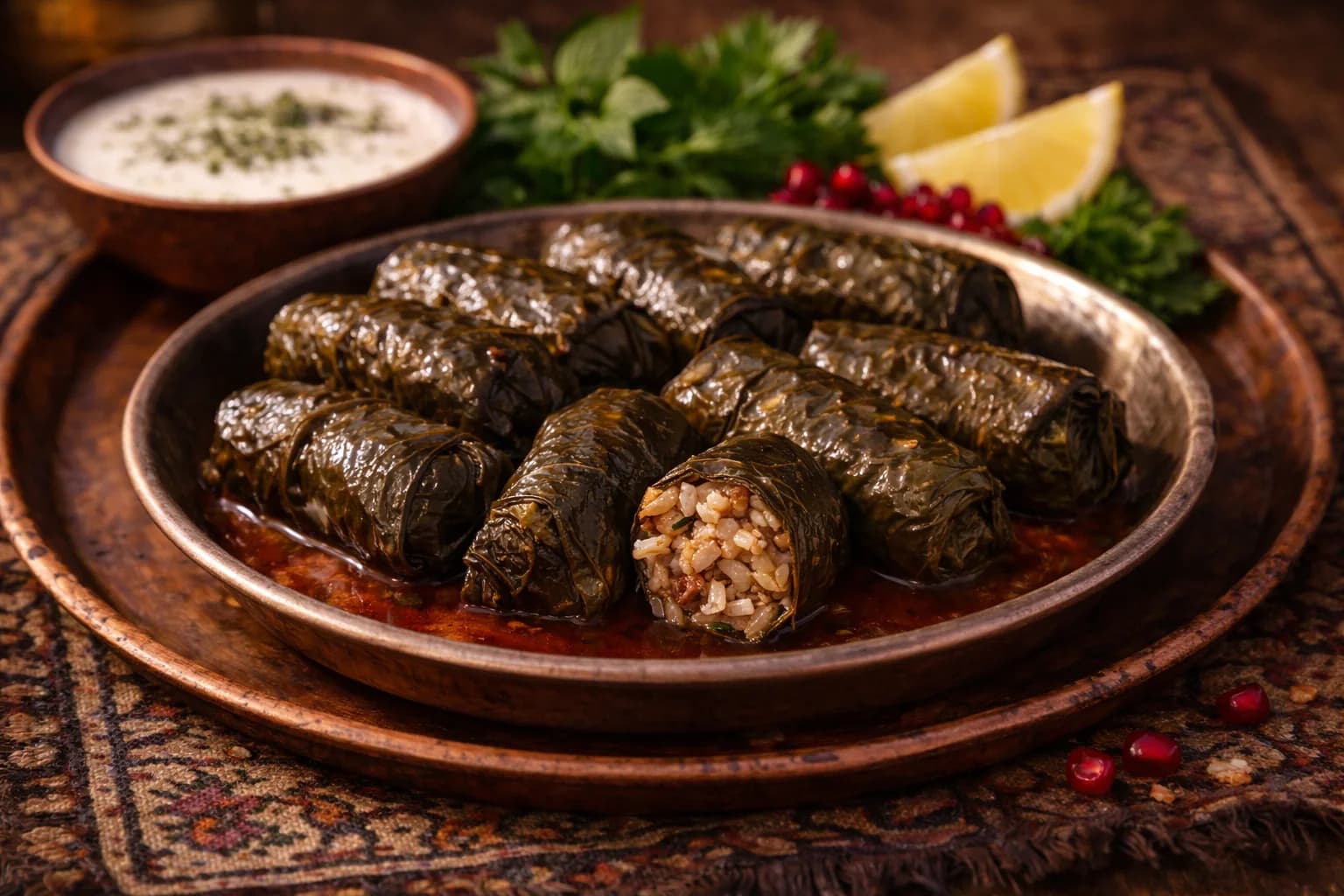
Place a grape leaf vein-side up with the stem end toward you. Place about 1 tablespoon of filling (more for larger leaves, less for smaller) in a horizontal line near the stem end. Fold the bottom of the leaf up over the filling, then fold in both sides toward the center. Roll away from you, tucking the sides in as you go, to create a snug cylinder about the size of your finger. Don't roll too tight—the rice needs room to expand. Repeat with remaining leaves and filling.
Critical Step
The rolling technique is essential. Too tight and the rice can't expand, causing bursting. Too loose and they fall apart. Aim for snug but with some give.
Common Mistakes
- •Rolling too tight (rice expands and bursts the leaf)
- •Too much filling (won't close properly)
- •Not folding sides in (filling escapes during cooking)
Arrange dolmeh in pot
Line the bottom of a large heavy pot with torn grape leaves, potato slices, or a layer of onion slices—this prevents sticking. Arrange the rolled dolmeh seam-side down in tight concentric circles, packing them snugly in a single layer. Build additional layers on top if needed, offsetting the dolmeh like bricks. They should be packed fairly tightly so they don't unroll during cooking.
Critical Step
Tight packing prevents the dolmeh from unrolling during cooking. The bottom layer protection prevents burning. Seam-side down keeps them sealed.
Prepare the braising liquid
In a bowl, whisk together the tomato paste, grape or pomegranate molasses, lemon juice, sugar, remaining 30ml oil, and 500ml water. Taste and adjust the sweet-sour balance—it should be noticeably tangy and slightly sweet. Pour this mixture over the dolmeh.
Critical Step
The sweet-sour braising liquid is what makes Persian dolmeh distinctive. It should be assertively flavored—the taste mellows and penetrates the dolmeh during cooking.
Cook the dolmeh
The liquid should come about two-thirds up the dolmeh—add more water if needed. Place an inverted heat-safe plate on top of the dolmeh to keep them submerged. Cover the pot. Bring to a gentle boil, then reduce to a low simmer. Cook for 75-90 minutes until the rice is fully cooked and the dolmeh are tender.
Critical Step
Low, slow cooking allows the rice to cook through and absorb the braising liquid. The liquid should reduce to a thick, glossy sauce. Check periodically and add water if the pot is drying out.
Rest and serve
Remove from heat and let rest for 15-20 minutes with the lid on. This allows the dolmeh to firm up slightly and makes them easier to handle. Carefully remove from the pot—they're delicate. Arrange on a platter. Spoon the reduced braising liquid over the top as a glaze.
Serve
Serve warm, at room temperature, or cold. Traditionally accompanied by yogurt, torshi (pickles), and fresh bread. Dolmeh are often part of a larger spread and can be eaten as appetizers or a main course.
Resting Required
15 min - Allows dolmeh to firm up; easier to handle