
Doogh (Persian Yogurt Drink)

Doogh (Persian Yogurt Drink)

دوغ

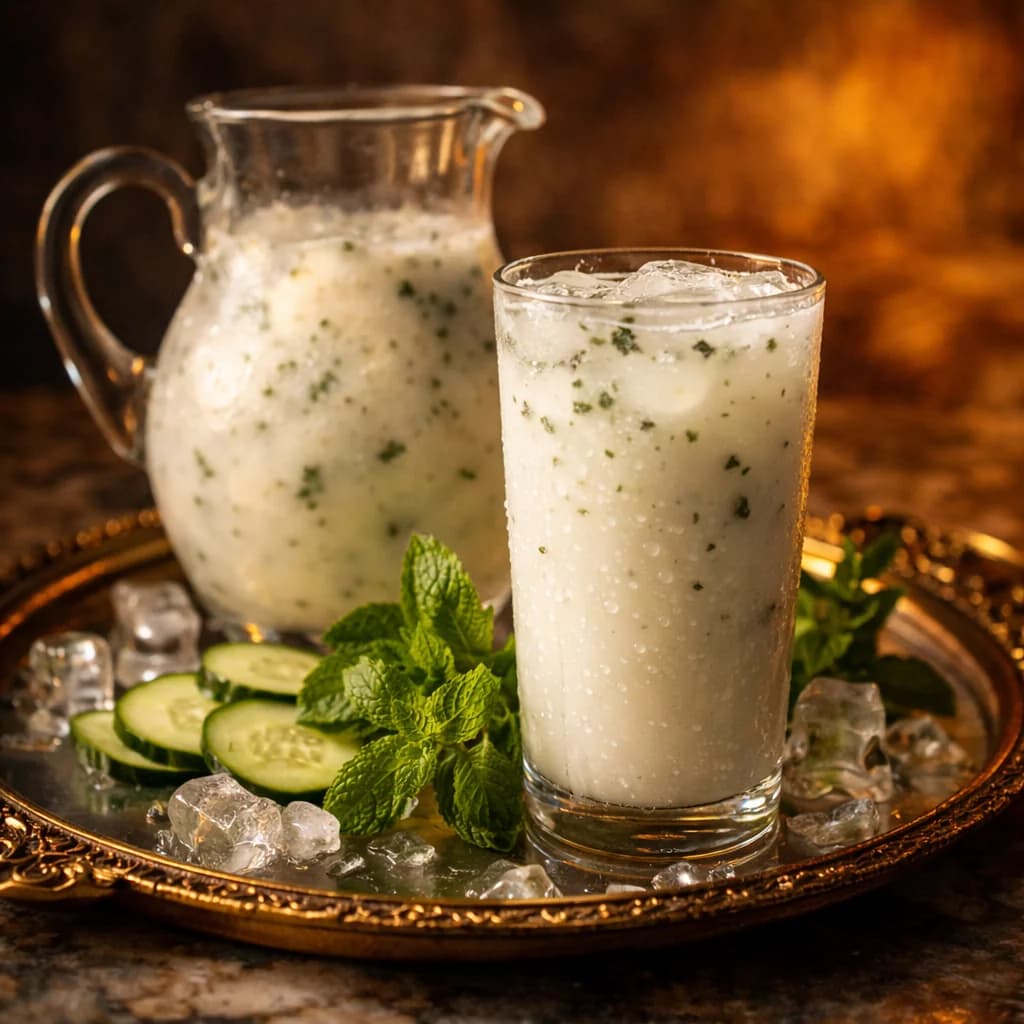
The quintessential Persian beverage—a refreshing, tangy, effervescent drink of yogurt, water, salt, and dried mint that accompanies nearly every Persian meal. Doogh is the perfect counterpoint to rich, flavorful Persian cuisine: its cool tanginess cuts through the richness of kebabs, its salt replenishes what's lost in summer heat, and its probiotics aid digestion. Whether homemade or from one of Iran's beloved commercial brands, doogh is as essential to the Persian table as bread itself. The slight fizz of traditionally fermented doogh or modern carbonated versions adds an extra dimension of refreshment.

beveragePrep: 10 minCook: 0 mineasyServes 6

Cultural Note

Doogh is to Iran what wine is to France or tea is to Britain—a national beverage deeply woven into daily life. The word 'doogh' comes from the Persian word for 'to milk.' It accompanies virtually every Persian meal, especially kebabs and rice dishes, where its cooling tanginess provides essential balance. In hot Iranian summers, doogh serves both as refreshment and electrolyte replacement—the salt content is intentional and important. Traditionally, doogh was naturally carbonated through fermentation; today, commercial brands add carbonation for the beloved fizz. Major Iranian brands like Abali and Mihan are household names, and Iranians abroad often seek out these brands or make doogh at home. The drink is always served very cold, often over ice. Beyond the table, doogh is also used in cooking—most notably in ash-e doogh, the yogurt soup.

Critical Moments

  • Whisking yogurt until completely smooth
  • Achieving proper consistency (not too thick, not too thin)
  • Adequate salt for proper flavor balance
  • Serving very cold
1
PREP2 min

Prepare the yogurt base

Place the yogurt in a large pitcher or bowl. Using a whisk, beat the yogurt until completely smooth with no lumps. This ensures the doogh will be uniformly smooth rather than clumpy.

Smooth, creamy yogurt with no lumps
SmellFresh, tangy yogurt
SoundWhisking
TouchCompletely smooth
Full-fat yogurt creates the richest doogh, but low-fat works if preferred. Greek yogurt can be used but requires more water due to its thickness.
2
PREP3 min

Add water and mix

Gradually add the cold water to the yogurt while whisking continuously. For still doogh, use regular cold water. For fizzy doogh (more traditional), use cold sparkling water or club soda. The consistency should be like thin buttermilk—pourable but not watery.

Uniform, pourable white liquid; no separation
SmellDiluted yogurt
SoundWhisking
TouchThin, smooth, pourable

Critical Step

The ratio of yogurt to water determines the body of the doogh. Too thick is overwhelming; too thin is watery and unsatisfying. Adjust to your preference—some like it thicker, some thinner.

Start with less water and add more to reach desired consistency. Traditional doogh is fairly thin and very drinkable. If using sparkling water, add it gently to preserve carbonation.
3
PREP2 min

Season with salt and mint

Add the salt and dried mint. Whisk well to distribute evenly. Taste and adjust salt—traditional doogh is noticeably salty, which balances the tang and aids in hydration. The dried mint will rehydrate and release flavor as it sits.

Green flecks of mint distributed throughout white doogh
SmellMint blooming in the yogurt
TouchMint flecks visible throughout

Critical Step

Salt is essential—undersalted doogh tastes flat and unbalanced. Don't be shy with the salt; it's a key flavor component, not just seasoning. Dried mint is traditional and provides a different flavor than fresh.

The mint flavor intensifies as it sits. If serving immediately, you can crush the dried mint between your palms before adding to release more flavor quickly.
4
PREP30 min

Chill and let flavors meld

Refrigerate the doogh for at least 30 minutes before serving. This allows the mint to fully rehydrate and the flavors to meld. The doogh will be better after resting. Stir or shake before serving as separation is natural.

Well-chilled doogh; mint has rehydrated
SmellDeveloped mint and yogurt aroma
TouchCold; mint is soft and rehydrated
Doogh keeps refrigerated for 3-4 days. Stir well before each serving. The mint flavor becomes more pronounced over time.
5
FINISH3 min

Serve ice cold

Stir the doogh well before serving—separation is natural. Pour into tall glasses over ice. Garnish with fresh mint leaves if desired. Serve immediately while very cold.

Frothy white drink in tall glass; ice cubes; fresh mint garnish
SmellCold, minty, tangy
SoundIce clinking
TouchCold, refreshing, slightly thick
Doogh must be served very cold—this is non-negotiable. The colder, the more refreshing. In Iran, doogh is sometimes served in frosted glasses.

Resting Required

30 min - Allows mint to rehydrate and flavors to meld
Extras

Equipment

pitcher or blenderwhiskstandard

Make Ahead

  • Doogh keeps refrigerated for 3-4 days.
  • Flavor actually improves after resting overnight.
  • Stir well before serving as separation is natural.

N/A—always served cold.

If using sparkling water, add just before serving to preserve carbonation.

Serve With

Sides

  • Essential with kebabs
  • Perfect with any rice dish
  • Excellent with dolmeh
  • Traditional with abgoosht

Drinks

  • Served as the beverage itself

Substitutions

yogurtMust be plain, unsweetened yogurt. Full-fat is traditional and best. Greek yogurt works but use more water. Kefir can substitute for tangier, thinner doogh. Plant-based yogurts create a non-traditional but acceptable alternative.
dried mintEssential flavor—don't substitute with fresh (different flavor profile when rehydrated). Persian dried mint is ideal; any dried spearmint works.
sparkling waterClub soda, sparkling mineral water, or even plain seltzer work for carbonation. Don't use tonic water (wrong flavor).
saltSea salt or kosher salt recommended. The amount is adjustable but salt is essential—don't omit.

Scaling

Scales infinitely—simply maintain the ratio of about 1 part yogurt to 1-2 parts water, adjusting to taste. Iranians often keep a pitcher in the refrigerator, refreshing it daily. Commercial doogh is carbonated; homemade can be still or carbonated with soda water.

Source

Traditional · Traditional Persian cuisine

Doogh has been consumed in Persia for thousands of years, predating written history. Similar yogurt drinks exist across Central Asia, the Caucasus, and the Middle East (ayran, tan, lassi), but Persian doogh is distinguished by its dried mint and the tradition of carbonation.

Related Recipes

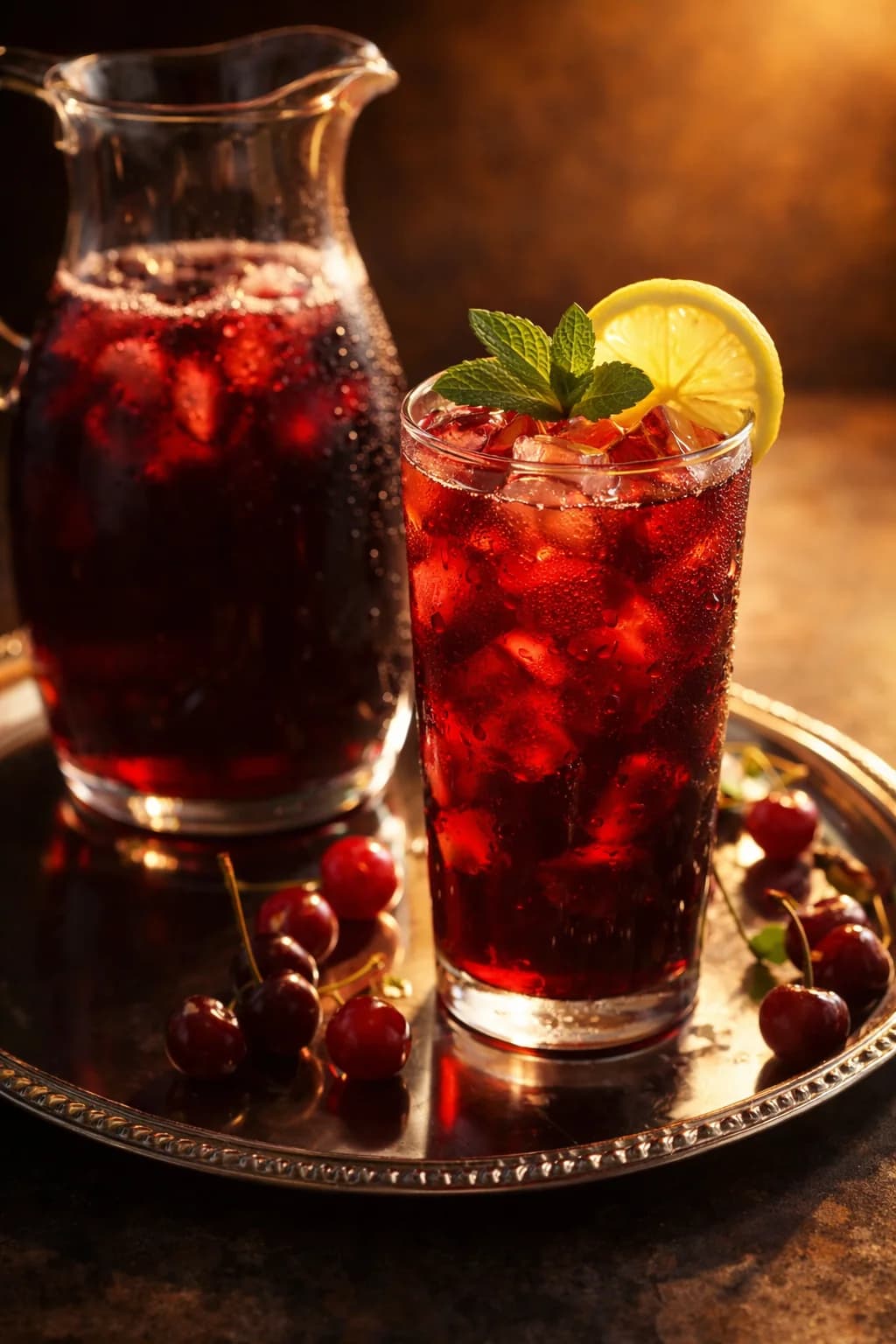
Sharbat Albaloo (Persian Sour Cherry Syrup)

Sharbat Albaloo (Persian Sour Cherry Syrup)

A jewel-toned syrup made from tart sour cherries, their ruby juice transformed into a concentrated elixir that captures the essence of Persian summer. Diluted with ice water, sharbat albaloo becomes a stunningly beautiful drink—deep garnet red, intensely fruity, and perfectly balanced between sweet and tart. Beyond drinking, this versatile syrup is the traditional topping for faloodeh, drizzled over the icy rose water noodles for a stunning pink-red contrast. The brief summer season when sour cherries are available makes this syrup precious—families preserve summer's bounty in these jeweled jars to enjoy year-round.

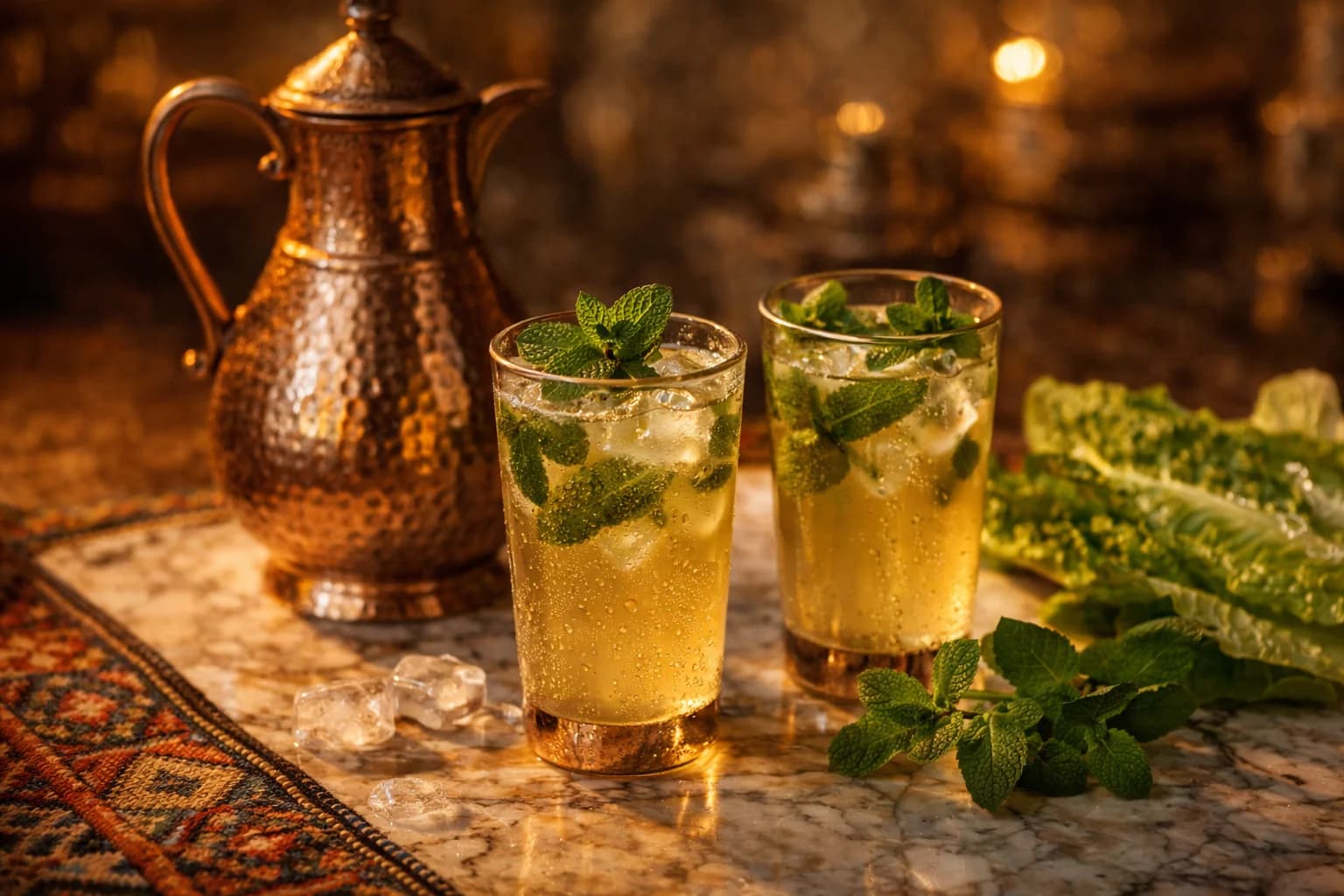
Sharbat Sekanjabin (Persian Mint and Vinegar Syrup)

Sharbat Sekanjabin (Persian Mint and Vinegar Syrup)

An ancient Persian elixir dating back over 2,000 years—a concentrated syrup of honey (or sugar), vinegar, and fresh mint that's diluted with cold water to create one of the world's most refreshing drinks. The name comes from 'serke' (vinegar) and 'anjabin' (honey), revealing its original ingredients. This sweet-sour-minty drink was prized in ancient Persia as both refreshment and medicine, believed to aid digestion, cool the body, and restore balance. Today, sekanjabin remains beloved, especially during Nowruz when it's served with crispy romaine lettuce leaves for dipping—a tradition as old as Persian civilization itself.

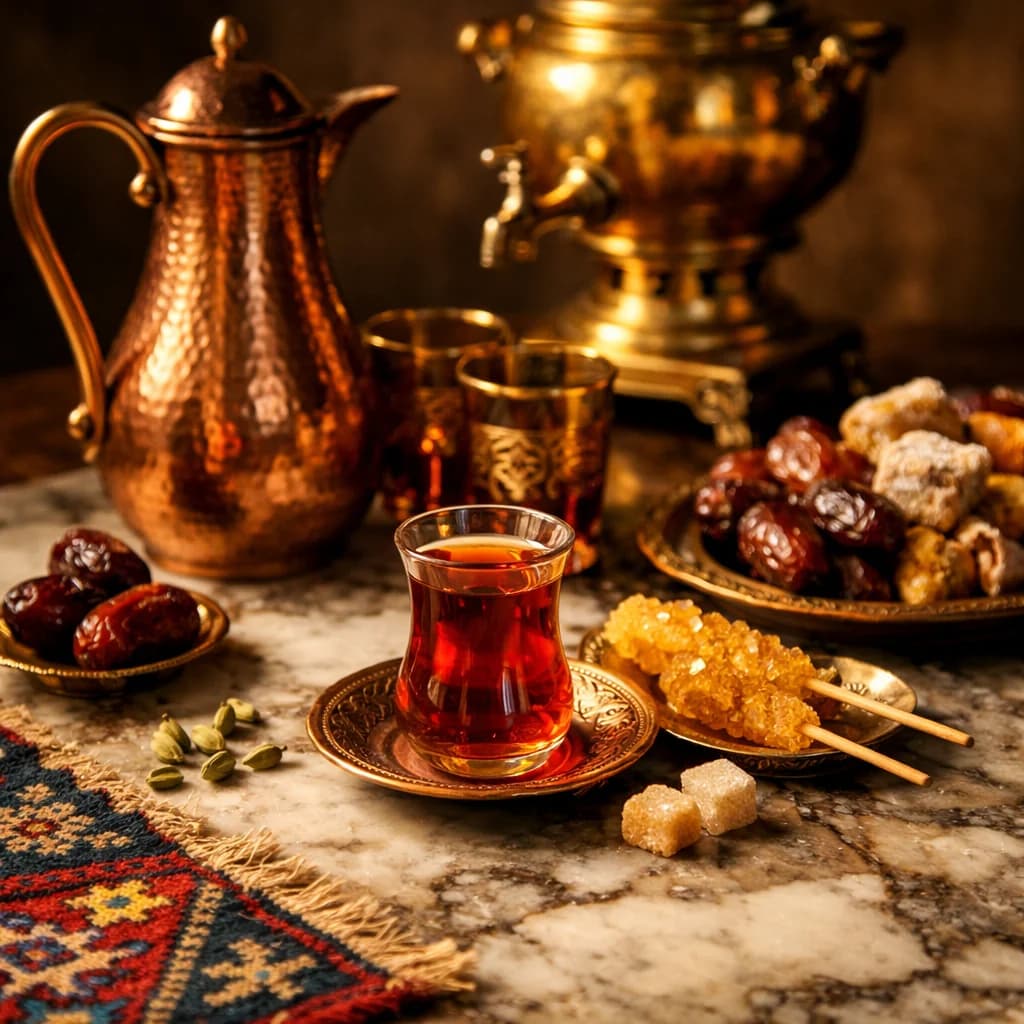
Chai (Persian Tea Service)

Chai (Persian Tea Service)

Tea is not merely a beverage in Iran—it is the very rhythm of daily life, the foundation of hospitality, and an art form unto itself. Persian tea service involves brewing strong black tea (traditionally in a two-tiered pot with a samovar) until it reaches a deep amber color, then diluting it to taste with hot water. Served in small, elegant glasses that showcase its jewel-like color, accompanied by rock sugar (nabat), sweets, and good conversation, Persian tea is offered to every guest and consumed throughout the day. The brewing method, the glassware, the accompaniments—all are integral to an experience that transcends simple tea-drinking.