

Sharbat Sekanjabin (Persian Mint and Vinegar Syrup)

Sharbat Sekanjabin (Persian Mint and Vinegar Syrup)

شربت سکنجبین

An ancient Persian elixir dating back over 2,000 years—a concentrated syrup of honey (or sugar), vinegar, and fresh mint that's diluted with cold water to create one of the world's most refreshing drinks. The name comes from 'serke' (vinegar) and 'anjabin' (honey), revealing its original ingredients. This sweet-sour-minty drink was prized in ancient Persia as both refreshment and medicine, believed to aid digestion, cool the body, and restore balance. Today, sekanjabin remains beloved, especially during Nowruz when it's served with crispy romaine lettuce leaves for dipping—a tradition as old as Persian civilization itself.

beveragePrep: 15 minCook: 25 mineasyServes 20

Cultural Note

Sekanjabin is among the oldest drinks in Persian culinary history, with recipes appearing in medieval texts dating back over a thousand years. The name derives from Persian 'serke' (vinegar) and 'anjabin' (honey), though sugar is now commonly used. In ancient Persian medicine, the drink was prized for its supposed ability to balance the body's humors, cool internal heat, and aid digestion—beliefs that persist today. The tradition of serving sekanjabin with crispy romaine lettuce leaves for dipping is iconic, especially during Nowruz (Persian New Year) and Sizdah Bedar (the thirteenth day of Nowruz, spent outdoors). Guests dip the lettuce into the sweet-sour syrup and eat it as a refreshing snack. This combination dates back centuries and represents the Persian love of contrasting textures and flavors. Beyond drinking, sekanjabin is also used as a dressing for grated cucumber salad.

Critical Moments

  • Achieving proper sweet-sour balance
  • Adequate mint steeping time (minimum 30 minutes)
  • Straining completely for clear syrup
  • Proper dilution ratio when serving
1
COOK15 min

Make the sugar syrup

In a medium saucepan, combine the sugar and 500ml water. Heat over medium heat, stirring until the sugar completely dissolves. Bring to a boil, then reduce heat and simmer for 10 minutes without stirring. The syrup should thicken slightly.

Clear syrup; slightly thickened; all sugar dissolved
MediumSimmer for 10 minutes
SmellHot sugar syrup
SoundBubbling
TouchSyrupy consistency
Don't stir once boiling—this can cause crystallization. A gentle simmer is fine.
2
COOK7 min

Add the vinegar

Remove the saucepan from heat. Carefully add the vinegar—it will bubble and steam. Stir to combine. Return to low heat and simmer for another 5 minutes. The syrup should be well-balanced between sweet and sour. Taste and add more vinegar if you prefer it tangier.

Clear syrup with slight amber tint from vinegar
LowGentle simmer
SmellSweet-sour, vinegar softened by sugar
SoundGentle simmering
TouchSlightly thinner than before vinegar addition

Critical Step

The balance of sweet and sour defines sekanjabin. The ratio here is traditional, but personal taste varies. Some prefer it sweeter, others more tart. The vinegar mellows with simmering.

Good quality vinegar makes a difference. White wine vinegar is most traditional; apple cider vinegar adds fruity depth. Avoid distilled white vinegar—too harsh.
3
COOK30 min

Infuse with fresh mint

Remove from heat. Add the fresh mint (stems and all—the stems have flavor too). Press the mint down to submerge it in the hot syrup. Cover and let steep for at least 30 minutes, or up to overnight in the refrigerator for stronger mint flavor.

Mint submerged in syrup; gradually releasing color and flavor
SmellMint blooming in warm syrup—increasingly fragrant
TouchMint wilting and releasing oils

Critical Step

The mint infusion is essential—it provides the characteristic fresh, cooling flavor. Longer steeping = stronger mint flavor. Don't skip or rush this step.

For the most intense mint flavor, let the syrup cool completely with the mint, then refrigerate overnight before straining. The cold infusion extracts different flavors than hot.
4
FINISH5 min

Strain the syrup

Strain the syrup through a fine-mesh strainer into a clean glass jar or bottle, pressing on the mint to extract all the flavor. Discard the spent mint. The syrup should be clear with a pale green or amber tint.

Clear syrup with subtle green or amber color; no mint particles
SmellIntensely minty sweet-sour
SoundStraining
TouchSmooth, syrupy
Press firmly on the mint to extract all the flavorful liquid. For clearer syrup, strain through cheesecloth.
5
FINISH60 min

Cool and store

Let the syrup cool completely, then refrigerate. The syrup will keep refrigerated for several months. The flavor improves after a day of resting.

Cold, clear syrup in jar
SmellCold, minty, sweet-sour
TouchThick, pourable syrup
Store in a glass jar or bottle. The syrup keeps for 2-3 months refrigerated. Label with the date.
6
FINISH3 min

Serve as a drink

To serve as a drink, add about 3-4 tablespoons (45-60ml) of syrup to a tall glass. Fill with cold water (still or sparkling) and stir. Add ice and garnish with fresh mint. Adjust syrup-to-water ratio to taste—some prefer it stronger, some weaker.

Pale green drink with ice and mint garnish
SmellFresh, minty, sweet-sour
SoundIce clinking
TouchRefreshing, light, tangy
The dilution ratio is very personal—start with 1:4 (syrup:water) and adjust. Sparkling water adds extra refreshment. Very cold is essential.
7
FINISH5 min

Traditional serving with lettuce (Nowruz style)

For the traditional Nowruz presentation: Pour undiluted syrup into a shallow bowl. Arrange crispy inner romaine lettuce leaves around the bowl. Guests dip the lettuce into the syrup and eat—the crispy, watery lettuce with the sweet-sour syrup is a beloved combination.

Shallow bowl of golden-green syrup surrounded by crispy pale green lettuce leaves
SmellMinty syrup, fresh lettuce
SoundCrispy lettuce crunch
TouchContrast of crunchy lettuce and thick syrup

Critical Step

This is the most iconic way to serve sekanjabin, especially during Nowruz. The contrast of crispy, fresh lettuce with the thick, sweet-sour syrup is extraordinary and ancient.

Use the pale, crispy inner leaves of romaine—they should be cold, crunchy, and sturdy enough for dipping. This is traditionally enjoyed outdoors on Sizdah Bedar.

Resting Required

30 min - Mint must steep to infuse flavor; longer is better
Extras

Equipment

medium saucepanfine mesh strainerglass jar or bottlestandard

Make Ahead

  • The syrup keeps refrigerated for 2-3 months.
  • This is a concentrate meant to be made ahead.
  • Flavor improves after resting at least overnight.
  • Dilute fresh for each serving.

N/A—served cold.

Syrup can be used straight from the refrigerator.

Serve With

Sides

  • Romaine lettuce for dipping (essential)
  • Fresh fruit
  • Part of Nowruz spread
  • Grated cucumber

Drinks

  • Served as the beverage itself

Substitutions

sugarHoney is traditional and creates a more complex flavor. Ratio: 400g honey = 500g sugar. Can mix half honey, half sugar.
vinegarWhite wine vinegar is most traditional. Apple cider vinegar adds fruitiness. Rice vinegar works but is milder. Avoid distilled white vinegar—too harsh. Red wine vinegar changes the color but works.
fresh mintMust be fresh mint—dried doesn't provide the same bright, fresh flavor. Spearmint is traditional; peppermint is stronger.
romaine lettuceFor dipping, any crispy lettuce works—butter lettuce, iceberg, little gem. The key is cold, crispy, and sturdy enough to dip.

Scaling

This recipe makes a concentrated syrup that's diluted to serve—about 20 servings. The syrup keeps for months refrigerated, so make a full batch. Dilution ratio is typically 1 part syrup to 4-5 parts cold water, but adjust to taste.

Source

Traditional · Ancient Persian cuisine

One of the oldest recorded Persian drinks, mentioned in medieval texts as both beverage and medicine. The sweet-sour combination was believed to balance the humors and aid digestion. Sekanjabin was so valued it spread throughout the medieval Islamic world and into medieval Europe.

Related Recipes

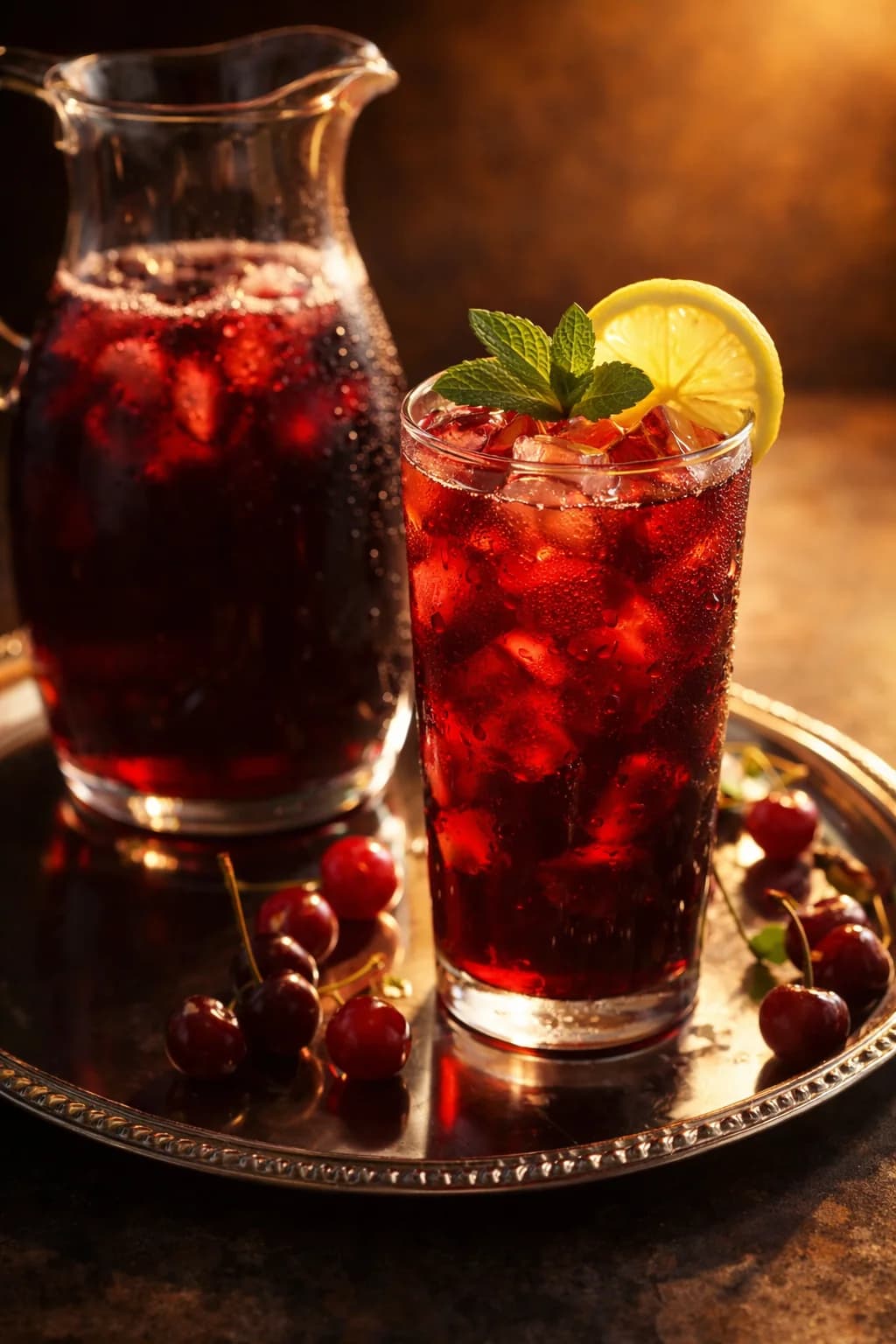
Sharbat Albaloo (Persian Sour Cherry Syrup)

Sharbat Albaloo (Persian Sour Cherry Syrup)

A jewel-toned syrup made from tart sour cherries, their ruby juice transformed into a concentrated elixir that captures the essence of Persian summer. Diluted with ice water, sharbat albaloo becomes a stunningly beautiful drink—deep garnet red, intensely fruity, and perfectly balanced between sweet and tart. Beyond drinking, this versatile syrup is the traditional topping for faloodeh, drizzled over the icy rose water noodles for a stunning pink-red contrast. The brief summer season when sour cherries are available makes this syrup precious—families preserve summer's bounty in these jeweled jars to enjoy year-round.

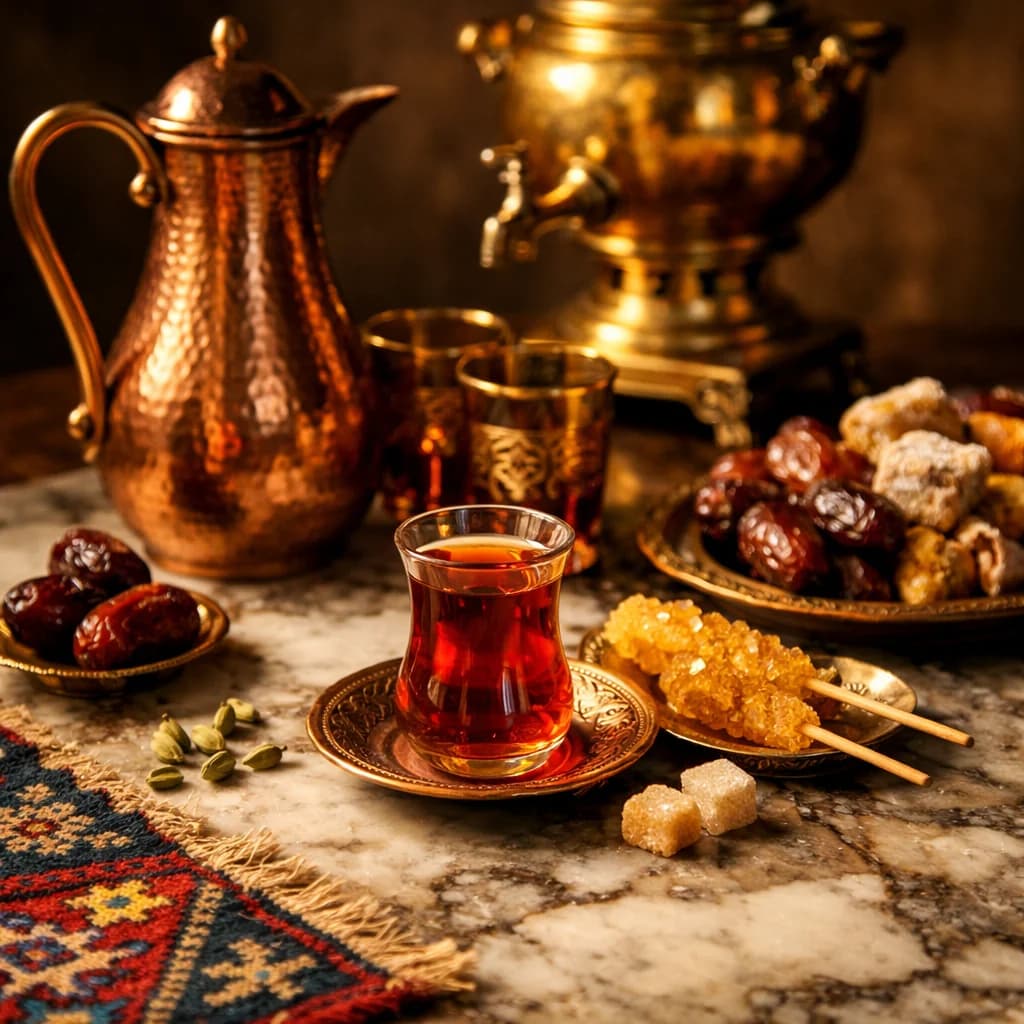
Chai (Persian Tea Service)

Chai (Persian Tea Service)

Tea is not merely a beverage in Iran—it is the very rhythm of daily life, the foundation of hospitality, and an art form unto itself. Persian tea service involves brewing strong black tea (traditionally in a two-tiered pot with a samovar) until it reaches a deep amber color, then diluting it to taste with hot water. Served in small, elegant glasses that showcase its jewel-like color, accompanied by rock sugar (nabat), sweets, and good conversation, Persian tea is offered to every guest and consumed throughout the day. The brewing method, the glassware, the accompaniments—all are integral to an experience that transcends simple tea-drinking.

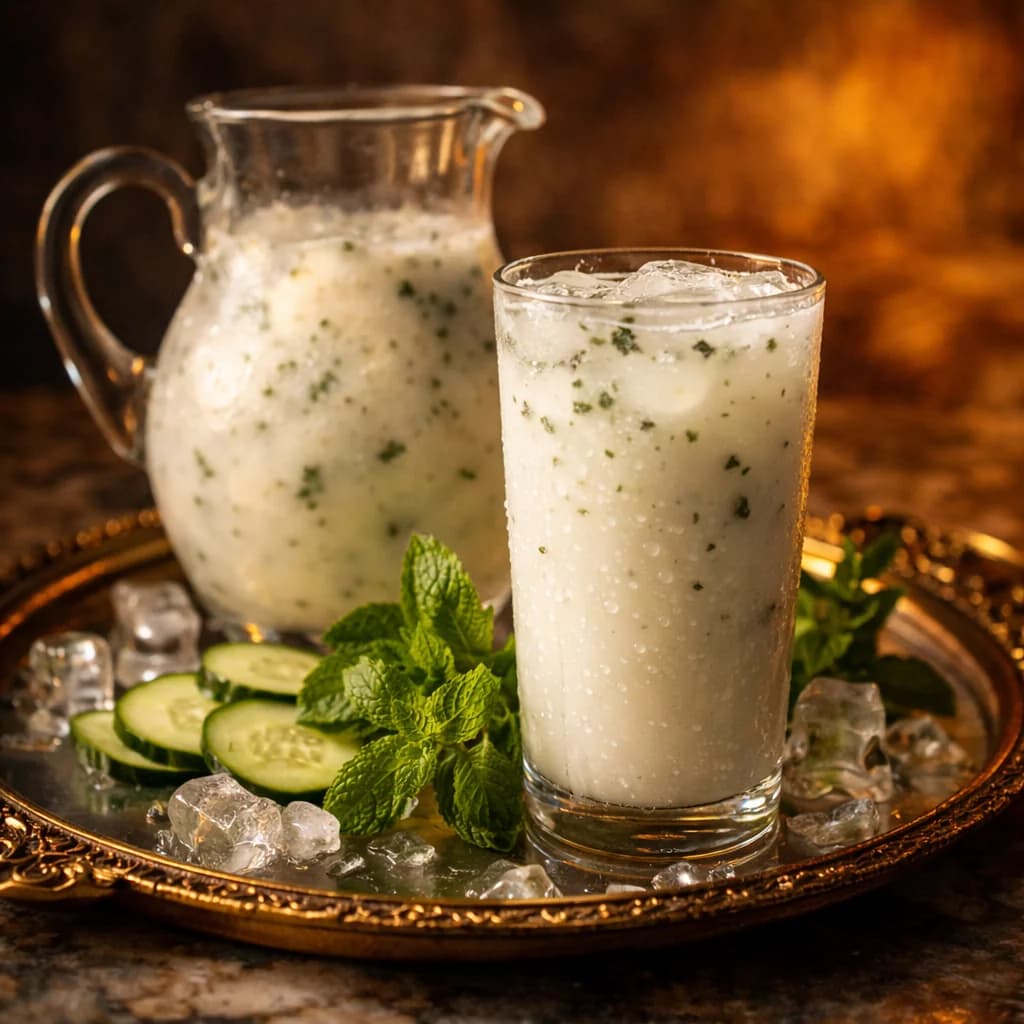
Doogh (Persian Yogurt Drink)

Doogh (Persian Yogurt Drink)

The quintessential Persian beverage—a refreshing, tangy, effervescent drink of yogurt, water, salt, and dried mint that accompanies nearly every Persian meal. Doogh is the perfect counterpoint to rich, flavorful Persian cuisine: its cool tanginess cuts through the richness of kebabs, its salt replenishes what's lost in summer heat, and its probiotics aid digestion. Whether homemade or from one of Iran's beloved commercial brands, doogh is as essential to the Persian table as bread itself. The slight fizz of traditionally fermented doogh or modern carbonated versions adds an extra dimension of refreshment.