
Eshkeneh (Persian Fenugreek Egg-Drop Soup)

Eshkeneh (Persian Fenugreek Egg-Drop Soup)

اشکنه

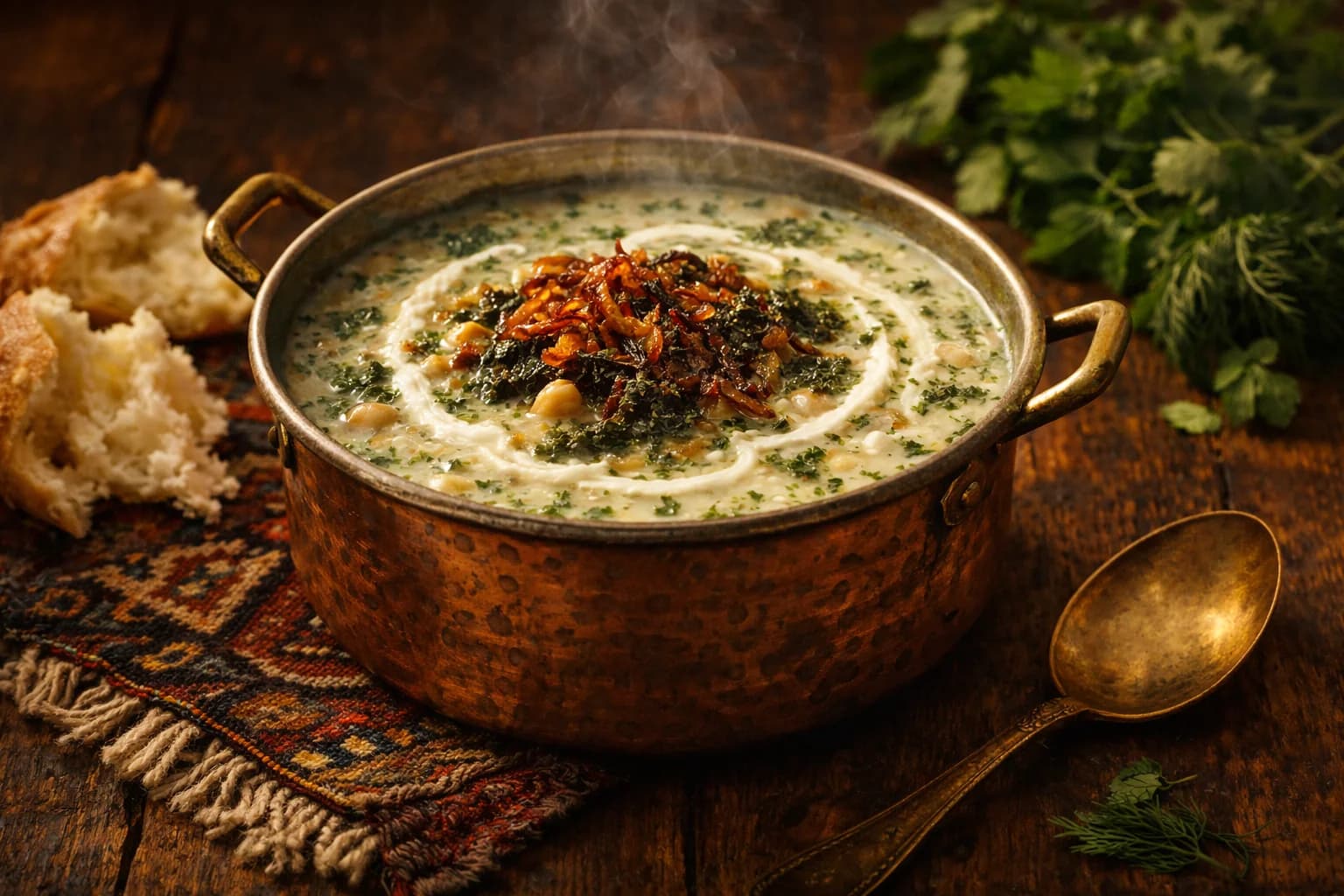
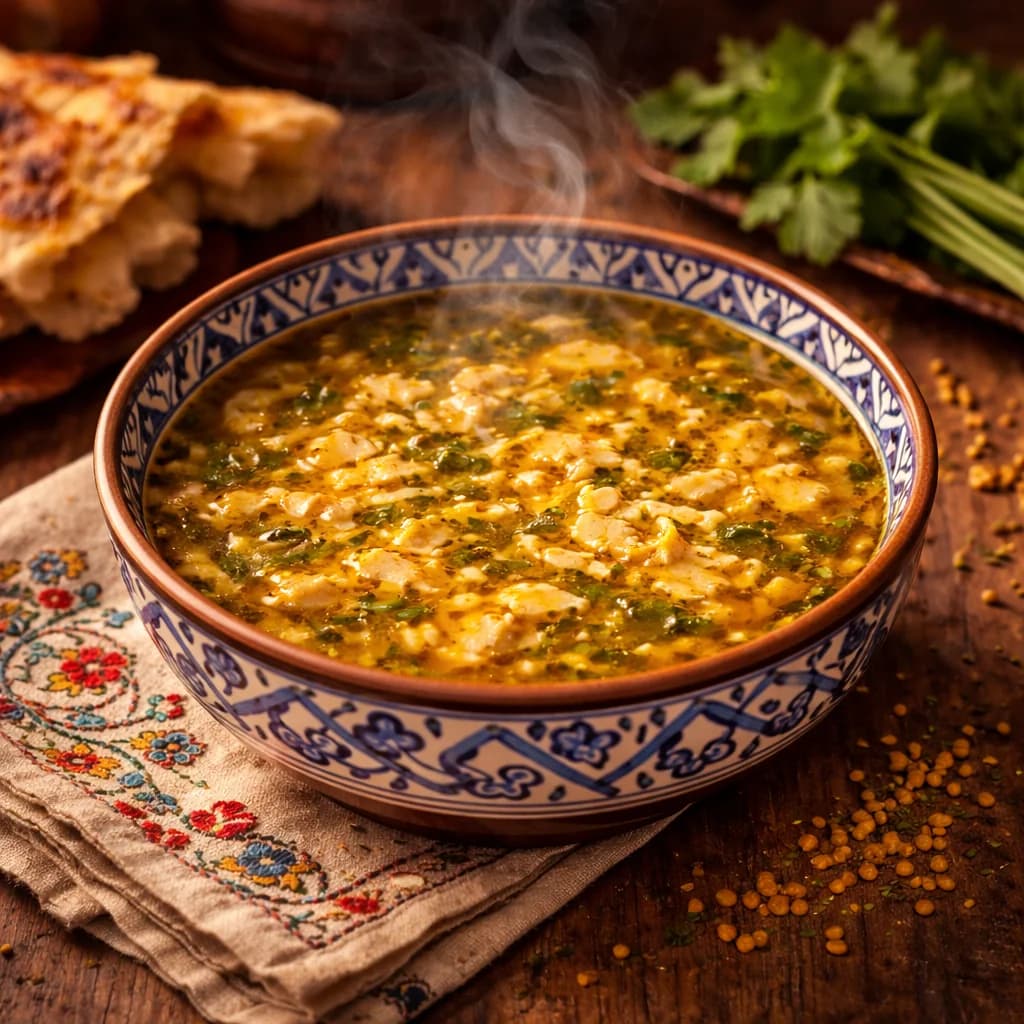
One of Persia's most ancient and humble soups—a simple, restorative broth flavored with fenugreek, enriched with eggs dropped into the simmering liquid. Quick to make and deeply comforting, eshkeneh was traditionally the food of the poor and the sick, requiring only pantry staples. The fenugreek gives it a distinctive slightly bitter, maple-like flavor that Iranians find deeply soothing. This is Persian penicillin at its most elemental.

soupPrep: 10 minCook: 25 mineasyServes 4

Cultural Note

Eshkeneh is one of the humblest dishes in Persian cuisine—historically the food of the poor, made when there was little else in the house. Yet it holds a special place in Iranian hearts as the ultimate comfort food. When someone is sick, tired, or needs nourishment without fuss, eshkeneh is what appears. The fenugreek flavor is distinctly Persian and deeply nostalgic for many Iranians. Some regions add walnuts or dried fruit; others keep it utterly simple. Its very simplicity is its virtue.

Critical Moments

  • Blooming fenugreek in hot fat
  • Adding eggs to barely simmering (not boiling) liquid
  • Not stirring after eggs are added
1
COOK11 min

Sauté onions and fenugreek

Heat oil or butter in a medium pot over medium heat. Add sliced onions and sauté until golden brown, about 8-10 minutes. Add garlic, dried fenugreek, turmeric, and dried mint. Stir for 1-2 minutes until very fragrant.

Golden onions coated in green fenugreek and yellow turmeric
Medium165°C / 325°F
SmellDistinctive fenugreek aroma—slightly bitter, maple-like; toasted mint
SoundSizzling

Critical Step

Blooming the fenugreek in hot fat releases its essential oils and transforms its flavor from raw and harsh to warm and complex. This is the flavor foundation of the soup.

If using fresh fenugreek, add it with the water instead—it doesn't need to be fried.
2
COOK12 min

Add flour (optional) and water

If using flour for a slightly thicker soup, sprinkle it over the onion mixture and stir for 1 minute. Add water, salt, and pepper. Bring to a boil, then reduce to a simmer. Cook for 10 minutes to develop flavor.

Golden broth with visible onions and fenugreek
MediumSimmer
SmellSavory fenugreek broth
SoundGentle bubbling
The flour is optional—traditional versions are often made without it. It adds slight body but isn't essential.
3
COOK5 min

Drop in the eggs

Reduce heat to low so the liquid is barely simmering. Crack each egg into a small cup, then gently slide it into the soup, spacing eggs apart. Cover and cook for 3-4 minutes for runny yolks, 5-6 minutes for set yolks.

Eggs floating with whites setting around still-soft yolks
LowBare simmer
SoundVery gentle bubbling
TouchWhites are set; yolks are soft or firm depending on preference

Critical Step

If the soup is boiling when you add the eggs, the whites will disperse into threads. A bare simmer keeps the eggs intact. The poached eggs are the heart of this soup.

Sliding eggs from a cup prevents them from breaking. Don't stir after adding eggs.

Common Mistakes

  • Soup too hot (eggs break apart)
  • Stirring after adding eggs (breaks yolks)
  • Overcooking (hard yolks lose their richness)
4
FINISH3 min

Season and serve

Taste the broth and adjust salt. Carefully ladle one egg with surrounding broth into each bowl. Drizzle with vinegar or lemon juice if desired. Sprinkle with chopped walnuts if using. Serve immediately with bread.
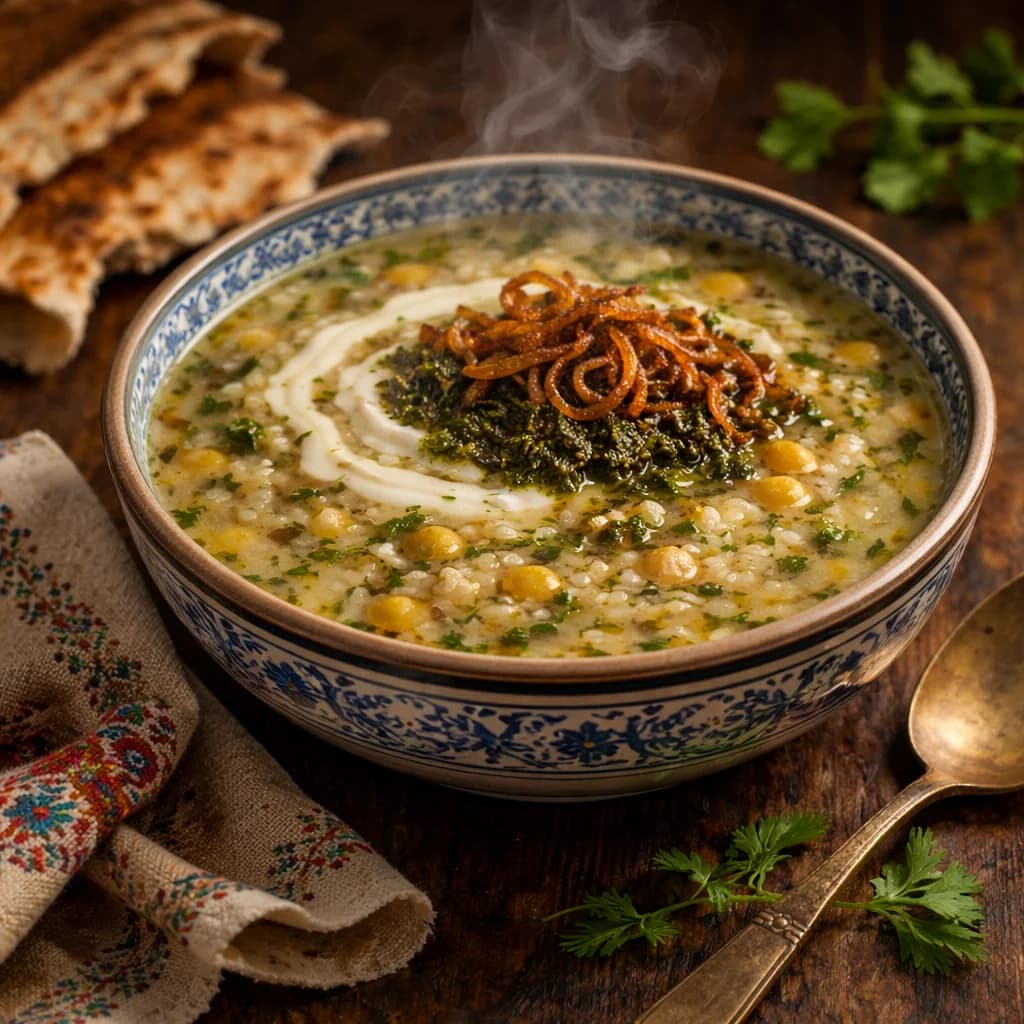
Golden broth with a poached egg nestled in each bowl
SmellWarm fenugreek, savory broth
TouchSilky broth; runny or set egg yolk
The vinegar is traditional and adds brightness that balances the fenugreek. Serve immediately—the eggs continue cooking in the hot broth.

Extras

Equipment

medium potstandard

Serve With

🍚Not served with rice

Sides

  • Fresh bread (essential for dipping)
  • Raw onion
  • Fresh herbs

Drinks

  • Black tea

Substitutions

dried fenugreekFresh fenugreek (30g) works—add with the water. In desperation, a tiny pinch of fenugreek seeds (very strong) or maple extract (not traditional but similar flavor profile).
eggsEssential—no substitute. Use the freshest eggs possible.
vinegarLemon juice, verjuice, or pomegranate molasses can substitute for the sour element.

Scaling

Doubles easily. Add one egg per person. This is deliberately simple—don't over-complicate it. The beauty is in its minimalism.

Source

Traditional · Ancient Persian home cooking

One of the oldest Persian soups, dating back centuries. Traditionally made during illness, poverty, or when pantries were bare. The name may derive from 'ashk' meaning teardrop, referring to the eggs. Regional variations exist throughout Iran.

Related Recipes