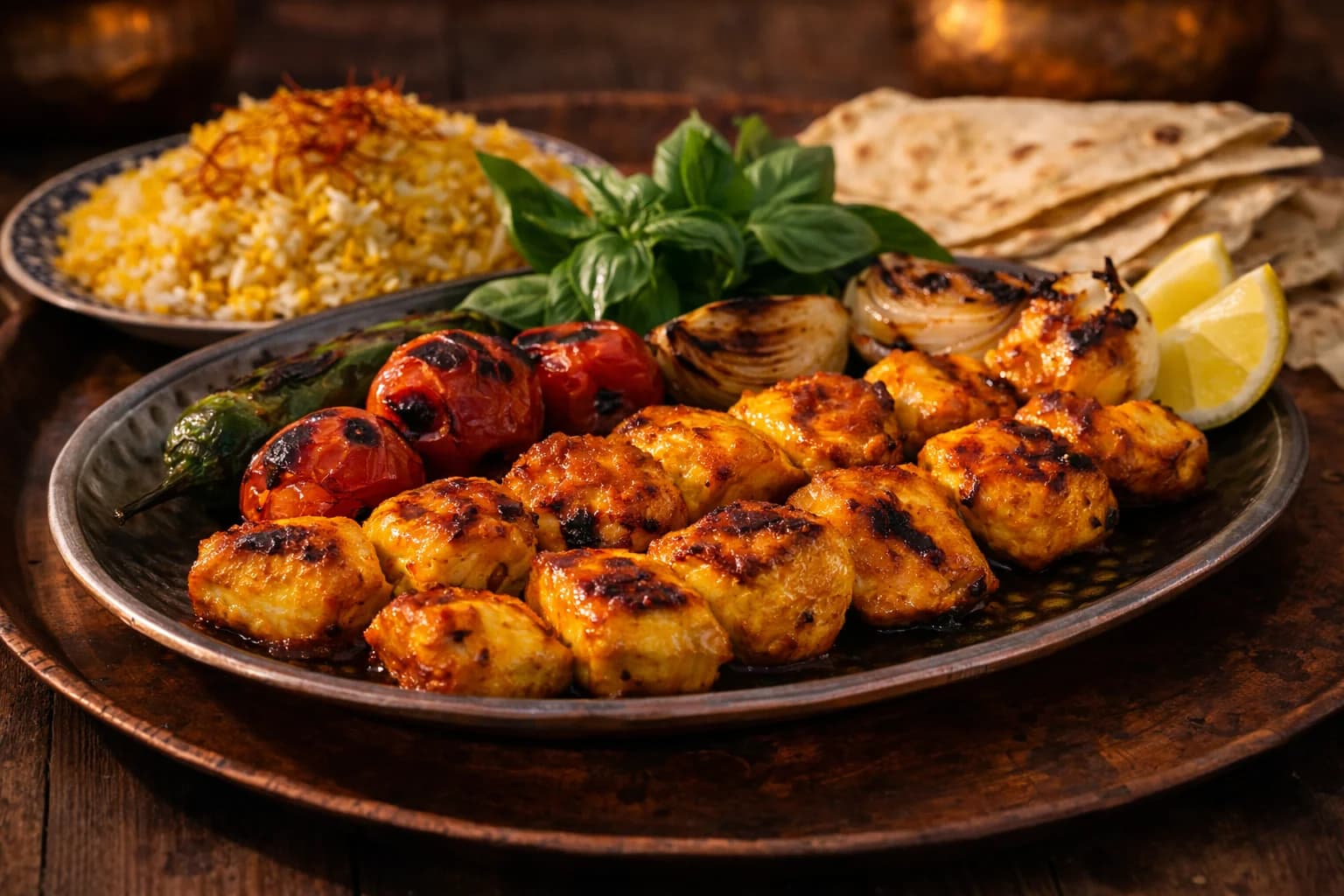
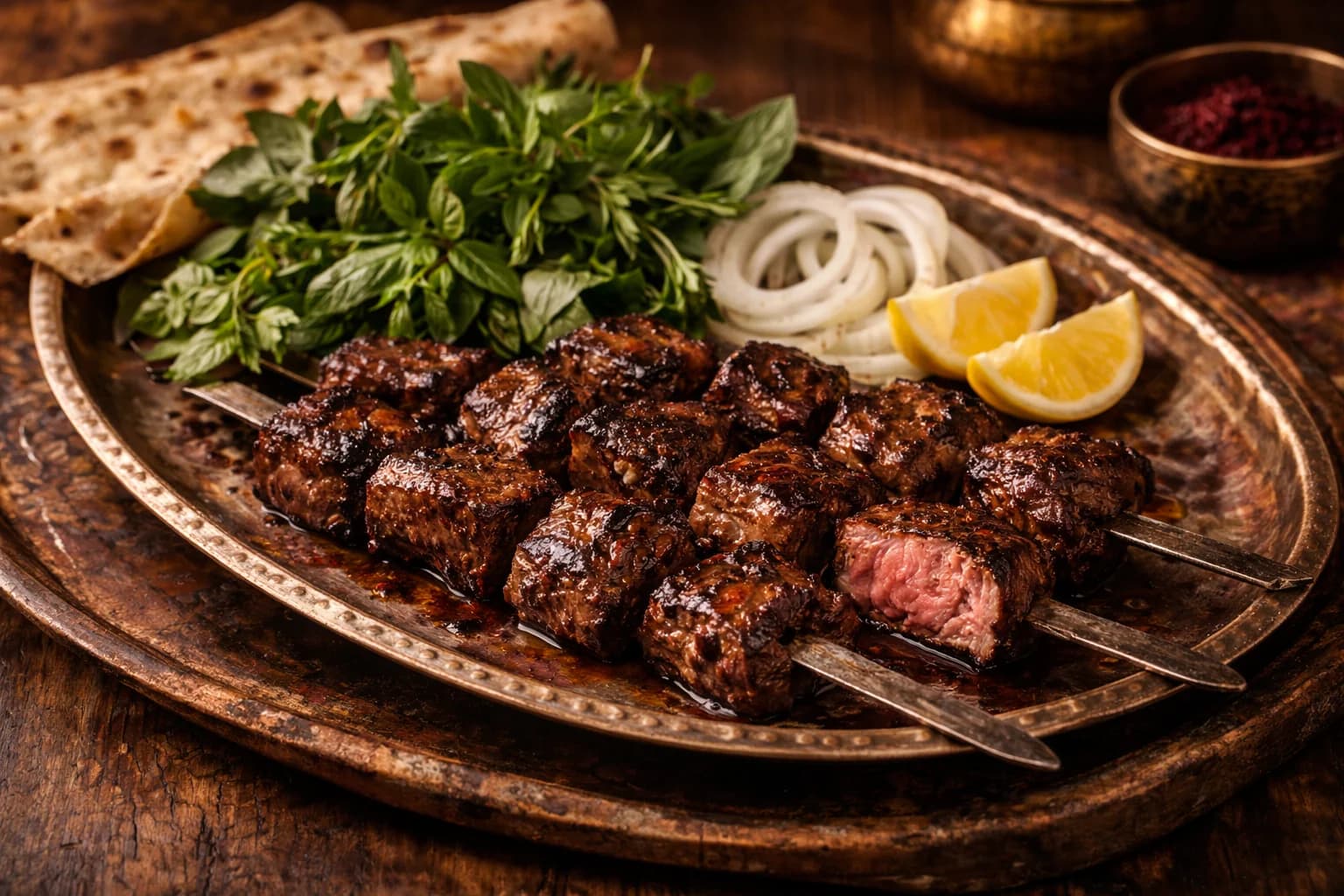
Jegar Kebab (Persian Liver Kebab)

Jegar Kebab (Persian Liver Kebab)

جگر کباب

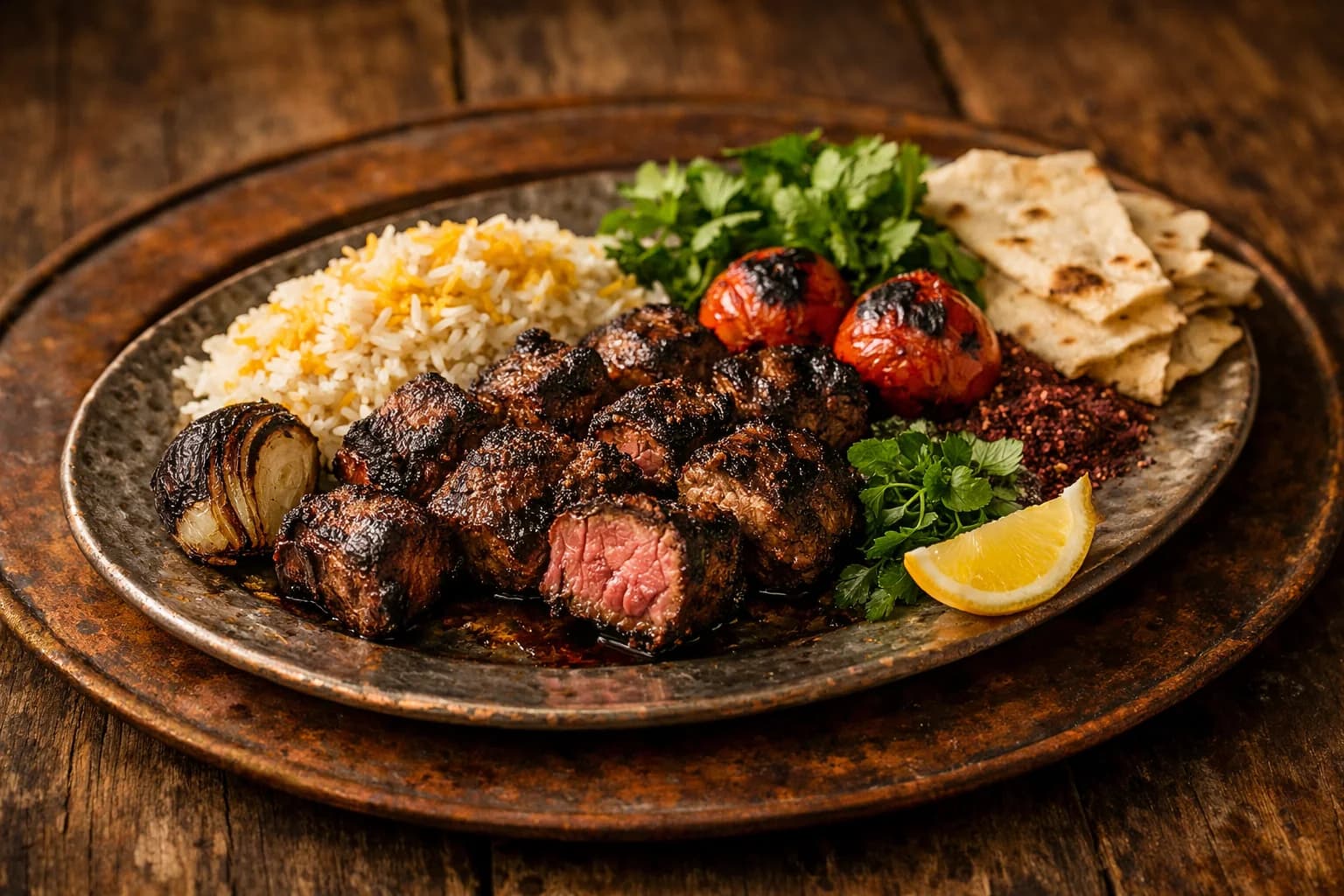
Tender cubes of lamb or calf liver marinated simply and grilled quickly over blazing coals—Iran's beloved street food and the ultimate kebab appetizer. When cooked properly, the exterior develops a slight char while the interior stays creamy and pink. Served with a mountain of fresh herbs, raw onion, and warm bread, jegar is a revelation for liver lovers and converts skeptics with its mild, almost sweet flavor.

kebabPrep: 20 minCook: 6 minintermediateServes 6

Cultural Note

Jegar kebab is quintessential Iranian street food, found sizzling at small stalls and restaurants across the country, especially in Tehran's Grand Bazaar. It's traditionally served as an appetizer—a few skewers to whet the appetite before the main kebabs arrive. The proper way to eat it: take a piece of warm bread, add liver, pile on fresh herbs (lots of basil!), raw onion, a squeeze of lemon, and a generous sprinkle of sumac. The combination of charred liver, cooling herbs, sharp onion, and tangy sumac is addictive. Lamb tail fat (dombeh) alternating with the liver is traditional—it bastes the liver as it melts and adds incredible richness.

Critical Moments

  • Very fresh liver, properly trimmed
  • Short marinating time (30 min - 1 hour maximum)
  • Salt added only just before grilling
  • Very hot grill
  • Very short cooking time (3-4 minutes total)
  • Served immediately—no resting
1
PREP15 min

Select and prepare the liver

Choose very fresh liver—it should be deep reddish-brown with no off odors. Using a sharp knife, remove the thin outer membrane by sliding the knife underneath and peeling it away. Cut out any visible tubes or tough connective tissue. Cut the liver into 2.5-3cm cubes.

Uniform cubes of deep reddish-brown liver, free of membrane and tubes
SmellFresh, clean, slightly metallic liver smell—no ammonia or strong odors
TouchLiver is firm and smooth, not mushy or sticky

Critical Step

Fresh liver is essential—old liver has a strong, unpleasant taste. Removing the membrane and tubes ensures tender, even-textured pieces. The membrane becomes tough and chewy when cooked.

Lamb liver is traditional and has the mildest flavor. Calf (veal) liver is excellent and widely available. Beef liver works but has stronger flavor. Avoid pork liver (not traditional).

Common Mistakes

  • Using old liver (strong, unpleasant flavor)
  • Not removing membrane (tough, chewy texture)
  • Cutting cubes too small (overcook instantly)
  • Cutting cubes too large (raw in center)
2
PREP5 min

Prepare lamb tail fat (if using)

If using lamb tail fat (dombeh), cut into 2cm cubes. The fat should be firm and white. This will be alternated with liver on the skewers.

White, firm fat cubes
SmellClean, slightly lamb-y
TouchFirm, waxy fat
Lamb tail fat is traditional and adds incredible richness. It's available at Middle Eastern butchers. If unavailable, the liver is still delicious without it. Don't substitute beef suet—it doesn't render the same way.
3
PREP5 min

Prepare the marinade

Grate the onion over a fine grater or use a food processor. Strain through a fine-mesh sieve, pressing to extract all juice. Discard the pulp—you only want the juice. Combine onion juice with olive oil and turmeric (if using).

Pale, slightly golden liquid from onion juice and oil
SmellPungent raw onion
TouchThin, watery liquid

Critical Step

Only the onion juice is used—the pulp would burn on the grill. The juice contains enzymes that help tenderize the liver and add flavor. Salt is NOT added now—it would draw out moisture and toughen the liver.

You need about 60ml of onion juice. Save the pulp for another use.
4
PREP3 min

Marinate the liver

Place liver cubes in a bowl and pour the onion juice marinade over them. Toss gently to coat. Cover and refrigerate for 30 minutes to 1 hour—no longer. Do not add salt yet.

Liver cubes coated in thin marinade
SmellOnion and liver
TouchMarinade coats surfaces

Critical Step

Short marinating only—liver becomes mushy if marinated too long. The onion juice tenderizes quickly. Salt is added only just before grilling to prevent moisture loss and toughening.

Unlike other kebabs, jegar needs only brief marinating. Don't exceed 1 hour.

Common Mistakes

  • Marinating too long (mushy texture)
  • Adding salt to marinade (toughens liver)
  • Using onion pulp (burns on grill)
5
PREP30 min

Prepare the grill

Light a charcoal grill and let coals burn until very hot—covered with white ash and glowing intensely. This kebab needs very high heat for quick cooking. Position grate close to coals (5-8cm).

Coals glowing bright orange-red under white ash; intense radiant heat
Hand test: 1-2 seconds maximum. Very hot.
SmellClean charcoal smoke
SoundStrong crackling

Critical Step

Very high heat is essential for liver—it must cook quickly to develop char while staying pink inside. Low heat results in gray, overcooked, rubbery liver.

This is the hottest you'll run your grill for any kebab. The cooking time is measured in seconds per side.
6
PREP5 min

Season and thread skewers

Just before grilling, season the marinated liver cubes with salt and pepper. Thread onto metal skewers, alternating with lamb tail fat cubes if using: fat, liver, fat, liver, etc. Leave small gaps between pieces. Don't compress the cubes.

Skewers with alternating liver and white fat cubes
SmellSeasoned liver

Critical Step

Salt is added only now, just before cooking. Salting earlier draws out moisture and toughens the delicate liver. The fat cubes will render during grilling, basting the liver.

Work quickly once salt is added—get the liver on the grill within minutes
7
COOK4 min

Grill the liver

Place skewers on the very hot grill. Cook for 1.5-2 minutes on the first side until charred. Flip and cook another 1.5-2 minutes. The liver should be charred on the outside but still pink and creamy inside. Total cooking time is 3-4 minutes maximum. The fat should be rendered and slightly charred.

Charred exterior, liver cubes feel slightly firm but still have give; fat is rendered and golden-brown; liver should be pink when cut
Direct high heat
SmellCharred liver and rendering fat—rich and appetizing
SoundActive sizzling; fat dripping onto coals
TouchExterior firm, interior still soft

Critical Step

This is the most critical step. Liver goes from perfect to overcooked in seconds. It should be slightly pink in the center—overcooked liver is grainy, dry, and strongly flavored. Err on the side of undercooking.

Cut into a piece to check—it should be pink inside. If still very raw in center, return for 30 seconds more. If gray throughout, it's overcooked.

Common Mistakes

  • Overcooking (grainy, dry, strong-flavored)
  • Heat too low (no char, gray exterior)
  • Cooking too long (the most common mistake)
  • Not checking doneness
Checkpoint: Cut into one cube—should be charred outside, pink/creamy inside
8
FINISH2 min

Serve immediately

Remove skewers from grill. Do not rest—liver is best served immediately. Slide the liver and fat off skewers onto warm lavash or sangak bread. Sprinkle very generously with sumac. Serve immediately with the pile of fresh herbs (basil, mint, tarragon), scallions, raw onion slices, radishes, and lemon wedges.

Charred liver and fat pieces on warm bread, covered in purple sumac; surrounded by mountains of fresh green herbs
SmellCharred liver, fresh herbs, tangy sumac
TouchExterior is charred and slightly crisp; interior is creamy and pink; fat is melted and rich

Critical Step

Liver must be eaten immediately—it continues cooking from residual heat and becomes overcooked if it sits. Unlike other meats, liver does not benefit from resting.

Serve with a heavy hand on the sumac—its tanginess cuts through the richness of the liver perfectly. The herbs are not garnish; they're essential to the eating experience.
9
FINISH

How to eat jegar kebab

Tear off a piece of warm bread. Add a piece of liver and fat. Top with fresh basil leaves, mint, raw onion, and a generous pinch of sumac. Squeeze lemon over everything. Wrap and eat. The combination of charred liver, cool herbs, sharp onion, and tangy sumac is the authentic experience.
Bread wrap filled with liver, green herbs, and purple sumac
Don't skip the herbs—especially the basil. The contrast between rich liver and fresh herbs is what makes this dish special. Radishes add a peppery crunch between bites.

Extras

Equipment

metal skewerscharcoal grillmixing bowlstandard

Serve With

🍚Not typically served with rice—this is an appetizer/snack, served with bread only

Sides

  • Fresh herbs—basil, mint, tarragon (essential)
  • Raw onion slices
  • Scallions
  • Radishes
  • Lemon wedges
  • Warm lavash or sangak bread (essential)

Drinks

  • Doogh
  • Black tea
  • Beer (if available—not traditional but pairs well)

Substitutions

lamb liverCalf (veal) liver is excellent and milder. Beef liver works but is stronger-flavored. Chicken livers are a different dish but work if that's what's available.
lamb tail fatTraditional but optional. Beef fat doesn't work the same way. Can skip entirely—the liver is still excellent without it. Some use bacon (not traditional but tasty).
sumacEssential—don't substitute. The tangy sumac is key to the flavor profile. In emergencies, extra lemon helps but isn't the same.
fresh basilPersian basil (rayhan) is ideal. Italian basil works. Thai basil in a pinch. Don't skip the basil—it's essential to the authentic taste.

Scaling

Scales easily. Liver cooks very quickly, so for large quantities, grill in batches to maintain proper heat. This kebab is traditionally served as an appetizer or shared starter, so portions are smaller than main-course kebabs.

Source

Traditional · Traditional street food

One of the most popular street foods in Iran, particularly in Tehran's bazaars and traditional neighborhoods. Often served as an appetizer before other kebabs or eaten alone with bread for a quick meal.

Related Recipes