
Kebab Koobideh (Persian Ground Meat Kebab)

Kebab Koobideh (Persian Ground Meat Kebab)

کباب کوبیده

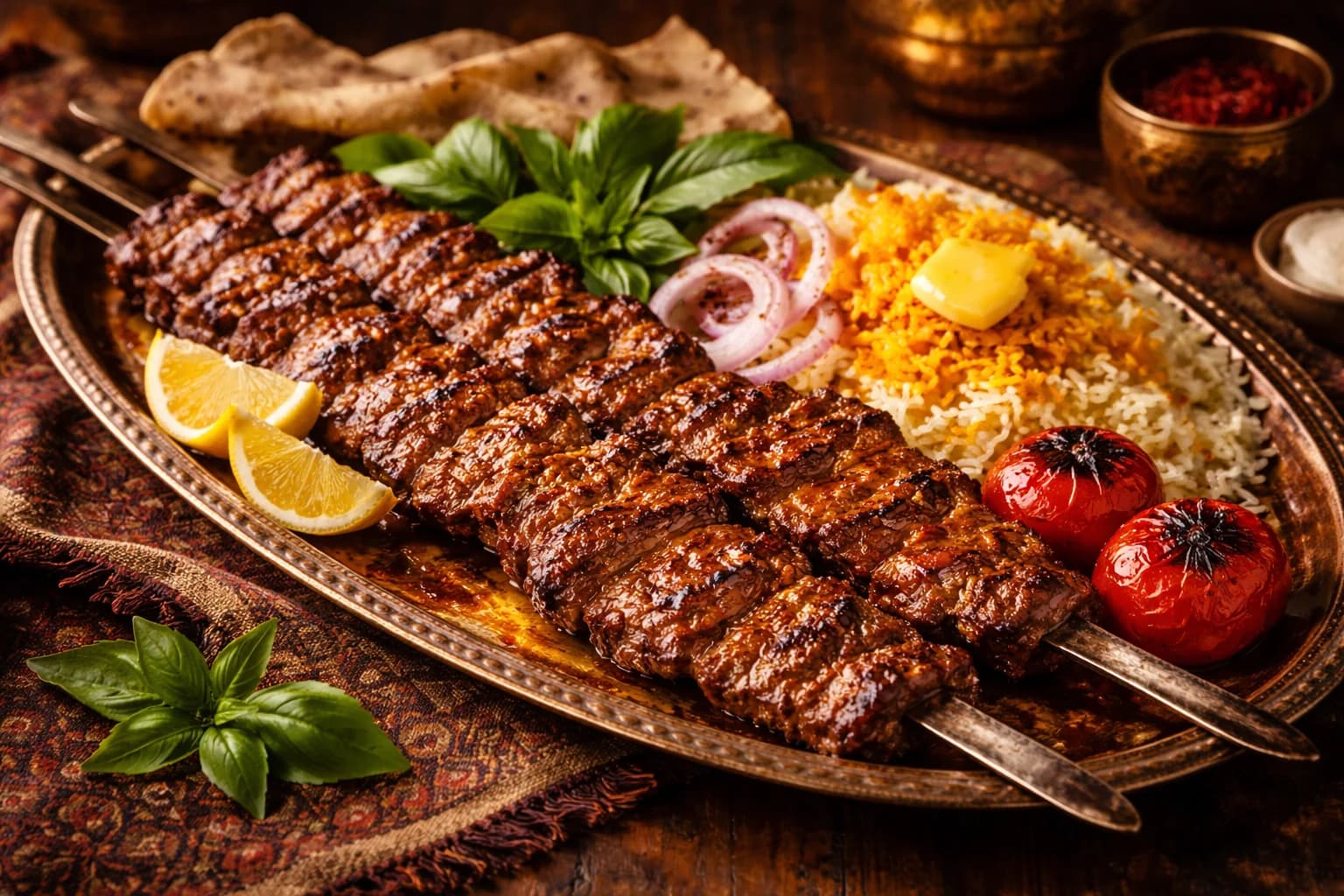
The king of Persian kebabs—luxuriously seasoned ground meat molded onto flat skewers and grilled over blazing coals until charred outside and impossibly juicy within. The name 'koobideh' comes from 'koobidan' (to pound), referring to the traditional method of tenderizing the meat. When done right, these kebabs are silky, richly flavored, and melt in your mouth. Served with fluffy saffron rice, grilled tomatoes, and raw onion, this is Iran's most beloved street food and restaurant dish.

kebabPrep: 30 minCook: 15 minintermediateServes 6

Cultural Note

Kebab koobideh is arguably Iran's national dish—found in every kebab house (chelow-kababi) from tiny roadside stalls to upscale restaurants. The proper way to eat it: lay a piece of lavash bread on your plate, place the kebab on top, and use the bread to slide the meat off the skewer. Wrap bites in bread with raw onion, grilled tomato, and a squeeze of sumac. The quality of a restaurant is often judged by its koobideh. Street vendors serve them tucked into bread as the ultimate fast food.

Critical Moments

  • Fresh ground meat with 20% fat
  • Onion squeezed completely dry
  • Kneading for 8-10 minutes until sticky and paste-like
  • Resting meat mixture at least 2 hours
  • Very hot grill
  • Proper shaping onto flat skewers with no air pockets
1
PREP15 min

Select and prepare the meat

For best results, start with whole cuts: lamb shoulder and beef chuck. Cut into chunks and grind at home using a meat grinder with a medium (6mm) plate. Grind twice for silkier texture. Alternatively, ask your butcher to grind fresh meat with 20% fat content. The meat should be very cold but not frozen.

Freshly ground meat with visible fat marbling; pink-red color indicating freshness
SmellFresh, clean meat smell—no off odors
SoundMeat grinder working smoothly
TouchCold meat, slightly tacky to touch

Critical Step

Fresh grinding is the single biggest factor in koobideh quality. Pre-ground meat from supermarkets is often too lean and too old, resulting in dry, crumbly kebabs. The fat content (20%) is essential for juiciness and for the meat to stick to the skewer.

If you don't have a grinder, ask a butcher to grind lamb shoulder and beef chuck fresh. Explain you're making kebab and need 20% fat. Many Middle Eastern butchers will do this gladly.

Common Mistakes

  • Using pre-ground meat (too dry, won't stick)
  • Meat too lean (crumbly, dry kebabs)
  • Meat not cold enough (fat smears, won't bind)
2
PREP5 min

Prepare the grated onion

Peel and grate the onion on the fine holes of a box grater. Place the grated onion in a fine-mesh strainer or cheesecloth and squeeze out as much liquid as possible—this is critical. You should extract at least 60ml of liquid. The onion should be almost dry.

Dry, pulpy onion paste; significant liquid removed
SmellStrong raw onion aroma
SoundLiquid dripping during squeezing
TouchOnion pulp is dry, not wet or drippy

Critical Step

Excess onion liquid is the number one cause of koobideh falling off skewers. The liquid prevents the meat proteins from binding properly. Thoroughly squeezing the onion is non-negotiable.

Save the onion juice—it's delicious in salad dressings or marinades. For the kebab, the onion must be DRY.

Common Mistakes

  • Not squeezing enough (meat won't stick to skewers)
  • Chopping instead of grating (uneven distribution)
  • Too much onion (overpowers meat flavor)
3
PREP3 min

Bloom the saffron

Grind saffron threads with a pinch of sugar using mortar and pestle. Add 2 tbsp hot water and steep for at least 20 minutes. This will be mixed with melted butter for basting.

Ruby-red liquid
SmellHoney-floral saffron aroma
4
PREP12 min

Combine and knead the meat mixture

In a large bowl, combine the ground meat, squeezed onion, salt, pepper, turmeric (if using), sumac (if using), and baking soda (if using). Mix thoroughly with your hands. Then begin kneading: fold the meat over itself, press down firmly, and repeat. Knead vigorously for 8-10 minutes until the mixture becomes smooth, sticky, and cohesive—almost paste-like.

Meat transforms from loose and granular to smooth, sticky, and paste-like. When you pull a portion, it should stretch slightly before breaking, not crumble.
SmellMeat with onion and spices blending
SoundSlapping/squelching sound as meat becomes sticky
TouchInitially loose and crumbly; after kneading: tacky, smooth, sticky, holds together firmly

Critical Step

Kneading develops the meat proteins (myosin) that act like glue, binding the mixture and allowing it to stick to skewers. Under-kneaded meat will fall off during grilling. This is the technique that gives koobideh its silky texture.

The meat should stick to your hand and require effort to shake off. If it's not sticky, keep kneading. Wet your hands occasionally with cold water to prevent sticking.

Common Mistakes

  • Under-kneading (meat falls off skewers)
  • Not mixing evenly (inconsistent texture)
  • Meat too warm (fat smears instead of binding)
5
PREP5 min

Rest the meat mixture

Cover the bowl with plastic wrap and refrigerate for at least 2 hours, preferably overnight. This resting period allows the proteins to further develop and makes the mixture easier to mold onto skewers.

Covered bowl in refrigerator
TouchAfter resting, meat is firmer and even stickier

Critical Step

Resting allows salt to further break down proteins and allows the mixture to firm up when cold. Cold meat is much easier to mold onto skewers and holds its shape better during grilling.

Overnight rest gives best results, but 2 hours minimum. Can rest up to 24 hours.
6
PREP3 min

Prepare the saffron butter

Melt the butter and mix with the bloomed saffron water. Keep warm for basting during grilling.

Golden-orange melted butter
SmellButter and saffron
TouchLiquid, not solidified
Keep the butter warm throughout grilling—it should be liquid for easy basting
7
PREP30 min

Prepare the grill

Light a charcoal grill and let coals burn until covered with white ash and glowing red—about 30 minutes. Spread coals in an even layer. The grill should be very hot. If using a gas grill, preheat on high for 15 minutes. Position grill grate 5-8cm above coals.

Coals covered in white ash, glowing red underneath; intense radiant heat
HighVery hot coals—you should only be able to hold your hand 15cm above the grate for 2 seconds
SmellClean charcoal smoke
SoundCrackling of hot coals

Critical Step

Koobideh requires intense heat to sear the outside quickly while keeping the inside juicy. Insufficient heat means the kebab steams instead of chars, resulting in gray, dry meat.

Charcoal is traditional and gives the best flavor. Hardwood charcoal (not briquettes) burns hotter and cleaner. Gas grills work but lack the smoky char.

Common Mistakes

  • Grill not hot enough (dry, gray kebabs)
  • Coals not ready (black spots = not ready)
  • Grate too far from coals (won't sear properly)
8
PREP15 min

Shape the kebabs onto skewers

Remove meat from refrigerator. Oil the flat metal skewers lightly. Take about 100-120g of meat mixture (roughly the size of a large egg) and form it into a ball. Press the ball onto the skewer, then mold it with wet hands into a long, flat oval shape about 20cm long, 3cm wide, and 1.5cm thick. The meat should have slight ridges from your fingers. Ensure the meat adheres firmly to the skewer with no air pockets.

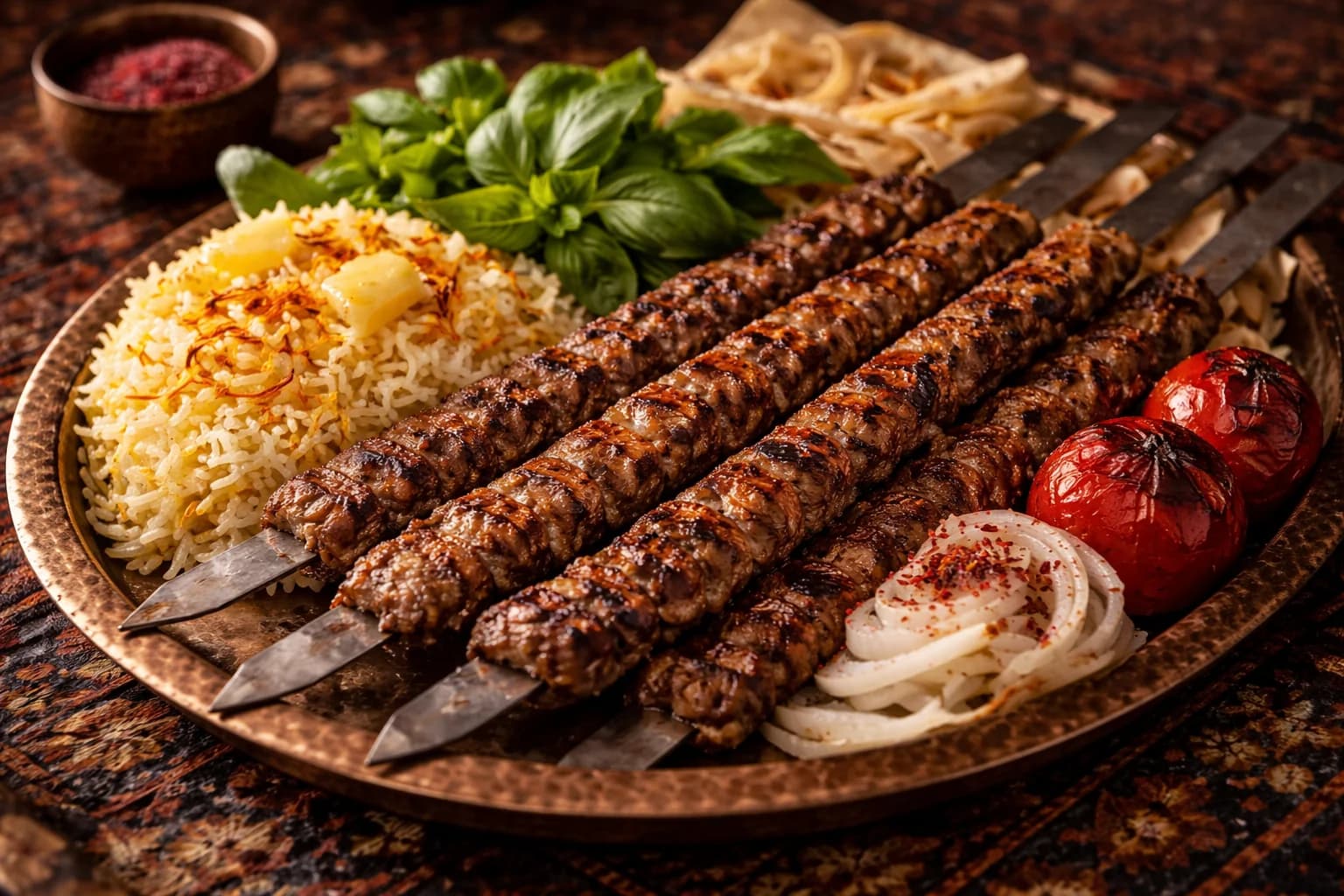
Long, flat oval kebabs with finger ridges, firmly attached to flat skewers; uniform thickness
TouchMeat feels firmly attached to skewer; no looseness when you gently shake

Critical Step

Proper shaping ensures even cooking and prevents falling. Flat skewers (not round) are essential—round skewers cause the meat to spin. Uniform thickness ensures even cooking. Air pockets cause the kebab to fall.

Keep a bowl of cold water nearby to wet your hands frequently—this prevents sticking and helps create a smooth surface. Work quickly while meat is still cold.

Common Mistakes

  • Using round skewers (meat spins)
  • Shaping too thick (won't cook through)
  • Air pockets between meat and skewer (falls off)
  • Meat too warm when shaping (falls apart)
9
COOK8 min

Grill the kebabs

Place skewers on the hot grill, suspended with the ends resting on the grill edges or on bricks so the kebabs hang over the coals without touching the grate. Grill for 3-4 minutes on the first side until charred and the meat releases from any contact points. Flip carefully using the skewer handles. Grill another 3-4 minutes on the second side.

Charred exterior with grill marks; meat pulling away from grate when ready to flip; juices visible on surface; no pink visible on exterior
HighDirect high heat over hot coals
SmellIntoxicating smell of grilling meat with char
SoundActive sizzling and fat dripping onto coals
TouchMeat feels firm when pressed but not hard

Critical Step

High heat sears the outside quickly, locking in juices. The kebab should char but not dry out. Timing depends on heat intensity—watch the kebab, not just the clock.

Traditional Persian kebab grills have notches to suspend skewers above coals. At home, use bricks or the grill edges. The kebab should hang freely, cooking by radiant heat, not direct contact.

Common Mistakes

  • Flipping too early (meat sticks, tears)
  • Heat too low (no char, dry meat)
  • Kebab touching grate directly (sticks, uneven cooking)
  • Overcooking (dry, tough)
10
COOK2 min

Baste with saffron butter

After flipping, brush the cooked side generously with saffron butter. Just before removing from grill, brush the other side. The butter should sizzle and create a glossy, golden coating.

Glossy, golden-orange coating; butter sizzling on contact
SmellButter and saffron hitting hot meat—intoxicating
SoundSizzle as butter hits hot kebab
Don't baste too early or the butter will burn. Baste just before and after the final flip for best results.
11
COOK6 min

Grill the tomatoes

Place tomato halves cut-side down on the grill. Grill for 3-4 minutes until charred and slightly softened but still holding shape. Flip and grill another 2 minutes. Season with salt.

Charred marks on cut side; tomato softened but not falling apart
HighSame hot grill as kebabs
SmellCharred tomato—sweet and smoky
SoundSizzling
TouchSoft but holding shape
Grill tomatoes while kebabs rest or use a cooler part of the grill
12
FINISH3 min

Rest briefly and serve

Remove kebabs from grill and let rest for 1-2 minutes. To serve: place a piece of lavash bread on each plate, lay the skewer on top. Use the bread to grip the kebab while sliding the skewer out—the bread catches all the juices. Serve immediately with grilled tomatoes, raw onion sprinkled with sumac, and chelow (saffron rice).

Charred, glistening kebabs on lavash bread; grilled tomatoes; raw onion with purple sumac
SmellSmoky, meaty, saffron perfume
TouchExterior is charred and slightly crispy; interior is juicy and almost silky
The traditional presentation: kebab on bread, grilled tomato alongside, raw onion with sumac. The bread absorbs the juices and becomes part of the meal. Eat by wrapping bites in bread.

Resting Required

2 min - Brief rest allows juices to redistribute; longer rest not needed for ground meat
Extras

Equipment

flat metal skewerscharcoal grillmixing bowlmeat grinderstandard

Make Ahead

  • Meat mixture can be made 24 hours ahead and refrigerated—flavors improve.
  • Can be shaped onto skewers 2-3 hours ahead, kept refrigerated until grilling.
  • Do not freeze shaped kebabs (texture suffers).

Best fresh off the grill.

Leftover kebabs can be reheated briefly on a hot pan or in a hot oven, but will lose some juiciness.

Serve With

🍚Chelow (essential), Zereshk polo, Baghali polo

Sides

  • Grilled tomatoes
  • Raw white onion with sumac
  • Sabzi khordan
  • Mast-o-khiar
  • Torshi
  • Fresh lavash or sangak bread

Drinks

  • Doogh (essential)
  • Black tea
  • Cola (popular in Iran)

Substitutions

lambAll beef (chuck with 20% fat) works well. All lamb is most traditional. Avoid veal or pork (not traditional and different texture).
flat skewersEssential for koobideh. If unavailable, make kabob tabei (patties) instead. Round skewers will not work—meat spins.
charcoal grillGas grill works but lacks smoky flavor. Broiler is acceptable indoor method. Avoid pan-cooking on skewers.
sumacCan omit from the meat, but essential for sprinkling on raw onion accompaniment.

Scaling

Scales easily—each skewer uses about 100-120g of meat mixture. For large gatherings, prepare the meat mixture in batches to ensure proper kneading. The mixture can be made ahead and refrigerated. Grill in batches as needed.

Source

Traditional · Traditional Persian cuisine

The most iconic Persian kebab, found in every kebab house across Iran. Techniques vary by region and family, but the fundamentals remain constant: quality meat, proper fat ratio, thorough kneading, and high-heat grilling.

Related Recipes