
Critical Moments
- •Using brown/green lentils (not red/yellow)
- •Monitoring liquid level—lentils absorb a lot
- •Cooking lentils until completely tender (no chalkiness)
Prepare the lentils
Spread lentils on a plate and pick through to remove any small stones or debris. Rinse thoroughly under cold water until water runs clear. Do not soak—brown and green lentils cook well without soaking and hold their shape better.
Common Mistakes
- •Using red/yellow lentils (dissolve into mush)
- •Not picking through for stones (can crack a tooth)
- •Pre-soaking (unnecessary and makes lentils too soft)
Brown the onions
Heat oil in a large heavy pot over medium-high heat. Add diced onions and cook until deep golden brown, about 12-15 minutes, stirring occasionally.
Add spices and brown the meat (if using)
Add turmeric, cumin, coriander (if using), and cinnamon (if using). Stir for 30 seconds until fragrant. If using meat, increase heat to high, add cubes, and brown on at least two sides, about 6-8 minutes. If making vegetarian, skip to next step after toasting spices.
Build the tomato base
Reduce heat to medium. Add tomato paste and stir constantly for 2 minutes until darkened. Add grated tomatoes and cook for another 3 minutes until broken down and thick.
Critical Step
Cooking the tomato paste removes raw, metallic flavors. This step is especially important in lentil stew where the sauce needs to complement rather than compete with the earthy lentil flavor.
Add lentils, liquid, and dried limes
Add rinsed lentils and stir to coat with the tomato mixture. Add water or stock, salt, and pepper. Pierce each dried lime 3-4 times and add to the pot. Bring to a boil, then reduce heat to low. Cover and simmer.
Simmer until lentils and meat are tender
Simmer covered for 50-60 minutes if using meat, or 35-40 minutes if vegetarian. Stir every 15 minutes, checking liquid level and adding more water (about 100ml at a time) if stew becomes too thick before lentils are tender.
Critical Step
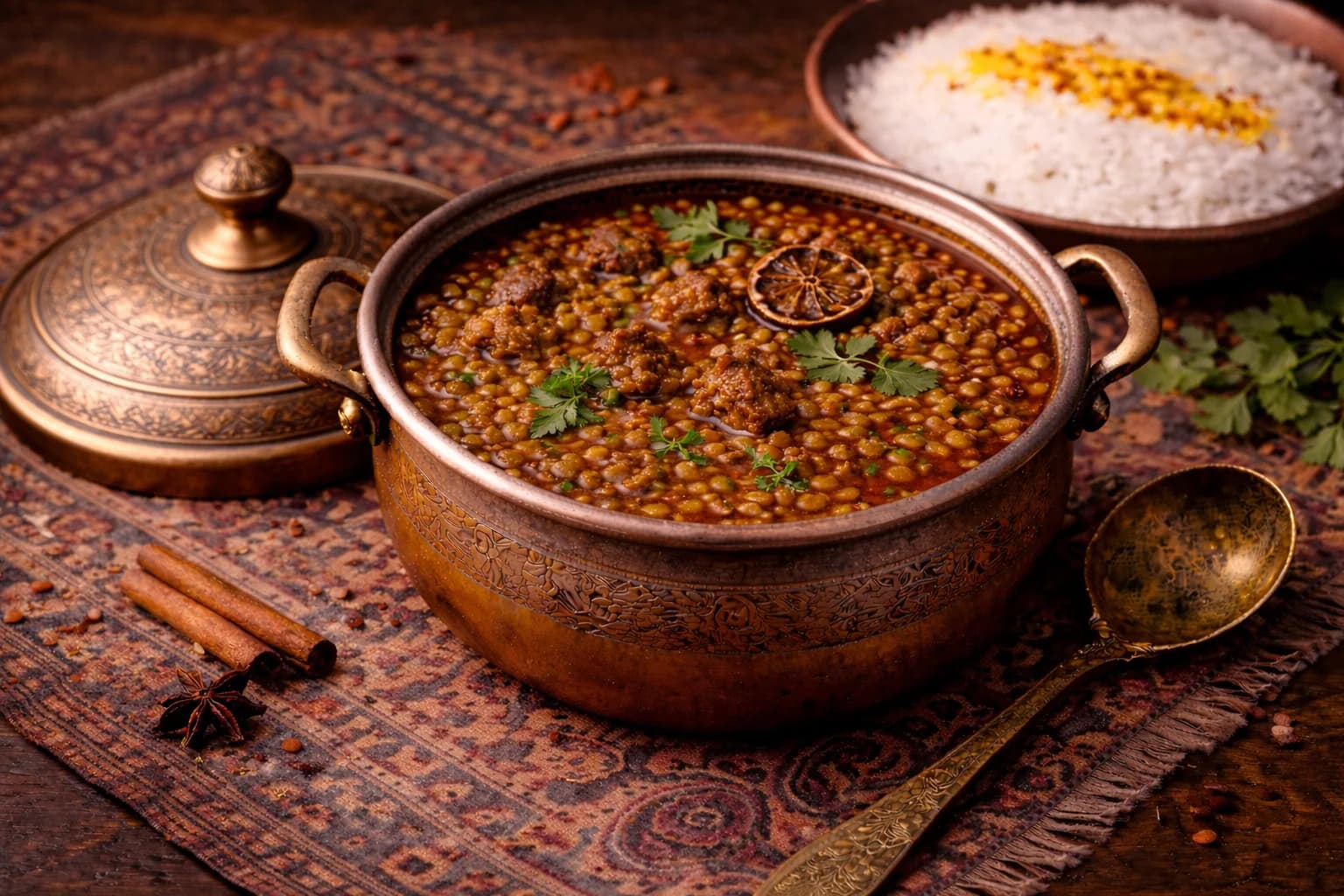
Lentils need to be completely tender—not chalky or firm in the center. They should be soft throughout but not all dissolved into mush. The ideal texture is a mix: some lentils intact for texture, others broken down to thicken the sauce naturally.
Common Mistakes
- •Not stirring (lentils stick to bottom and burn)
- •Letting it get too dry (lentils on top don't cook evenly)
- •Undercooking lentils (chalky, unpleasant texture)
Adjust consistency and seasoning
The stew should be thick and hearty but not dry—add water if too thick, or simmer uncovered for 5-10 minutes if too thin. Add lemon juice and stir. Taste and adjust salt, pepper, and sourness. The tang from dried limes and lemon should be noticeable.
Common Mistakes
- •Too thin (should be hearty and thick)
- •Under-seasoning (lentils need good salt)
- •Forgetting the lemon juice (brightens the earthy flavors)
Rest and serve
Remove from heat, cover, and let rest for 10 minutes. The stew will thicken slightly as it rests. Transfer to a serving dish and garnish with fresh parsley or cilantro if desired. Serve hot over chelow with tahdig.
Resting Required
10 min - Allows stew to thicken to ideal consistency and flavors to harmonize