
Critical Moments
- •Drying herbs thoroughly before chopping
- •Frying herbs until dark green (15-20 min)
- •Simmering meat/beans 3 hrs BEFORE adding herbs and limes
- •Adding fried herbs, dried limes, and tomato paste for final 2 hrs
Soak the beans
If using dried kidney beans, place them in a large bowl and cover with cold water by at least 8cm. Soak for 8-12 hours or overnight. Drain and rinse before using.
Wash and dry the herbs
Wash all fresh herbs thoroughly in several changes of cold water to remove all grit. Spin dry in a salad spinner or spread on clean kitchen towels and pat completely dry. Herbs must be very dry before chopping.
Critical Step
Wet herbs will steam instead of fry, resulting in a bitter, muddy-colored stew instead of the characteristic deep green. This is the most common mistake in ghormeh sabzi.
Common Mistakes
- •Not drying herbs thoroughly (causes steaming)
- •Using wilted or yellow herbs
- •Including thick parsley stems
Finely chop all herbs
Using a sharp knife or mezzaluna, finely chop the parsley, cilantro, chives, and fenugreek. Aim for pieces about 3-4mm—not minced to a paste, but fine enough to create a cohesive stew. Keep herbs separate for now.
Common Mistakes
- •Chopping too fine (becomes paste)
- •Leaving pieces too large (won't integrate into stew)
- •Using a dull knife (bruises herbs)
Fry the herbs
Heat 80ml oil in a large skillet over medium heat. Add all chopped herbs and fry, stirring frequently, for 15-20 minutes. The herbs will first release moisture, then begin to darken and reduce significantly in volume.
Critical Step
Proper frying of herbs is what distinguishes restaurant-quality ghormeh sabzi from amateur attempts. Under-fried herbs taste grassy and bitter; properly fried herbs develop deep, complex flavors.
Common Mistakes
- •Heat too high (burns herbs)
- •Not stirring enough (uneven cooking)
- •Stopping too early (herbs still bright green)
- •Adding herbs when oil isn't hot (herbs absorb too much oil)
- •Adding fried herbs at start of simmer (overcooks them)
Brown the onions
In a large heavy-bottomed pot, heat remaining 40ml oil over medium-high heat. Add diced onions and cook, stirring occasionally, until deep golden brown, about 12-15 minutes.
Brown the meat
Push onions to the side and increase heat to high. Add meat cubes in a single layer (work in batches if needed). Let meat sear undisturbed for 2-3 minutes per side until deeply browned on at least two sides.
Critical Step
Browning develops fond and deep flavor base essential for stew complexity
Common Mistakes
- •Moving meat too soon (doesn't develop crust)
- •Overcrowding pot (meat steams)
- •Skipping this step (less flavor development)
Add spices and build the base
Reduce heat to medium. Add turmeric and stir for 30 seconds until fragrant. Add water or stock, scraping up any browned bits from the bottom of the pot. Add half the salt (¾ tsp) and the pepper—final salt adjustment comes at the end.
Add beans
Add the soaked and drained kidney beans to the pot. Stir to combine with the meat and liquid.
Main simmer
Bring to a boil, then immediately reduce heat to low. Cover and simmer gently for 3 hours, stirring occasionally, until meat is completely tender and beans are nearly done.
Critical Step
This long simmer develops depth and tenderizes meat properly. Rushing results in tough meat. Do NOT add herbs or limes yet—they come in the next phase.
Add herbs, limes, and tomato paste
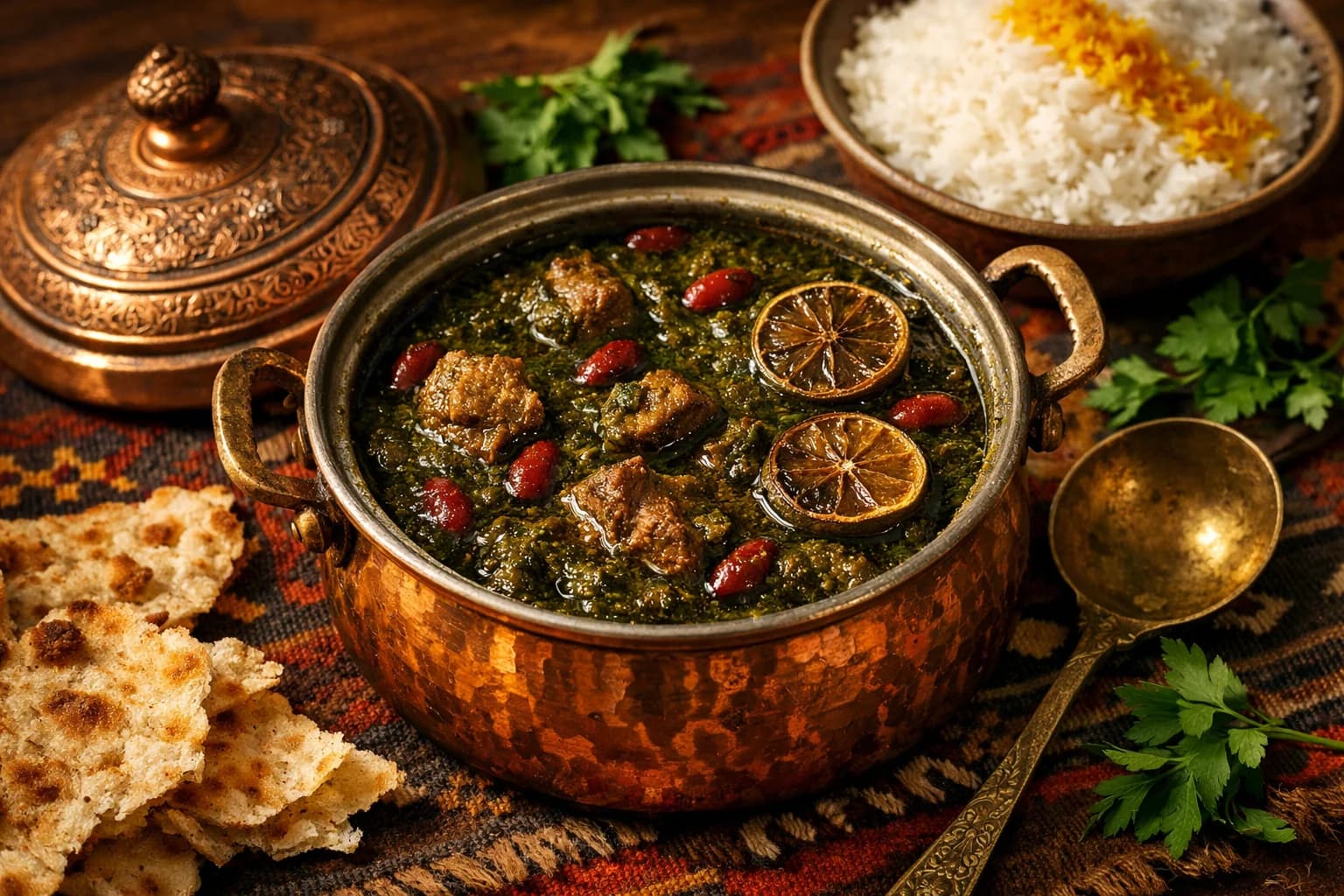
Pierce each dried lime 3-4 times with a sharp knife (or crush one open for more intense sourness). Add the fried herb mixture, pierced dried limes, and 1 tablespoon tomato paste to the pot. Stir to combine. Continue simmering, covered, for 2 hours more.
Critical Step
Adding herbs and limes in the final 2 hours allows their flavors to meld without overcooking. The tomato paste adds depth and slight sweetness to balance the tang.
Common Mistakes
- •Forgetting to pierce limes (flavor won't release)
- •Using fresh lime juice instead (completely different flavor profile)
Adjust seasoning and rest
Taste the stew and adjust salt, pepper, and sourness (add another pierced dried lime or a squeeze of fresh lime if needed). Remove from heat and let rest, covered, for 10 minutes before serving.
Serve
Serve hot over chelow (Persian steamed rice) with tahdig on the side. Traditionally served family-style with the stew in a central dish and rice alongside.
Resting Required
10 min - Allows flavors to settle and oil to rise to surface for proper presentation