
Critical Moments
- •Peeling cardoons thoroughly to remove all strings
- •Keeping cut cardoons in acidulated water to prevent browning
- •Adding fresh mint at the end for brightness
Bloom the saffron
If using saffron, grind threads with a pinch of sugar using a mortar and pestle. Transfer to a small bowl, add 3 tbsp hot (not boiling) water, cover, and steep for at least 20 minutes.
Prepare acidulated water
Fill a large bowl with cold water and add the juice of 1 lemon. This acidulated water prevents cardoons from browning once cut.
Trim and prepare the cardoons
Working with one stalk at a time: Remove any leaves. Using a vegetable peeler or paring knife, peel the stringy outer layer from each stalk (like peeling celery, but more thoroughly). Cut into 5cm pieces and immediately drop into the acidulated water. Repeat with all stalks. The cardoons will wait in the water while you prepare other ingredients.
Critical Step
Cardoons have tough, fibrous strings on the outer surface that become unpleasant when cooked. Thorough peeling is essential. The acidulated water prevents browning—brown cardoons look unappetizing and can taste bitter.
Common Mistakes
- •Not peeling thoroughly (stringy, tough texture)
- •Letting cut pieces sit without acid (turn brown)
- •Cutting pieces too small (fall apart during cooking)
Blanch the cardoons (optional but recommended)
Bring a pot of salted water to boil. Drain cardoons from acidulated water and blanch for 8-10 minutes until slightly tender but still firm. Drain and set aside. This step reduces bitterness and ensures even cooking.
Common Mistakes
- •Over-blanching (cardoons become mushy)
- •Under-blanching (remain bitter and tough)
Chop the herbs
Finely chop the mint and parsley. If using dried mint, set aside—it will be added differently.
Brown the onions
Heat oil in a large heavy pot over medium-high heat. Add diced onion and cook until golden brown, about 10-12 minutes, stirring occasionally.
Add turmeric and brown the meat
Add turmeric and stir for 30 seconds. Increase heat to high, add meat cubes, and brown well on at least two sides, about 6-8 minutes total.
Add liquid and dried limes
Add water or stock, salt, and pepper. Pierce each dried lime 3-4 times with a knife and add to the pot. Bring to a boil, then reduce heat to low. Cover and simmer for 1.5 hours until meat is very tender.
Add cardoons and herbs
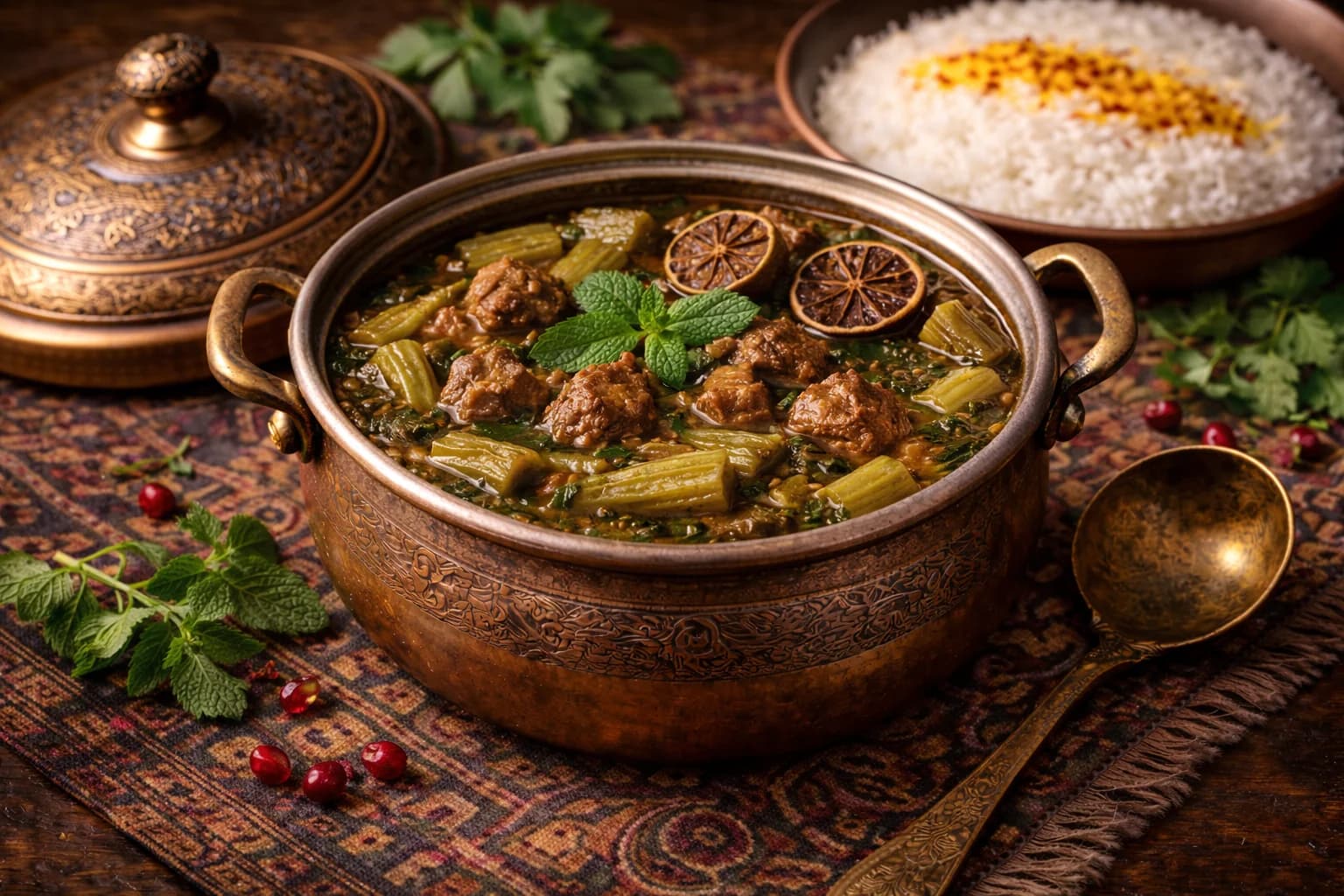
Add blanched cardoons (or artichoke hearts if substituting) to the pot. Add chopped parsley and half the mint (reserve rest for finishing). If using dried mint, add 1 tbsp now. Stir gently to combine. Cover and simmer for another 30-35 minutes.
Add saffron and remaining mint, adjust seasoning
Stir in bloomed saffron (if using), remaining fresh mint, and juice of the second lemon. Taste and adjust salt, pepper, and sourness. The stew should be notably tangy and aromatic with mint. If too sour, add the optional sugar. Remove from heat, cover, and let rest for 10 minutes.
Critical Step
The fresh mint added at the end provides brightness that cooking would diminish. This final addition is what gives the stew its characteristic fresh, springlike character.
Common Mistakes
- •Adding all mint at beginning (loses freshness)
- •Under-seasoning with lemon (missing the bright tang)
- •Over-reducing sauce (should be light)
Serve
Transfer to a serving dish. The stew should be lighter in color and brothier than most khoresh. Serve hot over chelow with tahdig. Dried limes can be left in or removed.
Resting Required
10 min - Allows flavors to harmonize and mint to infuse