
Moraba-ye Albaloo (Persian Sour Cherry Preserve)

Moraba-ye Albaloo (Persian Sour Cherry Preserve)

مربای آلبالو

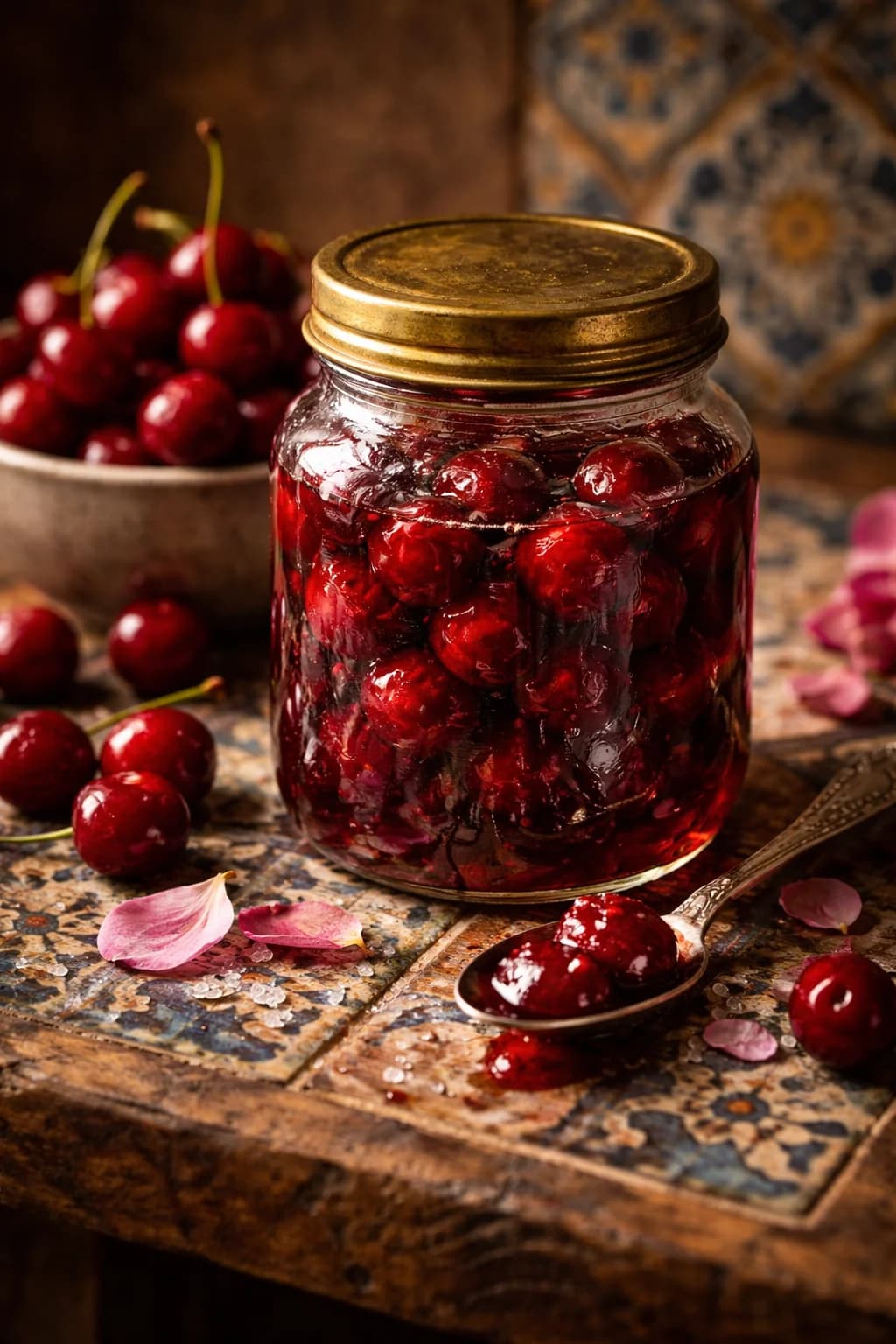
Jewel-like whole sour cherries suspended in a garnet-red syrup, delicately perfumed with cardamom and a whisper of rosewater—moraba-ye albaloo is summer captured in a jar. Unlike the syrup (sharbat) that uses cherry juice, this preserve keeps the cherries whole and plump, each one a burst of sweet-tart intensity. The brief sour cherry season in early summer is a time of frenzied preserving, as families transform the fleeting fruit into jars of ruby treasure to enjoy year-round. Spooned over bread at breakfast or used to crown rice puddings and ice cream, moraba-ye albaloo is one of Persia's most beloved preserves.

jamPrep: 60 minCook: 60 mineasyServes 40

Cultural Note

Sour cherries (albaloo) are among the most beloved fruits in Persian cuisine, treasured for their intense tart-sweet flavor that's completely different from sweet cherries. The brief season—usually just a few weeks in early summer—creates a frenzy of activity as families buy cases of cherries for preserving. The whole fruit preserve (moraba) is distinct from the juice-based syrup (sharbat): in moraba, each cherry remains whole and plump, suspended in syrup like a ruby gem. The preserve is traditionally served at breakfast alongside bread, butter, and cream, or used to top desserts. Some families leave the pits in (traditional and said to add flavor from the almond-like kernel inside), while others pit the cherries for easier eating—both approaches are correct. The deep garnet color and jewel-like appearance make moraba-ye albaloo particularly beautiful on the table.

Critical Moments

  • Careful handling to preserve cherry shape
  • Maceration to draw out natural juice
  • Gentle simmering (not vigorous boiling)
  • Testing for proper consistency
  • Adding rosewater off heat
1
PREP45 min

Prepare the cherries

Rinse the sour cherries gently and remove all stems. You have two options: leave the pits in (traditional—the pits add subtle almond flavor and help cherries keep their shape) or pit them carefully using a cherry pitter (easier eating but cherries may lose shape). If pitting, work over a bowl to catch the precious juice.

Clean, stemmed cherries—either whole with pits or pitted
SmellFresh, tart cherry aroma
TouchFirm, plump cherries

Critical Step

Careful handling preserves the cherries' shape—rough handling crushes them. If pitting, a proper cherry pitter is worth the investment. All juice released should be saved.

Traditional Persian preserve often leaves pits in—they add a subtle almond flavor from the kernel and help cherries hold their shape. Warn guests about pits when serving!

Common Mistakes

  • Crushing cherries with rough handling
  • Discarding juice released during pitting
2
PREP360 min

Macerate with sugar

Place the cherries in a large heavy pot. Add the sugar and lemon juice. Toss gently to coat the cherries evenly. Cover and let macerate at room temperature for 4-8 hours, or overnight in the refrigerator. The sugar will draw out juice from the cherries, creating a syrup.

Cherries coated in sugar; increasing pool of ruby juice at the bottom
SmellSweet, intensifying cherry aroma
TouchSugar dissolving; syrup forming

Critical Step

Maceration gently draws juice from the cherries without cooking, preserving their shape and creating a natural syrup base. This produces better texture than cooking cherries directly in syrup.

Stir gently once or twice during maceration to redistribute. Overnight maceration produces the most juice and best flavor development.
3
COOK10 min

Begin cooking

Add the water, crushed cardamom pods (and vanilla bean if using) to the pot. Place over medium heat and bring slowly to a boil, stirring gently to dissolve any remaining sugar. Reduce heat to medium-low and simmer gently.

Ruby syrup bubbling gently; cherries floating
Medium-LowGentle simmer
SmellCooking cherries—intensely fruity; cardamom blooming
SoundGentle bubbling
TouchSyrup becoming more liquid as it heats
Gentle heat preserves the cherries' shape. Vigorous boiling will cause them to burst and become mushy.
4
COOK50 min

Simmer until thickened

Continue simmering gently for 45-60 minutes, stirring occasionally and very gently. Skim any foam that rises to the surface. The syrup will gradually thicken and the cherries will become slightly translucent while holding their shape. The color will deepen to a rich garnet.

Deep garnet syrup; cherries slightly translucent but intact; syrup coating spoon
Medium-LowGentle, steady simmer
SmellConcentrated cherry-cardamom—rich and sweet-tart
SoundThick, slow bubbling
TouchSyrup thickening; coats spoon

Critical Step

The preserve must simmer long enough for the syrup to thicken and the cherries to candy slightly, but not so long that the cherries fall apart. Gentle stirring prevents sticking without crushing fruit.

Stir very gently—you want the cherries to remain whole and beautiful. If the syrup thickens before the cherries are ready, add a splash of water.
Checkpoint: After 30 min: syrup noticeably thicker, still loose. After 45-60 min: syrup coats spoon, cherries slightly translucent.
5
COOK5 min

Test for doneness

Test the preserve: the syrup should coat a spoon thickly and drip slowly. Do the cold plate test—a drop on a cold plate should wrinkle when pushed after cooling. The cherries should be slightly translucent but still holding their shape.

Glossy garnet syrup; cherries plump and intact; proper consistency
SmellIntense cherry-cardamom
SoundThick bubbling
TouchSyrup sheets off spoon; cherries tender but not mushy
The preserve will thicken more as it cools. If in doubt, slightly underdone is better than overdone—you can always cook more, but you can't un-cook mushy cherries.
6
FINISH2 min

Add rosewater

Remove from heat. If using rosewater, stir it in gently. The floral note should be subtle, complementing rather than overwhelming the cherry flavor. Remove and discard the cardamom pods and vanilla bean if you can find them.

Glossy, aromatic preserve
SmellRosewater adding floral top notes
Rosewater is optional in this preserve—the cherry flavor is strong enough to stand alone. If using, add less than you think; you can always add more to taste.
7
FINISH15 min

Jar the preserve

Ladle the hot preserve into clean, sterilized glass jars, distributing cherries and syrup evenly. Leave 1cm headspace. Wipe rims clean and seal tightly. For long-term storage, process in a boiling water bath for 10 minutes.

Beautiful ruby-red preserve with whole cherries visible in jars
SmellSweet cherry-cardamom
SoundLids sealing as they cool
Make sure each jar gets a good ratio of cherries to syrup. The cherries may float initially but will settle as the preserve cools.
8
FINISH1440 min

Rest and serve

Let the preserve cool completely and rest for at least a day—the flavors meld and develop. Serve at room temperature with fresh bread and butter, over yogurt or ice cream, or as a topping for rice pudding. Once opened, refrigerate and use within 2 months.

Glistening preserve on plate; whole cherries in thick ruby syrup
SmellDeveloped cherry-cardamom-rose aroma
TouchThick syrup; tender-firm cherries
Moraba-ye albaloo is especially beautiful served in a small crystal or glass dish that shows off its jewel-like color. If pits were left in, provide a small dish for guests to discard them.

Resting Required

1440 min - Flavors develop and meld; best after at least a day
Extras

Equipment

large heavy potglass jars with lidscherry pitterwooden spoonstandard

Make Ahead

  • Moraba-ye albaloo must be made during sour cherry season (early summer) and keeps for a year or more properly sealed.
  • Once opened, refrigerate and use within 2 months.

N/A—served at room temperature or cold

Serve With

Sides

  • Fresh bread (noon barbari)
  • Butter
  • Clotted cream (sarshir)
  • Over rice pudding (sholeh zard)
  • Over vanilla ice cream

Drinks

  • Persian tea (essential)

Substitutions

sour cherriesFresh sour cherries (Montmorency, Morello) are essential—sweet cherries create a completely different, less interesting preserve. Frozen pitted sour cherries work well when fresh aren't available.
pitted vs unpittedBoth are traditional. Unpitted keeps better shape and adds subtle almond flavor; pitted is easier to eat. Choose based on preference.
rosewaterOptional but adds Persian character. Can omit for a pure cherry flavor. Orange blossom water is an acceptable substitute.
cardamomEssential for traditional flavor. Ground cardamom (½ tsp) can substitute for pods.

Scaling

This recipe makes approximately 1.5 liters of preserve. Scale based on cherry availability—make as much as you can when sour cherries are in season. The recipe is simple but time-sensitive: work quickly during cherry season. Moraba-ye albaloo keeps for a year or more.

Source

Traditional · Traditional Persian cuisine

Sour cherries (albaloo) hold a special place in Persian cuisine, appearing in rice dishes, stews, syrups, and preserves. The fruit's brief season in early summer makes it precious, and families preserve as much as possible to enjoy throughout the year. The whole-cherry preserve is prized for both its beauty and its intense flavor.

Related Recipes

Moraba-ye Beh (Persian Quince Preserve)

Moraba-ye Beh (Persian Quince Preserve)

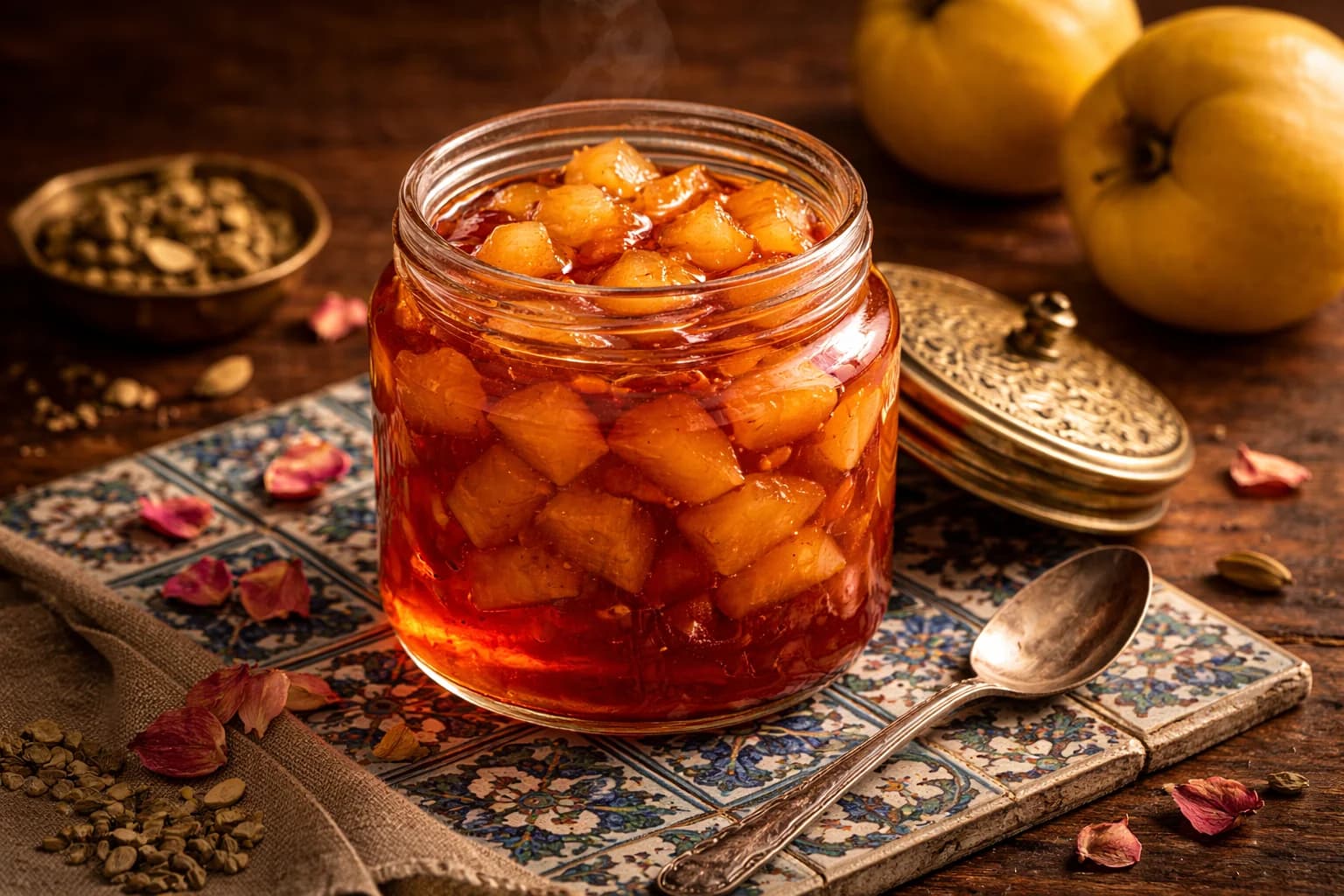
Golden, jewel-like pieces of quince suspended in a fragrant, ruby-tinged syrup perfumed with cardamom and rosewater—moraba-ye beh is the queen of Persian preserves. The humble quince, rock-hard and astringent when raw, transforms through slow cooking into something magical: tender, translucent, and deeply honeyed, with a flavor that's part apple, part pear, and entirely its own. This ancient preserve captures autumn's fleeting quince season in jars of amber sweetness, to be spooned over bread at breakfast, served alongside tea, or used to crown rice puddings. The process requires patience, but the result is extraordinary.

Moraba-ye Havij (Persian Carrot Preserve)

Moraba-ye Havij (Persian Carrot Preserve)

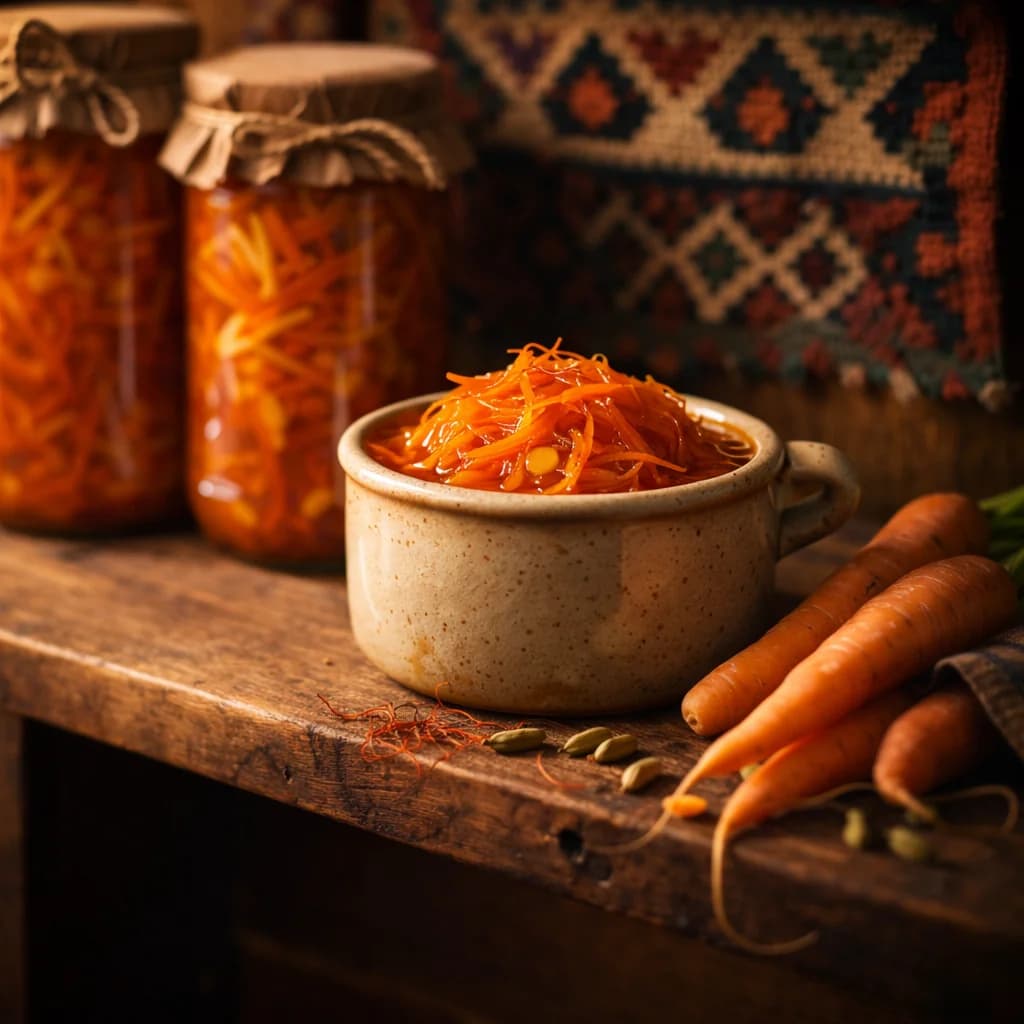
Tender slivers of carrot suspended in a golden, fragrant syrup scented with cardamom, rosewater, and saffron—moraba-ye havij transforms the humble carrot into something unexpectedly elegant. This traditional preserve showcases the Persian genius for turning simple ingredients into luxurious sweets. The carrots are cut into delicate julienne strips or decorative shapes, then slowly candied until translucent and jewel-like. The result is subtly sweet with a pleasant, gentle chew, the carrot's natural earthiness balanced by floral aromatics. A jar of moraba-ye havij on the breakfast table, glowing orange-gold in the morning light, is one of Persian cuisine's quiet pleasures.

Moraba-ye Gol (Persian Rose Petal Preserve)

Moraba-ye Gol (Persian Rose Petal Preserve)

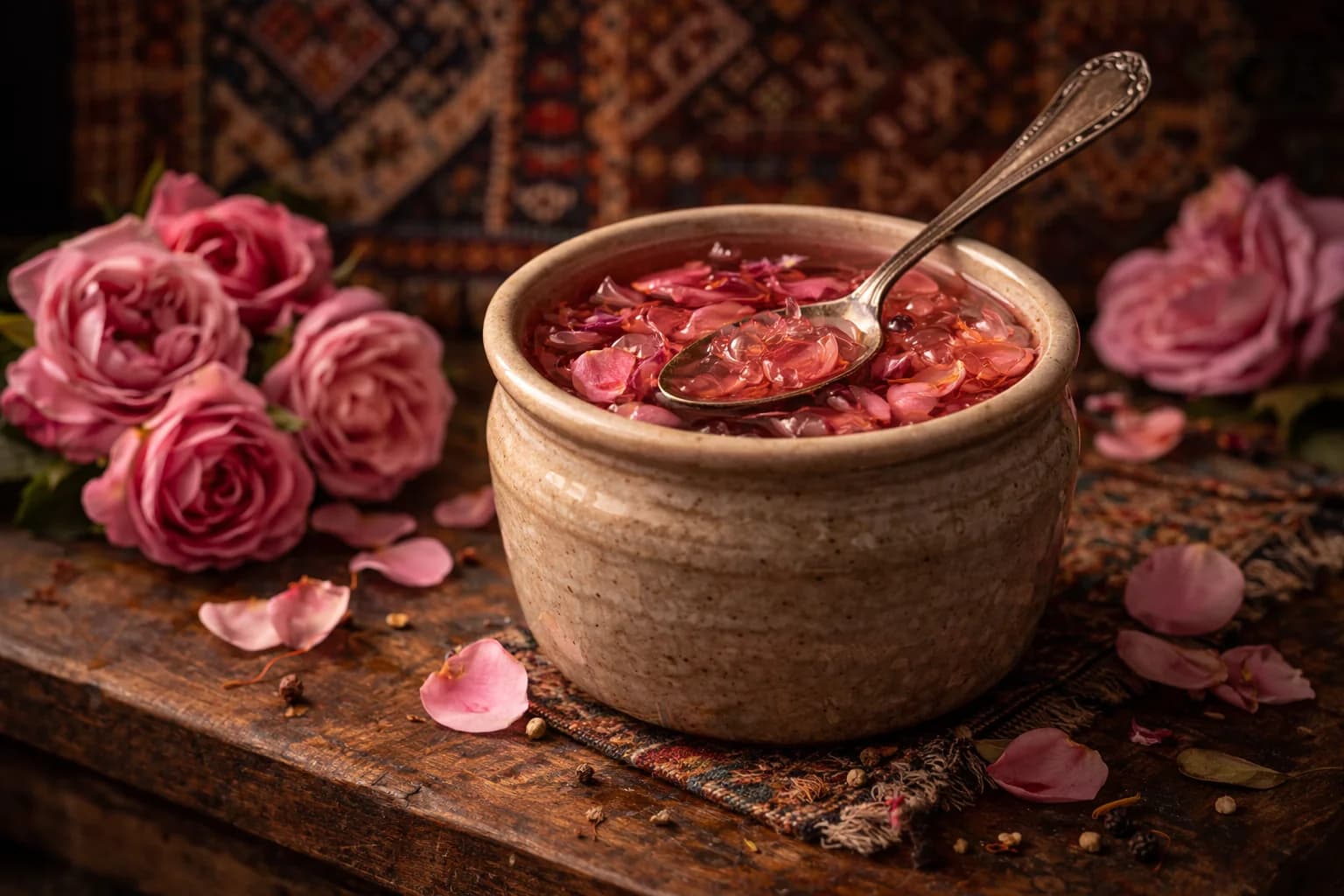
Delicate rose petals suspended in a blush-pink syrup, impossibly fragrant and achingly beautiful—moraba-ye gol is poetry in a jar. This ethereal preserve captures the essence of Persian gardens in late spring, when damask roses bloom in profusion and the air is heavy with their perfume. Each petal is carefully prepared and slowly candied until translucent and silken, the syrup becoming infused with pure rose essence. Served sparingly—a spoonful is a meditation—moraba-ye gol is the most romantic of all Persian preserves, given as gifts between lovers and offered to honored guests. Making it is an act of devotion; eating it is an experience of transcendence.