
Critical Moments
- •Using highly fragrant, unsprayed roses
- •Trimming the bitter white base from every petal
- •Thorough drying of petals
- •Massaging with sugar and lemon to extract oils
- •Gentle, low-heat cooking to preserve color and fragrance
- •Adding rosewater off heat
Select and harvest the roses
Choose roses that are highly fragrant—damask roses are ideal, but any strongly scented, unsprayed rose works. Harvest in the morning after dew has dried but before the heat of the day diminishes the fragrance. Use roses at peak bloom, not overblown or past their prime. You'll need about 8-10 cups of loosely packed petals.
Critical Step
The quality of the roses determines everything. Unscented roses produce a preserve that looks pretty but tastes of nothing. The roses MUST be unsprayed—pesticides concentrate in preserves.
Common Mistakes
- •Using unscented roses (no flavor)
- •Using roses treated with pesticides (toxic)
- •Using roses past peak bloom (bitter, less fragrant)
Prepare the petals
Gently pull petals from the roses. Using scissors, trim off the white or pale base of each petal—this part is bitter and must be removed. Inspect each petal and discard any that are damaged, discolored, or have insects. Place prepared petals in a large bowl.
Critical Step
The white base of rose petals contains bitter compounds that will ruin the preserve. Every single petal must be trimmed. This is the most time-consuming step but cannot be skipped.
Wash and dry the petals
Gently rinse the prepared petals in cold water to remove any dust or tiny insects. Spread on clean kitchen towels and pat gently dry, or use a salad spinner on the gentlest setting. The petals must be completely dry before proceeding—any water will dilute the preserve.
Critical Step
Water is the enemy of proper preserve-making. Wet petals will make the syrup thin and can promote spoilage. Take time to dry them thoroughly.
Macerate with sugar and lemon
Place the dry petals in a large bowl. Add 200g of the sugar (reserving the rest) and all the lemon juice. Using your hands, gently massage the sugar and lemon into the petals for 5 minutes. This releases the rose oils and begins to break down the petals. Cover and let macerate for 2-4 hours or overnight.
Critical Step
Massaging the petals with sugar and lemon extracts their essential oils and begins the preservation process. The lemon juice also helps maintain the pink color (without it, the preserve turns brown).
Make the syrup
In a large heavy pot, combine the remaining 400g sugar with the water. Heat over medium, stirring until sugar dissolves completely. Add the crushed cardamom pods if using. Bring to a boil, then reduce to a simmer and cook for 5 minutes until slightly thickened.
Add the petals and cook gently
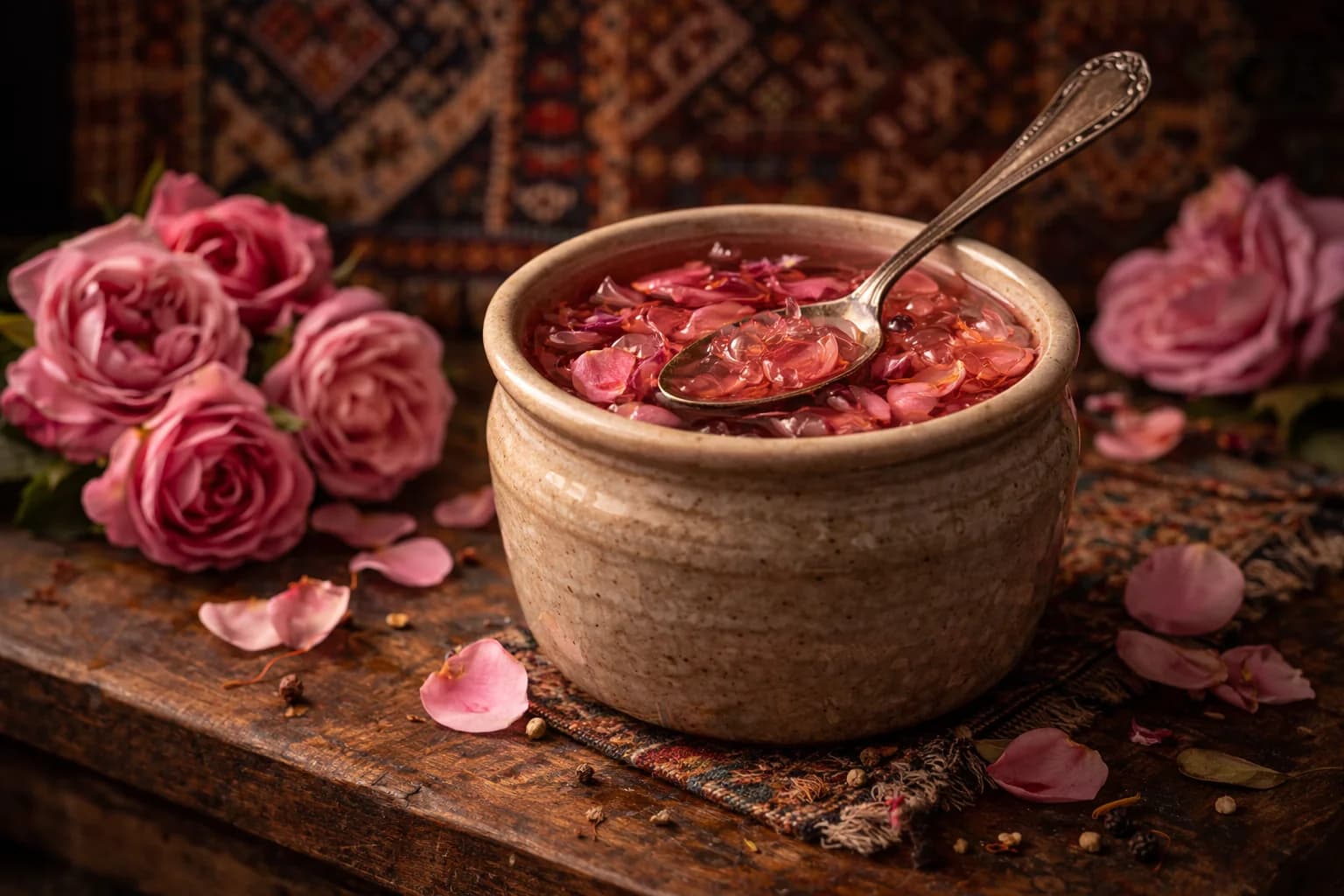
Add the macerated rose petals with all their liquid to the syrup. Stir gently to combine. Reduce heat to low and simmer gently for 30-40 minutes, stirring occasionally. The petals will become translucent and the syrup will turn a beautiful blush-pink color. The syrup should thicken to coat a spoon.
Critical Step
Gentle cooking preserves the color and fragrance. High heat destroys the delicate rose oils and can turn the preserve brown. Low and slow is essential.
Test for doneness
Test the preserve: the syrup should coat a spoon thickly and drip slowly. Do the cold plate test—a drop should wrinkle when pushed. The petals should be completely translucent and silky. The color should be a delicate pink.
Add rosewater
Remove from heat. Stir in the rosewater to intensify the rose flavor. The preserve should be intensely fragrant. Remove cardamom pods if you can find them.
Critical Step
Adding rosewater off heat preserves its volatile aromatic compounds. This final addition deepens and rounds out the rose flavor.
Jar the preserve
Ladle the hot preserve into small, clean, sterilized glass jars. Small jars are traditional—this is a precious preserve meant to be savored sparingly. Leave 1cm headspace. Wipe rims and seal tightly.
Rest and serve
Let the preserve cool completely and rest for at least a day—the flavors develop further. Serve very sparingly—a spoonful is an experience. Moraba-ye gol is served with bread and butter, stirred into tea, or used to top special desserts. Once opened, refrigerate and use within 2 months.
Resting Required
1440 min - Flavors develop and meld; best after at least a day