Noon Sangak (Persian Pebble-Baked Flatbread)

Noon Sangak (Persian Pebble-Baked Flatbread)

نان سنگک

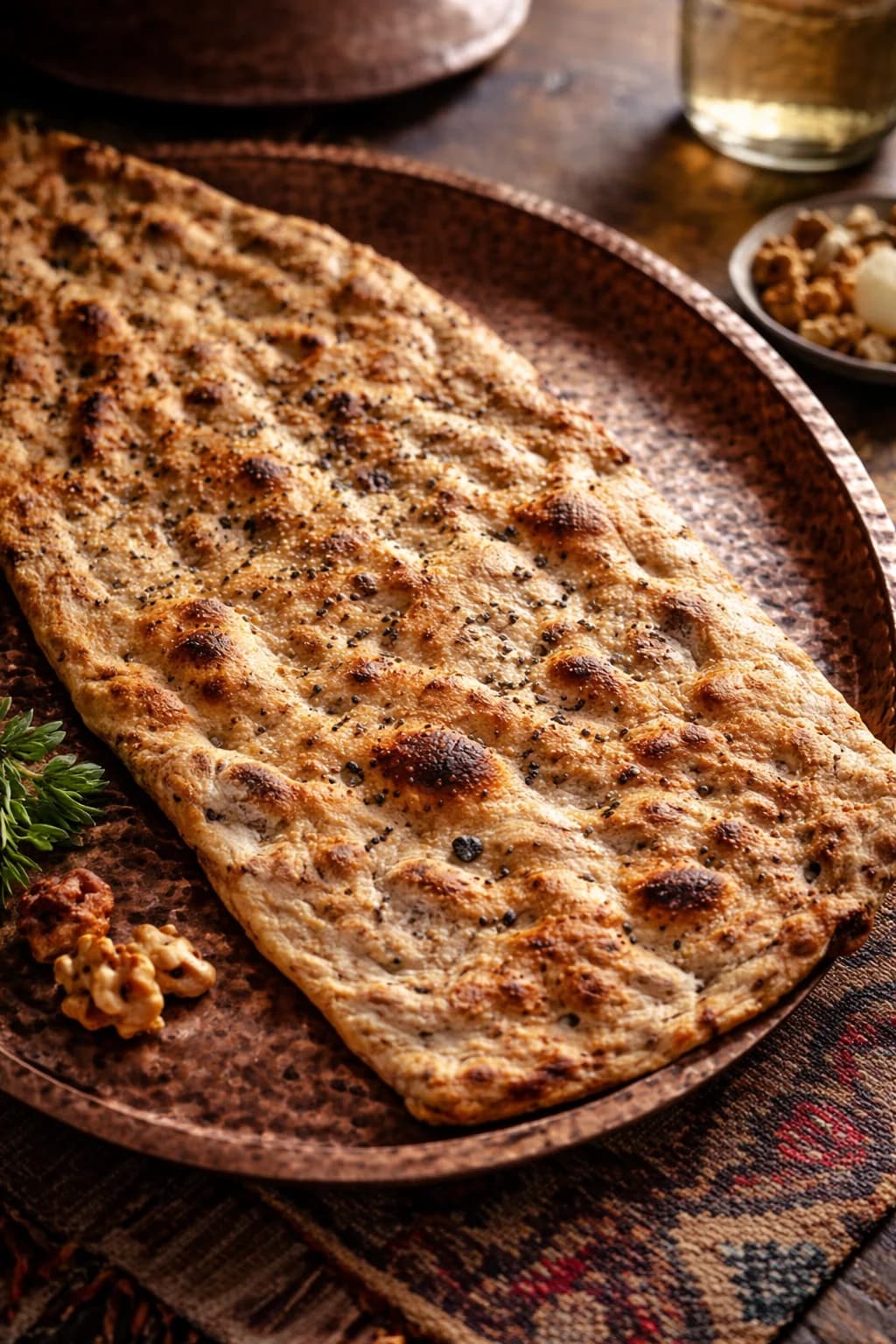
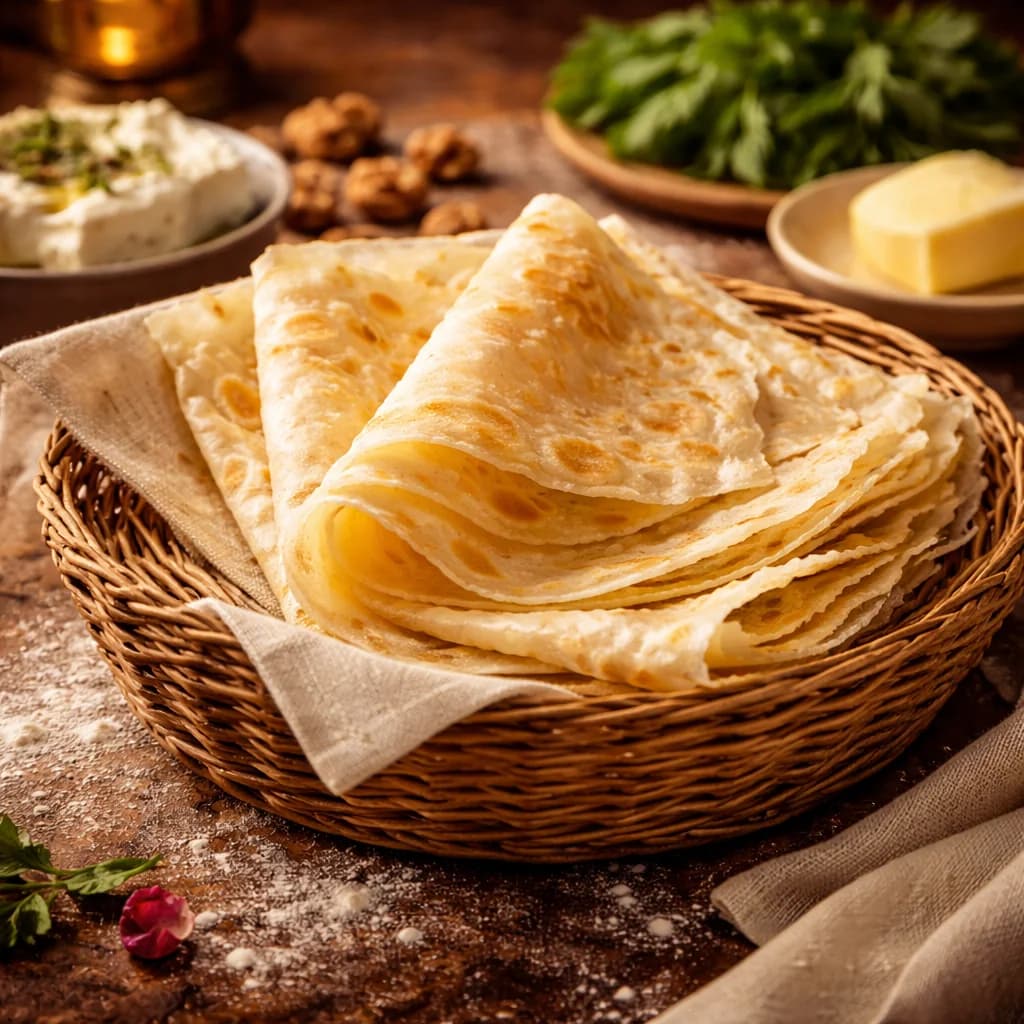
The most dramatic and ancient of Persian breads—a large, rustic whole wheat flatbread baked directly on a bed of hot river pebbles, emerging with a distinctive dimpled surface and an incomparable smoky, nutty flavor. Sangak (meaning 'little stones') dates back over a thousand years and was traditionally the bread of the Persian army, baked in portable ovens. Its irregular, almost primitive appearance belies its sophisticated flavor—the whole wheat dough develops deep, complex tastes, while the stone-contact creates a uniquely crispy, charred underside. This is artisan bread in its most elemental form.

breadPrep: 20 minCook: 10 minadvancedServes 4

Cultural Note

Sangak holds a special place in Persian culture as perhaps the most ancient and revered bread. Its origins date back over a millennium, and it was famously the bread of Persian armies—the portable pebble-oven could be set up anywhere, and soldiers' helmets could serve as baking surfaces. The name literally means 'little stones' (sang = stone). Traditional sangak bakeries are a cultural institution: customers watch as bakers stretch the wet dough over long paddles, slide it onto beds of hot river pebbles, and retrieve it moments later—blistered, charred, and extraordinary. The whole wheat dough, long fermentation, and stone-contact create flavors no other bread can match. Sangak is considered the 'king of breads' by many Iranians and is particularly prized for eating with kebab. The irregular, hole-pocked surface and varying thickness are features, not flaws—each bite is different.

Critical Moments

  • Accepting the very wet dough (don't add flour)
  • Long fermentation for flavor development
  • Extremely hot oven/pebbles
  • Thin, irregular shaping (embrace rusticity)
  • Quick baking with characteristic charring
1
PREP5 min

Mix the dough

In a large bowl or stand mixer, combine the whole wheat flour, bread flour, yeast, and salt. Add the warm water and mix until a very wet, sticky, batter-like dough forms. This dough is much wetter than typical bread dough—more like a thick batter. Mix for 3-4 minutes until somewhat smooth, though it will remain sticky.

Very wet, sticky dough; almost batter-like; shaggy but cohesive
SmellWhole wheat, yeasty
SoundWet slapping sounds
TouchSticky, wet, stretchy

Critical Step

Sangak dough is intentionally very wet (high hydration)—this creates the open, hole-filled crumb and distinctive texture. Don't add more flour; embrace the stickiness.

This dough cannot be kneaded traditionally—it's too wet. Mix in a stand mixer or stir vigorously with a wooden spoon. The wetness is correct.

Common Mistakes

  • Adding flour because dough seems too wet (don't—it should be wet)
  • Expecting a kneadable dough (it's more like thick batter)
2
PREP210 min

Long fermentation

Cover the bowl with plastic wrap or a damp towel. Let ferment at room temperature for 3-4 hours, or refrigerate overnight (up to 24 hours) for more flavor development. The dough should at least double in size and become bubbly and active.

Dough has doubled or more; surface is bubbly; active fermentation visible
SmellDeveloped, sour-yeasty, complex
TouchVery airy, full of bubbles, stretchy

Critical Step

Long fermentation develops the complex, slightly sour flavor that distinguishes sangak. Short fermentation produces bland bread. This is not a quick bread—the wait is essential.

Overnight refrigerator fermentation produces the best flavor. The cold slows yeast but allows enzymatic activity that develops taste. Remove from fridge 1 hour before baking.
3
PREP45 min

Prepare the pebbles (traditional method)

If using pebbles: wash the river pebbles thoroughly and dry them. Spread in a single layer on a rimmed baking sheet. Place in oven and preheat to maximum temperature (250-290°C / 480-550°F) for at least 45 minutes. The pebbles must be extremely hot.

Pebbles are extremely hot; may appear slightly ashy
250-290°C / 480-550°F
TouchRadiating intense heat
Food-safe river pebbles can be purchased from specialty cooking suppliers. They must be smooth, clean, and able to withstand high heat without cracking. Once seasoned, they can be reused indefinitely.
4
PREP45 min

Alternative: Preheat pizza stone

If not using pebbles: place a pizza stone or baking steel on the middle rack. Preheat oven to maximum temperature (250-290°C / 480-550°F) for at least 45 minutes. Place a small pan of water on the bottom rack to create steam.

Stone is very hot; oven is at maximum
250-290°C / 480-550°F
The pizza stone method won't create the same dimpled texture as pebbles, but produces excellent bread. Steam helps create a crispy crust.
5
PREP3 min

Prepare for shaping

Generously oil your hands and a work surface (or use wet hands—traditional bakers use water). Have a bowl of water nearby. Prepare a sheet of parchment paper the size of your baking surface. Have sesame seeds ready for sprinkling.

Oiled hands and surface; parchment ready
This dough is too wet to handle with floured hands—oil or water prevents sticking. Traditional bakers use wet hands and work very quickly.
6
PREP5 min

Shape the sangak

Working with well-oiled hands, scoop about ¼ of the dough (it will be very sticky). Gently stretch it into a rough oval or triangle shape about 30cm long, letting gravity help. The dough should be thin—about 5-8mm—but will have thick and thin spots. Transfer to the parchment paper. The shape should be rustic and irregular—this is traditional.

Thin, irregular, rustic oval/triangle; varying thickness; holes are fine
SmellFermented dough
TouchVery stretchy, elastic, sticky

Critical Step

Sangak is meant to be thin and irregular. Thick and thin spots, holes, and uneven edges are features, not flaws. Don't try to make it uniform—embrace the rustic nature.

Work quickly and confidently. The dough is forgiving—if it tears, just press it back together. Traditional sangak can be up to 1 meter long; home versions are smaller but same style.
7
PREP2 min

Add toppings

Sprinkle sesame seeds (and poppy seeds if using) over the shaped dough. Press them gently into the surface. Dimple the surface with your fingertips to create the characteristic pockmarks.

Seeds scattered over dimpled surface
TouchSeeded, dimpled surface
The fingertip dimples help the bread bake evenly and create the characteristic pocked surface. Don't be shy—press firmly.
8
COOK7 min

Bake on pebbles (traditional)

If using pebbles: carefully slide the shaped dough (on parchment) directly onto the hot pebbles. The dough will sink into the pebbles, creating the characteristic dimpled bottom. Bake for 6-8 minutes until puffed, blistered, and charred in spots. Watch carefully—it goes quickly.

Puffed, blistered, charred spots on top; dimpled bottom from pebbles
250-290°C / 480-550°F
SmellBaking whole wheat—nutty, toasty, slightly charred
SoundSizzling, slight crackling
TouchCrispy charred spots, soft interior

Critical Step

The pebbles create sangak's signature dimpled bottom and unique texture. The high heat and short baking time produce the characteristic blistering and charring.

Remove the parchment paper after 2-3 minutes if possible—direct pebble contact is ideal. Use long tongs. Some charring is desirable; burnt is not.
9
COOK9 min

Bake on stone (alternative)

If using pizza stone: spray the shaped dough lightly with water. Slide the dough (on parchment) onto the hot stone. Bake for 8-10 minutes until puffed, blistered, and charred in spots. Spray with water once more halfway through for extra steam.

Puffed, blistered, golden-brown with darker spots
250-290°C / 480-550°F
SmellBaking whole wheat bread—nutty, earthy
SoundSizzling from steam
TouchCrispy bottom and edges, soft interior
The stone method produces delicious bread but without the distinctive pebble-dimpled bottom. Extra steam helps create a better crust.
10
FINISH5 min

Cool and serve

Transfer the baked sangak to a wire rack. It will crackle and crisp as it cools slightly. Serve within a few hours while still fresh—sangak is best same-day. Tear into pieces; the varying thickness creates different textures in each bite.

Rustic, blistered bread with irregular surface; beautiful charred spots
SmellNutty, wheaty, slightly charred—extraordinary
SoundCrackling crust
TouchCrispy where charred, chewy inside, complex
Sangak is traditionally served with kebabs, fresh cheese, and herbs. It's also excellent for sandwiches. The holes and thin spots are perfect for scooping up sauces.

Resting Required

210 min - Long fermentation essential for flavor; minimum 3 hours, ideally overnight
Extras

Equipment

pizza stone or baking steelriver pebbles optionalrimmed baking sheetspray bottlestand mixer or handsstandard

Make Ahead

  • Dough can be refrigerated for up to 24 hours—this improves flavor.
  • Baked sangak doesn't keep well; best eaten same day.
  • Can be frozen immediately after baking and reheated.

Reheat frozen or same-day sangak in 200°C oven for 3-5 minutes.

Can be refreshed on a hot dry skillet for a minute per side.

Serve With

Sides

  • Kebabs (essential pairing)
  • Feta cheese (panir)
  • Fresh herbs (sabzi khordan)
  • Kashk-e bademjan
  • Any dip or spread

Drinks

  • Doogh (especially with kebabs)
  • Persian tea

Substitutions

whole wheat flourStone-ground whole wheat has the best flavor. Regular whole wheat works. Can use up to 50% white flour if whole wheat is too dense for your taste, but flavor will differ.
river pebblesPizza stone or baking steel are the best substitutes. Cast iron skillet works for smaller breads. The pebble-dimpled texture is unique to the traditional method.
bread flourThe bread flour adds structure. All-purpose flour substitutes but the dough will be even stickier and harder to handle.
long fermentationEssential for flavor. Minimum 3 hours at room temperature, but overnight cold fermentation is highly recommended.

Scaling

This recipe makes 4 large sangak breads. The dough is wetter and more challenging than other breads. Traditional sangak is very large (up to 1 meter), but home versions are smaller. The pebble-baking method can be approximated at home with careful technique.

Source

Traditional · Traditional Persian cuisine

Sangak is believed to date back over 1,000 years and was historically the bread of Persian armies due to the portability of the pebble-oven. The word 'sangak' means 'little stones.' Traditional bakeries still use this ancient method, creating bread that's considered by many to be Iran's finest.

Related Recipes

Noon Lavash (Persian Paper-Thin Flatbread)

Noon Lavash (Persian Paper-Thin Flatbread)

The most versatile of Persian breads—paper-thin sheets that can be soft and pliable for wrapping kebabs and herbs, or dried to a satisfying cracker-like crispness for scooping dips and breaking into soups. Lavash is ancient, practical, and elegant, its simplicity belying its importance in Persian cuisine. Made from just flour, water, and salt, rolled impossibly thin and baked in moments, lavash has sustained travelers, nomads, and families for millennia. Fresh lavash folds like fabric; dried lavash shatters like delicate glass. Both forms are essential to the Persian table.

Noon Barbari (Persian Sesame Flatbread)

Noon Barbari (Persian Sesame Flatbread)

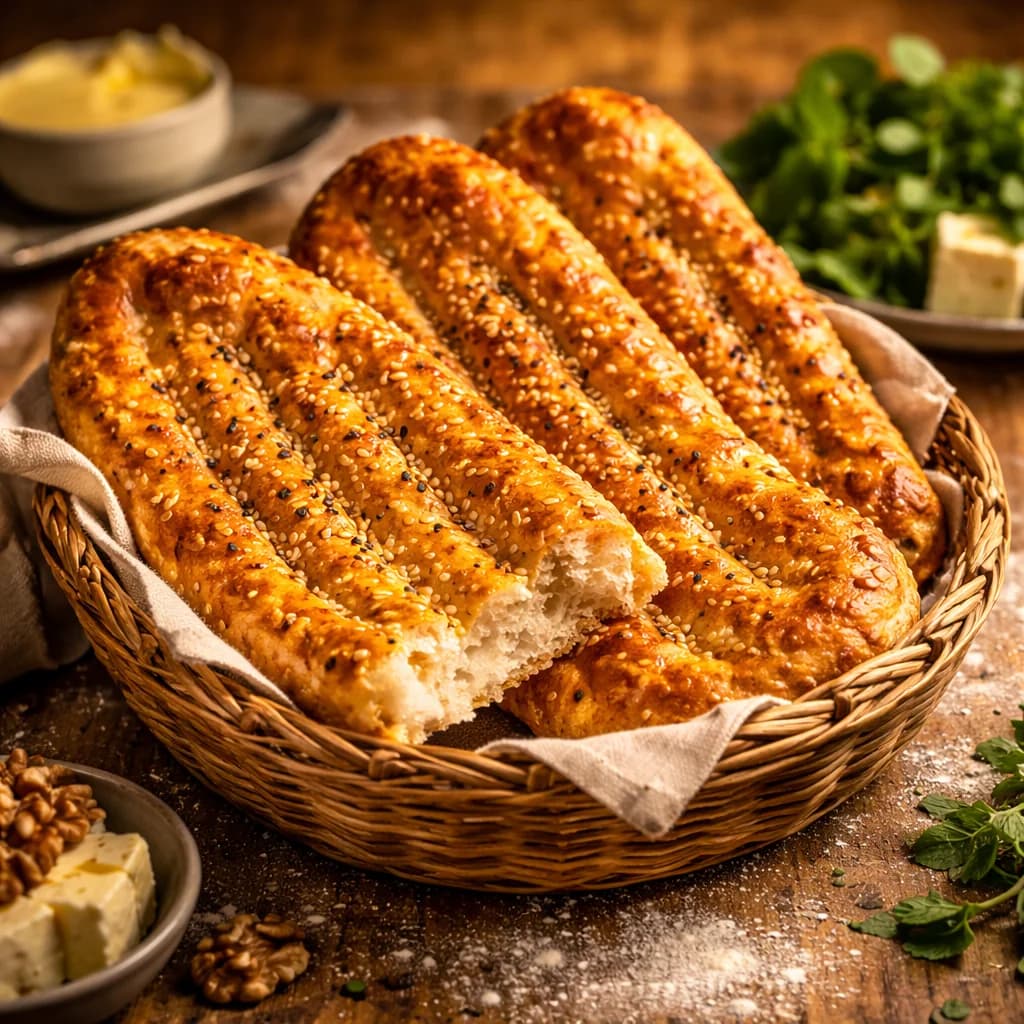
The king of Persian breads—a magnificent golden flatbread with a thick, chewy crust, soft interior, and distinctive ridged surface glistening with romaal (a flour-oil glaze) and scattered with sesame or nigella seeds. Barbari is substantial and satisfying, with a texture somewhere between focaccia and Turkish pide. Fresh from the oven, it fills the kitchen with an irresistible aroma and offers that perfect combination of crispy crust and pillowy crumb. This is the bread of Persian breakfasts, torn into pieces and served with feta cheese, fresh herbs, walnuts, and sweet tea.

Noon Taftoon (Persian Soft Dimpled Flatbread)

Noon Taftoon (Persian Soft Dimpled Flatbread)

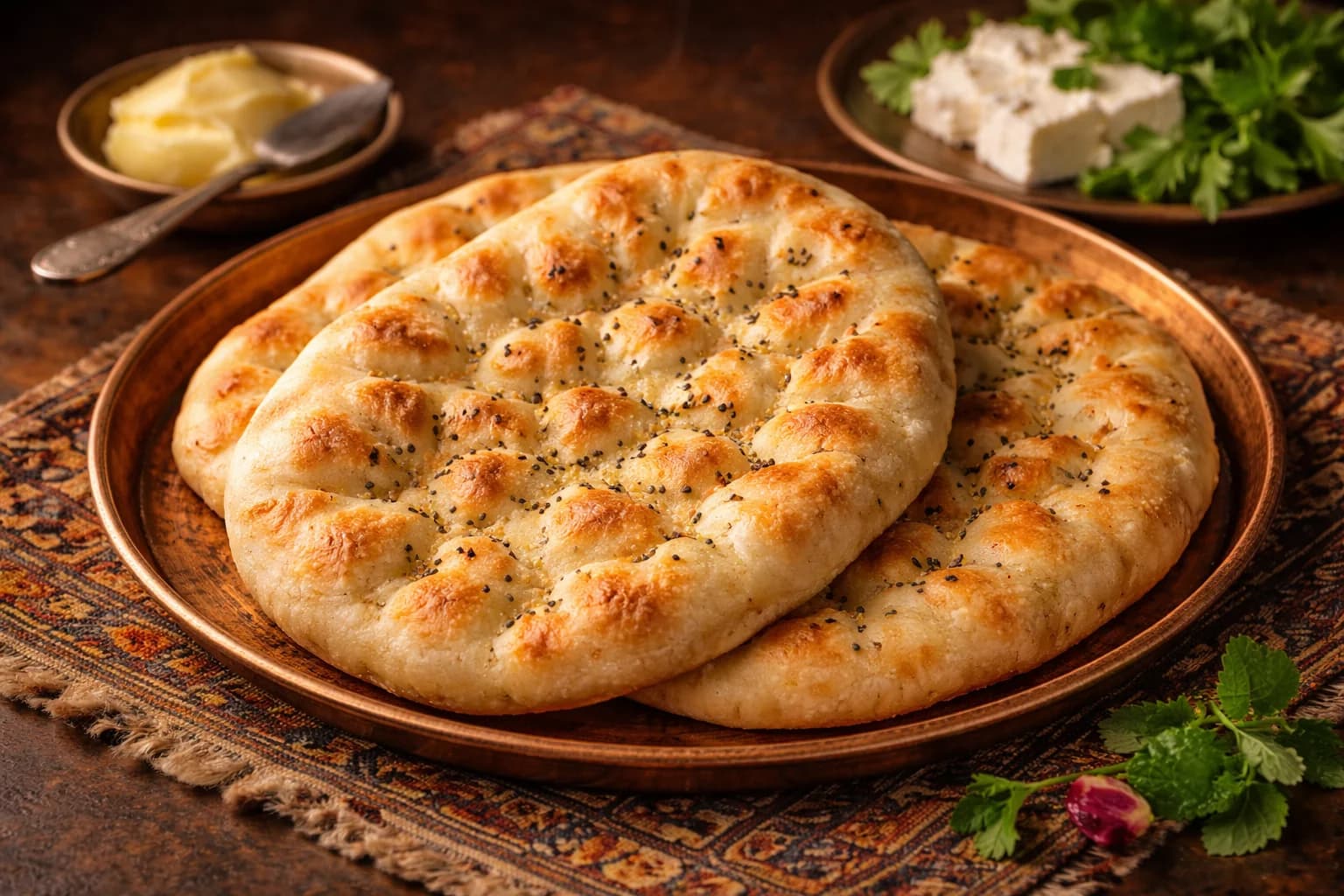
A pillowy, dimpled flatbread with a soft, tender crumb and slightly chewy crust—taftoon is the everyday bread of Persian homes, perfect for scooping up stews, soaking up sauces, and tearing apart at the family table. Its characteristic dimpled surface, created by pressing fingertips or a special tool into the dough, isn't just decorative—it ensures even cooking and creates texture variation in every bite. Traditionally baked slapped against the walls of a clay tandoor, taftoon emerges warm, fragrant, and irresistibly soft. This is comfort bread at its finest.