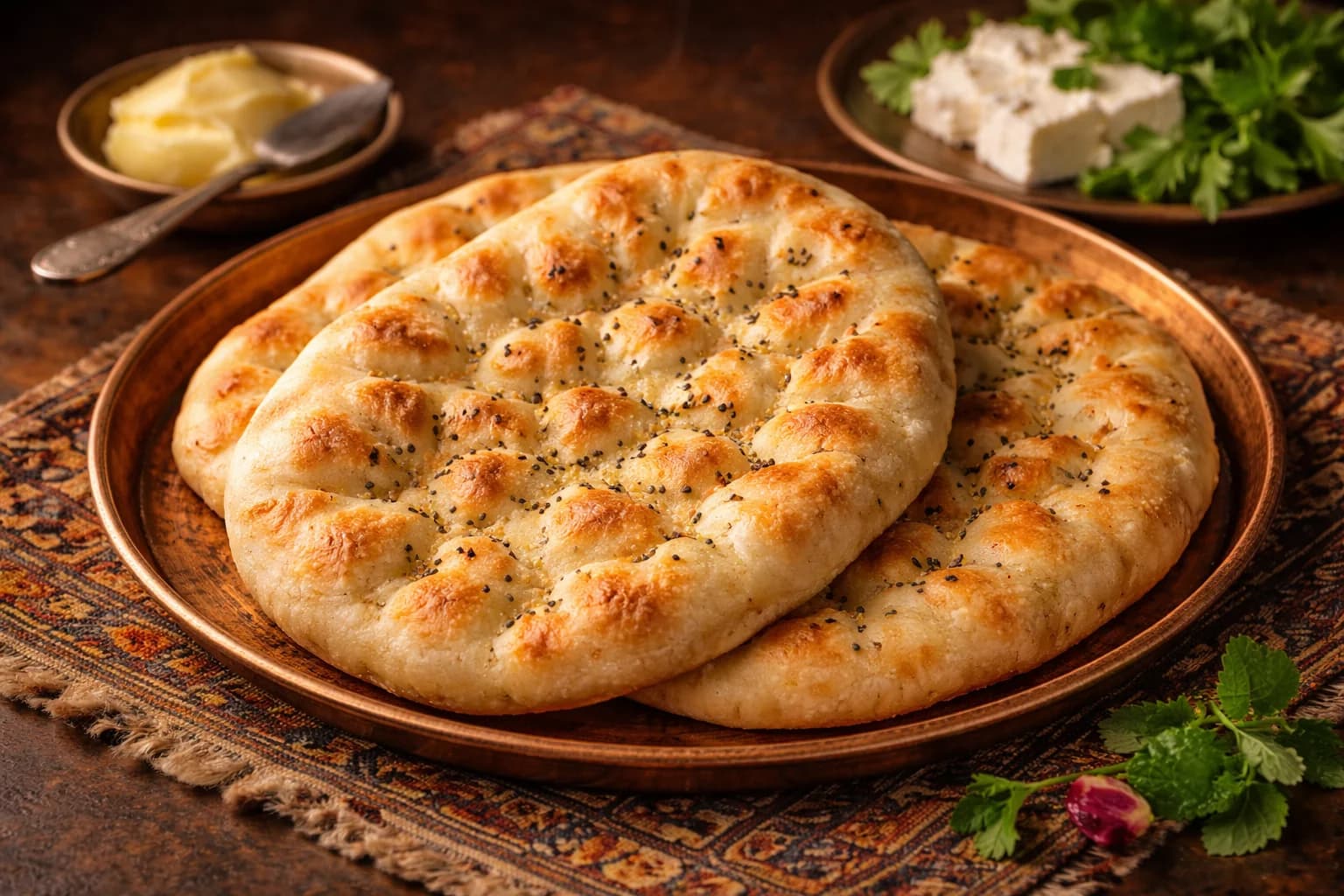
Noon Taftoon (Persian Soft Dimpled Flatbread)

Noon Taftoon (Persian Soft Dimpled Flatbread)

نان تافتون

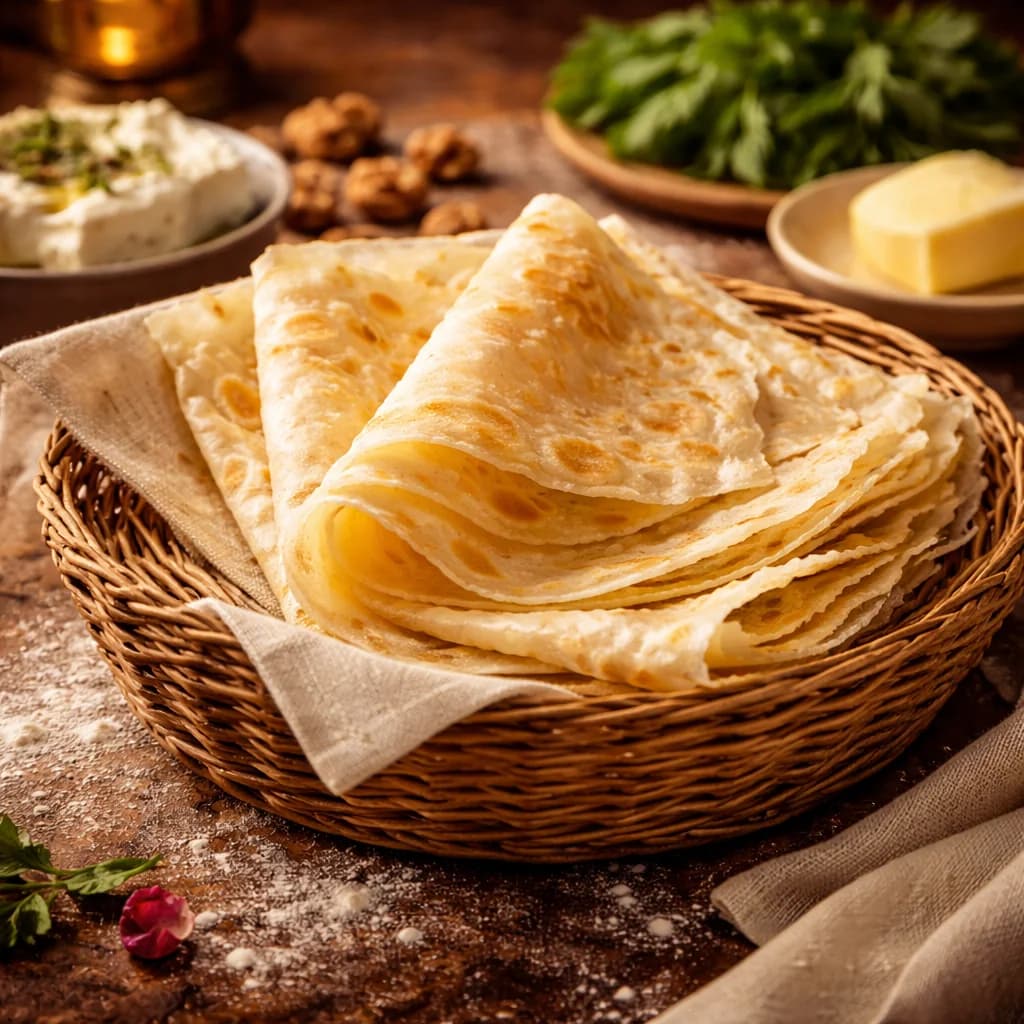
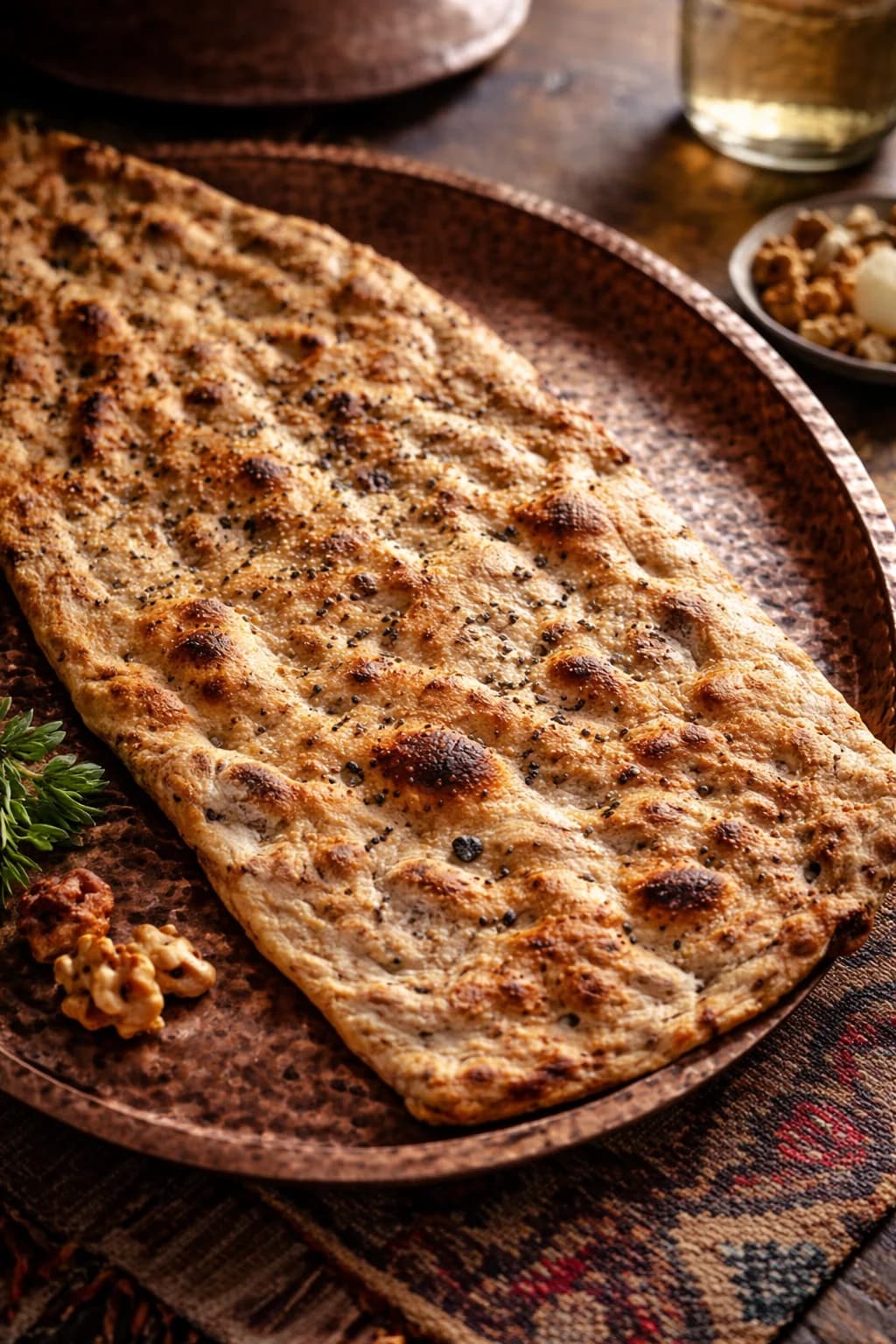
A pillowy, dimpled flatbread with a soft, tender crumb and slightly chewy crust—taftoon is the everyday bread of Persian homes, perfect for scooping up stews, soaking up sauces, and tearing apart at the family table. Its characteristic dimpled surface, created by pressing fingertips or a special tool into the dough, isn't just decorative—it ensures even cooking and creates texture variation in every bite. Traditionally baked slapped against the walls of a clay tandoor, taftoon emerges warm, fragrant, and irresistibly soft. This is comfort bread at its finest.

breadPrep: 25 minCook: 25 mineasyServes 6

Cultural Note

Taftoon is the soft, tender counterpart to the crispier Persian breads. Its name comes from 'taftan' (to heat), referencing the traditional tandoor-baking method where rounds of dough are slapped against the oven's hot clay walls. The characteristic dimpled surface serves both practical and aesthetic purposes: the dimples prevent the bread from puffing up too much, ensure even cooking, and create a beautiful pattern. In Iran, taftoon is the go-to bread for everyday meals, particularly for scooping up khoresh (stews) and other saucy dishes. Some regional variations include saffron or cardamom in the dough, creating a subtly fragrant bread. Unlike the whole wheat sangak or the thick barbari, taftoon is refined and soft—comfort food for all ages.

Critical Moments

  • Keeping dough soft (don't add too much flour)
  • Full rise for tender texture
  • Proper dimpling technique (halfway through dough)
  • Hot oven with preheated stone
  • Not overbaking (should remain soft)
1
PREP3 min

Mix the wet ingredients

In a small bowl, combine the warm milk, yogurt, water, oil, and egg (if using). Whisk until the yogurt is fully incorporated and the mixture is smooth.

Smooth, creamy liquid mixture
SmellWarm milk and tangy yogurt
SoundWhisking
TouchSmooth, no yogurt lumps
The yogurt adds tenderness and a subtle tang to the bread. Full-fat yogurt works best. Greek yogurt works but thin it with a bit more water.
2
PREP12 min

Make the dough

In a large bowl or stand mixer, combine the flour, yeast, salt, and sugar. Add the wet ingredients and mix until a shaggy dough forms. Knead for 8-10 minutes by hand or 5-6 minutes in a stand mixer until smooth, soft, and slightly tacky. The dough should be softer than typical bread dough.

Soft, smooth dough; slightly tacky but not sticky
SmellYeasty, milky
SoundSlapping against bowl/counter
TouchSoft, smooth, elastic, slightly tacky

Critical Step

The milk and yogurt create a softer dough than water-based breads. Don't add too much flour—the softness is intentional and creates taftoon's tender texture.

This dough should be softer than barbari dough. Resist adding flour; a slightly tacky dough is correct.
3
PREP75 min

First rise

Shape the dough into a ball and place in a lightly oiled bowl. Cover with plastic wrap or a damp towel. Let rise in a warm place for 1-1.5 hours until doubled in size.

Dough has doubled; soft and puffy
SmellYeasty, fermented
TouchLight, airy, springs back slowly when poked
The milk and sugar create a favorable environment for yeast, so the dough may rise faster than expected. Don't let it over-rise, or the texture will be compromised.
4
PREP30 min

Preheat oven

Place a pizza stone or inverted baking sheet on the middle rack. Preheat oven to 230°C (450°F) for at least 30 minutes. The surface must be very hot.

Oven fully preheated; stone is very hot
High230°C / 450°F
A hot stone is essential for the characteristic bottom crust. Without a stone, use an inverted baking sheet—preheat it in the oven.
5
PREP5 min

Divide and shape

Turn the risen dough onto a lightly floured surface. Divide into 6 equal pieces (about 140g each). Shape each piece into a smooth ball. Cover with a towel and let rest for 10 minutes.

Six smooth dough balls, relaxed
TouchSoft, smooth balls
The rest allows the gluten to relax for easier rolling. Even 10 minutes makes a significant difference.
6
PREP4 min

Roll and dimple

Working with one ball at a time, roll into an oval or round about 20-22cm across and 5-8mm thick—thicker than lavash but thinner than barbari. Using your fingertips (all five fingers together), press rows of dimples across the entire surface, creating the characteristic pattern. The dimples should indent the dough about halfway through.

Oval bread with regular rows of fingertip dimples; slightly thick and puffy
TouchSoft dough yields to fingertips

Critical Step

The dimpled pattern is taftoon's signature. Beyond aesthetics, it prevents the bread from puffing into a balloon and ensures even cooking. The dimples also create texture variation.

Press firmly but not all the way through. Traditional bakers use a special tool (daanak) with multiple points; fingertips work perfectly at home. Create a regular pattern of rows.
7
PREP2 min

Add toppings

Brush the dimpled surface with melted butter. Sprinkle with sesame seeds, nigella seeds, and/or poppy seeds as desired. The butter helps the seeds adhere and adds richness.

Glistening surface with seeds in dimples and across bread
SmellButter
TouchMoist, seeded surface
The butter also contributes to the soft crust. Be generous. Seeds are optional but traditional and add visual appeal and flavor.
8
COOK9 min

Bake

Carefully transfer the shaped taftoon (on parchment paper if easier) to the hot pizza stone. Bake for 8-10 minutes until puffed between the dimples, golden on top, and the bottom is lightly browned. The dimples should remain visible.

Golden top; puffed between dimples; dimples still visible; bottom has some color
High230°C / 450°F
SmellBaking bread—rich, buttery, yeasty
TouchPuffed but with dimpled pattern intact

Critical Step

Proper baking creates a soft but set bread with the characteristic puffed-dimpled appearance. Underbaking leaves raw dough; overbaking dries out the soft crumb.

Bake one or two at a time depending on your stone size. Each one only takes about 9 minutes.
Checkpoint: The bread is done when golden on top and the bottom has light brown spots. It should feel set but still soft.
9
FINISH3 min

Brush and serve

Remove from oven and immediately brush with more melted butter if desired for an extra-soft crust. Transfer to a towel-lined basket or plate. Serve warm—taftoon is best fresh. Continue baking remaining breads.

Golden, soft bread with glistening surface and visible dimple pattern
SmellFresh buttery bread—irresistible
SoundSoft, no crackling (unlike crispy breads)
TouchSoft, tender, slightly chewy crust
The post-bake butter brush keeps the crust soft. Stack breads in a towel-lined container to keep them warm and soft. Taftoon is best within a few hours but reheats well.

Resting Required

75 min - Dough must double for proper texture; rest after dividing for easier shaping
Extras

Equipment

stand mixer or handspizza stone or baking sheetpastry brushstandard

Make Ahead

  • Dough can be refrigerated overnight after first rise—bring to room temperature before shaping.
  • Baked taftoon freezes well for up to 2 months.
  • Reheat wrapped in foil in 180°C oven for 10 minutes.

Best reheated wrapped in foil or in microwave with damp paper towel to keep soft.

Can also warm in dry pan for 30 seconds per side.

Serve With

Sides

  • Khoresh (stews)—perfect for scooping
  • Feta cheese (panir)
  • Fresh herbs (sabzi khordan)
  • Butter and honey
  • Any dip or spread

Drinks

  • Persian tea
  • Doogh

Substitutions

yogurtFull-fat Greek yogurt (thinned with water), sour cream, or buttermilk can substitute. The acidity and fat contribute to tenderness.
milkWater can substitute but the bread will be less tender and rich. Plant-based milk works for dairy-free version (use dairy-free yogurt too).
pizza stoneAn inverted baking sheet works. Cast iron skillet for stovetop method. The key is a hot surface.
dimpling toolTraditional 'daanak' tool creates perfect dimples; fingertips work perfectly at home. Some use a fork, but the pattern differs.

Scaling

This recipe makes 6 medium-sized taftoon. The dough is enriched with milk and yogurt, making it softer and more tender than plain water doughs. Taftoon is best fresh but can be frozen successfully. The dimpling technique is simple and fun.

Source

Traditional · Traditional Persian cuisine

Taftoon (also spelled 'taftan') derives from the Persian word 'taftan,' meaning 'to heat' or 'to burn.' It's one of the four main bakery breads of Iran, known for its soft texture and the distinctive dimpled pattern created during shaping. Some regional variations include saffron or cardamom.

Related Recipes

Noon Barbari (Persian Sesame Flatbread)

Noon Barbari (Persian Sesame Flatbread)

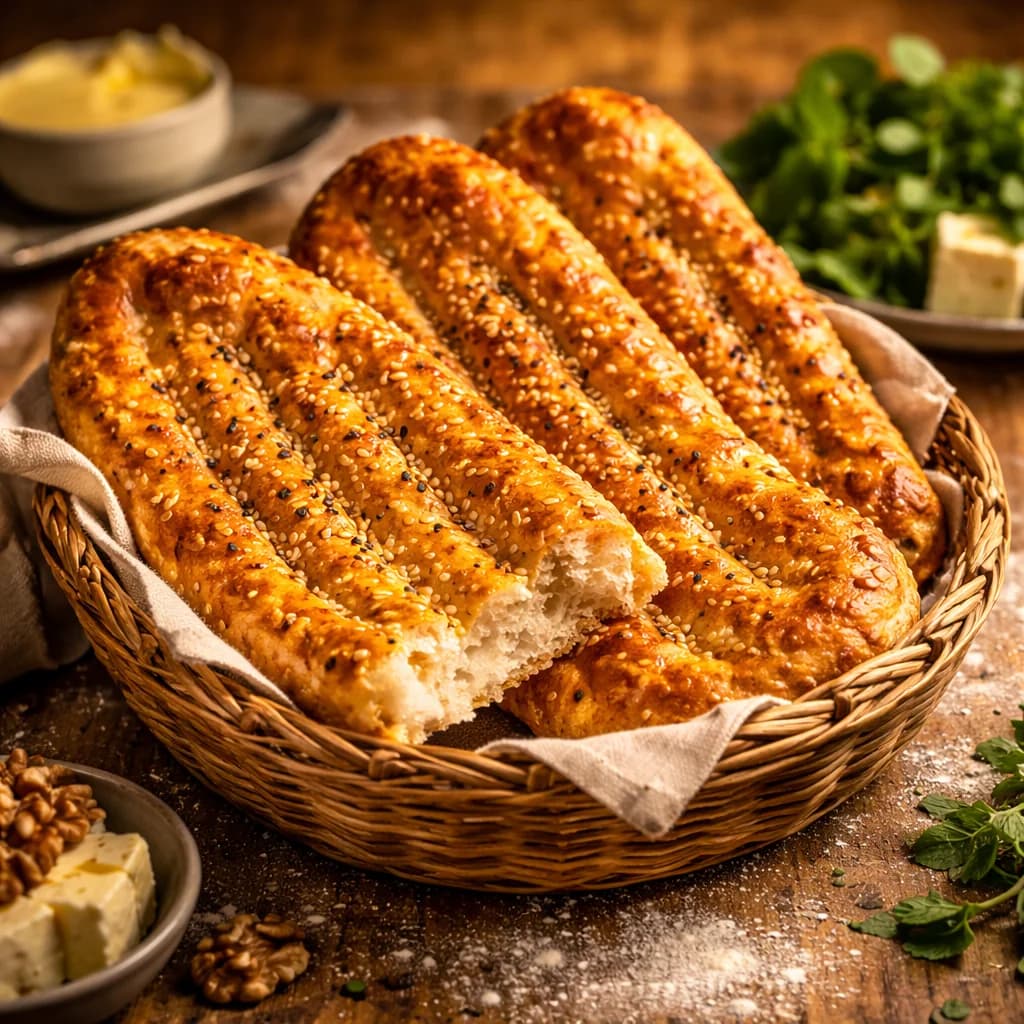
The king of Persian breads—a magnificent golden flatbread with a thick, chewy crust, soft interior, and distinctive ridged surface glistening with romaal (a flour-oil glaze) and scattered with sesame or nigella seeds. Barbari is substantial and satisfying, with a texture somewhere between focaccia and Turkish pide. Fresh from the oven, it fills the kitchen with an irresistible aroma and offers that perfect combination of crispy crust and pillowy crumb. This is the bread of Persian breakfasts, torn into pieces and served with feta cheese, fresh herbs, walnuts, and sweet tea.

Noon Lavash (Persian Paper-Thin Flatbread)

Noon Lavash (Persian Paper-Thin Flatbread)

The most versatile of Persian breads—paper-thin sheets that can be soft and pliable for wrapping kebabs and herbs, or dried to a satisfying cracker-like crispness for scooping dips and breaking into soups. Lavash is ancient, practical, and elegant, its simplicity belying its importance in Persian cuisine. Made from just flour, water, and salt, rolled impossibly thin and baked in moments, lavash has sustained travelers, nomads, and families for millennia. Fresh lavash folds like fabric; dried lavash shatters like delicate glass. Both forms are essential to the Persian table.

Noon Sangak (Persian Pebble-Baked Flatbread)

Noon Sangak (Persian Pebble-Baked Flatbread)

The most dramatic and ancient of Persian breads—a large, rustic whole wheat flatbread baked directly on a bed of hot river pebbles, emerging with a distinctive dimpled surface and an incomparable smoky, nutty flavor. Sangak (meaning 'little stones') dates back over a thousand years and was traditionally the bread of the Persian army, baked in portable ovens. Its irregular, almost primitive appearance belies its sophisticated flavor—the whole wheat dough develops deep, complex tastes, while the stone-contact creates a uniquely crispy, charred underside. This is artisan bread in its most elemental form.