
Salad Shirazi (Persian Chopped Salad)

Salad Shirazi (Persian Chopped Salad)

سالاد شیرازی

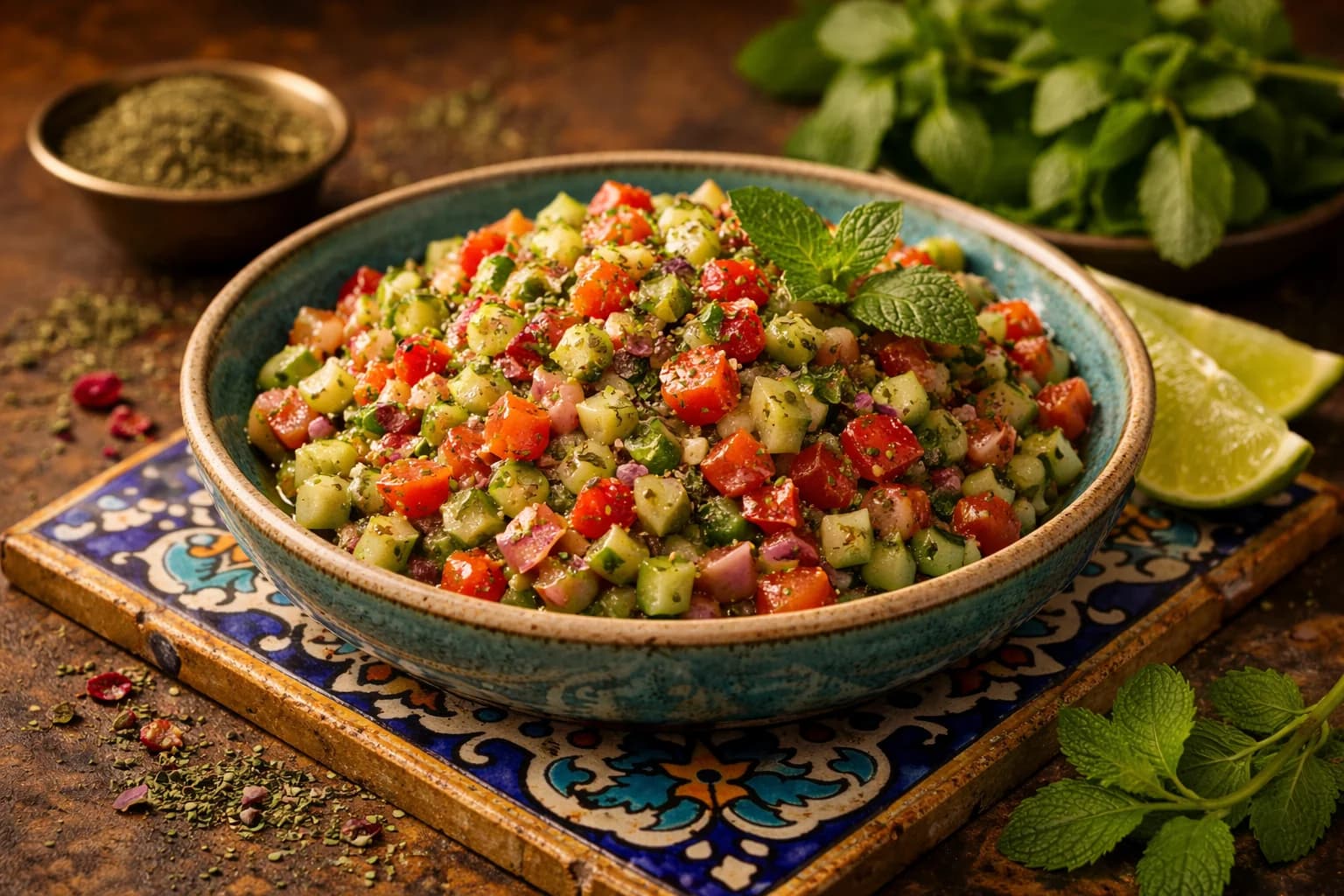
A brilliantly simple, refreshing chopped salad of cucumber, tomato, and onion dressed with nothing more than lime juice, olive oil, and salt—the essence of Persian summer in a bowl. Named after the city of Shiraz in southwestern Iran, this salad celebrates the pure flavors of peak-season vegetables cut into tiny, uniform dice. Each bite delivers a perfect balance of cool cucumber, sweet tomato, and sharp onion, unified by bright citrus. The key is impeccable knife work and the freshest possible produce.

appetizerPrep: 20 minCook: 0 mineasyServes 6

Cultural Note- Shiraz

Salad Shirazi takes its name from Shiraz, the city of poets, wine, and gardens in southwestern Iran. The salad embodies the Persian aesthetic of elegance through simplicity—no elaborate ingredients, just perfect execution. The tiny, uniform dice (about 5mm) is traditional and essential; it allows every forkful to contain all three vegetables in perfect proportion. This salad appears at virtually every Persian meal, especially in summer, and is the quintessential accompaniment to kebabs and rice dishes. The dressing is deliberately simple—lime, oil, salt—to let the vegetables shine.

Critical Moments

  • Uniform 5mm dice on all vegetables
  • Removing excess liquid from tomatoes
  • Generous lime juice—should taste bright and acidic
  • Serving fresh (doesn't hold well)
1
PREP6 min

Prepare the cucumbers

Wash the cucumbers. If using Persian cucumbers, no need to peel—simply trim the ends. If using English cucumber, peel alternating strips for a striped effect, or leave unpeeled. Cut cucumbers in half lengthwise, then into quarters lengthwise. Slice crosswise into small dice, approximately 5mm cubes. Place in a large mixing bowl.

Uniform small cucumber cubes, about 5mm on each side
SmellFresh cucumber
SoundClean chopping sounds
TouchCrisp, firm cubes

Critical Step

Uniform dice is essential for Salad Shirazi—it ensures even distribution of flavors in every bite and creates the signature texture. Aim for 5mm cubes; larger dice changes the character of the salad.

Persian cucumbers are ideal—crisp, seedless, thin-skinned. English cucumbers are the next best. Avoid watery field cucumbers with large seeds.
2
PREP6 min

Prepare the tomatoes

Cut tomatoes in half through the equator. Gently squeeze out some of the seeds and excess liquid (this prevents a watery salad). Cut each half into strips, then dice into cubes the same size as the cucumber—approximately 5mm. Add to the bowl with cucumbers.

Uniform tomato cubes matching cucumber size; not too wet
SmellRipe tomato
TouchFirm but ripe tomato cubes

Critical Step

Removing excess seeds and liquid prevents the salad from becoming watery. The tomatoes should be firm enough to hold their shape when diced—overripe tomatoes will become mushy.

Use firm, ripe tomatoes—they should yield slightly when pressed but not be soft. Roma/plum tomatoes work well as they're less watery. In winter, cherry tomatoes (quartered) are often a better choice than mealy out-of-season tomatoes.

Common Mistakes

  • Using overripe, soft tomatoes (falls apart)
  • Not removing seeds (watery salad)
  • Uneven dice (inconsistent texture)
3
PREP5 min

Prepare the onion

Peel the onion and cut in half from root to tip. Place cut-side down and make horizontal cuts, then vertical cuts, then slice crosswise to create small dice matching the other vegetables—approximately 5mm. For a milder flavor, soak the diced onion in cold water for 10 minutes, then drain well.

Small, uniform onion dice
SmellSharp raw onion
TouchCrisp onion pieces
White onion is traditional for its sharpness. Red onion is beautiful and slightly sweeter. For very mild onion flavor, use the white and light green parts of spring onions instead. Soaking in cold water removes some of the harsh raw bite.

Common Mistakes

  • Onion pieces too large (overpowers the salad)
  • Using too much onion (should be less than cucumber or tomato)
4
PREP1 min

Combine the vegetables

Add the diced onion to the bowl with cucumber and tomato. Toss gently to distribute evenly.

Colorful mix of green cucumber, red tomato, and white onion
SmellFresh vegetable medley
TouchUniform dice throughout
5
PREP2 min

Make the dressing

In a small bowl, whisk together the lime juice, olive oil, salt, pepper (if using), and dried mint (if using) until combined. Alternatively, simply add these directly to the salad—traditional home cooks often do this.

Emulsified dressing; or separate components ready to add
SmellBright lime with olive oil
TouchSlightly emulsified
The dressing is deliberately simple—the focus is on the fresh vegetables. Some families add a pinch of dried mint; others keep it absolutely pure.
6
FINISH2 min

Dress the salad

Pour the dressing over the salad. Toss gently but thoroughly to coat every piece. Taste and adjust salt and lime juice—the salad should be brightly acidic and well-seasoned.

Glistening vegetables coated in dressing
SmellLime juice brightening the vegetables
SoundGentle tossing
TouchEach piece lightly coated with dressing

Critical Step

The lime juice is essential—it should be generously acidic. Under-dressed Salad Shirazi is bland. Taste and add more lime and salt until it sings.

Persians tend to dress salads more generously with acid than Western palates might expect. Be bold with the lime juice.
7
FINISH2 min

Garnish and serve

Transfer to a serving bowl. Sprinkle with fresh mint (if using) and a dusting of sumac (if using). Serve immediately, or chill for up to 30 minutes. Salad Shirazi is best fresh but can sit for a short while.
Vibrant, colorful salad with optional purple sumac dusting and green mint
SmellBright, fresh, appetizing
TouchCrisp vegetables in tangy dressing
Sumac adds a beautiful color and extra tartness—traditional but optional. If serving later, dress lightly and add more dressing just before serving.

Extras

Equipment

sharp knifecutting boardmixing bowlstandard

Serve With

🍚Chelow, any polo (essential accompaniment)

Sides

  • Alongside kebabs (essential)
  • Part of any Persian meal
  • Sabzi khordan
  • Mast-o-khiar

Drinks

  • Doogh
  • Water with fresh mint

Substitutions

persian cucumbersEnglish cucumber works well. Regular cucumber can be used if peeled and seeded. Avoid watery varieties.
lime juiceLemon juice is an acceptable substitute. Verjuice is traditional in some regions. The key is bright acidity.
white onionRed onion (sweeter, prettier), spring onions (milder), or shallots all work.
olive oilAny neutral oil works, but good olive oil adds flavor. Some traditional versions omit oil entirely.

Scaling

Scales infinitely. Maintain the roughly equal proportions of cucumber, tomato, and onion. For large gatherings, prepare vegetables and dressing separately; combine just before serving to prevent sogginess. This is the perfect potluck salad.

Source

Traditional · Traditional Persian cuisine, Shiraz origin

Named after Shiraz, the cultural capital of Iran known for its poetry, gardens, and refined cuisine. This salad appears at virtually every Persian meal, especially in summer when tomatoes and cucumbers are at their peak.

Related Recipes

Borani Esfenaj (Persian Spinach Yogurt Dip)

Borani Esfenaj (Persian Spinach Yogurt Dip)

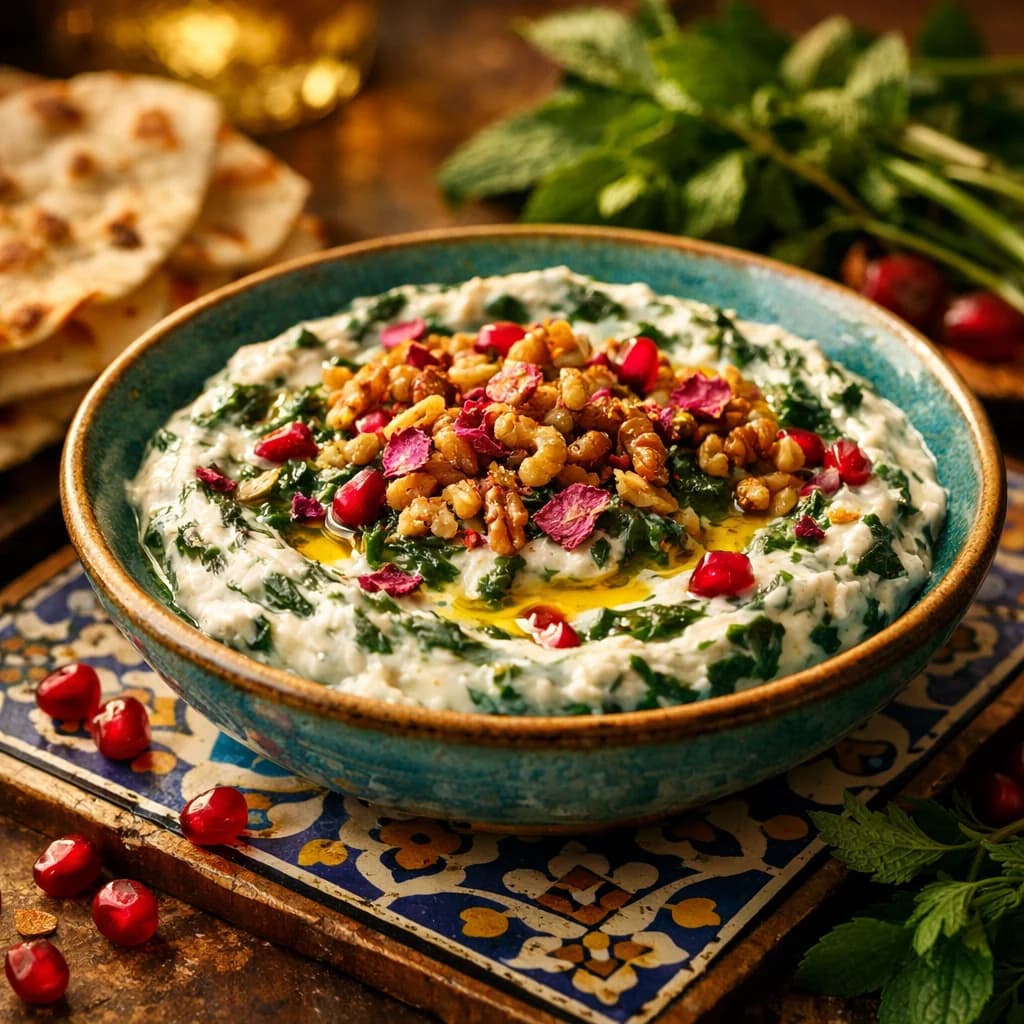
A vibrant, verdant dip of garlicky sautéed spinach folded into thick, tangy yogurt—cool, creamy, and deeply satisfying. The spinach is cooked with generous garlic until silky, then combined with yogurt and crowned with toasted walnuts, sometimes dried rose petals, and a drizzle of olive oil. Named after the legendary Persian queen Pourandokht (Buran), borani represents the elegant simplicity of Persian mezze—humble ingredients elevated through technique and balance.

Mast-o-Khiar (Persian Cucumber Yogurt)

Mast-o-Khiar (Persian Cucumber Yogurt)

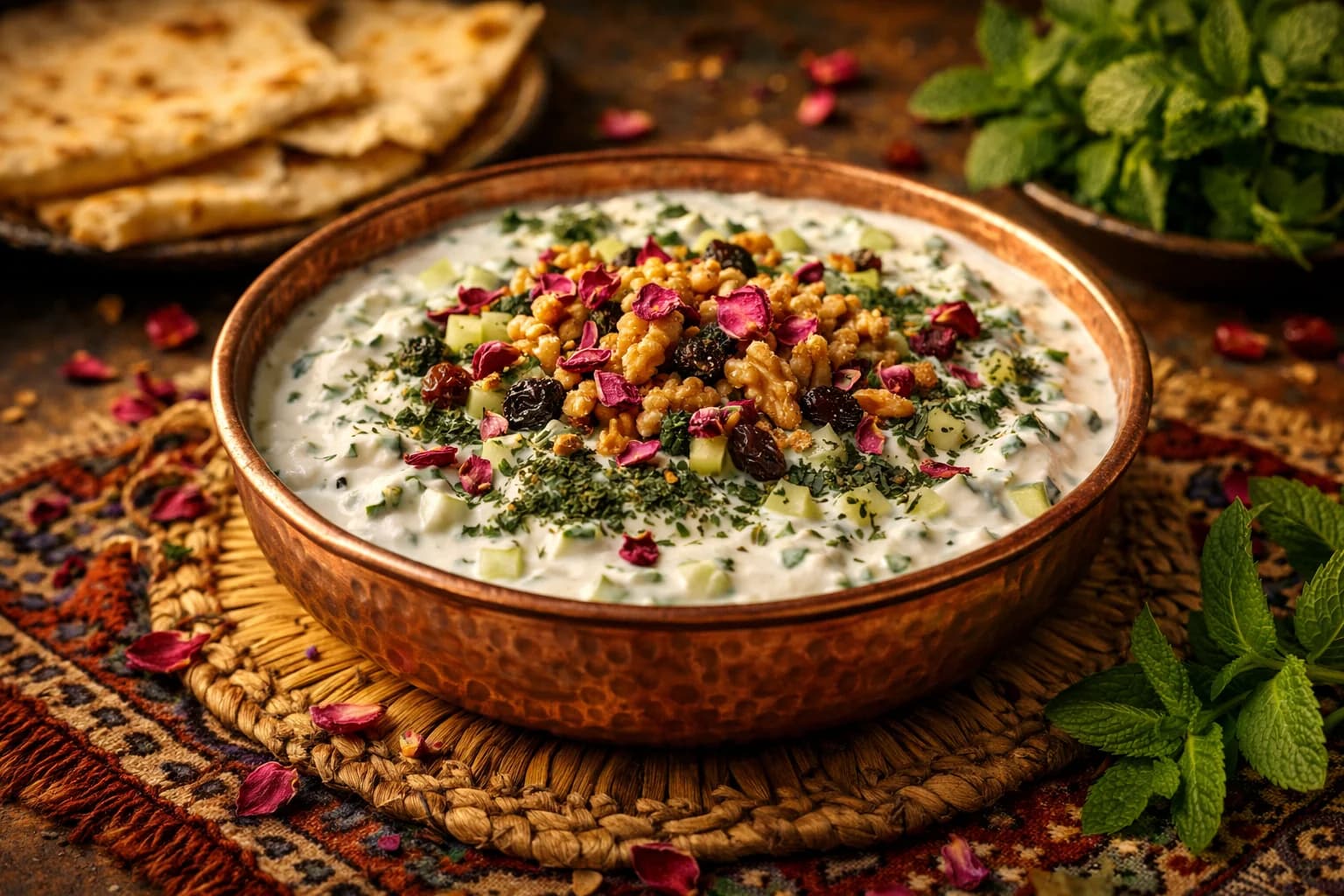
The essential Persian yogurt dip—cool, creamy yogurt studded with crisp cucumber, fragrant dried mint, and often enriched with walnuts, raisins, and rose petals. Unlike Greek tzatziki, Persian mast-o-khiar is thicker, more aromatic, and often includes surprising sweet elements that create a uniquely Persian flavor profile. Found at every Persian table from simple family dinners to elaborate celebrations, this refreshing dip is the perfect cooling counterpoint to rich stews and smoky kebabs.

Sabzi Khordan (Persian Fresh Herb Platter)

Sabzi Khordan (Persian Fresh Herb Platter)

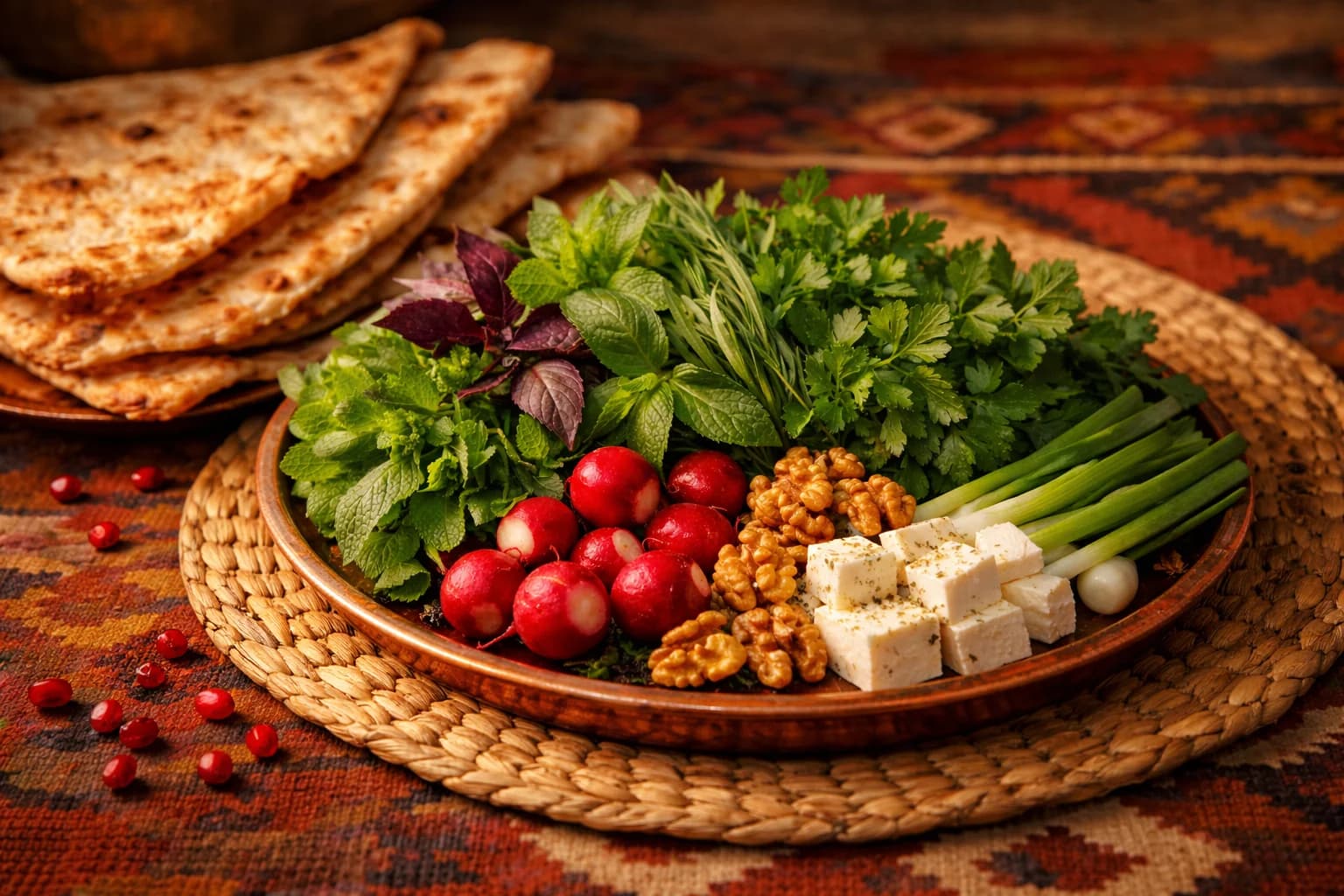
Not a recipe but a ritual—a generous platter of fresh herbs, radishes, spring onions, and sometimes cheese and walnuts that graces every Persian table. The name means literally 'herbs to eat,' and guests pluck whole leaves and sprigs to wrap in bread, eat alongside stews, or simply nibble between bites. This living centerpiece represents the Persian reverence for fresh herbs as not just garnish but essential components of every meal, believed to aid digestion and balance rich dishes.