
Torshi Liteh (Persian Mixed Vegetable Pickle)

Torshi Liteh (Persian Mixed Vegetable Pickle)

ترشی لیته

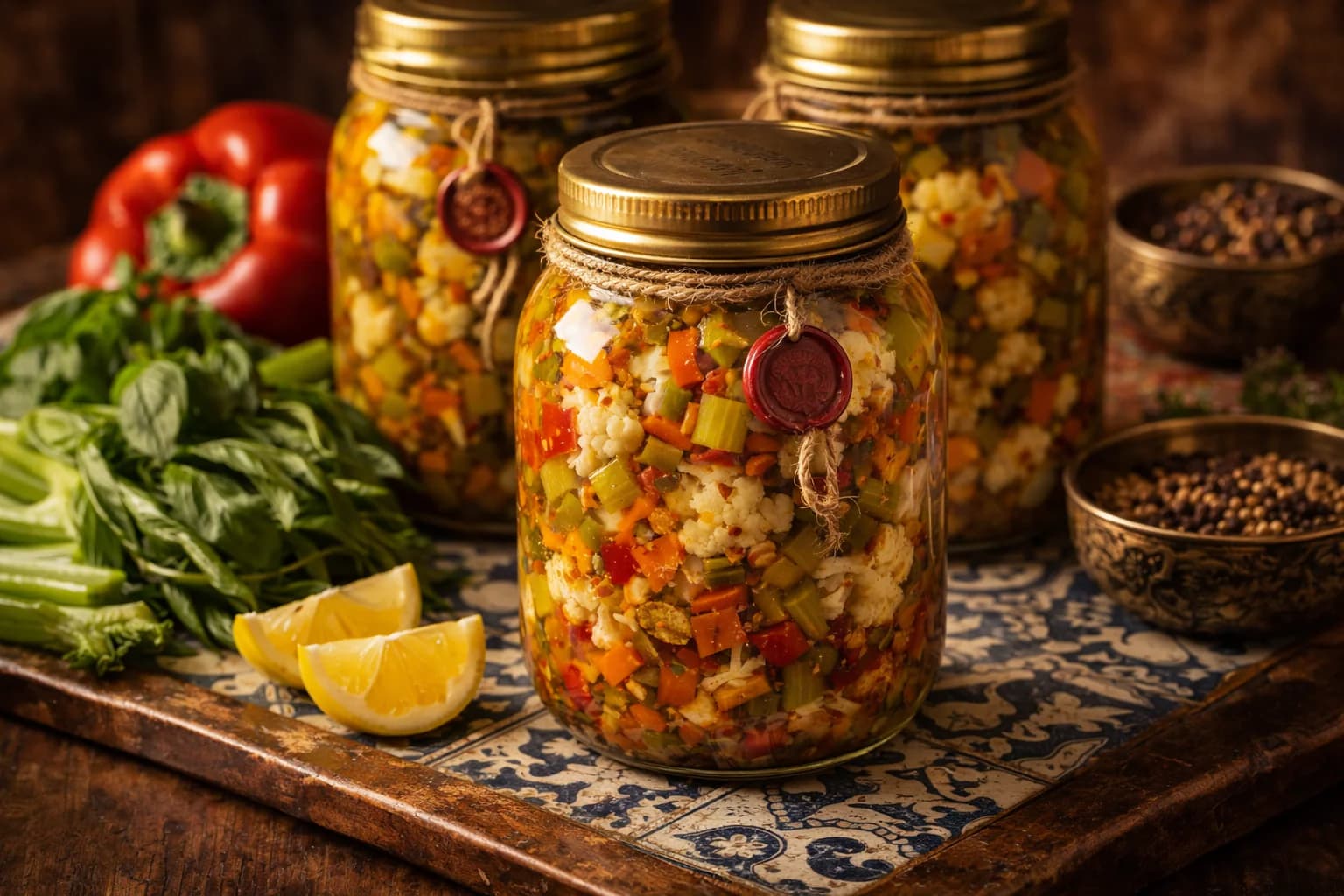
The crown jewel of Persian pickles—a vibrant, chunky medley of vegetables transformed by weeks of soaking in spiced vinegar into something magnificently tangy, aromatic, and complex. Torshi liteh features a colorful array of cauliflower, carrots, celery, peppers, eggplant, and herbs, all infused with the warmth of golpar (Persian hogweed), nigella seeds, and garlic. This isn't a quick pickle but a fermented treasure that improves with age, the flavors melding and deepening over months. A spoonful of torshi liteh alongside rice and stew is essential to the Persian table—its bright acidity cuts through richness and awakens the palate.

picklePrep: 60 minCook: 15 mineasyServes 48

Cultural Note

Torshi is as essential to the Persian table as bread itself—no meal of rice and stew is complete without it. The tradition of making torshi stretches back millennia, born from the practical need to preserve autumn's vegetable bounty through winter. In Iran, autumn is torshi-making season: families gather to prepare large batches, filling rows of glass jars that will line pantry shelves for the coming year. Each family has its own recipe, passed down through generations, with secret spice blends and vegetable combinations. The best torshi is aged—fresh torshi is good, but torshi that has sat for 6 months or a year develops extraordinary depth. 'Torsh' means sour in Persian, and a good torshi should be bracingly tangy, a perfect foil to rich, meaty dishes. Offering torshi to guests is a point of pride; a family's torshi is often the subject of much discussion and comparison.

Critical Moments

  • Thoroughly drying all vegetables (no water!)
  • Blanching hard vegetables briefly (still firm)
  • Complete submersion in vinegar
  • Using vinegar with at least 5% acidity
  • Cool, dark storage for aging
1
PREP35 min

Salt the eggplant

Cut the eggplant into 1-2cm cubes. Place in a colander, toss with 1 tablespoon salt, and let drain for 30 minutes. This removes bitterness and excess moisture. Rinse briefly and pat dry.

Eggplant cubes have released moisture; slightly wilted
TouchEggplant is less spongy, slightly compressed
Salting is essential for eggplant in pickles—unsalted eggplant absorbs too much vinegar and becomes mushy. Well-drained eggplant maintains texture.
While waiting: While eggplant drains, prepare other vegetables
2
PREP20 min

Prepare all vegetables

Cut cauliflower into small florets (2-3cm). Peel carrots and cut into small chunks or sticks. Slice celery into 1cm pieces. Cut peppers into chunks. Trim green beans and cut into 2cm pieces. Peel turnip and cut into small chunks. All pieces should be roughly uniform in size for even pickling.

Colorful array of uniform vegetable pieces
SmellFresh vegetables
SoundChopping
TouchFirm, raw vegetables

Critical Step

Uniform size ensures all vegetables pickle at the same rate. Too large and they won't pickle through; too small and they become mushy.

The vegetable selection is flexible—use what's fresh and available. Other traditional additions include parsley root, green tomatoes, and small hot peppers.
3
COOK10 min

Blanch the hard vegetables

Bring a large pot of salted water to boil. Blanch the harder vegetables (cauliflower, carrots, green beans, turnip) for 2-3 minutes—just until slightly softened but still very firm (they will continue to soften in the vinegar). Drain immediately and spread on a clean towel to cool and dry completely.

Vegetables are slightly brighter in color; still very firm
HighBoiling water
SmellCooking vegetables
SoundBoiling water
TouchFirm—should still have significant crunch

Critical Step

Blanching removes raw enzyme activity that can cause off-flavors and softens vegetables just enough for the vinegar to penetrate. Overblanching creates mushy torshi. The vegetables should still be quite firm.

Don't blanch the eggplant, peppers, celery, or herbs—they're tender enough raw. The blanching water can be salted generously.
4
PREP30 min

Dry the vegetables thoroughly

Spread all vegetables (blanched and raw) on clean kitchen towels. Let air dry for at least 30 minutes, or pat dry thoroughly. The vegetables must be completely dry before jarring—any water dilutes the vinegar and can cause spoilage.

Vegetables are dry to the touch; no visible moisture
TouchCompletely dry, no moisture

Critical Step

Water is the enemy of successful pickling. Moisture trapped in the jar dilutes the vinegar's acidity and can allow mold or bacteria to grow. Patience here ensures long-lasting torshi.

You can even let the vegetables air dry for several hours or overnight. The drier, the better. Some traditional recipes spread vegetables in the sun.
5
PREP10 min

Prepare the aromatics and spices

Peel the garlic cloves and leave whole or halve large ones. Roughly chop the fresh herbs. In a small bowl, combine the golpar, nigella seeds, coriander seeds, peppercorns, dried fenugreek (if using), and turmeric (if using). Lightly crush the coriander seeds.

Prepared garlic, chopped herbs, spice mixture
SmellAromatic spices—especially the distinctive golpar
Golpar (Persian hogweed seeds) has a unique tangy, citrusy flavor that's essential to authentic torshi. It's available at Persian groceries. If unavailable, see substitution notes, though the flavor will differ.
6
PREP15 min

Layer the vegetables in jars

In clean, sterilized glass jars, layer the vegetables, interspersing with garlic cloves, fresh herbs, and sprinkling spice mixture between layers. Pack firmly but don't crush. Leave about 3cm headspace at the top of each jar.

Colorful layers of vegetables with visible garlic and herbs; tightly packed
SmellFresh vegetables and aromatics
TouchFirmly packed

Critical Step

Layering distributes flavors evenly throughout. Firm packing prevents vegetables from floating above the vinegar (exposed vegetables can mold). Headspace allows for expansion.

Use glass jars only—metal reacts with vinegar. Jars should be sterilized by washing in hot soapy water and drying thoroughly, or running through dishwasher.
7
PREP5 min

Add salt and vinegar

Divide the remaining salt among the jars, sprinkling over the top layer. Pour vinegar over the vegetables, making sure to completely cover them by at least 2cm. Press down on vegetables to release air bubbles. All vegetables must be submerged.

Vegetables completely submerged in vinegar; no air pockets
SmellSharp vinegar
SoundBubbles rising as air escapes

Critical Step

Complete submersion is essential—any vegetable above the vinegar line can mold. The vinegar's acidity (5% minimum) is what preserves the vegetables and prevents spoilage.

If vegetables float, place a small piece of cheesecloth or a grape leaf on top to keep them submerged. Some recipes use a small weight.

Common Mistakes

  • Not using enough vinegar (vegetables not covered)
  • Using vinegar with less than 5% acidity (won't preserve properly)
8
FINISH5 min

Seal and store

Wipe jar rims clean with a dry cloth. Seal tightly with lids. Store in a cool, dark place (pantry, cellar, or dark cupboard). The torshi will be ready to eat in 3-4 weeks but improves significantly with age—6 months to a year is ideal.

Sealed jars with colorful vegetables visible; clear vinegar (will become cloudy over time)
SmellSealed—no smell

Critical Step

Cool, dark storage is essential for proper aging and color preservation. Light can degrade colors and flavors. The torshi needs time to develop—rushing results in inferior product.

Label jars with the date. Check occasionally in the first week to ensure vegetables remain submerged—press down if needed. A slight cloudiness is normal and desirable.
9
FINISH0

Age and serve

Let the torshi age for at least 3-4 weeks before opening. For best flavor, wait 2-3 months or longer—properly made torshi improves for up to a year. Once opened, refrigerate and use within 2-3 months. Serve as a condiment alongside rice, stews, kebabs, and any Persian meal.

Matured torshi with softened but still textured vegetables; amber-colored liquid
SmellComplex, tangy, aromatic
TouchVegetables are softened but retain some texture; pleasantly crunchy-tender
The torshi liquid is also precious—use it to flavor dressings, marinades, or drink a small amount as a digestive (traditional remedy). Serve torshi in a small bowl alongside the main meal.

Resting Required

30240 min - Minimum 3-4 weeks aging; best at 2-3+ months for full flavor development
Extras

Equipment

large glass jars with lidslarge pot for blanchinglarge bowlstandard

Make Ahead

  • Torshi IS a make-ahead food—it must age.
  • Make in autumn for use all year.
  • Unopened jars keep for 1+ years in cool, dark storage.
  • Once opened, refrigerate and use within 2-3 months.

N/A—served cold or at room temperature as a condiment

Serve With

Sides

  • Essential condiment for all Persian meals
  • Particularly with rice and stew (khoresh)
  • Alongside kebabs
  • With abgoosht (lamb soup)

Drinks

  • Persian tea
  • Doogh

Substitutions

golparEssential Persian pickle spice with unique tangy-citrus flavor. Substitute: angelica seeds (closest), or a mix of caraway and coriander (different but acceptable). Available at Persian groceries.
vinegarWhite wine vinegar or apple cider vinegar are traditional. Distilled white vinegar works but has harsher flavor. Must be at least 5% acidity for safe preservation.
vegetablesThe recipe is flexible—use what's available. Traditional additions include parsley root, green tomatoes, small hot peppers, cabbage. Avoid very soft vegetables like tomatoes or cucumbers (use for other pickles).
nigella seedsAlso called kalonji or black seeds. Essential for authentic flavor. Available at Middle Eastern, Indian, or Persian groceries.

Scaling

This recipe makes approximately 3 liters of torshi—enough to fill several jars. Scale based on your harvest or vegetable availability. Torshi improves with age and keeps for over a year, so large batches are traditional and practical. The vegetable proportions are flexible; use what's freshest.

Source

Traditional · Traditional Persian cuisine

Torshi-making is an autumn tradition in Iran, when vegetables are abundant and families prepare large batches to last through winter and beyond. The word 'torshi' comes from 'torsh' meaning sour. Liteh specifically refers to this chunky mixed-vegetable style, distinguished from smoother or single-vegetable torshis.

Related Recipes

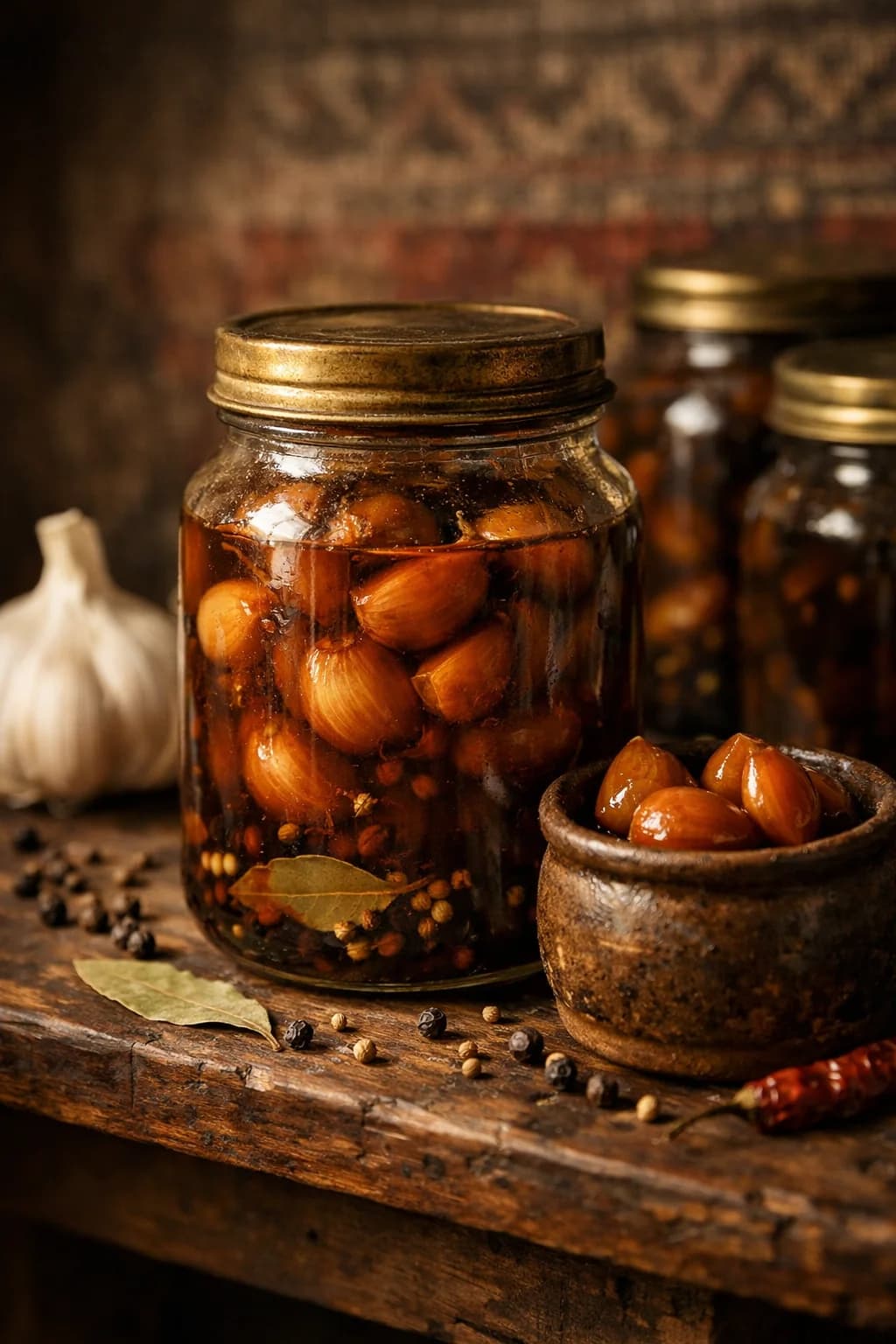
Torshi Sir (Persian Pickled Garlic)

Torshi Sir (Persian Pickled Garlic)

Whole garlic cloves slowly transformed over months into tender, mellow, golden nuggets—torshi sir takes garlic's assertive pungency and gentles it into something almost sweet, deeply savory, and utterly addictive. Pickled in vinegar with Persian spices, the garlic mellows dramatically while absorbing complex flavors. What begins as sharp and biting becomes soft, tangy, and beautifully nuanced. Aged torshi sir is a prized condiment, eaten whole alongside rice and kebabs, or minced into dishes for its unique fermented depth. This is a patience project—minimum three months, ideally a year—but the result is extraordinary.

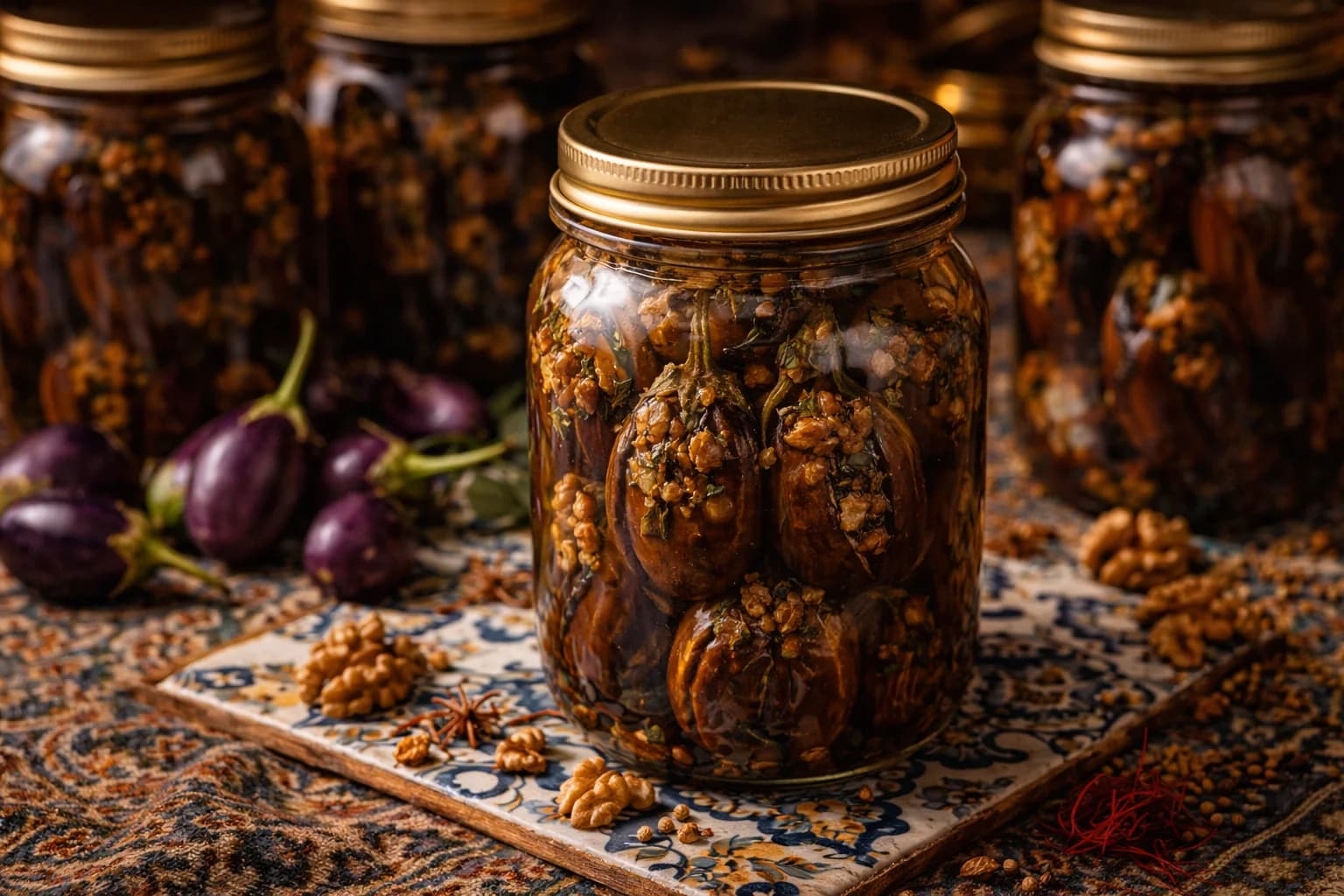
Torshi Bademjan (Persian Stuffed Pickled Eggplant)

Torshi Bademjan (Persian Stuffed Pickled Eggplant)

Small eggplants stuffed with an aromatic blend of garlic, walnuts, herbs, and spices, then pickled in spiced vinegar until tender and intensely flavorful—torshi bademjan is the most elegant and labor-intensive of Persian pickles. Each little eggplant is a treasure chest of flavors: the silky, tangy flesh yielding to a fragrant filling of crushed walnuts, golden garlic, fresh herbs, and the distinctive warmth of golpar. This is a showpiece pickle, brought out for special occasions and honored guests. The preparation is a labor of love, but the result—after weeks of patient aging—is extraordinary.

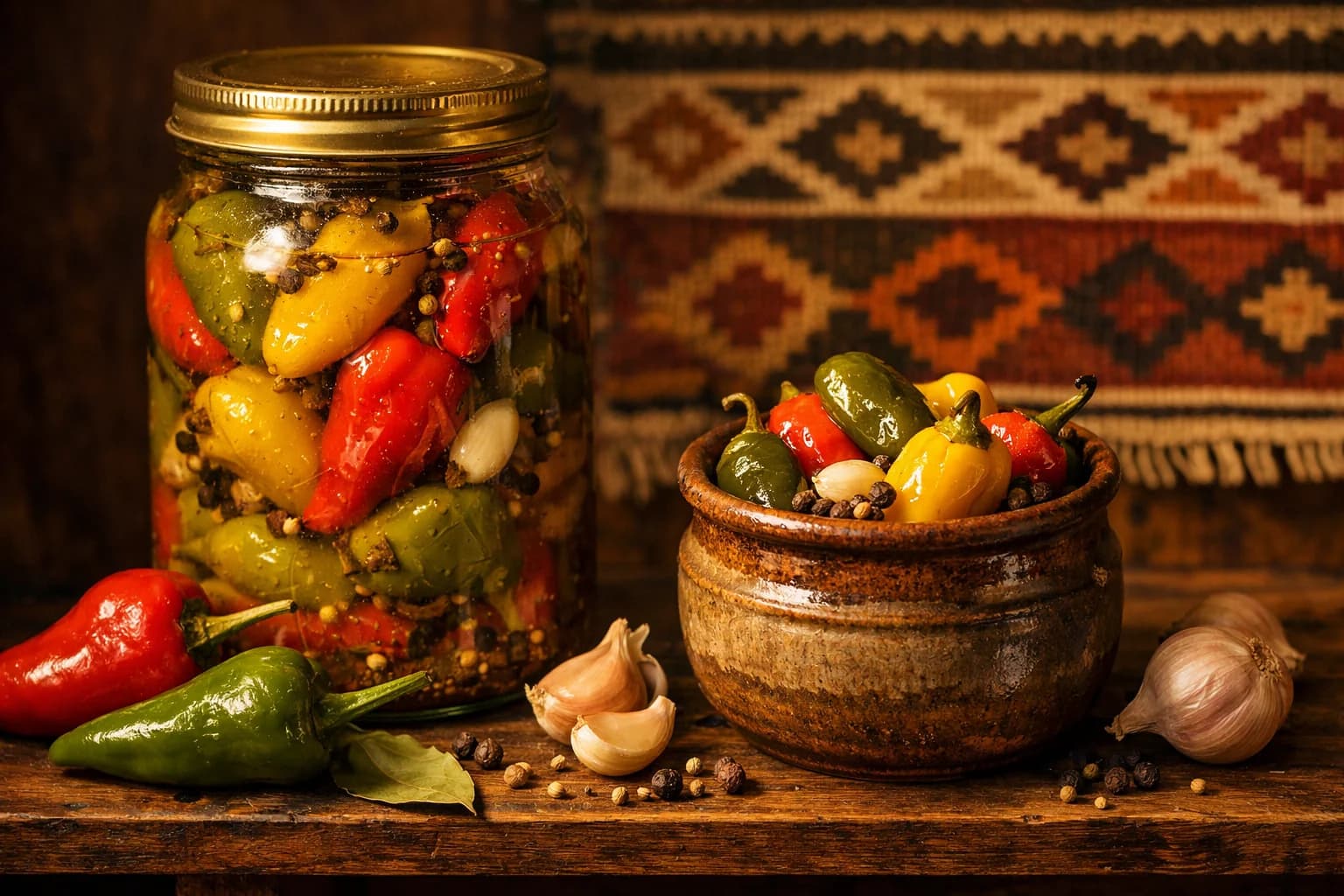
Torshi Felfel (Persian Pickled Peppers)

Torshi Felfel (Persian Pickled Peppers)

Vibrant, tangy, and versatile—torshi felfel transforms sweet or hot peppers into crunchy, flavor-packed pickles that brighten any meal. This straightforward pickle showcases peppers in all their glory, from mild bell peppers to fiery serranos, preserved with vinegar, garlic, and Persian spices. The peppers retain their satisfying crunch while absorbing the tangy, aromatic brine. Whether you prefer mild or spicy, whole or sliced, torshi felfel is one of the quickest and most rewarding Persian pickles to make—ready in just a few weeks and perfect alongside rice, kebabs, and stews.