
Critical Moments
- •Rice parboiling to al dente (not soft)
- •Proper layering for visual effect
- •Potato tahdig requires full cooking time
- •Never lifting lid during steaming
Wash and soak the rice
Place rice in a large bowl. Fill with cold water, swirl with your hand, and drain. Repeat 5-6 times until water runs mostly clear. Dissolve 2 tbsp salt in 2L lukewarm water, add rice, and soak for at least 1 hour (up to 3 hours).
Critical Step
Proper washing and soaking is the foundation of fluffy Persian rice. This cannot be skipped or rushed.
Bloom the saffron
Grind saffron with a pinch of sugar using mortar and pestle. Add 5 tbsp hot water, cover, and steep for at least 30 minutes.
Brown the lamb shanks
Pat lamb shanks dry. Season generously with salt, pepper, and turmeric. Heat 60ml oil in a large braising pot or Dutch oven over medium-high heat. Brown shanks in batches on all sides, about 4-5 minutes per side. Remove to a plate.
Critical Step
Browning develops deep flavor through the Maillard reaction. Skipping this step results in bland, gray meat.
Braise the lamb shanks
Add sliced onions to the pot and cook until golden, about 8 minutes. Add cinnamon if using. Return lamb shanks to pot, add water or stock, and 2 tbsp of saffron water. Bring to a boil, then reduce heat to low. Cover tightly and braise for 2-3 hours until meat is falling off the bone.
Prepare the fava beans
If using fresh fava beans: shell the beans from pods, blanch in boiling water 2 minutes, then shock in ice water and slip off the outer skins. If using frozen: thaw completely and slip off outer skins (optional but results in more vibrant green color and tender texture).
Common Mistakes
- •Not removing outer skins (tougher texture, paler color)
- •Using very old frozen beans (grayish, mealy texture)
Prepare the dill
If using fresh dill: wash thoroughly, shake dry, and finely chop (you should have about 3 packed cups). If using dried dill: measure 80g and set aside—it will be added differently.
Sauté dill and fava beans (if using fresh dill)
Heat 30ml oil in a skillet over medium heat. Add fava beans and sauté for 3 minutes. Add fresh dill and sauté together for another 3-4 minutes until dill is wilted and darkened slightly. Season with a pinch of salt. Set aside. (If using dried dill, skip this step—it will be layered directly with rice.)
Parboil the rice
Bring 3L water with 2 tbsp salt to a rolling boil. Drain soaked rice and add to boiling water. Boil for 5-7 minutes, testing frequently. Rice should be al dente—soft outside with a tiny firm core.
Critical Step
Perfect parboiling is essential for fluffy final rice. The al dente stage ensures grains finish cooking during steaming without becoming mushy.
Drain the rice
Immediately drain rice into a fine-mesh strainer. Rinse briefly with lukewarm water to stop cooking. Shake gently to drain—don't press or compact.
Prepare the potato tahdig
In a non-stick pot, add 60ml oil and 2 tbsp saffron water. If using potato tahdig: arrange potato slices in a single layer on the bottom, overlapping slightly. If not using potatoes, mix 2 cups parboiled rice with 2 tbsp saffron water and spread on bottom as in zereshk polo.
Critical Step
The tahdig layer is set up now. Potato tahdig is traditional for baghali polo and becomes incredibly crispy and golden.
Layer rice with dill and fava beans
Add rice and dill-fava mixture in alternating layers: start with a layer of plain rice over the tahdig, then a layer of dill-fava mixture, then rice, then dill-fava. Finish with a layer of rice. Build into a pyramid shape. Poke 5-6 holes to the bottom with a wooden spoon handle.
Critical Step
Layering distributes the dill and beans throughout and creates the beautiful striped appearance when served. The pyramid and steam vents ensure even cooking.
Drizzle with butter and saffron
Melt butter and combine with remaining saffron water. Drizzle over the rice pyramid, allowing it to seep down through the holes.
Steam the rice
Place pot over medium-high heat uncovered for 3-4 minutes until steam rises. Wrap lid with a clean kitchen towel, place tightly on pot. Reduce heat to lowest setting. Steam for 50-55 minutes without lifting the lid.
Critical Step
The towel absorbs condensation. Low heat ensures gentle steaming and gradual tahdig crisping. Opening the lid releases essential steam.
Release and serve
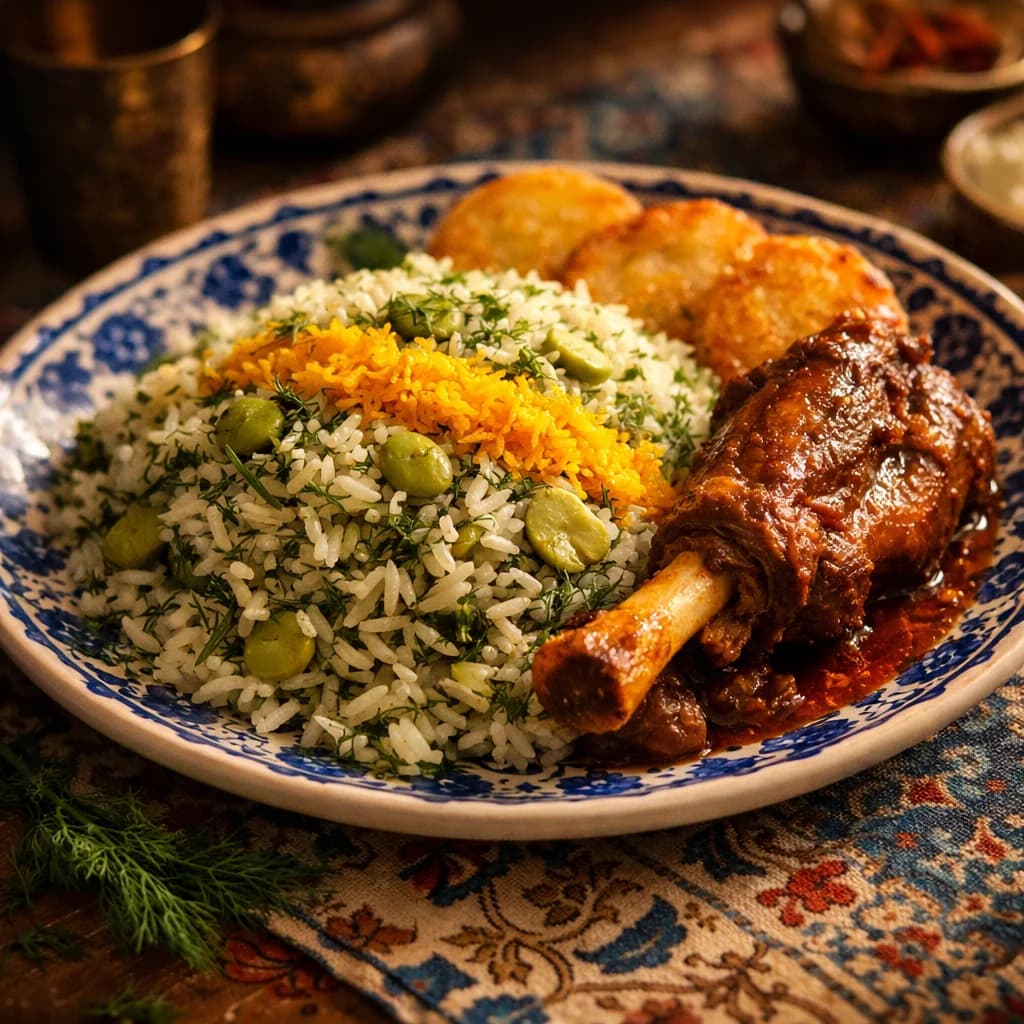
Remove from heat and let rest 5 minutes. Remove lid. Gently fluff rice with a fork, keeping layers somewhat intact. Spoon onto serving platter. For tahdig: place a plate over the pot, flip confidently, and lift pot. Potato tahdig should release as a golden disc.
Final assembly
Arrange lamb shanks around the rice platter or on a separate platter. Spoon some of the braising juices over the lamb. Drizzle additional saffron water over the rice for color. Serve immediately with the tahdig broken into pieces or presented whole.
Resting Required
5 min - Allows tahdig to contract from pot sides for clean release