
Bastani Sonnati (Persian Saffron Ice Cream)

Bastani Sonnati (Persian Saffron Ice Cream)

بستنی سنتی

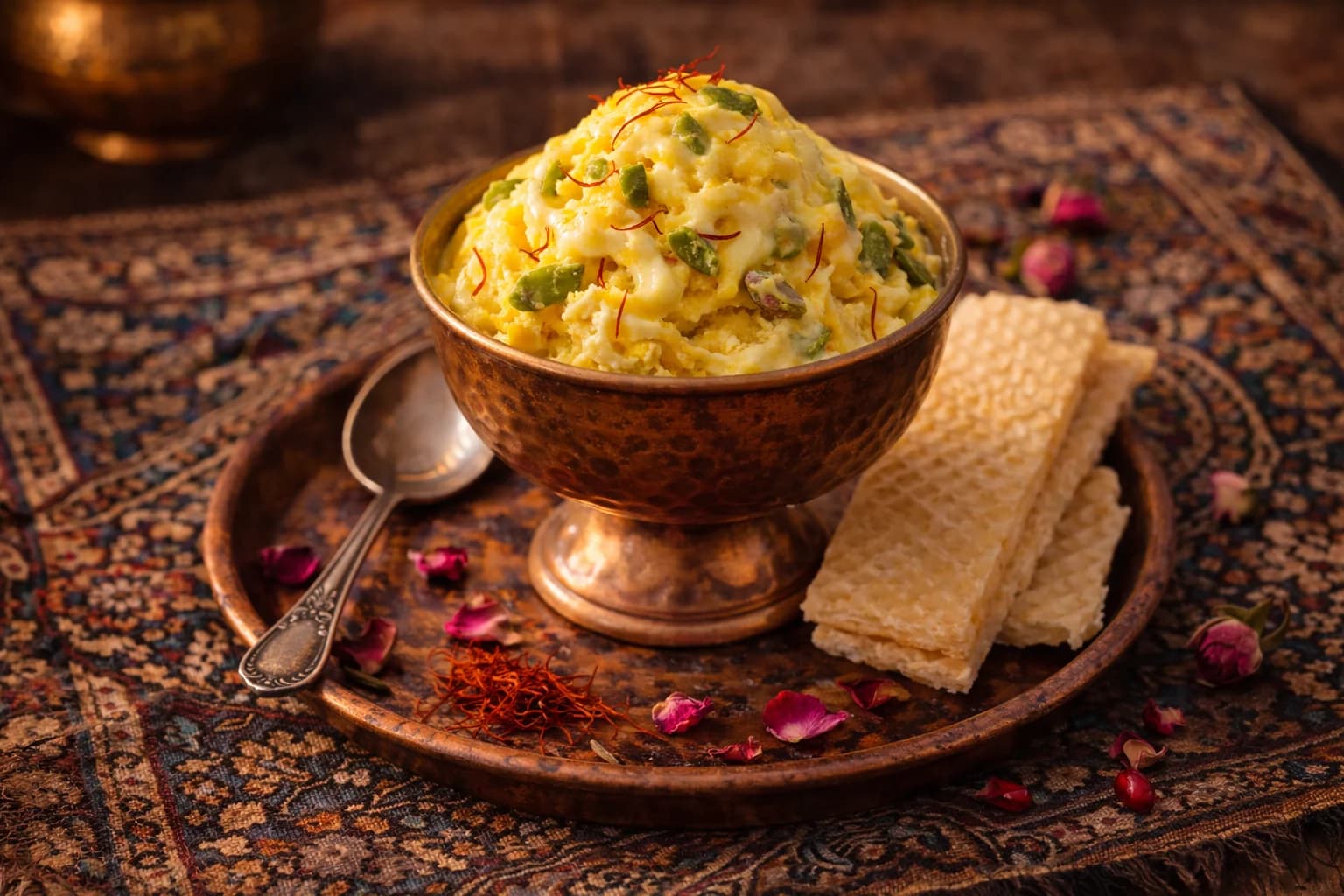
The legendary Persian ice cream—a luxurious frozen cream perfumed with saffron and rosewater, studded with pistachios, and threaded with frozen ribbons of clotted cream. Unlike any Western ice cream, bastani sonnati has a distinctive chewy, stretchy texture from salep (orchid root powder) and an intoxicating fragrance that captures the essence of Persian sweets. Traditionally served pressed between crispy wafers or alongside faloodeh, this golden ice cream is the crown jewel of Persian frozen desserts.

dessertPrep: 30 minCook: 25 minintermediateServes 8

Cultural Note

Bastani sonnati is one of Iran's most beloved treats, sold from street carts, ice cream shops (bastani forooshi), and enjoyed at home. The name means 'traditional ice cream,' distinguishing it from Western-style varieties. What makes it unique is the combination of salep (which creates a chewy, stretchy, mochi-like texture), saffron (for color and fragrance), rosewater (for floral perfume), and frozen chunks of clotted cream (sarshir) that provide creamy pockets of richness. The traditional serving is 'bastani nooni'—ice cream pressed between two thin, crispy wafers like a sandwich. It's also the traditional accompaniment to faloodeh. In summer, bastani sonnati is practically a national obsession.

Critical Moments

  • Blooming saffron for color and flavor
  • Making smooth salep paste before adding to hot liquid
  • Cooking salep long enough for stretchy texture
  • Chilling base completely before churning
  • Not over-churning (should remain stretchy)
1
PREP20 min

Bloom the saffron

Grind the saffron threads with a pinch of sugar using a mortar and pestle until powdered. Place in a small bowl, add 3 tablespoons hot water, and let steep for at least 20 minutes. The liquid should be deep orange-gold.

Deep orange-gold liquid; saffron fully dissolved
SmellIntense saffron aroma—floral, honey-like, distinctive
TouchLiquid is deeply colored

Critical Step

Proper saffron blooming extracts maximum color and flavor. The golden color is essential to bastani's identity. Bloom longer if possible—even overnight in the refrigerator.

2
PREP3 min

Prepare the salep mixture

In a small bowl, whisk the salep powder with 3 tablespoons of the cold milk until smooth—no lumps. This prevents clumping when added to the hot mixture.

Smooth paste with no visible lumps
SmellFaint starchy smell
TouchSmooth, slightly thick paste

Critical Step

Salep clumps instantly in hot liquid. Making a cold paste first ensures even distribution and the signature chewy texture. Lumpy salep ruins the smooth ice cream.

Salep is available at Middle Eastern or Turkish groceries. If unavailable, see substitution notes—though the texture won't be quite authentic.
3
COOK10 min

Heat the milk mixture

In a medium heavy-bottomed saucepan, combine the remaining milk, heavy cream, and sugar. Heat over medium heat, stirring occasionally, until the sugar dissolves and the mixture is hot but not boiling—small bubbles around the edges.

Steam rising; small bubbles at edges; sugar completely dissolved
MediumAbout 80°C / 175°F—just below simmer
SmellWarm, sweet cream
SoundVery gentle simmering
TouchSugar fully dissolved when stirred
4
COOK10 min

Add the salep

Reduce heat to medium-low. While whisking constantly, pour the salep paste into the hot milk mixture in a steady stream. Continue whisking and cooking for 8-10 minutes. The mixture will noticeably thicken and become slightly stretchy.

Mixture has thickened; coats spoon heavily; slightly glossy and stretchy
Medium-LowGentle heat—do not boil
SmellSweet cream
SoundThick bubbling
TouchNoticeably thicker; when stirred, has slight resistance

Critical Step

The salep must be cooked long enough to activate its thickening properties and eliminate any raw starch taste. The mixture should coat a spoon heavily and have a slight stretch when dripped.

Don't let it boil vigorously—gentle heat allows even thickening. The stretchy quality is the hallmark of authentic bastani.
5
COOK5 min

Temper the egg yolks (if using)

If using egg yolks for extra richness: whisk the yolks in a bowl. Slowly ladle about 200ml of the hot milk mixture into the yolks while whisking constantly (this tempers them). Then pour the tempered yolks back into the pot while whisking. Cook for 2-3 more minutes until slightly thickened—do not boil.

Mixture coats spoon more heavily; slightly thicker
Medium-LowDo not exceed 82°C / 180°F or eggs will curdle
SmellRich, custard-like
SoundGentle bubbling
TouchCoats spoon; leaves trail when finger drawn through
Egg yolks are optional—they add richness and smoother texture but are not traditional. Skip for a lighter version.

Common Mistakes

  • Adding hot liquid too fast (scrambles eggs)
  • Boiling after adding eggs (curdles)
6
COOK2 min

Add saffron and rosewater

Remove from heat. Stir in the bloomed saffron (including all liquid) and rosewater. Add vanilla if using. The mixture will turn a beautiful golden-yellow. Stir well to distribute evenly.

Beautiful golden-yellow color; uniform throughout
SmellIntoxicating—saffron and rosewater together create the signature Persian fragrance
TouchSmooth, thick, golden cream

Critical Step

Adding these aromatics off heat preserves their delicate fragrances. The combination of saffron and rosewater defines bastani sonnati.

Taste and adjust rosewater—some prefer more floral intensity. The flavor will mellow slightly when frozen.
7
PREP240 min

Chill the base

Pour the mixture through a fine-mesh strainer into a clean bowl (this catches any lumps or cooked egg bits). Press plastic wrap directly onto the surface to prevent a skin from forming. Refrigerate for at least 4 hours or overnight until completely cold.

Thick, golden cream; cold throughout
SmellSaffron-rosewater aroma
TouchCold, thick, ready for churning

Critical Step

The base must be completely cold before churning—warm base won't freeze properly and results in icy texture. Overnight chilling is best.

The base can be refrigerated for up to 3 days before churning. Give it a good whisk before churning.
8
COOK60 min

Prepare the cream chunks (if using)

If using clotted cream or kaymak: spread it on a parchment-lined plate in small dollops or cut into 1cm pieces. Freeze for at least 1 hour until solid. These frozen chunks will be folded into the ice cream.

Small solid chunks of frozen cream
SmellRich cream
TouchFrozen solid
These cream chunks are the signature 'sarshir' pieces in bastani—pockets of pure frozen cream. If unavailable, you can freeze small pieces of mascarpone or even thick whipped cream.
While waiting: Prepare while the base chills
9
COOK30 min

Churn the ice cream

Pour the cold base into your ice cream maker and churn according to manufacturer's instructions—typically 25-35 minutes until thick and the consistency of soft-serve. The salep makes it thicker and stretchier than regular ice cream.

Thick, golden soft-serve consistency; noticeably stretchy when scooped
SmellFrozen saffron-rosewater
SoundIce cream maker churning
TouchThick, stretchy, soft-serve consistency

Critical Step

Proper churning incorporates air and creates smooth texture. The salep gives bastani its distinctive stretchy quality—it should almost stretch like mochi when scooped.

If you don't have an ice cream maker, pour into a shallow container and freeze, whisking vigorously every 30 minutes for 3-4 hours until set.
10
FINISH3 min

Fold in pistachios and cream chunks

During the last few minutes of churning, or after transferring to a container, fold in the chopped pistachios and frozen cream chunks. Distribute evenly throughout.

Green pistachio pieces and white cream chunks visible throughout golden ice cream
SmellSaffron-rosewater with nutty pistachio
TouchChunky with nuts and cream pieces
Don't over-mix—you want distinct pockets of frozen cream and visible pistachio pieces throughout.
11
FINISH240 min

Freeze until firm

Transfer the ice cream to a freezer-safe container, pressing plastic wrap directly onto the surface. Freeze for at least 4 hours or overnight until firm. Remove from freezer 10-15 minutes before serving to soften slightly.

Firm, scoopable ice cream with visible pistachios and cream chunks
SmellSaffron-rosewater (when serving)
TouchFirm but scoopable; stretchy when served
Bastani is best served when not rock-hard—the stretchy texture is most apparent when slightly softened. Traditional serving temperature is just below the point where it starts to melt.
12
FINISH5 min

Serve traditionally

For traditional 'bastani nooni': place a scoop of ice cream between two thin crispy wafers and press gently to form a sandwich. Alternatively, serve in bowls topped with additional pistachios, or alongside faloodeh for a classic pairing.

Golden ice cream sandwiched between pale wafers; or elegant scoops in a bowl
SmellIntoxicating saffron-rosewater
SoundCrisp wafer crunch (if serving as sandwich)
TouchCreamy, stretchy, with crunchy pistachios and cream pockets
The wafer sandwich is iconic street food. At home, elegant scoops in small bowls work beautifully. Always garnish with extra pistachios.

Resting Required

240 min - Base must chill completely; final freeze for proper texture
Extras

Equipment

ice cream makermedium heavy saucepanwhiskfreezer safe containerstandard

Make Ahead

  • Base can be made 3 days ahead and refrigerated.
  • Finished ice cream keeps frozen for 2 weeks, though texture is best in first week.
  • Remove 10-15 minutes before serving.

N/A—frozen dessert.

Just let it temper at room temperature briefly before serving.

Serve With

Sides

  • Faloodeh (essential classic pairing)
  • Fresh fruit
  • Baklava

Drinks

  • Hot Persian tea (traditional contrast)
  • Cold water

Substitutions

salepSalep (sahlab) is essential for authentic texture but hard to find. Substitutes: 1 tbsp cornstarch + ½ tsp guar gum; or 1 tbsp arrowroot. Texture will differ but flavor remains. Mastic gum (½ tsp ground) adds chewiness.
saffronNo substitute—saffron is essential for authentic bastani. The color, flavor, and aroma cannot be replicated.
rosewaterMust be high-quality Persian rosewater. Rose extract is too intense. No substitute for this essential flavor.
clotted creamKaymak (Turkish/Middle Eastern clotted cream), mascarpone, or frozen whipped cream dollops work. The cream chunks are traditional but optional.

Scaling

Recipe can be doubled for a larger batch. The salep ratio is critical for texture—maintain the proportion carefully. Without an ice cream maker, the hand-churning method requires more active time but produces authentic results. Keeps frozen for up to 2 weeks.

Source

Traditional · Traditional Persian cuisine

Persian ice cream has a history going back centuries, with bastani sonnati ('traditional ice cream') being the most beloved variety. The use of salep, saffron, and rosewater distinguishes it from all other ice creams. Traditionally churned in large metal canisters and served from street carts.

Related Recipes

Halva (Persian Saffron Flour Halva)

Halva (Persian Saffron Flour Halva)

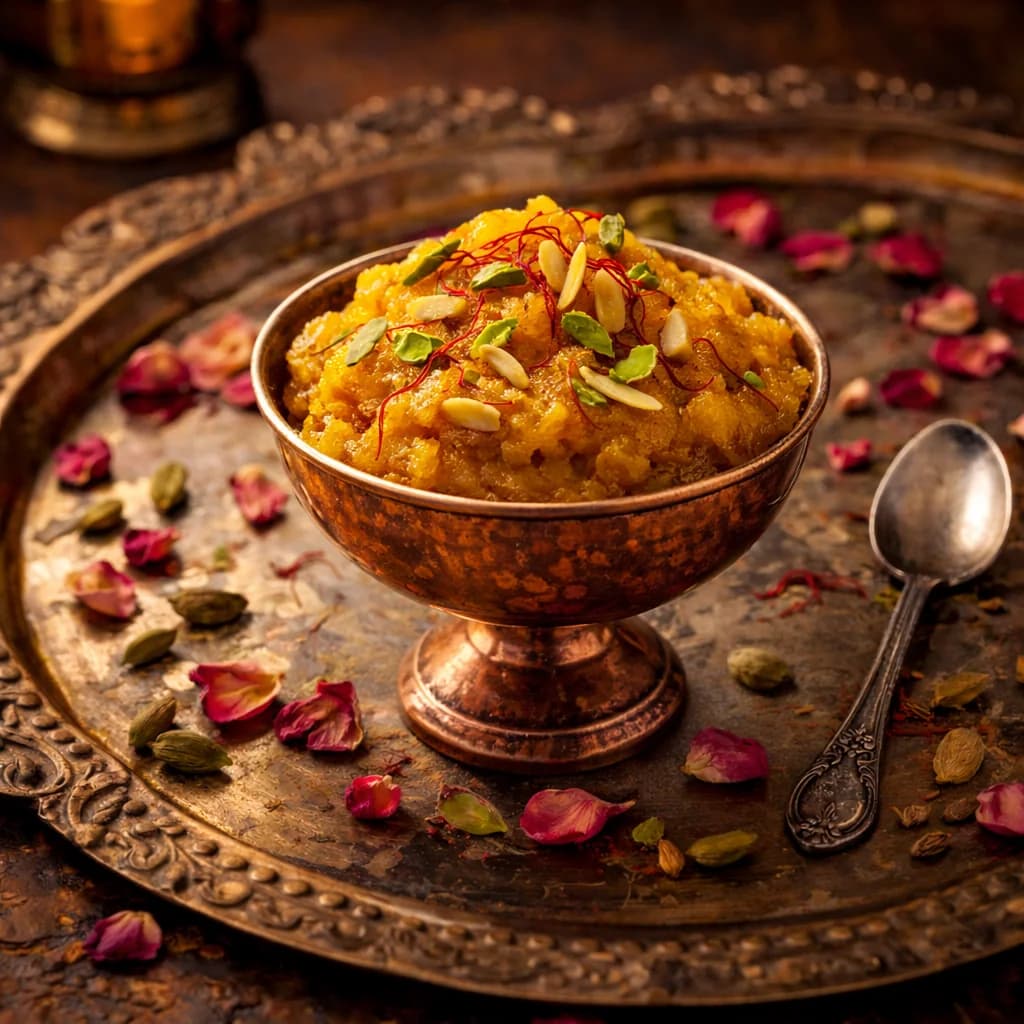
A rich, aromatic confection of toasted flour cooked with butter, infused with saffron and rosewater, then sweetened with fragrant syrup—Persian halva is unlike any other version you may know. This dense, spoonable sweet is deeply connected to Persian religious and cultural life, prepared for memorial services, religious holidays, and sacred occasions. The slow toasting of flour in butter creates a distinctive nutty flavor, while saffron and rosewater provide the unmistakable Persian perfume. Decorated with almonds and pistachios, halva is both a comfort food and a spiritual offering.

Sholeh Zard (Persian Saffron Rice Pudding)

Sholeh Zard (Persian Saffron Rice Pudding)

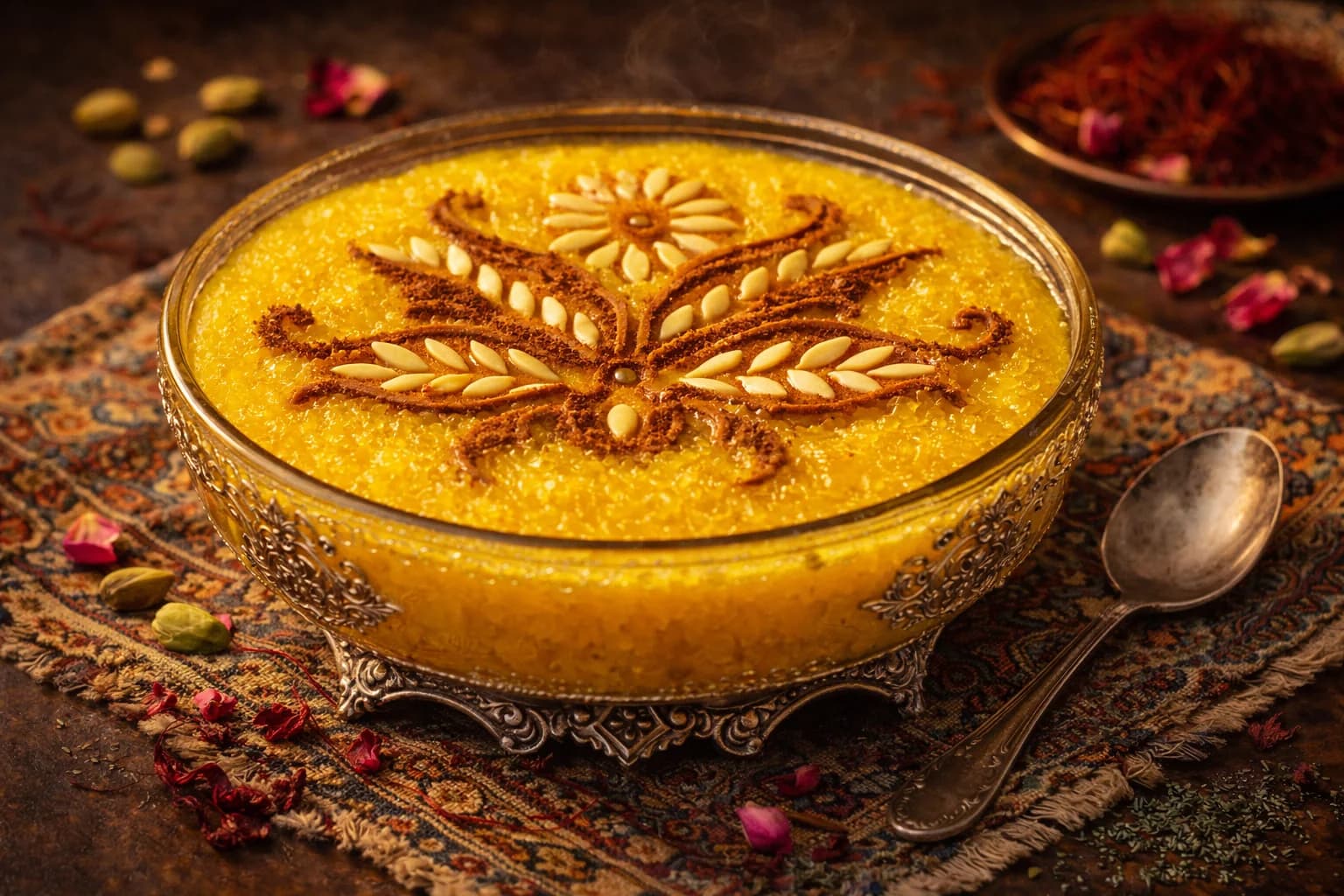
A luminous golden pudding of slow-cooked rice infused with generous saffron and rosewater, decorated with intricate patterns of cinnamon and slivered almonds. This is the most spiritually significant dessert in Persian cuisine—prepared as nazri (religious offering) to fulfill vows, share blessings, and commemorate sacred occasions. The name means 'yellow flame,' referring to its brilliant saffron color. Made in enormous quantities and distributed to neighbors, strangers, and those in need, sholeh zard represents Persian hospitality and devotion at their most generous.

Baklava (Persian-Style Layered Nut Pastry)

Baklava (Persian-Style Layered Nut Pastry)

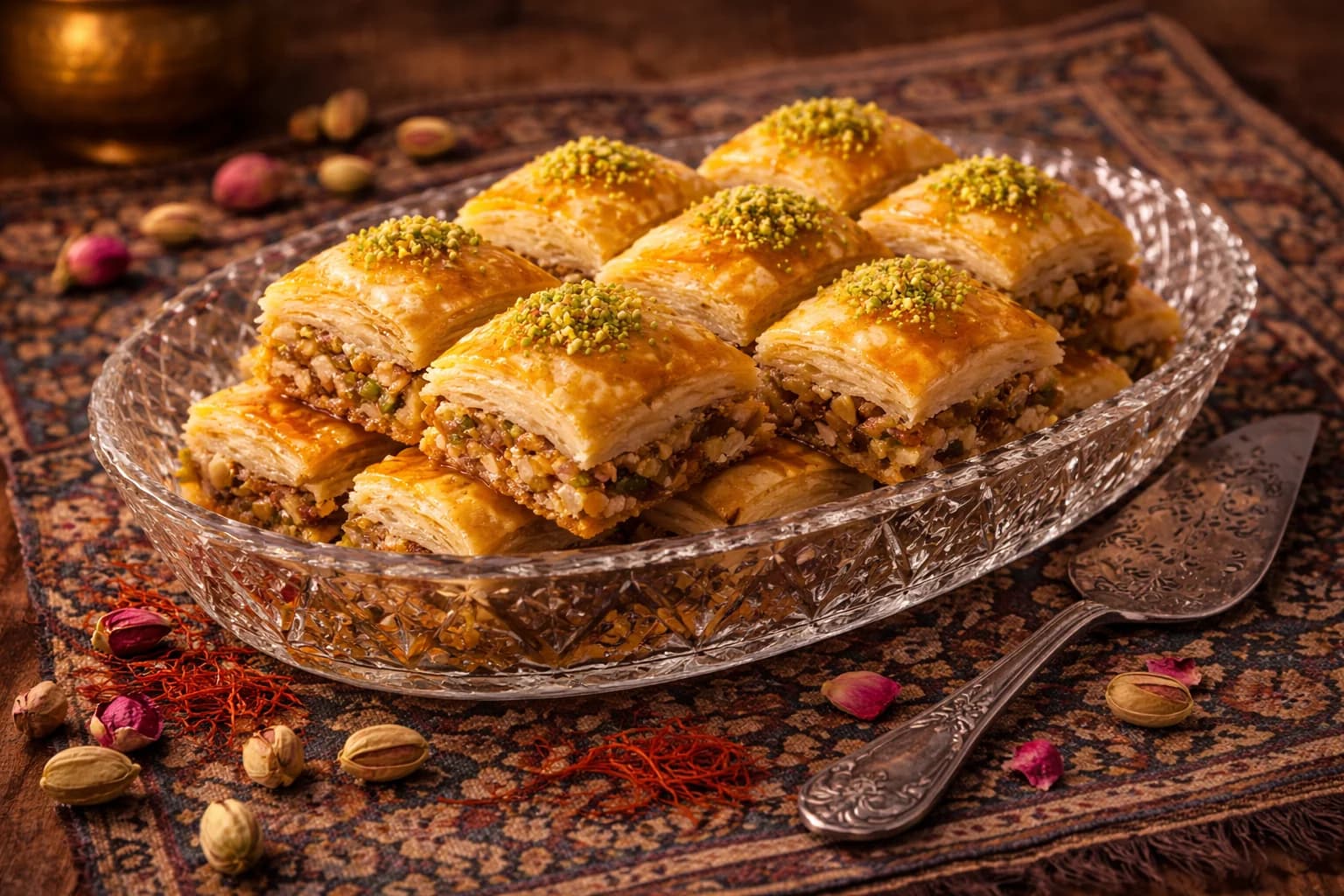
Delicate layers of paper-thin phyllo pastry filled with fragrant ground nuts, baked to golden crispness, and soaked in a saffron-rosewater syrup—Persian baklava is more refined and aromatic than its regional cousins. The Persian version distinguishes itself with generous saffron, rosewater, and cardamom, and often features a combination of pistachios and almonds rather than walnuts alone. Cut into elegant diamond shapes and decorated with ground pistachios, this is the jewel of Persian pastry-making, served at weddings, Nowruz, and whenever celebration calls for something extraordinary.