
Critical Moments
- •Blooming saffron properly for color and flavor
- •Cooking rice until completely broken down (not individual grains)
- •Long, slow cooking to proper thick consistency
- •Adding rosewater off heat to preserve aroma
- •Traditional decoration with cinnamon and nuts
Rinse the rice
Place the rice in a fine-mesh strainer and rinse under cold running water until the water runs clear—this removes excess starch. This typically takes 3-4 rinses. Drain well.
Bloom the saffron
Grind the saffron threads with a pinch of sugar using a mortar and pestle until powdered. Place in a small bowl and add 100ml hot (not boiling) water. Let steep for at least 15 minutes—the water will turn deep orange-gold. This is your bloomed saffron.
Critical Step
Blooming extracts maximum color and flavor from the expensive saffron. Grinding ensures even distribution. The deep golden color is essential to sholeh zard's identity.
Cook the rice until very soft
Place the rinsed rice and 2500ml water in a large heavy pot. Add cardamom pods if using. Bring to a boil, then reduce to a medium simmer. Cook uncovered for 45-60 minutes, stirring occasionally, until the rice is completely soft and broken down—almost porridge-like. The grains should be very soft and the mixture somewhat thick.
Critical Step
The rice must be completely broken down—this is not a rice pudding with distinct grains. It should be soft and almost dissolved, creating a smooth, thick base.
Add sugar and butter
Add the sugar and butter to the pot. Stir until both are completely dissolved and incorporated. The mixture will become glossier and slightly thinner as the sugar dissolves.
Add saffron and continue cooking
Pour in the bloomed saffron, including any sediment. Stir well—the pudding will turn a beautiful golden-yellow. Continue cooking over low heat for another 45-60 minutes, stirring frequently, until the pudding is very thick and pulls away from the sides of the pot slightly. It should coat a spoon heavily.
Critical Step
The long, slow cooking concentrates flavors and develops the characteristic thick texture. The saffron color should be brilliant gold. Too thin and it won't set properly; too thick and it becomes gluey.
Common Mistakes
- •Not cooking long enough (too thin, doesn't set)
- •Not stirring enough (burns on bottom)
- •Too high heat (scorches)
Add rosewater
Remove from heat. Stir in the rosewater—the fragrance will bloom beautifully. Taste and adjust sweetness if desired. Remove and discard cardamom pods if you can find them.
Critical Step
Adding rosewater off heat preserves its delicate floral aroma. Adding while cooking would dissipate the fragrance. The combination of saffron and rosewater is the signature of Persian sweets.
Portion into serving bowls
Ladle the hot pudding into individual serving bowls or one large shallow serving dish. Traditional portions are quite generous—about 150-200ml per bowl. Smooth the tops with the back of a spoon.
Decorate with cinnamon and nuts
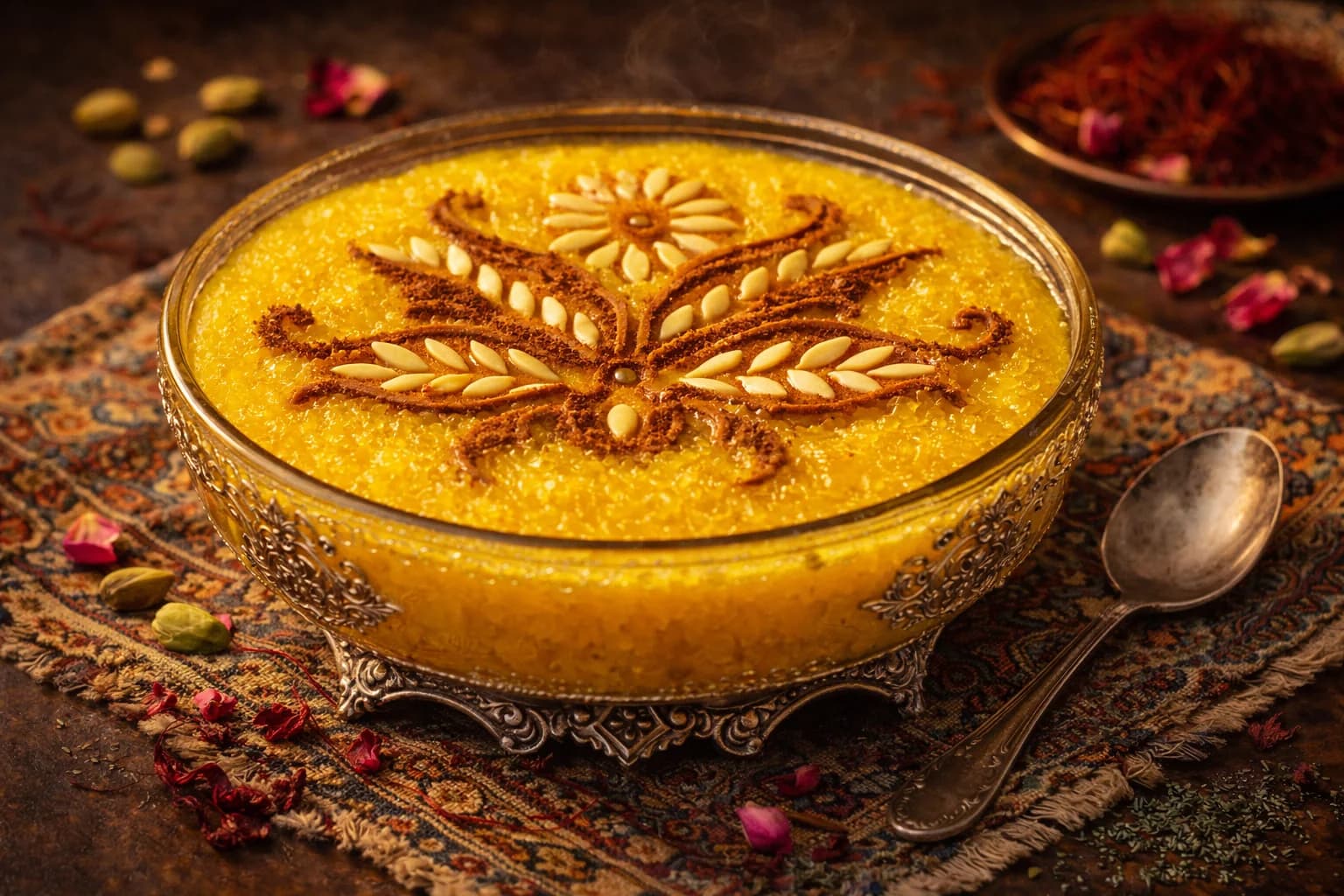
While the surface is still slightly warm (so decorations adhere), create traditional decorations: use cinnamon to draw geometric patterns, write religious phrases (like 'Ya Hussain'), or create simple designs like diamonds, circles, or stars. Arrange slivered almonds and pistachios in decorative patterns—radiating from center, around edges, or as part of the cinnamon design.
Critical Step
The decoration is not merely aesthetic—it's an integral part of sholeh zard's identity and often carries religious significance. Traditional patterns transform simple pudding into an offering.
Cool and serve
Let cool to room temperature, then refrigerate for at least 2 hours until fully set and chilled. Sholeh zard is traditionally served cold or at room temperature. Cover with plastic wrap once fully cooled to prevent a skin from forming.
Resting Required
120 min - Must chill for pudding to set properly; flavor improves overnight