
Fereni (Persian Rice Flour Pudding)

Fereni (Persian Rice Flour Pudding)

فرنی

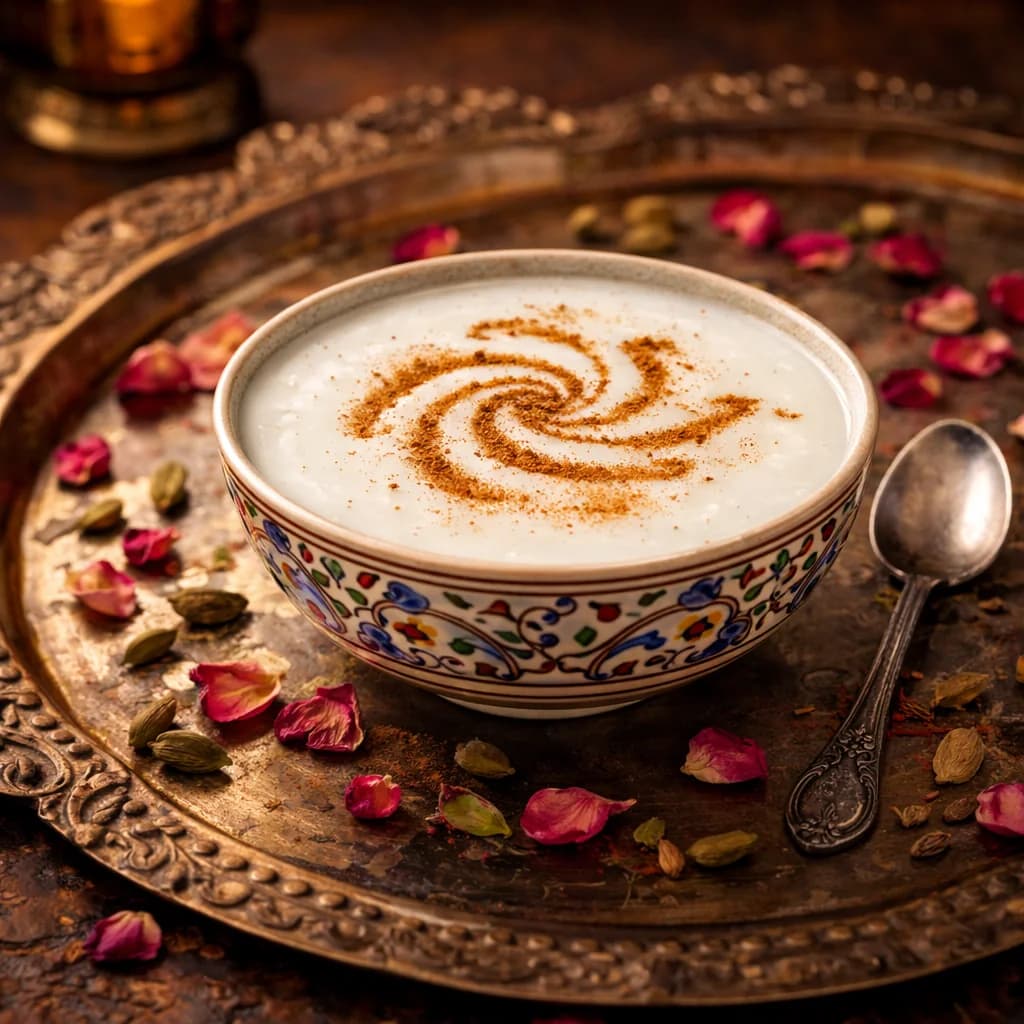
A silky-smooth, pure white pudding made from rice flour, perfumed with rosewater and cardamom, and decorated with a dusting of cinnamon—the most delicate and elegant of Persian desserts. Unlike sholeh zard's golden richness, fereni is subtle, creamy, and light, with a texture like panna cotta or blancmange. Served chilled in small portions, it's the perfect ending to a heavy meal. The contrast of snowy white pudding with cinnamon swirls is visually stunning and distinctly Persian.

dessertPrep: 10 minCook: 25 mineasyServes 6

Cultural Note

Fereni is the lighter, more delicate cousin of sholeh zard—where sholeh zard is rich, golden, and ceremonial, fereni is pure, white, and everyday elegant. The word 'fereni' shares roots with similar puddings across Persian-influenced cuisines: phirni in India and Pakistan, muhallabia in Arab countries. The Persian version is distinguished by its perfume of rosewater and cardamom, and its pure white color that serves as a canvas for cinnamon decoration. Fereni is often served at the end of rich meals because its lightness cleanses the palate. It's also a beloved children's dessert—gentle, creamy, and not too sweet.

Critical Moments

  • Making smooth slurry before cooking (prevents lumps)
  • Constant whisking while cooking
  • Cooking to proper thickness (coats spoon, leaves trail)
  • Adding rosewater off heat
  • Straining for silkiest texture
1
PREP3 min

Make a slurry with the rice flour

In a medium bowl, whisk the rice flour with about 200ml of the cold milk until completely smooth, with no lumps. This slurry prevents lumps when cooking.

Completely smooth white slurry; no visible lumps
SmellFresh milk
SoundWhisking
TouchSmooth liquid, slightly thicker than milk

Critical Step

Starting with a cold slurry prevents lumps. Rice flour clumps instantly when added to hot liquid. This technique ensures silky-smooth pudding.

Whisk thoroughly and check for lumps by pressing against the bowl with the whisk. Any lumps now will be lumps in the finished pudding.
2
COOK8 min

Heat the remaining milk

Pour the remaining 800ml milk into a medium heavy-bottomed saucepan. Add the sugar and cardamom. Heat over medium heat, stirring occasionally, until the sugar dissolves and the milk is hot but not boiling—small bubbles around the edges.

Small bubbles around edges; steam rising; sugar dissolved
MediumJust below simmer—about 80°C / 175°F
SmellWarm milk with cardamom—fragrant
SoundGentle simmering sounds
TouchSugar completely dissolved when stirred
Don't let the milk boil—it can scorch on the bottom and develop a skin.
3
COOK2 min

Add the rice flour slurry

Reduce heat to medium-low. While whisking the hot milk constantly, slowly pour in the rice flour slurry in a steady stream. Continue whisking as you pour to prevent lumps from forming.

Slurry incorporating smoothly; mixture beginning to thicken
Medium-LowGentle heat
SmellWarm milk and cardamom
SoundWhisking
TouchMixture starting to thicken slightly

Critical Step

Constant whisking while adding the slurry prevents lumps. Pour slowly in a steady stream, not all at once. This is the moment when lumps form if you're not careful.

Give the slurry a final whisk before adding—rice flour settles quickly.
4
COOK13 min

Cook until thickened

Continue cooking over medium-low heat, whisking constantly, for 10-15 minutes until the mixture thickens to the consistency of heavy cream or thin custard. It should coat the back of a spoon and leave a trail when you draw your finger through it. Don't stop whisking—the mixture can scorch or form lumps.

Coats spoon thickly; leaves trail when finger drawn through; smooth and glossy
Medium-LowGentle simmer
SmellCooked milk with cardamom—richer, sweeter
SoundThick bubbling
TouchNoticeably thicker; coats spoon and doesn't run off immediately

Critical Step

The pudding must thicken enough to set when chilled, but not so thick it becomes gluey. The coating-spoon test is reliable. Constant whisking prevents scorching.

If you see any lumps forming, whisk vigorously. If lumps persist, you can strain the finished pudding through a fine-mesh strainer.

Common Mistakes

  • Not whisking constantly (lumps, scorching)
  • Undercooking (doesn't set properly)
  • Overcooking (too thick, gluey texture)
Checkpoint: Draw a line through the pudding on the spoon—it should hold its shape for a few seconds.
5
COOK2 min

Add rosewater

Remove from heat. Stir in the rosewater. The fragrance will bloom beautifully. Taste and adjust sweetness or rosewater if needed.

Fragrant, smooth white pudding
SmellIntense rosewater blooming with cardamom—heady, floral
TouchSmooth, pourable but thick

Critical Step

Adding rosewater off heat preserves its delicate floral aroma. Adding while cooking would dissipate the fragrance.

High-quality rosewater makes all the difference. Start with 3 tablespoons and add more to taste—preferences vary.
6
FINISH3 min

Strain (optional but recommended)

For the silkiest texture, pour the pudding through a fine-mesh strainer into a clean bowl or pitcher, pressing gently. This removes any tiny lumps and ensures perfect smoothness.

Perfectly smooth pudding passing through strainer
SmellRosewater and cardamom
TouchSilky smooth, no lumps whatsoever
This step is optional but worthwhile for the most elegant result. Even small lumps are noticeable in this delicate pudding.
7
FINISH5 min

Portion into serving bowls

Pour the warm pudding into individual serving bowls, small glasses, or ramekins—about 150ml per portion. Traditional Persian servings are modest. Smooth the tops gently.

Pure white pudding in small bowls with smooth surfaces
SmellFragrant rosewater-cardamom
TouchPourable, smooth
Small portions are traditional—fereni is rich and the rosewater flavor is intense. Small glass bowls or cups show off the white color beautifully.
8
FINISH8 min

Decorate with cinnamon and nuts

While the surface is still slightly warm, decorate each bowl: dust with cinnamon in decorative patterns (swirls, geometric shapes, or simple dusting), and arrange slivered pistachios and almonds on top. Scatter dried rose petals if using.

Snowy white pudding with brown cinnamon patterns, green pistachios, white almonds, pink rose petals
SmellCinnamon joining rosewater-cardamom
TouchDecorations resting on slightly tacky surface
The contrast of pure white pudding with brown cinnamon and green pistachios is stunning. Keep decorations simple—the beauty is in the contrast.
9
FINISH180 min

Chill and serve

Cover each bowl with plastic wrap (or place plastic directly on surface to prevent skin) and refrigerate for at least 3 hours or overnight until fully set and chilled. Serve cold.

Set, firm pudding; cool and refreshing
SmellDelicate rosewater-cardamom aroma
TouchFirm and set, like panna cotta; spoonable
Fereni is best very cold. It can be made up to 3 days ahead. The texture firms up beautifully when chilled.

Resting Required

180 min - Must chill to set properly; best served very cold
Extras

Equipment

medium heavy saucepanwhiskfine mesh strainerserving bowlsstandard

Make Ahead

  • Ideal make-ahead dessert.
  • Prepare up to 3 days before serving.
  • Cover tightly to prevent skin formation and absorption of fridge odors.
  • Flavor develops nicely overnight.

Do not heat.

Serve cold only.

Serve With

Sides

  • Served alone as dessert
  • With fresh fruit (berries, pomegranate seeds)

Drinks

  • Hot Persian tea
  • Cold water

Substitutions

rice flourMust be plain rice flour (not glutinous/sweet rice flour, which has different properties). Cornstarch can substitute in emergency but texture differs. Ratio: use 60g cornstarch per liter milk.
whole milkFull-fat milk gives best texture. 2% works but thinner. Coconut milk or almond milk for dairy-free (see variations).
rosewaterEssential for authentic flavor—no substitute. Must be high-quality Persian rosewater, not rose extract. Available at Middle Eastern groceries.
cardamomFreshly ground is best but pre-ground works. Can substitute ¼ tsp ground cinnamon in the pudding if cardamom unavailable, though flavor differs.

Scaling

Scales easily. The ratio of rice flour to milk is the key—maintain about 60g rice flour per liter of milk. Can be made in larger batches for gatherings. Individual portions in small bowls or glasses are traditional and elegant.

Source

Traditional · Traditional Persian cuisine

An ancient Persian dessert with variations found throughout the Middle East, South Asia, and Mediterranean. The Persian version is distinguished by its rosewater and cardamom perfume and pure white color. A lighter alternative to sholeh zard.

Related Recipes

Sholeh Zard (Persian Saffron Rice Pudding)

Sholeh Zard (Persian Saffron Rice Pudding)

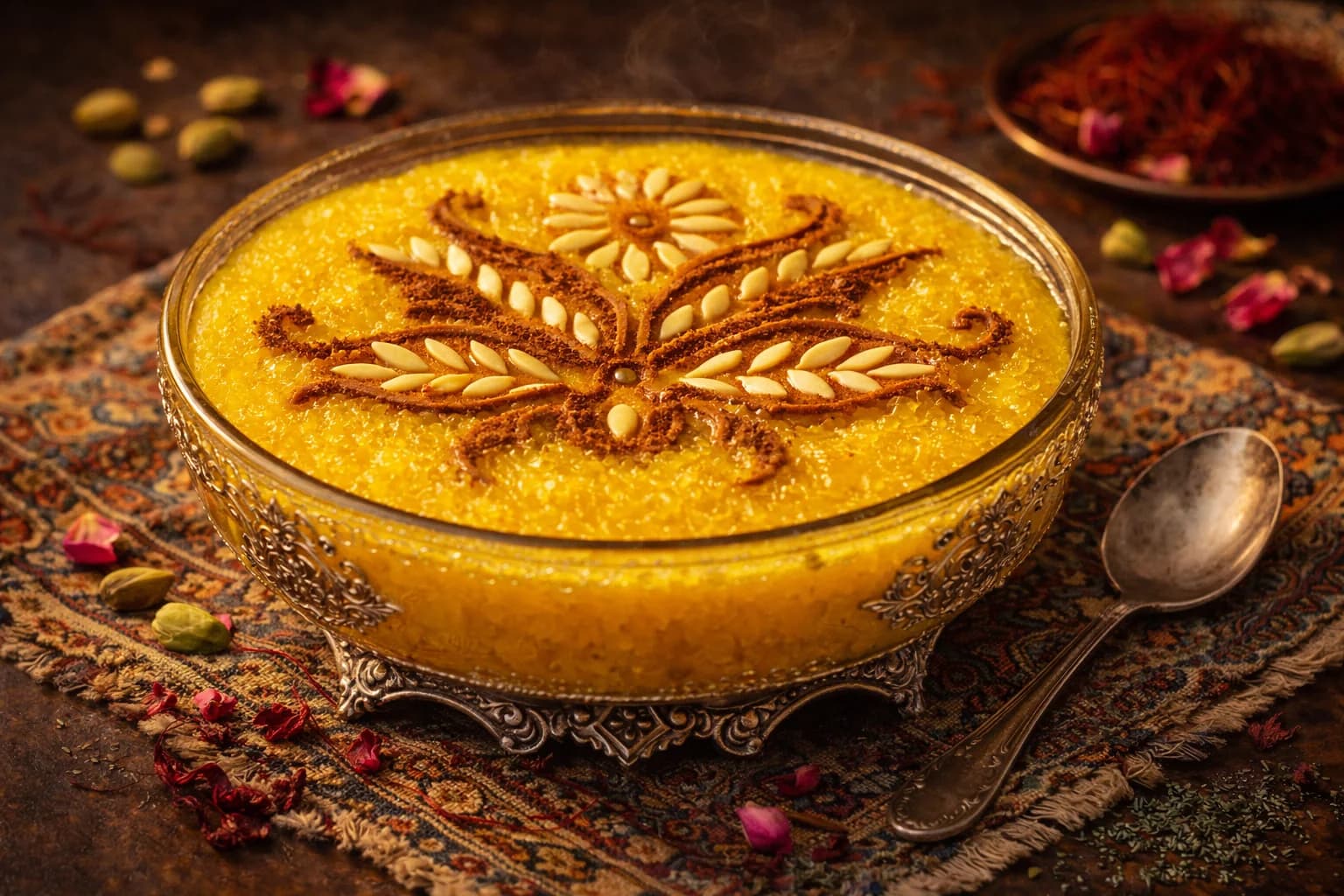
A luminous golden pudding of slow-cooked rice infused with generous saffron and rosewater, decorated with intricate patterns of cinnamon and slivered almonds. This is the most spiritually significant dessert in Persian cuisine—prepared as nazri (religious offering) to fulfill vows, share blessings, and commemorate sacred occasions. The name means 'yellow flame,' referring to its brilliant saffron color. Made in enormous quantities and distributed to neighbors, strangers, and those in need, sholeh zard represents Persian hospitality and devotion at their most generous.

Baklava (Persian-Style Layered Nut Pastry)

Baklava (Persian-Style Layered Nut Pastry)

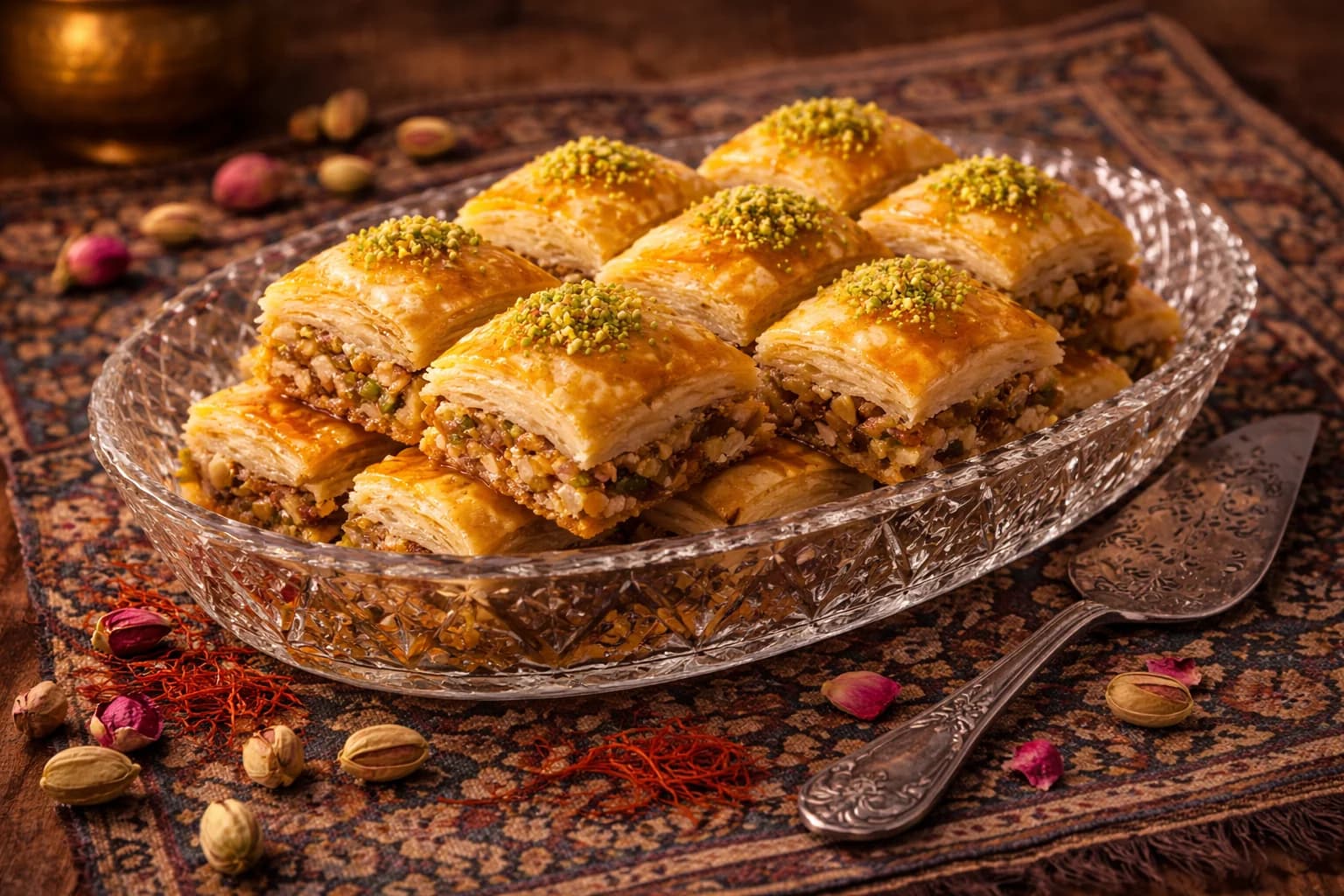
Delicate layers of paper-thin phyllo pastry filled with fragrant ground nuts, baked to golden crispness, and soaked in a saffron-rosewater syrup—Persian baklava is more refined and aromatic than its regional cousins. The Persian version distinguishes itself with generous saffron, rosewater, and cardamom, and often features a combination of pistachios and almonds rather than walnuts alone. Cut into elegant diamond shapes and decorated with ground pistachios, this is the jewel of Persian pastry-making, served at weddings, Nowruz, and whenever celebration calls for something extraordinary.

Bastani Sonnati (Persian Saffron Ice Cream)

Bastani Sonnati (Persian Saffron Ice Cream)

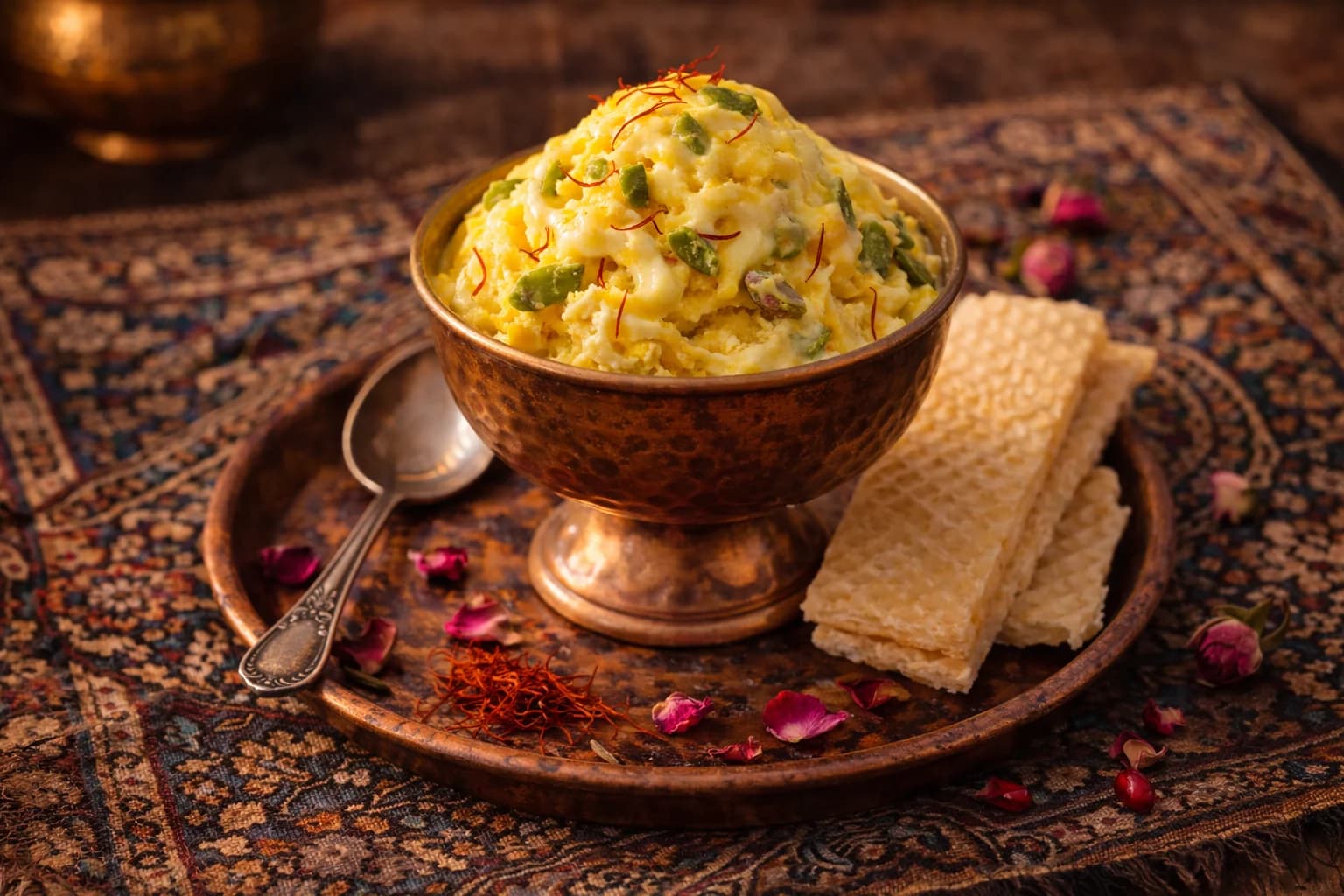
The legendary Persian ice cream—a luxurious frozen cream perfumed with saffron and rosewater, studded with pistachios, and threaded with frozen ribbons of clotted cream. Unlike any Western ice cream, bastani sonnati has a distinctive chewy, stretchy texture from salep (orchid root powder) and an intoxicating fragrance that captures the essence of Persian sweets. Traditionally served pressed between crispy wafers or alongside faloodeh, this golden ice cream is the crown jewel of Persian frozen desserts.