Halva (Persian Saffron Flour Halva)

Halva (Persian Saffron Flour Halva)

حلوا

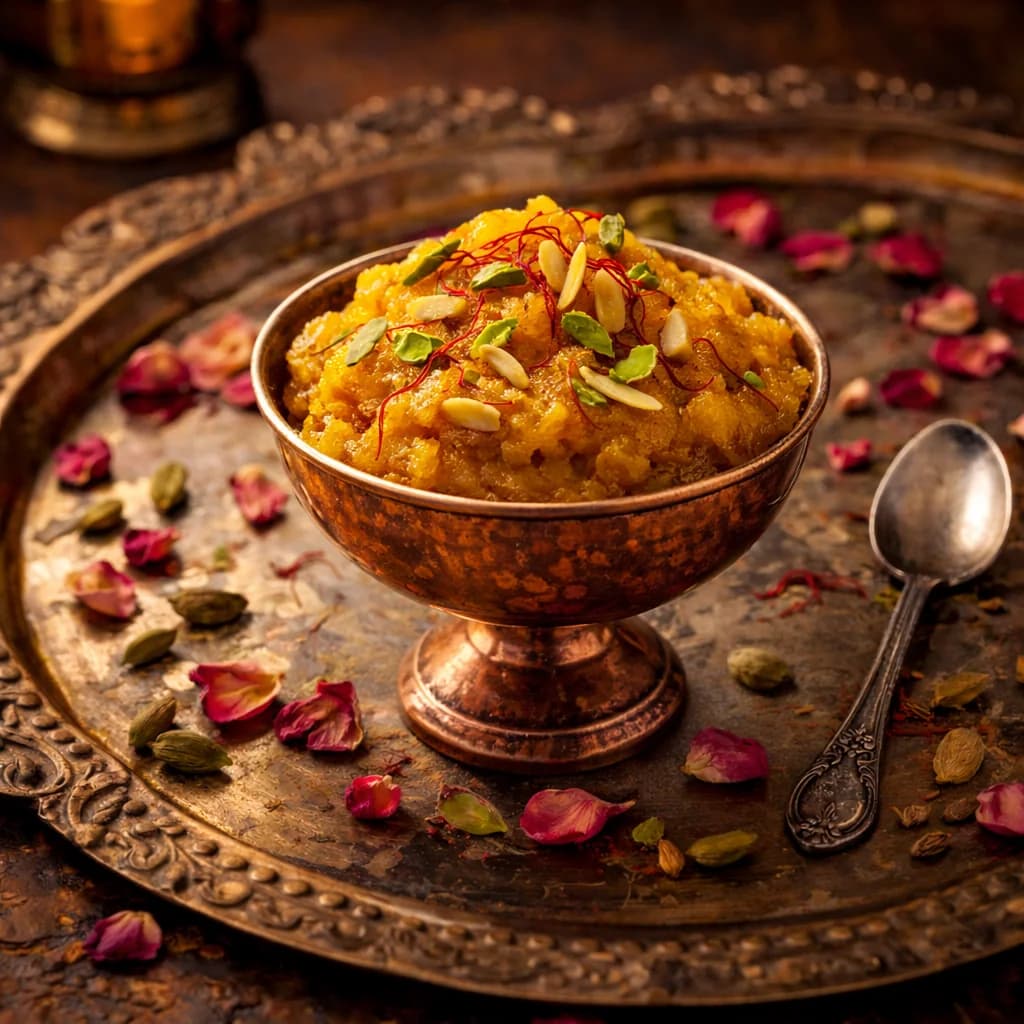
A rich, aromatic confection of toasted flour cooked with butter, infused with saffron and rosewater, then sweetened with fragrant syrup—Persian halva is unlike any other version you may know. This dense, spoonable sweet is deeply connected to Persian religious and cultural life, prepared for memorial services, religious holidays, and sacred occasions. The slow toasting of flour in butter creates a distinctive nutty flavor, while saffron and rosewater provide the unmistakable Persian perfume. Decorated with almonds and pistachios, halva is both a comfort food and a spiritual offering.

dessertPrep: 15 minCook: 45 minintermediateServes 10

Cultural Note

Persian halva holds deep spiritual significance. It is the quintessential food of mourning and memorial—prepared for funeral gatherings, the fortieth-day memorial (chehelom), and annual death anniversaries. During Muharram, the month commemorating Imam Hussain's martyrdom, halva is made as nazri (religious offering) and distributed to neighbors and the needy. The act of stirring the halva is considered a form of prayer; many recite blessings while preparing it. Beyond mourning, halva appears at religious holidays, Nowruz, and any occasion requiring a blessing. The continuous stirring required represents patience and devotion. When someone has passed, neighbors often bring halva to the grieving family, and sharing halva is a way of sharing in blessings (savab). Despite its memorial associations, halva is not sad—it represents the sweetness we share to honor those who have passed and to spread blessings among the living.

Critical Moments

  • Blooming saffron properly
  • Toasting flour to deep golden-brown (not under or over)
  • Keeping syrup warm before adding
  • Stirring constantly throughout entire process
  • Cooking after syrup addition to proper consistency
1
PREP15 min

Bloom the saffron

Grind the saffron threads with a pinch of sugar using a mortar and pestle until powdered. Place in a small bowl, add 3 tablespoons hot water, and let steep for at least 15 minutes. The liquid should be deep orange-gold.

Deep orange-gold liquid; saffron fully dissolved
SmellIntense saffron aroma
TouchDeeply colored liquid

Critical Step

Proper saffron blooming extracts maximum color and flavor. This gives halva its golden color and distinctive aroma.

2
PREP10 min

Make the sugar syrup

In a medium saucepan, combine the sugar and water. Heat over medium heat, stirring until the sugar dissolves completely. Bring to a boil, then reduce heat and simmer for 5 minutes without stirring. Remove from heat and stir in the rosewater. Set aside.

Clear syrup; all sugar dissolved
MediumSimmer for 5 minutes
SmellHot sugar syrup, then rosewater blooming
SoundBubbling
TouchThin syrup consistency
Keep the syrup warm—cold syrup will seize when added to the hot flour. Adding rosewater off heat preserves its fragrance.
3
COOK30 min

Toast the flour in butter

In a large heavy skillet or wide pot, melt the butter over medium heat. Add the flour all at once and stir immediately to combine. Continue cooking over medium to medium-low heat, stirring constantly with a wooden spoon, for 25-35 minutes. The mixture will go through stages: pale and pasty → beige → golden → deep golden-brown. You want it a rich golden-brown with a deeply nutty aroma.

Deep golden-brown color—like caramel or dark peanut butter; slightly darker at edges is okay
150-165°C / 300-325°F
SmellProgression from floury → nutty → deeply toasted and cookie-like
SoundGentle sizzling
TouchSmooth, moves easily in pan; slightly grainy feel

Critical Step

This is the heart of halva-making. The flour must toast long enough to develop deep nutty flavor and eliminate raw taste. Too short = pasty, raw flavor. Too long = burnt and bitter. Constant stirring prevents hot spots and burning.

This requires patience and attention. Don't walk away—stir constantly. The color develops slowly, then faster near the end. Trust your nose as much as your eyes.

Common Mistakes

  • Heat too high (burns before cooking through)
  • Not stirring constantly (uneven cooking, burning)
  • Stopping too early (raw flour taste)
  • Going too dark (bitter taste)
4
COOK2 min

Add saffron and cardamom

When the flour reaches the proper golden-brown color, reduce heat to low. Add the bloomed saffron (including all liquid) and ground cardamom. Stir well to distribute the saffron evenly—the mixture will turn a beautiful golden color with orange tones.

Golden-orange color from saffron; evenly distributed
SmellSaffron and cardamom joining the nutty flour—intensely aromatic
SoundGentle sizzling
TouchSmooth, colored mixture
The saffron will sizzle when added—this is normal. Stir quickly to distribute before it can burn in any one spot.
5
COOK7 min

Add the syrup

Carefully pour the warm rosewater syrup into the flour mixture, stirring constantly. The mixture will bubble and steam vigorously—be careful of splatters. Continue stirring over low heat for 5-8 minutes as the syrup is absorbed. The halva will come together into a thick, glossy mass that pulls away from the sides of the pan.

Thick, glossy mass; pulls away from pan sides cleanly; smooth and cohesive
LowGentle heat
SmellRosewater, saffron, toasted flour—intoxicating
SoundInitial vigorous bubbling, then quieting
TouchThick, spoonable, holds shape; not runny or dry

Critical Step

The syrup must be absorbed completely and the halva cooked to the right consistency. Too wet = won't hold shape. Too dry = crumbly. It should be thick and spoonable, pulling away from the pan cleanly.

Add syrup gradually if nervous about splattering. Continue stirring until the halva moves as one mass in the pan.

Common Mistakes

  • Cold syrup (seizes and becomes lumpy)
  • Not stirring while adding syrup (lumps form)
  • Undercooking after syrup (too wet)
  • Overcooking (too dry and crumbly)
6
FINISH5 min

Shape and decorate

Transfer the hot halva to a serving platter, mounding it in the center or spreading it into an even layer about 2-3cm thick. While still warm, smooth the top with the back of a spoon dipped in water. Decorate with slivered almonds and pistachios, pressing them gently into the surface. Scatter rose petals if using.

Golden mound or layer decorated with white almonds, green pistachios, and pink rose petals
SmellWarm, aromatic halva
TouchWarm, pliable, easy to shape
Work while the halva is warm—it becomes firmer as it cools. Traditional decorations often include geometric patterns with the nuts. Some families create grooves with a fork for texture.
7
FINISH60 min

Cool and serve

Let the halva cool to room temperature—about 1 hour. It will firm up but remain soft and spoonable. Cut into diamonds or wedges, or serve by scooping with a spoon. Halva can be served at room temperature or slightly warm.

Set but soft halva; holds shape when cut but still spoonable
SmellSaffron-rosewater-nutty aroma
TouchFirm enough to cut; soft and slightly crumbly on the tongue
Halva is typically served at room temperature. It firms up more when refrigerated but is best slightly soft. Traditionally served with tea, allowing the warmth of the tea to balance the richness.

Resting Required

60 min - Halva must cool and set; remains soft but sliceable
Extras

Equipment

large heavy skillet or potmedium saucepanwooden spoonserving platterstandard

Make Ahead

  • Halva keeps at room temperature for 4-5 days in an airtight container.
  • Refrigerate for up to 2 weeks—bring to room temperature before serving.
  • Can be frozen for up to 2 months.

Can be gently warmed in microwave for 15-20 seconds to soften if desired.

Best at room temperature.

Serve With

Sides

  • Served alone as dessert or with bread at memorial gatherings

Drinks

  • Hot Persian tea (essential)
  • The warmth of tea balances the richness

Substitutions

butterGhee is traditional in some families and adds nuttier flavor. Can use vegetable oil for dairy-free version, though flavor differs significantly.
saffronEssential for authentic Persian halva. No substitute provides the same color and flavor. Turmeric adds color but different taste.
rosewaterEssential for authentic flavor. Orange blossom water creates a different but acceptable variation. Don't substitute with extracts.
all purpose flourSome use half whole wheat flour for nuttier flavor. Rice flour creates a different, grainier texture (not traditional Persian style).

Scaling

Recipe can be scaled, maintaining the ratio of flour to butter (roughly 1:1 by weight) and adjusting syrup accordingly. Traditionally made in larger quantities for religious occasions and sharing. The stirring is labor-intensive regardless of batch size.

Source

Traditional · Traditional Persian cuisine

Persian halva (halva-ye ardi, flour halva) is distinct from tahini-based or semolina halvas found elsewhere. It's deeply associated with religious occasions, particularly memorial services (nazri) and Muharram mourning ceremonies. The act of making halva is itself considered spiritually meaningful.

Related Recipes

Sholeh Zard (Persian Saffron Rice Pudding)

Sholeh Zard (Persian Saffron Rice Pudding)

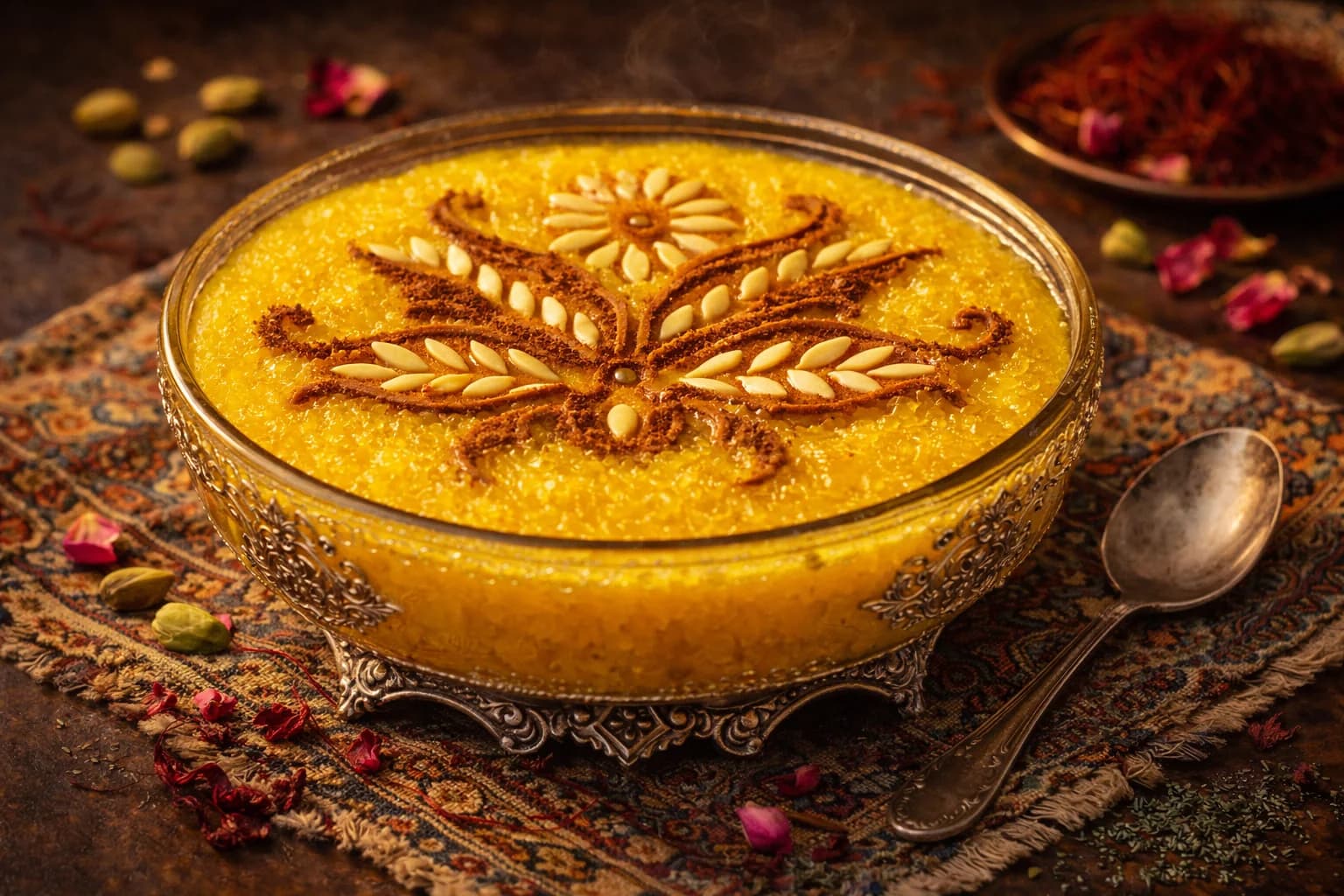
A luminous golden pudding of slow-cooked rice infused with generous saffron and rosewater, decorated with intricate patterns of cinnamon and slivered almonds. This is the most spiritually significant dessert in Persian cuisine—prepared as nazri (religious offering) to fulfill vows, share blessings, and commemorate sacred occasions. The name means 'yellow flame,' referring to its brilliant saffron color. Made in enormous quantities and distributed to neighbors, strangers, and those in need, sholeh zard represents Persian hospitality and devotion at their most generous.

Bastani Sonnati (Persian Saffron Ice Cream)

Bastani Sonnati (Persian Saffron Ice Cream)

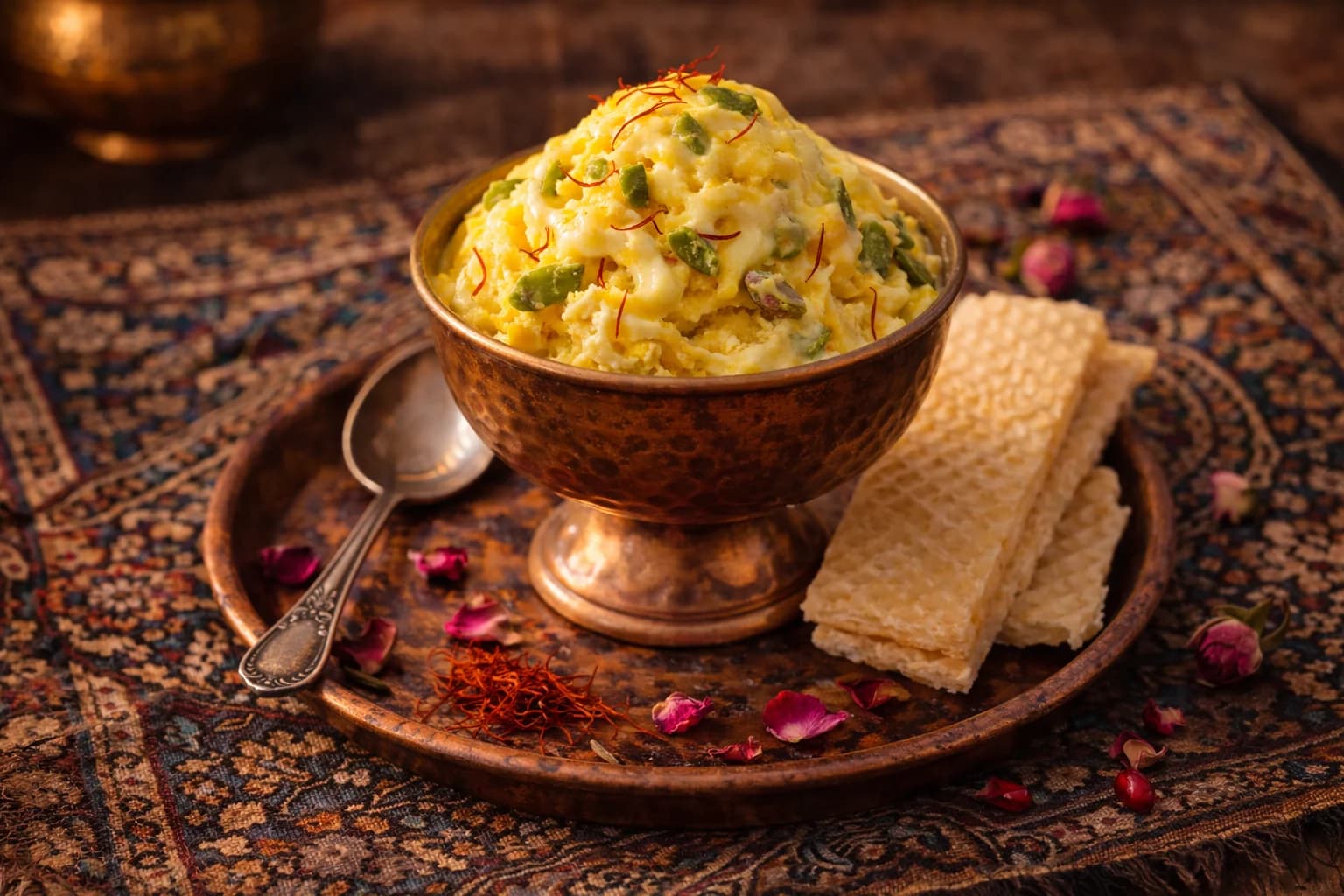
The legendary Persian ice cream—a luxurious frozen cream perfumed with saffron and rosewater, studded with pistachios, and threaded with frozen ribbons of clotted cream. Unlike any Western ice cream, bastani sonnati has a distinctive chewy, stretchy texture from salep (orchid root powder) and an intoxicating fragrance that captures the essence of Persian sweets. Traditionally served pressed between crispy wafers or alongside faloodeh, this golden ice cream is the crown jewel of Persian frozen desserts.

Baklava (Persian-Style Layered Nut Pastry)

Baklava (Persian-Style Layered Nut Pastry)

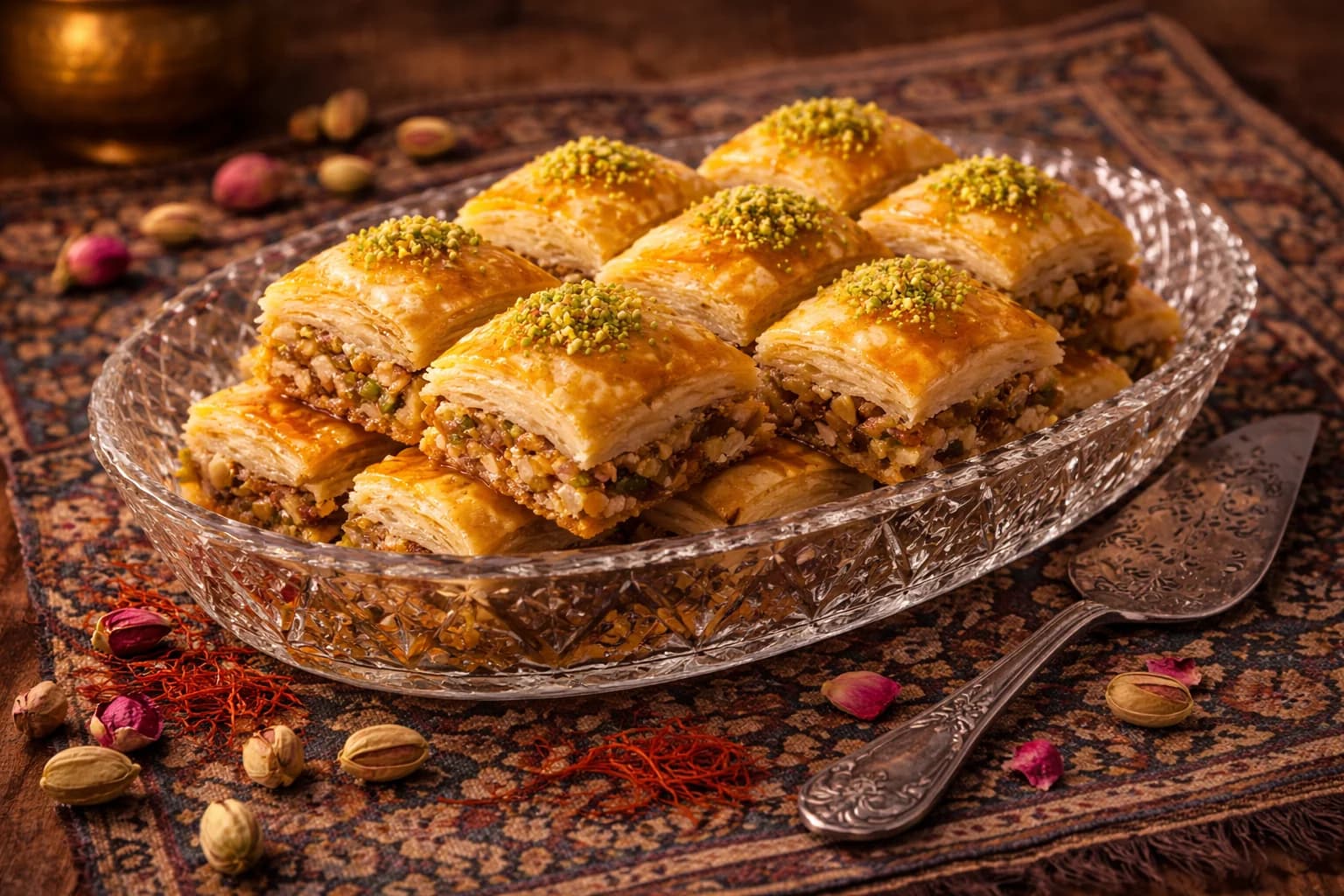
Delicate layers of paper-thin phyllo pastry filled with fragrant ground nuts, baked to golden crispness, and soaked in a saffron-rosewater syrup—Persian baklava is more refined and aromatic than its regional cousins. The Persian version distinguishes itself with generous saffron, rosewater, and cardamom, and often features a combination of pistachios and almonds rather than walnuts alone. Cut into elegant diamond shapes and decorated with ground pistachios, this is the jewel of Persian pastry-making, served at weddings, Nowruz, and whenever celebration calls for something extraordinary.