
Khoresh-e Bademjan (Persian Eggplant Stew)

Khoresh-e Bademjan (Persian Eggplant Stew)

خورشت بادمجان

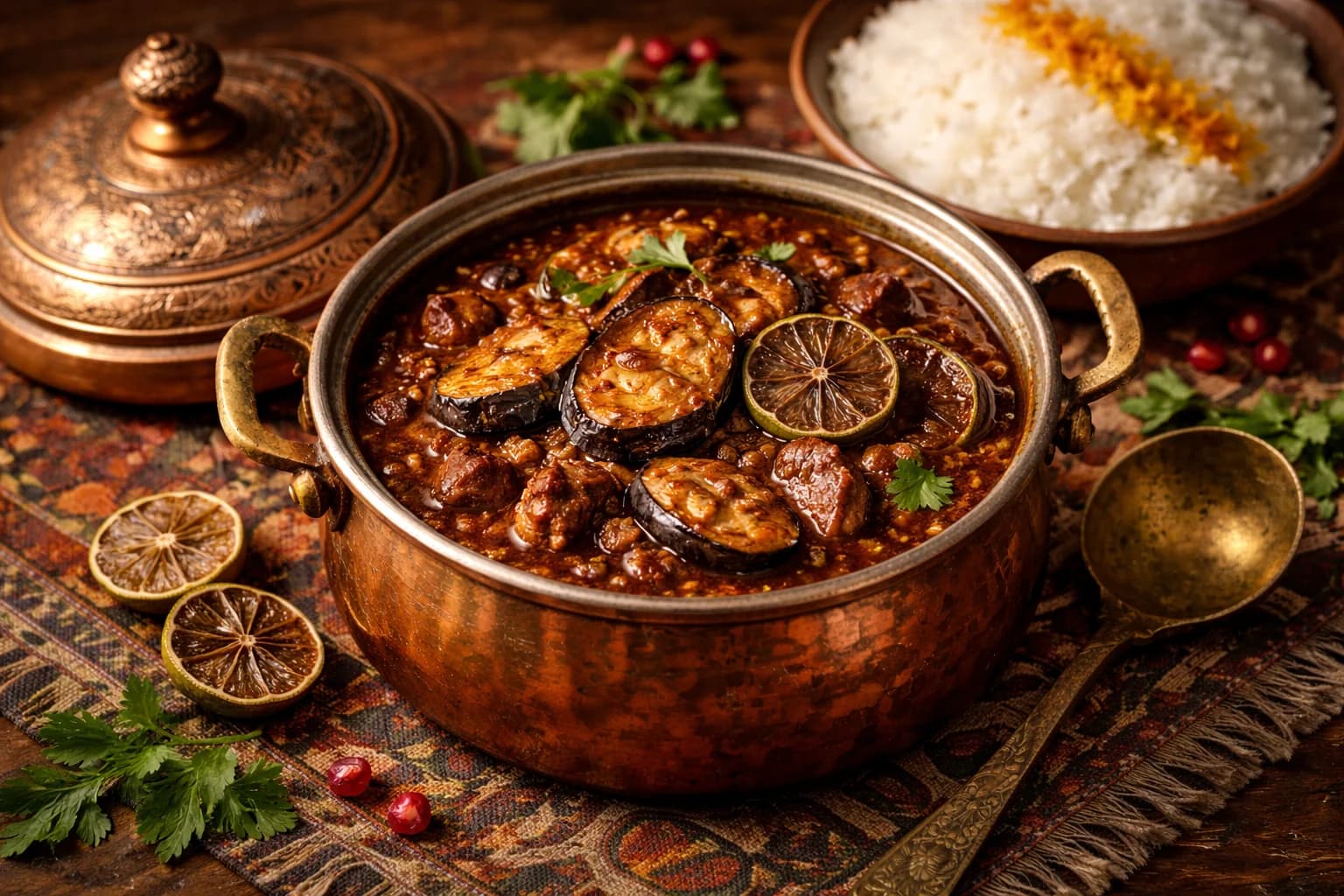
Golden fried eggplants nestle in a rich tomato-saffron sauce alongside tender lamb and tart grape verjuice. This beloved everyday stew showcases eggplant at its silky best—crispy-edged yet meltingly soft inside, saturated with aromatic spices. A true Persian comfort classic.

stewPrep: 45 minCook: 165 minintermediateServes 6

Cultural Note

Khoresh-e bademjan is arguably the most popular everyday stew in Iranian households after ghormeh sabzi. The combination of fried eggplant with tomato and sour elements represents the Persian mastery of balancing rich and tangy flavors. Best made when eggplants are in peak summer season.

Critical Moments

  • Salting eggplants to remove bitterness and reduce oil absorption
  • Frying eggplants to deep golden (not pale)
  • Adding eggplants at the end to preserve texture
1
PREP5 min

Bloom the saffron

Grind saffron threads with a pinch of sugar using a mortar and pestle. Transfer to a small bowl, add 3 tbsp hot (not boiling) water, cover, and steep for at least 20 minutes.

Deep ruby-red liquid with intense color
SmellHoney-floral saffron aroma
While waiting: Prepare eggplants while saffron blooms
2
PREP10 min

Prepare and salt the eggplants

Cut eggplants lengthwise into quarters (or halves if small), keeping stems attached for presentation. Alternatively, slice into 1cm thick rounds. Sprinkle generously with 1 tsp salt on all cut surfaces. Place in a colander over a bowl and let sit for 30 minutes.

Beads of brown liquid forming on eggplant surfaces
TouchEggplant feels slightly softer and less spongy after salting

Critical Step

Salting draws out moisture and bitterness, and—crucially—collapses the eggplant's spongy structure so it absorbs less oil during frying. Skipping this step results in greasy, bitter eggplant.

Persian (or Japanese/Italian) eggplants are ideal—they have fewer seeds and less bitterness than globe eggplants

Common Mistakes

  • Not salting long enough (eggplant remains spongy)
  • Using globe eggplants without extra salting time
  • Not rinsing off salt (final dish too salty)
While waiting: Start cooking the stew base while eggplants drain
3
COOK15 min

Caramelize the onions

Heat 60ml oil in a large heavy pot over medium-high heat. Add sliced onions and cook, stirring occasionally, until deeply golden and caramelized, about 12-15 minutes.

Onions are deep golden brown with some darker caramelized edges
Medium-High190°C / 375°F
SmellSweet, rich caramelized onion aroma
SoundSteady sizzling that softens as moisture evaporates
4
COOK8 min

Add spices and brown the meat

Add turmeric and cinnamon (if using), stir for 30 seconds until fragrant. Increase heat to high, add meat cubes in a single layer, and brown well on at least two sides, about 6-8 minutes. Work in batches if needed to avoid crowding.

Meat has deep brown crust; spices have coated everything in golden color
High230°C / 450°F
SmellSearing meat with warm turmeric undertones
SoundStrong sizzling; meat releases from pot when properly seared
5
COOK5 min

Build the tomato base

Reduce heat to medium. Add tomato paste and stir constantly for 2 minutes until darkened. Add grated tomatoes and cook for another 3 minutes, stirring frequently.

Tomato paste has darkened from bright red to brick red; mixture is thick and glossy
Medium175°C / 350°F
SmellRaw tomato smell transforms to deeper, sweeter aroma
SoundSizzling as tomatoes release moisture

Critical Step

Cooking the tomato paste removes raw, tinny flavors and develops sweetness. This step builds the flavor foundation of the sauce.

Keep stirring to prevent scorching on the bottom
6
COOK120 min

Add liquid and simmer

Add water or stock, salt, and pepper. Bring to a boil, then reduce heat to low. Cover and simmer for 1.5-2 hours until meat is very tender and falls apart easily. Persian stews benefit from long, slow cooking.

Sauce has thickened slightly; meat is tender when pierced
LowGentle simmer ~120°C / 250°F
SmellRich, savory stew aroma
SoundGentle, occasional bubbles
TouchMeat yields easily to a fork but isn't falling apart
Checkpoint: After 45 minutes, check meat tenderness and liquid level—add water if too thick
While waiting: Rinse and fry eggplants during this time
7
COOK10 min

Rinse and dry the eggplants

Rinse salt off eggplant pieces under cold water. Squeeze gently to remove excess moisture, then pat very dry with paper towels or a clean kitchen towel. They must be completely dry before frying.

Eggplant pieces are dry with no visible moisture
TouchEggplant feels denser and drier than before salting

Critical Step

Wet eggplant dropped into hot oil causes dangerous splattering and prevents proper browning. Thorough drying is essential for safety and texture.

Press firmly between towels—eggplant can hold a surprising amount of water
8
COOK20 min

Fry the eggplants

Heat 120ml oil in a large skillet over medium-high heat until shimmering (about 180°C/350°F). Fry eggplant pieces in batches without crowding, turning once, until deep golden brown on both sides, about 3-4 minutes per side. Remove to a paper towel-lined plate.

Eggplant is deep golden brown with slightly crispy edges; flesh is visibly soft
Medium-High180°C / 350°F oil temperature
SmellSweet, caramelized eggplant aroma
SoundActive sizzling that calms as eggplant cooks
TouchEggplant yields completely when pressed, exterior slightly crisp

Critical Step

Properly fried eggplant is the star of this dish. It should be deeply golden (not pale) with a slight crust that holds its shape in the stew while the interior becomes silky.

Don't move the eggplant too soon—let it develop color on one side before flipping

Common Mistakes

  • Oil not hot enough (eggplant absorbs too much oil, becomes greasy)
  • Oil too hot (burns outside, raw inside)
  • Crowding the pan (temperature drops, eggplant steams)
  • Flipping too often (crust doesn't form)
9
ASSEMBLY2 min

Add verjuice and saffron to stew

Add verjuice (or lemon juice) and bloomed saffron to the stew. Stir gently and taste—adjust sourness with more verjuice or balance with a pinch of sugar if too tart.

Sauce brightens with saffron; golden streaks throughout
SmellBright, tangy note from verjuice; floral saffron
Verjuice (unripe grape juice) is traditional and gives a more complex sourness than lemon. Find it at Middle Eastern stores or online.

Common Mistakes

  • Adding too much sour element at once (taste as you go)
  • Forgetting the saffron (loses signature golden color)
10
ASSEMBLY20 min

Add eggplants to stew

Gently nestle the fried eggplant pieces into the stew, spooning some sauce over them. Try not to submerge completely—some should peek above the sauce. Cover and simmer for another 15-20 minutes to allow flavors to meld.

Eggplant pieces are half-submerged, absorbing sauce; sauce has thickened around them
LowGentle simmer
SmellAll elements merging—tomato, eggplant, saffron, meat
SoundVery gentle bubbling
TouchEggplant is silky throughout when pierced

Critical Step

Adding eggplants at the end preserves their shape and texture. Adding too early causes them to disintegrate into the sauce.

Handle eggplants gently—they're fragile after frying
11
FINISH10 min

Final seasoning and rest

Taste and adjust salt, pepper, and sour-sweet balance. Remove from heat and let rest covered for 10 minutes. The sauce will thicken slightly as it rests.

Sauce coats a spoon; some oil pooled on surface (correct and traditional)
SmellHarmonious, complex aroma
If sauce is too thin, remove lid and simmer a few more minutes. If too thick, add a splash of water.
12
FINISH

Garnish and serve

Transfer carefully to a serving dish, arranging eggplant pieces attractively on top. If using sour grapes (ghooreh), scatter over the top. Serve immediately with chelow and tahdig.

Deep orange-gold sauce with golden-brown eggplant pieces and scattered green sour grapes
Sour grapes (available frozen at Persian stores) add a wonderful pop of tartness and are traditional, but optional

Resting Required

10 min - Allows sauce to thicken and flavors to harmonize
Extras

Equipment

large heavy potlarge skilletstandard

Make Ahead

  • Stew base (without eggplant) can be made 2-3 days ahead.
  • Fry eggplants fresh or up to 1 day ahead (refrigerate separately).
  • Combine when reheating.
  • Complete dish keeps 3 days refrigerated.

Reheat stew base first, then gently add eggplants and warm through.

Eggplants are best not frozen—they become mushy.

Serve With

🍚Chelow (plain Persian steamed rice) with tahdig—essential pairing

Sides

  • Mast-o-khiar
  • Sabzi khordan (fresh herb platter)
  • Torshi (pickled vegetables)

Drinks

  • Doogh
  • Black tea

Substitutions

verjuiceLemon juice (use 3 tbsp), or white grape juice mixed with lemon juice 1:1. Verjuice has a more complex, wine-like tartness.
Persian eggplantJapanese or Italian eggplants work well. Globe eggplants can be used but need longer salting (45-60 min) and may have more seeds.
saffronOmit for everyday cooking—dish is still delicious. Turmeric provides color but not the same flavor.
lambBeef chuck is excellent. Boneless chicken thighs work for a lighter version.

Scaling

Doubles well but fry eggplants in batches to maintain crispness. The eggplant-to-meat ratio is flexible based on preference. Stew base freezes well; fried eggplants are best fresh but can be refrigerated separately and reheated.

Source

Traditional · Traditional home cooking

One of Iran's most popular everyday stews, with regional variations in sourness level and tomato quantity

Related Recipes