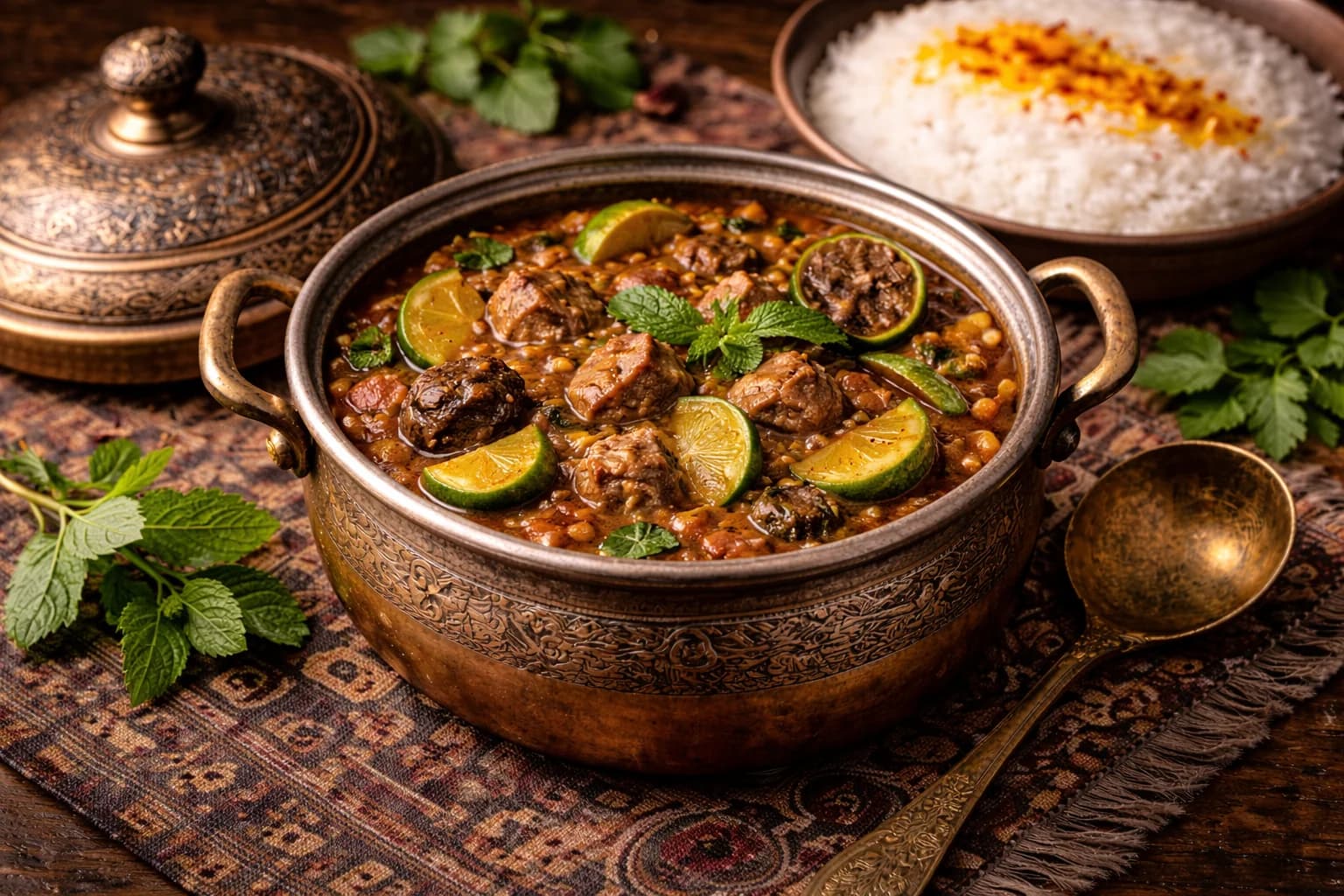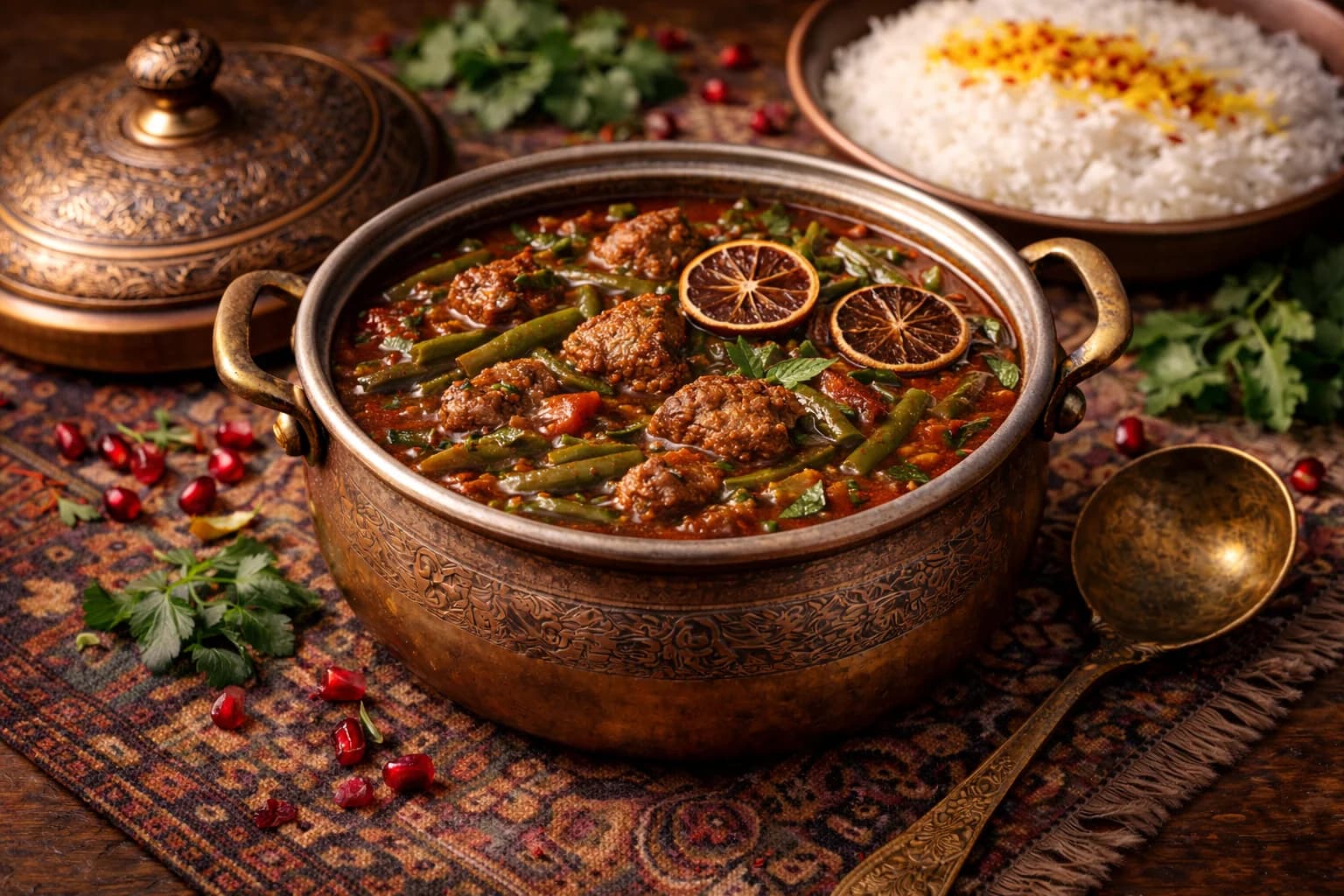

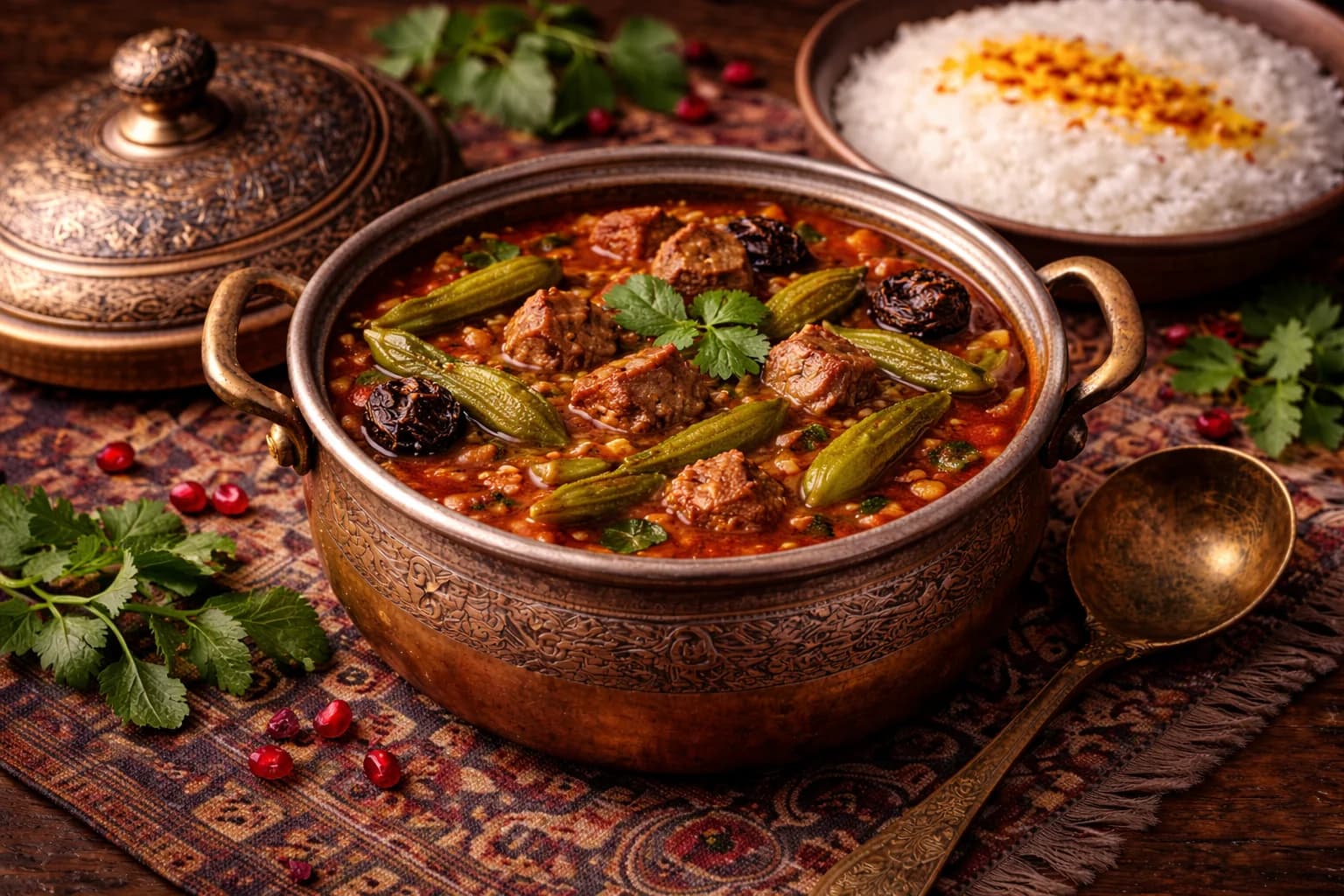
Khoresh-e Bamiyeh (Persian Okra Stew)

Khoresh-e Bamiyeh (Persian Okra Stew)

خورشت بامیه

A beloved southern Iranian stew where whole tender okra pods simmer in a tangy tomato sauce with succulent lamb, perfumed with dried Persian limes and warming spices. The secret lies in keeping the okra whole and using proper technique to minimize sliminess—resulting in tender pods that hold their shape beautifully in the rich, aromatic sauce.

stewPrep: 25 minCook: 100 minintermediateServes 6

Cultural Note- Shiraz

Khoresh-e bamiyeh showcases the culinary wisdom of southern Iran, where cooks have mastered techniques to transform okra—often maligned for its texture—into something sublime. The dish is particularly beloved in Khuzestan and Fars provinces. The key insight passed down through generations: keep the okra whole, sauté it first, and let acid (tomatoes, dried lime) work its magic on the texture.

Critical Moments

  • Trimming okra properly (stem tip only, keeping pod sealed)
  • Sautéing okra before adding to stew
  • Never stirring vigorously once okra is added
1
PREP15 min

Select and prepare the okra

Choose small to medium okra pods (6-8cm) that are bright green, firm, and snap cleanly when bent. Avoid large, fibrous pods. Wash okra and dry completely with clean towels. Trim the stem end carefully—cut only the very tip of the stem cap, leaving the pod sealed. Do NOT cut into the pod body or remove the entire cap.

Okra pods are completely dry with just the stem tip trimmed; the cap remains attached and pod is sealed
SmellFresh, grassy okra aroma
SoundCrisp snap when testing a pod for freshness
TouchPods feel firm and slightly fuzzy, not soft or slimy

Critical Step

This is the most important step for controlling okra's texture. Cutting into the pod releases the mucilaginous substance that causes sliminess. Keeping pods whole and sealed, plus ensuring they're completely dry before cooking, dramatically reduces sliminess.

If okra feels at all damp, let it air dry for 30 minutes or use paper towels to dry each pod individually

Common Mistakes

  • Cutting off entire stem cap (exposes interior, releases slime)
  • Cutting okra into pieces (maximum slime release)
  • Using wet okra (water + okra = slime)
  • Choosing large, tough pods (fibrous and more mucilaginous)
Checkpoint: Each pod should be sealed with just the stem tip removed. No moisture visible.
2
COOK10 min

Sauté the okra

Heat 40ml oil in a large skillet over medium-high heat until shimmering. Add okra in a single layer (work in batches if needed) and sauté without stirring for 2-3 minutes until lightly golden on one side. Gently turn and cook another 2-3 minutes. The okra should be lightly golden and slightly softened but still hold its shape. Remove to a plate.

Okra has light golden-brown spots on surface; pods are intact and slightly softened
Medium-High190°C / 375°F
SmellToasted, slightly sweet okra aroma
SoundActive sizzling that remains steady
TouchPods are pliable but not mushy; surface is dry, not slimy

Critical Step

Sautéing okra before adding to stew accomplishes two things: it creates a light crust that helps pods hold their shape, and the dry heat reduces the mucilaginous quality. Skipping this step results in slimy, disintegrating okra.

Don't crowd the pan—okra needs direct contact with hot oil. Crowding causes steaming and sliminess.

Common Mistakes

  • Crowding the pan (okra steams instead of sautés)
  • Stirring too much (breaks pods, releases slime)
  • Oil not hot enough (okra absorbs oil, becomes greasy)
  • Cooking too long (okra becomes mushy)
3
COOK15 min

Brown the onions

Heat 60ml oil in a large heavy pot over medium-high heat. Add diced onions and cook until deep golden brown, about 12-15 minutes, stirring occasionally.

Onions are uniformly deep golden with caramelized edges
Medium-High190°C / 375°F
SmellSweet, rich caramelized onion aroma
SoundSteady sizzling that softens over time
4
COOK8 min

Add garlic and spices, brown the meat

Add minced garlic and cook for 30 seconds. Add turmeric, coriander, cumin (if using), and cinnamon, stirring for another 30 seconds until fragrant. Increase heat to high, add meat cubes, and brown well on at least two sides, about 6-8 minutes total.

Meat has deep golden-brown crust; warm spices have coated everything
High230°C / 450°F
SmellSearing meat with warm coriander and cumin blooming
SoundStrong sizzling; meat releases when properly seared
TouchMeat releases easily from pot
The spice combination here reflects the southern Iranian influence—more aromatic than typical Tehran-style stews
5
COOK7 min

Build the tomato base

Reduce heat to medium. Add tomato paste and stir constantly for 2 minutes until darkened. Add grated tomatoes and cook for another 4-5 minutes, stirring frequently, until tomatoes break down and mixture is thick and cohesive.

Tomato paste has darkened to brick red; fresh tomatoes fully incorporated; mixture is thick and glossy
Medium175°C / 350°F
SmellRaw tomato smell transforms to richer, sweeter aroma
SoundSizzling as tomatoes release and then cook off moisture

Critical Step

The acid in tomatoes helps control okra's sliminess. A well-developed tomato base is essential both for flavor and texture. Undercooked tomato paste tastes harsh and metallic.

The generous amount of tomato in this recipe is intentional—acid helps with okra texture
6
COOK90 min

Add liquid and dried limes

Add water or stock, tamarind paste (if using), salt, and pepper. Pierce each dried lime 3-4 times with a knife and add to the pot. Bring to a boil, then reduce heat to low. Cover and simmer for 1.5 hours until meat is very tender.

Sauce is rich orange-red; dried limes have softened and begun sinking
LowGentle simmer ~120°C / 250°F
SmellTangy dried lime aroma developing; if using tamarind, fruity-sour note
SoundGentle, occasional bubbles
TouchMeat is becoming tender but still holds shape
If using tamarind, taste the sauce—you may want less lemon juice at the end
Checkpoint: Meat should be nearly tender before adding okra
While waiting: Okra is already prepared; this is a good time to start rice
7
COOK30 min

Add sautéed okra

Gently add the sautéed okra to the stew, distributing evenly. Do NOT stir vigorously—gently shake the pot or use a spoon to nestle okra into the sauce. Spoon some sauce over the okra. Cover and simmer for another 25-30 minutes.

Okra has absorbed sauce color; pods are very tender but still intact; sauce has thickened
LowGentle simmer
SmellOkra, tomato, and dried lime aromas melded
SoundVery gentle bubbling
TouchOkra is completely tender when tested; pods hold their shape

Critical Step

Gentle handling is essential. Vigorous stirring breaks okra pods and releases slime into the sauce. The goal is tender, intact pods in a smooth (not slimy) sauce.

Resist the urge to stir! Shaking the pot gently is safer than stirring with a spoon.

Common Mistakes

  • Stirring vigorously (breaks okra, releases slime)
  • Cooking too long (okra disintegrates)
  • Adding raw okra without sautéing first (slimy result)
8
FINISH10 min

Adjust seasoning and rest

Stir in bloomed saffron if using. Add lemon juice and gently shake pot to incorporate. Taste and adjust salt, pepper, and sourness. The stew should have a pleasant tangy note from the combination of tomatoes, dried limes, and lemon. If using tamarind, you may need less lemon. Remove from heat, cover, and let rest for 10 minutes.

Sauce is rich and glossy; oil visible on surface; okra pods intact in the sauce
SmellHarmonious blend of tangy, savory, and warm spices
TouchSauce coats a spoon smoothly—not stringy or slimy
The multiple acid sources (tomato, dried lime, lemon, optional tamarind) work together to create complex tanginess and help control okra texture

Common Mistakes

  • Under-seasoning (this stew needs good salt to balance acidity)
  • Stirring instead of shaking when adding lemon
9
FINISH

Serve

Carefully transfer to a serving dish—use a gentle hand to keep okra pods intact. Serve hot over chelow with tahdig. Dried limes can be served in the dish for presentation or removed.

Rich red-orange sauce with whole green okra pods visible; glossy surface with pooled oil
The intact okra pods are the visual centerpiece—handle carefully when plating

Resting Required

10 min - Allows sauce to settle and flavors to harmonize
Extras

Equipment

large heavy potlarge skilletstandard

Make Ahead

  • Meat base can be made 1-2 days ahead without okra.
  • Sauté okra fresh and add when reheating.
  • Complete stew keeps 2-3 days but okra softens.
  • Freezes adequately—okra texture suffers but flavor remains.

Reheat very gently over low heat without stirring.

If possible, make meat base ahead and add freshly sautéed okra when serving.

Serve With

🍚Chelow (plain Persian steamed rice) with tahdig—simple rice lets the stew shine

Sides

  • Mast-o-khiar (cooling contrast)
  • Sabzi khordan
  • Shirazi salad
  • Torshi (pickled vegetables)

Drinks

  • Doogh
  • Black tea

Substitutions

fresh okraFrozen okra can work—do not thaw before sautéing, cook directly from frozen in hot oil. Results are acceptable but fresh is strongly preferred.
dried limeZest of 2 limes + 3 tbsp lime juice, added in last 20 minutes. Combined with the tomatoes and optional tamarind, this approximates the tang.
tamarindOmit entirely, or use 1 tbsp pomegranate molasses for different but complementary sourness.
lambBeef chuck works well; chicken thighs for lighter version with reduced cooking time.

Scaling

Doubles well but fry okra in batches to maintain crispness. Sauté okra separately regardless of batch size—this is essential. Freezes adequately for up to 2 months; okra softens but flavor remains good.

Source

Regional · Southern Iran (Khuzestan, Fars) home cooking

Particularly popular in the southern provinces where okra grows abundantly. The techniques for handling okra to reduce sliminess have been perfected over generations. Some southern versions include tamarind for extra tang.

Related Recipes