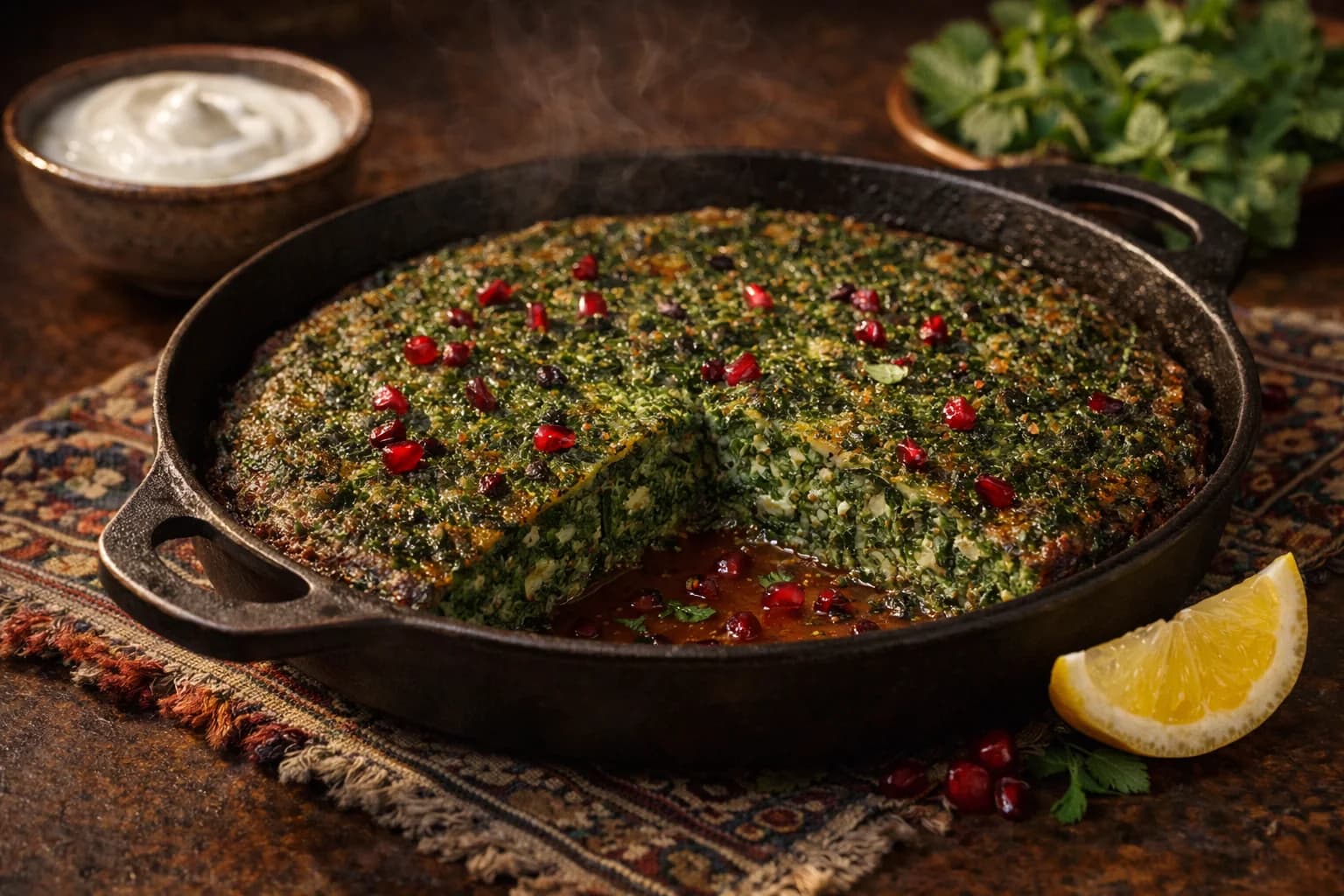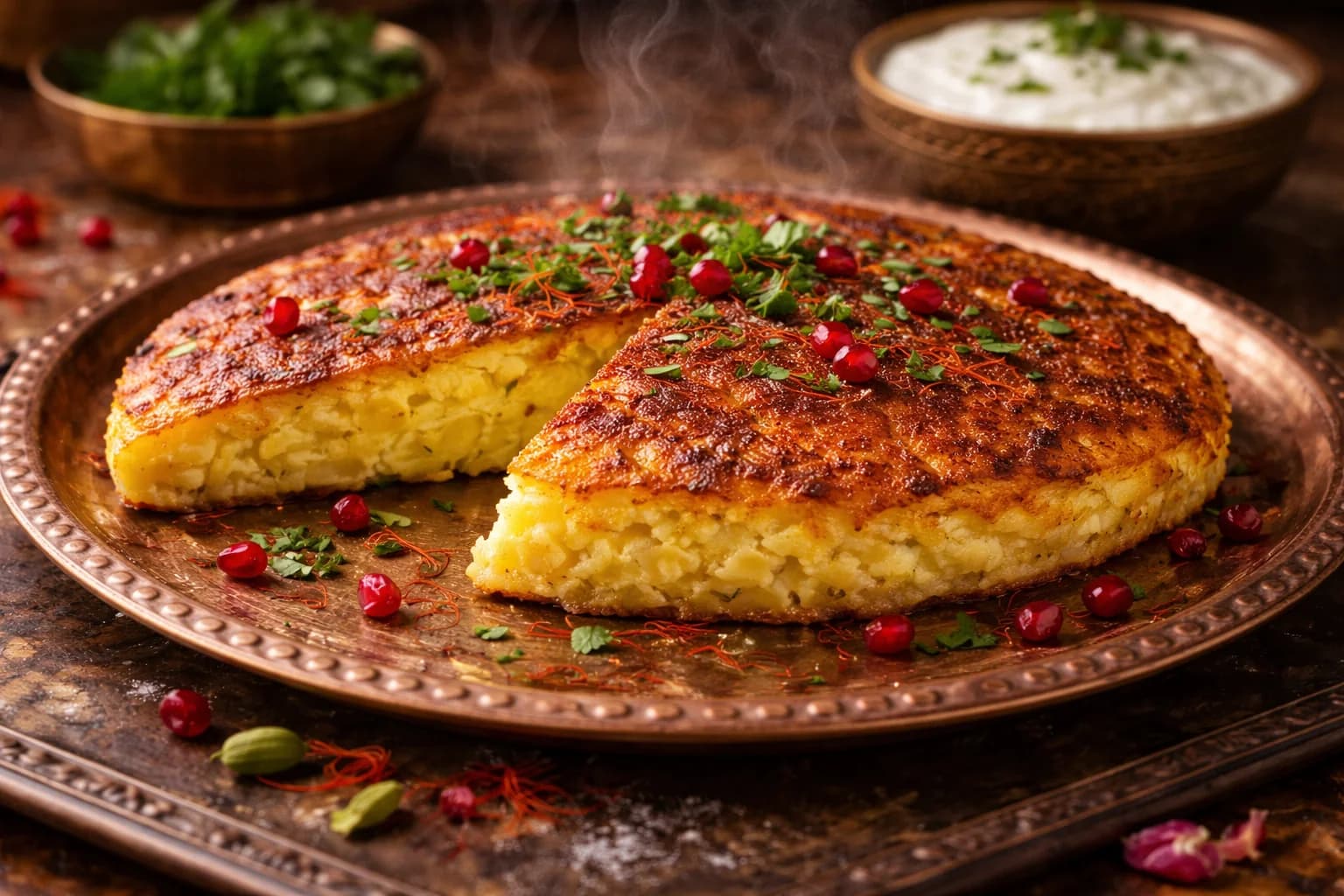

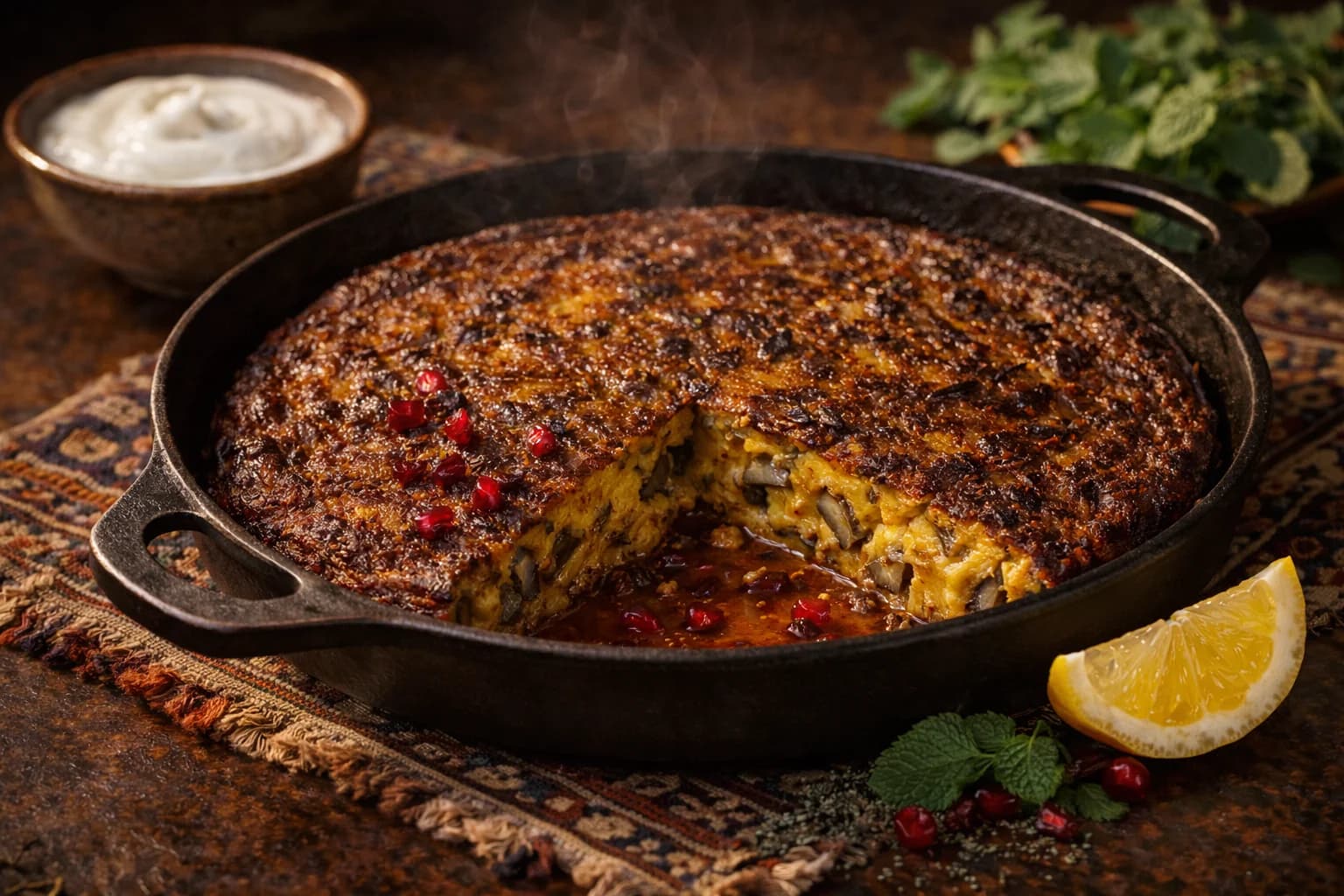
Kuku Bademjan (Persian Eggplant Frittata)

Kuku Bademjan (Persian Eggplant Frittata)

کوکو بادمجان

A luscious, deeply flavored frittata made with smoky roasted eggplant, aromatic saffron, and eggs—rich, silky, and utterly satisfying. The eggplant is roasted until collapsed and smoky, then combined with eggs and baked or pan-fried to a golden crust. The result is custardy and complex, with an almost meaty depth that makes this humble dish feel luxurious. A beloved everyday dish that showcases Persia's mastery of eggplant.

kukuPrep: 20 minCook: 75 mineasyServes 6

Cultural Note

Kuku bademjan celebrates the eggplant—one of Persia's most beloved vegetables. Unlike kuku sabzi with its festival associations, kuku bademjan is everyday home cooking at its best: economical, satisfying, and endlessly versatile. The smoky depth of properly roasted eggplant gives this dish a complexity that belies its simple ingredients. It's particularly popular in summer when eggplants are plentiful and sweet. Like all kukus, it's excellent at any temperature and makes wonderful sandwich filling.

Critical Moments

  • Roasting eggplant until completely collapsed and smoky
  • Draining eggplant thoroughly
  • Pan hot enough to sizzle when mixture added
  • Golden crust developed before oven
  • Cooked through (knife comes out clean)
1
PREP5 min

Bloom the saffron

Grind saffron threads with a pinch of sugar using mortar and pestle until powdered. Add 3 tbsp hot water and steep for at least 30 minutes.

Deep ruby-red liquid
SmellHoney-floral saffron aroma
2
PREP50 min

Roast the eggplants

Preheat oven to 220°C/425°F. Prick eggplants several times with a fork to prevent bursting. Place on a foil-lined sheet pan. Roast for 40-50 minutes, turning halfway, until completely collapsed, very soft, and the skin is charred and wrinkled. The eggplants should be utterly tender when pierced.

Eggplants completely collapsed; skin charred and wrinkled; flesh visible through splits
High220°C / 425°F
SmellSmoky, sweet roasted eggplant—intoxicating aroma
SoundOccasional sizzling
TouchUtterly soft when pressed; knife slides through without resistance

Critical Step

Thorough roasting is essential for the smoky flavor and silky texture. Undercooked eggplant will be bitter and won't mash properly. The eggplant should be so soft it practically melts.

For extra smokiness, char directly over a gas flame or on a grill until skin is blackened, then finish in oven. This is the traditional method.

Common Mistakes

  • Not roasting long enough (bitter, firm eggplant)
  • Not pricking (eggplant explodes)
  • Oven too cool (steams instead of roasts)
While waiting: Prepare other ingredients while eggplant roasts
3
PREP25 min

Cool and drain the eggplant

Transfer roasted eggplants to a colander set over a bowl. Let cool for 15 minutes. Once cool enough to handle, slit open and scoop the flesh into the colander, discarding the skin. Let the flesh drain for 10 minutes, pressing gently occasionally to remove excess liquid.

Pale, soft eggplant flesh draining; dark liquid collecting below
SmellConcentrated smoky eggplant
TouchFlesh is very soft, almost jammy

Critical Step

Draining removes bitter liquid and prevents a soggy kuku. The drained flesh will be more concentrated in flavor and will bind better with the eggs.

Save the drained liquid—it's delicious in soups or sauces. Some cooks press the eggplant in a sieve for even drier results.
4
PREP3 min

Mash the eggplant

Transfer drained eggplant flesh to a bowl. Mash with a fork until broken down but still slightly textured—you want some variation, not a smooth puree. You should have about 400-500g of mashed eggplant.

Roughly mashed eggplant with visible texture
SmellSmoky roasted eggplant
TouchSoft and jammy with some small pieces remaining
Don't use a food processor—it creates a gluey texture. Fork-mashing gives the best results.
5
PREP12 min

Sauté the aromatics

Heat 30ml oil in a skillet over medium heat. Add diced onion and cook until golden and soft, about 8-10 minutes. Add garlic and cook 1 minute more until fragrant. Remove from heat and let cool slightly.

Onions are golden and translucent; garlic is fragrant
Medium165°C / 325°F
SmellCaramelized onion and garlic
SoundGentle sizzling
TouchOnions are soft
6
PREP3 min

Beat the eggs with seasonings

In a large bowl, beat the eggs with bloomed saffron, turmeric, cumin (if using), dried mint (if using), flour, salt, and pepper until well combined.

Golden-orange egg mixture from saffron; uniform and smooth
SmellSaffron and warm spices
TouchSmooth, no lumps
7
PREP3 min

Combine all ingredients

Add the mashed eggplant, sautéed onion and garlic, chopped walnuts (if using), and parsley (if using) to the egg mixture. Fold together gently but thoroughly until evenly combined.

Uniform mixture with eggplant evenly distributed; golden from saffron with flecks of walnut and herbs
SmellSmoky eggplant with saffron and aromatics
TouchCohesive mixture that holds together
The mixture should be cohesive but not wet. If very loose, add another tablespoon of flour.
8
COOK3 min

Heat pan with oil

Preheat oven to 180°C/350°F. Heat remaining 45ml oil in a 10-inch oven-safe skillet over medium heat until shimmering. Swirl to coat bottom and sides.

Oil shimmering across entire pan surface
Medium175°C / 350°F
SmellHot oil
9
COOK10 min

Add mixture and cook bottom

Pour the eggplant-egg mixture into the hot pan, spreading evenly. The mixture should sizzle. Reduce heat to medium-low. Cook undisturbed for 8-10 minutes until the bottom is golden and set, and the edges are starting to firm up. Check by lifting an edge with a spatula.

Edges set and pulling away slightly; bottom golden when lifted
Medium-Low150°C / 300°F
SmellFrying eggplant and egg—rich and appetizing
SoundSteady gentle sizzle
TouchBottom feels firm when pan is shaken

Critical Step

A golden crust on the bottom is essential before transferring to oven. This gives the kuku its characteristic contrast between crispy exterior and creamy interior.

10
COOK25 min

Finish in oven

Transfer skillet to preheated oven. Bake for 20-25 minutes until the top is set, dry to the touch, and lightly golden. A knife inserted in the center should come out clean.

Top is set and golden; slight puffing; no wet spots
Medium180°C / 350°F
SmellBaking eggplant kuku—rich and aromatic
SoundQuiet
TouchTop springs back when pressed gently
Checkpoint: Insert knife in center—should come out clean
11
COOK12 min

Optional: Flip for double-crispy crust

For crispy crust on both sides: Remove from oven. Place a large plate over the skillet and flip the kuku onto the plate. Add 1 tbsp oil to the pan, slide kuku back in with cooked side up. Return to oven for 10 minutes to crisp the second side.

Golden crust visible on top after flip; second side crisping
SmellContinued crisping
SoundSizzle when flipped back into pan
TouchBoth sides developing crust
Flipping is optional—the kuku is delicious with just one crispy side. The oven-only method is gentler than stovetop flipping.
12
FINISH5 min

Rest and serve

Remove from oven and let rest in pan for 5 minutes. Slide or flip onto a serving plate. Cut into wedges. Serve warm or at room temperature with yogurt, bread, and fresh herbs.

Deep golden kuku with visible eggplant texture; crispy crust
SmellSmoky eggplant with saffron
TouchCrispy exterior; creamy, custardy interior
Kuku bademjan is excellent at any temperature. The flavor deepens as it cools.
13
FINISH

Traditional serving suggestions

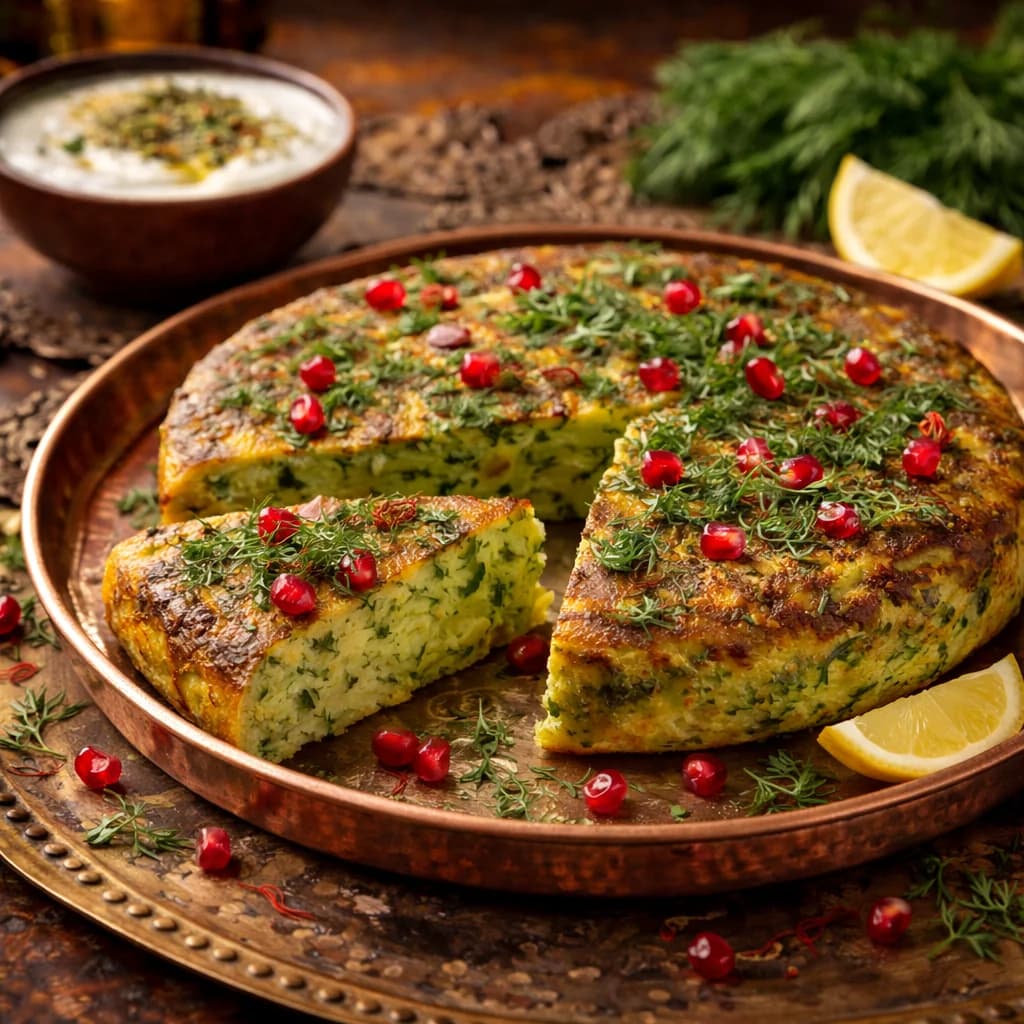
Serve wedges with plain yogurt or mast-o-khiar, warm lavash bread, sabzi khordan (fresh herb platter), and torshi (pickled vegetables). Also excellent as a sandwich filling in lavash with tomato, herbs, and yogurt.

Golden wedges on a platter surrounded by accompaniments
A drizzle of kashk (fermented whey) over the top is a delicious variation

Resting Required

5 min - Allows kuku to set and makes slicing easier
Extras

Equipment

sheet pan10 inch oven safe skilletmixing bowlstandard

Make Ahead

  • Excellent make-ahead dish.
  • Prepare completely, cool, cover, and refrigerate for up to 4 days.
  • Serve cold, at room temperature, or reheat gently.
  • Roasted eggplant can be prepared 2 days ahead and refrigerated.

Bring to room temperature or reheat in low oven (150°C/300°F) for 15 minutes.

Can re-crisp slices in a hot pan with a little oil.

Serve With

🍚Chelow, Sabzi polo

Sides

  • Lavash bread
  • Plain yogurt
  • Mast-o-khiar
  • Kashk (as topping)
  • Sabzi khordan
  • Torshi

Drinks

  • Doogh
  • Black tea

Substitutions

eggplantItalian eggplant is ideal. Japanese/Asian eggplant works well (fewer seeds). Globe eggplant works but may need longer draining. Cannot substitute with other vegetables—eggplant is essential.
saffronCan be reduced for everyday cooking but contributes important color and subtle flavor.
walnutsCan substitute pecans or omit entirely.
kashkAvailable at Middle Eastern stores. Greek yogurt mixed with a little sour cream approximates the tang but not the distinctive flavor.

Scaling

Scales easily. Use approximately 1 medium eggplant and 1 egg per serving. For larger quantities, roast eggplants in batches or use multiple sheet pans. The mixture can be baked in a larger pan or divided among smaller pans.

Source

Traditional · Traditional Persian home cooking

A summer staple when eggplants are abundant and at their peak. Found throughout Iran with regional variations in spicing and add-ins. The smoky roasted eggplant is what distinguishes Persian kuku bademjan from similar dishes in other cuisines.

Related Recipes