
Critical Moments
- •Herbs thoroughly washed and completely dried
- •Herbs finely chopped but not pureed
- •Correct herb-to-egg ratio (predominantly herbs)
- •Pan hot enough to sizzle
- •Golden crust developed before oven
- •Cooked through (knife comes out clean)
Wash and dry the herbs thoroughly
Wash all herbs in several changes of cold water, swishing vigorously to remove all grit and dirt—herbs can be very sandy. Spin dry in a salad spinner, then spread on clean kitchen towels and pat completely dry. The herbs must be very dry to prevent a soggy kuku.
Critical Step
Wet herbs release water during cooking, resulting in a soggy, steamed kuku instead of the desired crispy-crusted result. This is the most important prep step. Take the time to dry them completely.
Common Mistakes
- •Not washing thoroughly (gritty kuku)
- •Not drying thoroughly (soggy, wet kuku)
- •Rushing this step
Chop the herbs finely
Finely chop all herbs. You can do this by hand with a sharp knife (most traditional), or pulse in a food processor in batches (faster). If using food processor, pulse in short bursts—don't puree into a paste. The herbs should be finely chopped but still have texture, not liquefied.
Critical Step
Proper texture is key. Too coarse and the kuku won't hold together well. Too fine (pureed) and it becomes dense and loses the fresh herb character. Fine chop with visible texture is the goal.
Common Mistakes
- •Over-processing to paste (dense, heavy kuku)
- •Chopping too coarse (falls apart)
- •Uneven chopping (inconsistent texture)
Prepare optional add-ins
If using walnuts, chop coarsely. If using barberries, pick through to remove any stems, rinse briefly, and pat dry. If using garlic, mince finely.
Beat the eggs
In a large mixing bowl, beat the eggs with salt, pepper, turmeric, flour, and baking powder (if using) until well combined and slightly foamy.
Combine herbs and eggs
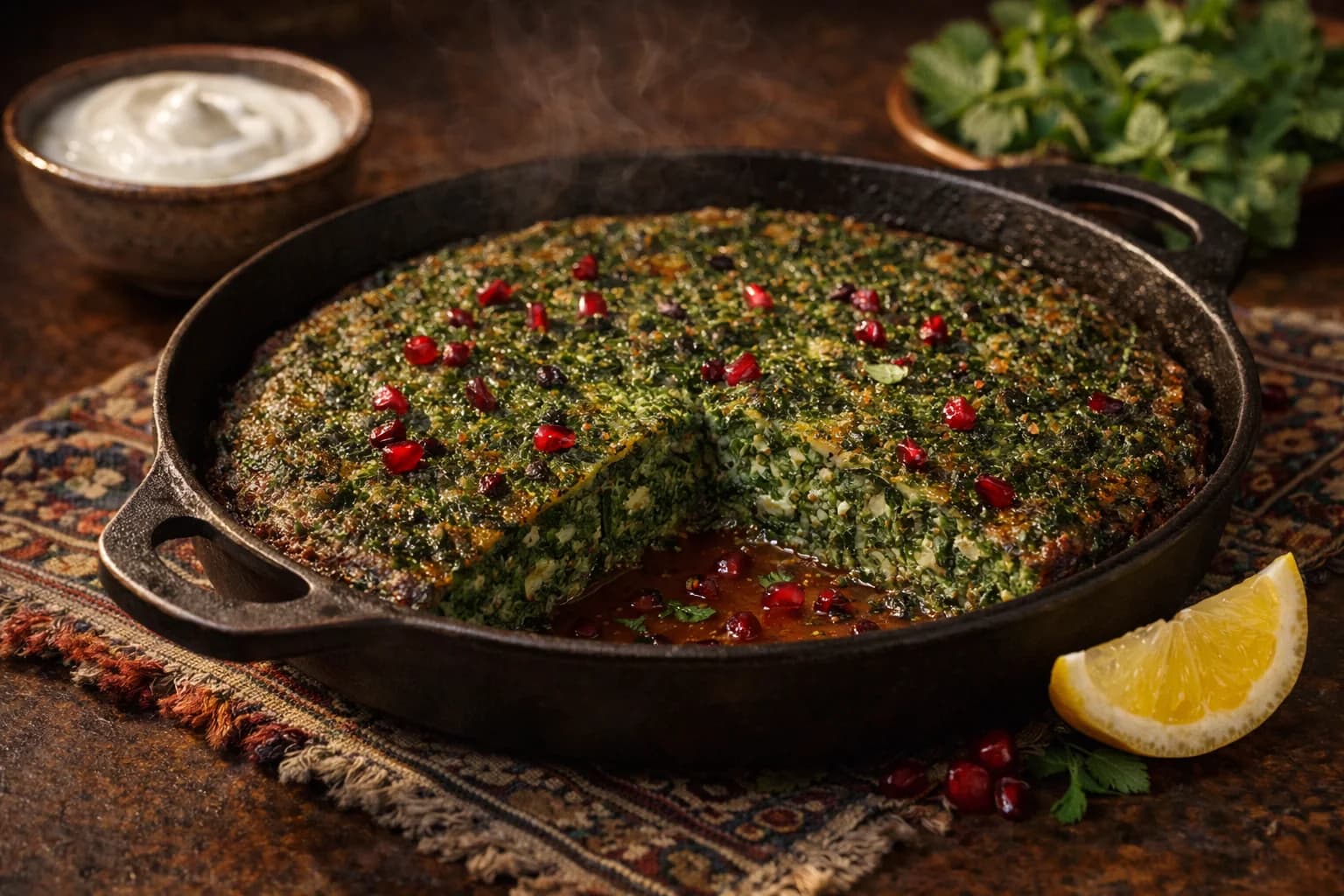
Add all the chopped herbs to the beaten eggs. Add walnuts, barberries, and garlic if using. Fold together gently but thoroughly until the herbs are evenly coated with egg. The mixture should be predominantly green with just enough egg to bind.
Critical Step
The ratio is key—this should look like a mountain of herbs with some egg, not scrambled eggs with herbs. The egg should barely bind the herbs together. If it looks too eggy, you need more herbs.
Heat the pan and add oil
Preheat oven to 180°C/350°F. Heat 45ml oil or butter in a 10-inch oven-safe skillet (cast iron is ideal) over medium heat until shimmering. Swirl to coat the bottom and sides.
Add the herb mixture
Carefully add the herb-egg mixture to the hot pan. Spread evenly with a spatula, pressing gently to create an even layer. The mixture should sizzle when it hits the pan. Reduce heat to medium-low.
Critical Step
The sizzle indicates the pan is hot enough to form a crust. If no sizzle, the pan wasn't hot enough and the bottom won't crisp properly.
Cook the bottom until set
Cook on medium-low heat for 8-10 minutes, undisturbed. The bottom should form a golden-brown crust and the edges should start to set. Gently lift an edge with a spatula to check the color—it should be deep golden.
Critical Step
The golden crust is what distinguishes great kuku. Too high heat burns it; too low heat doesn't crisp. Check the color before moving to the oven.
Common Mistakes
- •Heat too high (burns before setting)
- •Moving to oven too soon (pale bottom)
- •Stirring or disturbing (breaks the crust)
Finish in the oven
Transfer the skillet to the preheated oven. Bake for 20-25 minutes until the top is set and dry to the touch, and a knife inserted in the center comes out clean. The top should be lightly golden.
Flip for crispy top (optional but traditional)
For traditional presentation with crust on both sides: Remove from oven. Place a large plate over the skillet and carefully flip the kuku onto the plate. Add remaining 15ml oil to the hot pan, swirl, then slide the kuku back in, cooked-side up. Return to oven for 10 minutes to crisp the second side. Alternatively, simply serve with one crispy side.
Rest and serve
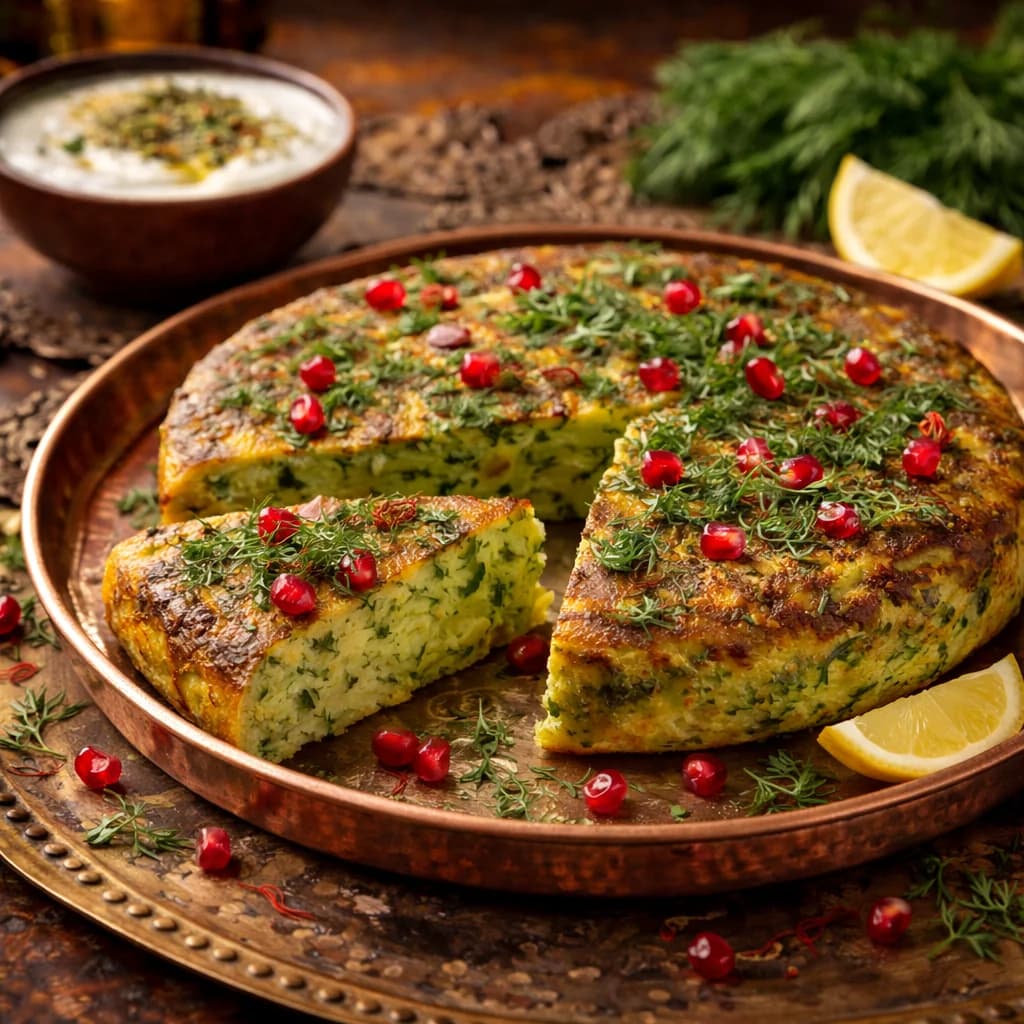
Remove from oven and let rest in the pan for 5 minutes. Slide or flip onto a serving plate. Cut into wedges. Serve warm, at room temperature, or cold—kuku sabzi is delicious at any temperature.
Traditional serving
Serve wedges with lavash bread, plain yogurt, mast-o-khiar, or alongside rice. Kuku sabzi is traditionally part of the Nowruz table, served at room temperature alongside other dishes. It also makes excellent sandwich filling in lavash.
Resting Required
5 min - Allows kuku to set and makes slicing easier