
Kuku Sibzamini (Persian Potato Frittata)

Kuku Sibzamini (Persian Potato Frittata)

کوکو سیب‌زمینی

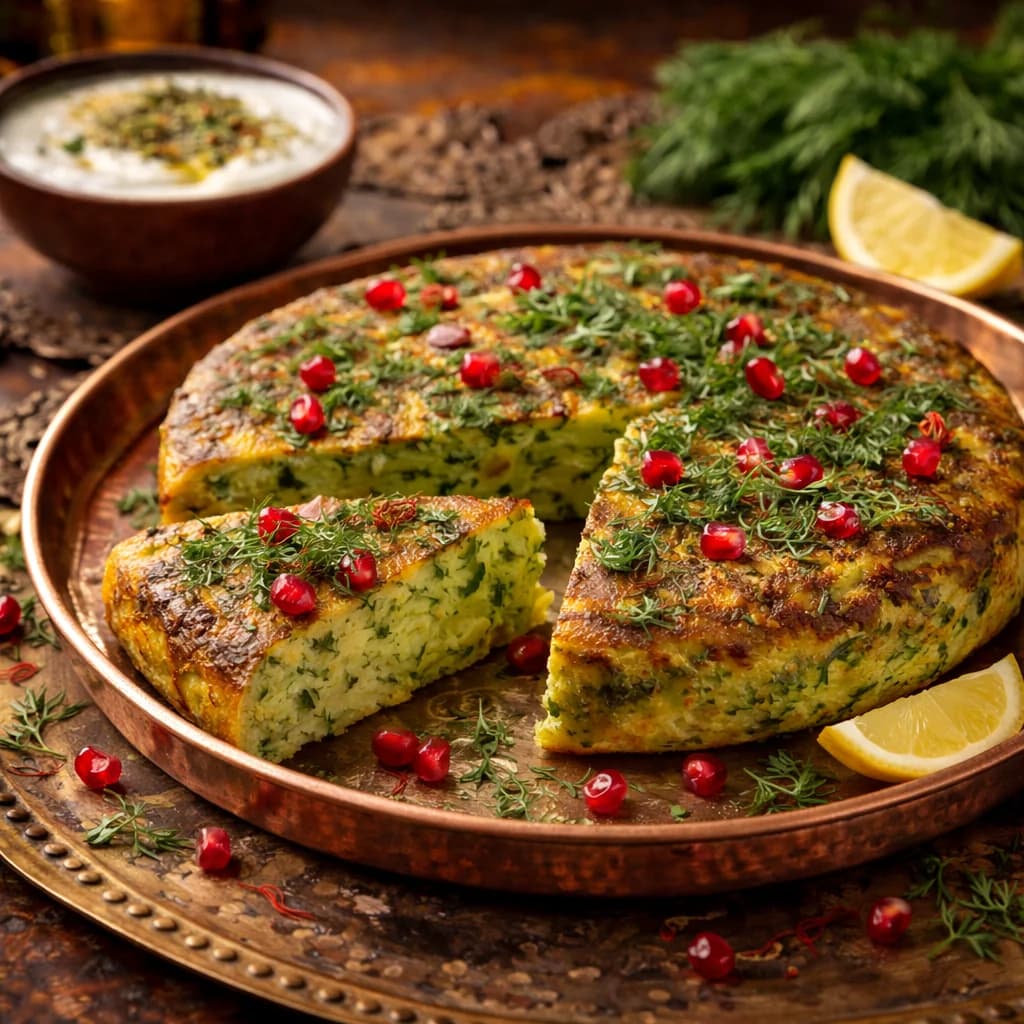
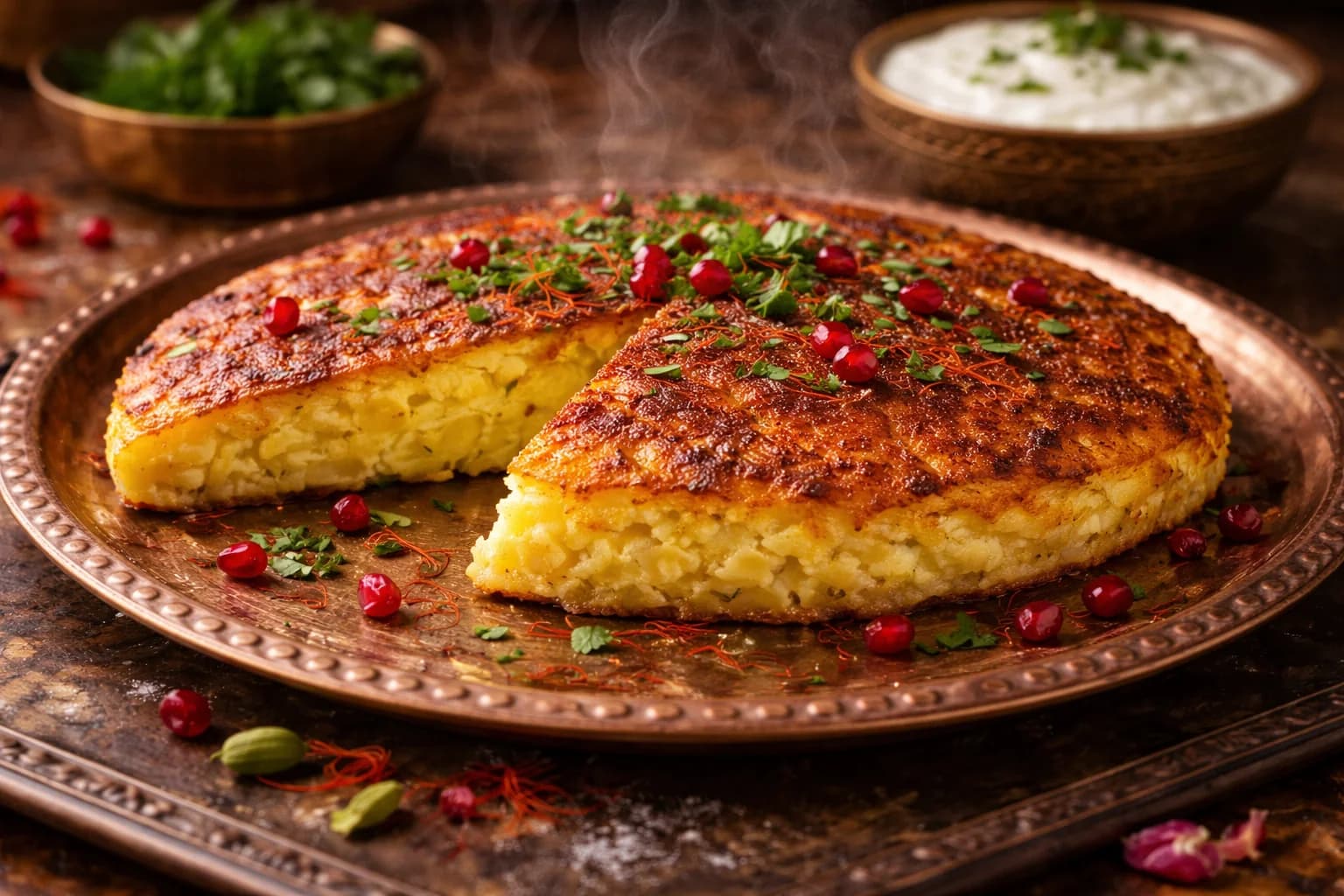
A golden, crispy-crusted frittata made with grated potatoes, eggs, and aromatic saffron—Persian comfort food at its finest. The exterior shatters with crispness while the interior stays tender and creamy. Simple ingredients transformed into something deeply satisfying through proper technique. This humble dish is beloved across all regions of Iran as an everyday meal, side dish, or sandwich filling.

kukuPrep: 25 minCook: 50 mineasyServes 6

Cultural Note

Kuku sibzamini is the everyday kuku—economical, satisfying, and universally loved. While kuku sabzi stars at Nowruz, kuku sibzamini is the weeknight hero, made from humble pantry staples. It's particularly beloved as a sandwich filling: slices of crispy-edged kuku tucked into lavash with tomato, herbs, and yogurt make a perfect lunch. The dish showcases the Persian genius for transforming simple ingredients into something special through technique and seasoning.

Critical Moments

  • Squeezing potatoes very dry
  • Pan hot enough to sizzle when mixture added
  • Developing deep golden crust before flipping
  • Confident flip for even browning on both sides
  • Cooking through without burning exterior
1
PREP3 min

Bloom the saffron (if using)

Grind saffron threads with a pinch of sugar using mortar and pestle. Add 2 tbsp hot water and steep for at least 20 minutes.

Ruby-red liquid
SmellHoney-floral saffron aroma
Saffron is optional for everyday cooking but adds beautiful color and subtle flavor
2
PREP10 min

Peel and grate the potatoes

Peel the potatoes and grate on the large holes of a box grater. Work quickly—potatoes oxidize and turn brown when exposed to air. Place grated potatoes in a large bowl of cold water as you work.

Long, thin shreds of potato; water becoming starchy
SmellFresh potato starch
SoundGrating sound
TouchLong, thin potato shreds
Grating by hand gives the best texture. Food processor grating is faster but creates smaller pieces. Both work.
3
PREP8 min

Rinse and drain the potatoes

Drain the grated potatoes and rinse under cold water until the water runs clear—this removes excess starch. Working in batches, squeeze the potatoes firmly by hand or in a clean kitchen towel to remove as much water as possible. The potatoes should be very dry.

Dry potato shreds; no water dripping when squeezed
SmellClean potato
TouchDry, fluffy shreds that don't clump together wetly

Critical Step

Excess moisture prevents proper crisping. Wet potatoes steam instead of fry, resulting in a soggy kuku. Squeeze until no more water comes out.

Roll potato shreds in a clean kitchen towel and wring—this removes more water than hand-squeezing

Common Mistakes

  • Not squeezing enough (soggy kuku)
  • Not rinsing (excess starch makes it gummy)
  • Letting squeezed potatoes sit (they release more water)
4
PREP3 min

Grate the onion (if using)

Grate the onion on the fine holes of the grater. Unlike for koobideh, keep the onion pulp and juice—it adds flavor and moisture to the kuku.

Onion pulp with juice
SmellPungent raw onion
TouchWet onion paste
Onion is optional but adds sweetness and depth. Some families always include it; others prefer pure potato flavor.
5
PREP3 min

Beat the eggs with seasonings

In a large mixing bowl, beat the eggs with salt, pepper, turmeric, bloomed saffron (if using), flour, and baking powder (if using) until well combined.

Golden-orange mixture from turmeric and saffron; smooth and uniform
SmellEggs with warm spices
TouchSmooth, no lumps
6
PREP3 min

Combine all ingredients

Add the squeezed dry potatoes to the egg mixture. Add grated onion, garlic, and chopped herbs if using. Mix thoroughly until the potatoes are evenly coated with the egg mixture.

Potato shreds evenly coated in golden egg mixture
SmellRaw potato with eggs and spices
TouchEvenly combined; mixture holds together when pressed
The mixture should hold together when pressed but not be wet or sloppy. Adjust with a bit more flour if too loose.
7
COOK3 min

Heat oil in the pan

Preheat oven to 180°C/350°F if using oven method. Heat 50ml oil in a 10-inch non-stick or well-seasoned skillet over medium heat until shimmering and hot. The oil should be generous—this creates the crispy crust.

Oil shimmering and flows easily across pan
Medium175°C / 350°F
SmellHot oil

Critical Step

Generous oil is essential for the crispy crust that defines great kuku sibzamini. Too little oil results in sticking and pale color.

Don't skimp on oil—the crispy crust depends on it. Some will be absorbed; excess can be blotted.
8
COOK2 min

Add potato mixture to pan

Carefully spread the potato mixture evenly in the hot pan, pressing gently with a spatula to create a compact, even layer about 2cm thick. Press especially around the edges to ensure good contact with the pan. The mixture should sizzle when it hits the pan.

Even layer filling the pan; edges pressed against sides; sizzling
SmellPotatoes frying in oil
SoundImmediate sizzle—essential
TouchCompact, even layer

Critical Step

The sizzle indicates proper heat for crust formation. If no sizzle, the pan wasn't hot enough. Even pressing ensures uniform cooking.

Press gently but firmly, especially at edges. Smooth the top with the spatula back.
9
COOK15 min

Cook the first side

Reduce heat to medium-low. Cook undisturbed for 12-15 minutes until the bottom is deeply golden and crispy, and the edges are starting to set. Gently lift an edge with a spatula to check color. The bottom should be deep golden-brown, not pale.

Edges setting and turning golden; bottom is deep golden-brown when lifted
Medium-Low150°C / 300°F
SmellFrying potatoes—appetizing, not burning
SoundSteady, gentle sizzling
TouchBottom feels crispy when pan is shaken

Critical Step

The crispy golden crust is the defining characteristic of great kuku sibzamini. Patience is essential—don't rush this step. Check the color before proceeding.

The kuku should move as one piece when you shake the pan. If it's sticking, it needs more time to release.

Common Mistakes

  • Heat too high (burns before cooking through)
  • Not cooking long enough (pale, soft bottom)
  • Checking too frequently (disturbs crust formation)
10
COOK3 min

Flip the kuku

When the bottom is deeply golden and the kuku moves freely in the pan, it's time to flip. Place a large flat plate or lid over the skillet. Hold firmly and flip the pan over so the kuku lands on the plate, cooked-side up. Add the remaining 25ml oil to the empty pan, swirl, then carefully slide the kuku back in, raw-side down.

Beautiful golden-brown crust now visible on top; raw side now in contact with pan
SmellCrispy fried potato
SoundSizzle as raw side hits hot oil
TouchCrust is crispy and intact

Critical Step

This flip is what gives kuku sibzamini its signature crispy crust on both sides. Confidence matters—a hesitant flip can break the kuku.

Hold the plate firmly against the pan. Flip in one confident motion over the sink (in case of oil drips). If you're nervous, slide onto the plate, add oil to pan, then slide back in.
11
COOK12 min

Cook the second side

Continue cooking over medium-low heat for another 10-12 minutes until the second side is equally golden and crispy. The kuku should be cooked through—no raw potato in the center.

Both sides golden; kuku feels firm throughout when pressed gently
Medium-Low150°C / 300°F
SmellFully cooked, crispy potato
SoundGentle sizzling continuing
TouchFirm throughout, crispy exterior
If the outside is browning too fast but center is still soft, reduce heat and cover loosely. Or transfer to oven to finish.
Checkpoint: Gently press the center—it should feel firm, not soft or wobbly
12
COOK20 min

Alternative oven method

For a less hands-on approach: After cooking the first side on the stovetop for 12-15 minutes, instead of flipping, transfer the skillet to the preheated 180°C/350°F oven. Bake for 15-20 minutes until the top is set and golden. Then flip onto a plate and return to the hot pan for 5 minutes to crisp the second side.

Top set and golden from oven; bottom already crispy from stovetop
Medium180°C / 350°F
The oven method is gentler and more foolproof than the flip method, though it takes slightly longer.
13
FINISH5 min

Rest and serve

Slide the kuku onto a cutting board or serving plate. Let rest for 5 minutes—this makes slicing easier and allows the interior to finish setting. Cut into wedges. Serve warm or at room temperature.

Golden-brown disc with crispy crust on both sides; tender interior when cut
SmellCrispy fried potato with aromatic spices
SoundSatisfying crunch when cutting through crust
TouchShattering crispy exterior; tender, creamy interior
Kuku sibzamini is excellent at any temperature. It keeps well and is perfect for packed lunches.
14
FINISH

Traditional serving

Serve wedges with lavash bread, plain yogurt, mast-o-khiar, fresh herbs, and torshi (pickles). For sandwiches, spread lavash with yogurt, add kuku slice, tomato, and herbs. Kuku sibzamini is also wonderful alongside rice dishes.

Golden wedges with visible crispy crust, served with bread, yogurt, and pickles
The contrast of crispy, warm kuku with cool creamy yogurt is classic. Fresh tomato slices are a common accompaniment.

Resting Required

5 min - Allows interior to set fully and makes slicing easier
Extras

Equipment

10 inch non stick skilletbox graterlarge mixing bowlstandard

Make Ahead

  • Prepare completely, cool, cover, and refrigerate for up to 3 days.
  • Serve cold or at room temperature, or reheat in a hot pan to re-crisp the exterior.

Reheat slices in a hot skillet with a little oil to restore crispness.

Microwave makes crust soggy—avoid if possible.

Serve With

🍚Chelow, any polo dish

Sides

  • Lavash bread
  • Plain yogurt
  • Mast-o-khiar
  • Torshi
  • Fresh tomatoes
  • Sabzi khordan

Drinks

  • Doogh
  • Black tea

Substitutions

potatoesStarchy potatoes (Russet, King Edward) crisp best. Waxy potatoes (Yukon Gold) work but are creamier and less crispy. Sweet potatoes create a different but delicious variation.
saffronCan be omitted for everyday cooking—turmeric provides color. Saffron adds subtle luxury.
onionOptional but traditional. Some prefer pure potato flavor.
flourChickpea flour (besan) for gluten-free. Rice flour works too. Helps bind and crisp.

Scaling

Scales easily. For larger quantities, use a larger pan or make multiple kukus. The potato-to-egg ratio can be adjusted based on preference—more potato for crispier kuku, more egg for softer texture.

Source

Traditional · Traditional Persian home cooking

An everyday comfort food found in households across Iran. Unlike the festive kuku sabzi, kuku sibzamini is humble, economical, and endlessly satisfying—the Persian equivalent of hash browns meets frittata.

Related Recipes