
Critical Moments
- •Soaking wheat and legumes overnight
- •Long simmering (1.5+ hours) before adding faster-cooking ingredients
- •Achieving thick pottage consistency
- •Generous seasoning to bring together all ingredients
Soak grains and legumes overnight
Place wheat berries, chickpeas, white beans, and kidney beans in separate bowls. Cover each with cold water by at least 8cm. Soak for 8-12 hours or overnight. Drain and rinse before using.
Soak grains and legumes overnight
Place wheat berries, chickpeas, white beans, and kidney beans in separate bowls. Cover each with cold water by at least 8cm. Soak for 8-12 hours or overnight. Drain and rinse before using.
Prepare herbs
Wash all herbs thoroughly in several changes of water. Finely chop parsley, cilantro, chives, dill, and fenugreek. Roughly chop spinach. This is a large quantity—take your time.
Prepare herbs
Wash all herbs thoroughly in several changes of water. Finely chop parsley, cilantro, chives, dill, and fenugreek. Roughly chop spinach. This is a large quantity—take your time.
Brown the meat (if using)
Heat 60ml oil in a large stockpot over high heat. Pat lamb cubes dry and brown in batches on all sides, about 6-8 minutes total. Remove and set aside.
Brown the meat (if using)
Heat 60ml oil in a large stockpot over high heat. Pat lamb cubes dry and brown in batches on all sides, about 6-8 minutes total. Remove and set aside.
Sauté aromatics
Reduce heat to medium. Add diced onion to the pot and sauté until golden, about 10 minutes. Add garlic and turmeric, stir for 1 minute until fragrant.
Sauté aromatics
Reduce heat to medium. Add diced onion to the pot and sauté until golden, about 10 minutes. Add garlic and turmeric, stir for 1 minute until fragrant.
Add slow-cooking ingredients
Return browned meat to pot. Add soaked wheat berries, chickpeas, white beans, and kidney beans. Add 3000ml water. Bring to a boil, skimming any foam. Reduce to a simmer.
Add slow-cooking ingredients
Return browned meat to pot. Add soaked wheat berries, chickpeas, white beans, and kidney beans. Add 3000ml water. Bring to a boil, skimming any foam. Reduce to a simmer.
Long simmer for grains and legumes
Simmer for 1.5 hours, stirring occasionally, until wheat berries are chewy-tender and chickpeas are soft. Add water as needed to maintain soup consistency. Season with salt halfway through.
Critical Step
Wheat berries and dried legumes take 1.5+ hours to become tender. Adding other ingredients too early results in mushy grains and undercooked wheat.
Long simmer for grains and legumes
Simmer for 1.5 hours, stirring occasionally, until wheat berries are chewy-tender and chickpeas are soft. Add water as needed to maintain soup consistency. Season with salt halfway through.
Critical Step
Wheat berries and dried legumes take 1.5+ hours to become tender. Adding other ingredients too early results in mushy grains and undercooked wheat.
Add barley, rice, lentils, and mung beans
Add pearl barley, rice, lentils, and mung beans (if using). Add remaining 500ml water. Continue simmering for 30 minutes.
Add barley, rice, lentils, and mung beans
Add pearl barley, rice, lentils, and mung beans (if using). Add remaining 500ml water. Continue simmering for 30 minutes.
Add all herbs
Add all the chopped herbs to the pot. Stir well—the soup will become deeply green. Add cinnamon if using. Simmer for another 25-30 minutes until everything is tender and flavors have melded.
Add all herbs
Add all the chopped herbs to the pot. Stir well—the soup will become deeply green. Add cinnamon if using. Simmer for another 25-30 minutes until everything is tender and flavors have melded.
Final seasoning
Taste and adjust salt generously—this hearty soup needs bold seasoning. Add pepper. The consistency should be thick like porridge but still spoonable.
Critical Step
With this many ingredients, adequate salt is essential to bring all the flavors together. Under-seasoned ash-e sholeh ghalamkar tastes flat despite its complexity.
Final seasoning
Taste and adjust salt generously—this hearty soup needs bold seasoning. Add pepper. The consistency should be thick like porridge but still spoonable.
Critical Step
With this many ingredients, adequate salt is essential to bring all the flavors together. Under-seasoned ash-e sholeh ghalamkar tastes flat despite its complexity.
Fry the onion topping
Heat 60ml oil in a large skillet over medium-high heat. Add sliced onions and fry for 15-18 minutes until deeply golden and crispy. Remove to paper towels.
Fry the onion topping
Heat 60ml oil in a large skillet over medium-high heat. Add sliced onions and fry for 15-18 minutes until deeply golden and crispy. Remove to paper towels.
Fry the mint
Melt butter in a small skillet over medium heat. Add dried mint and swirl for 30-45 seconds until fragrant. Remove from heat immediately.
Fry the mint
Melt butter in a small skillet over medium heat. Add dried mint and swirl for 30-45 seconds until fragrant. Remove from heat immediately.
Serve with all toppings
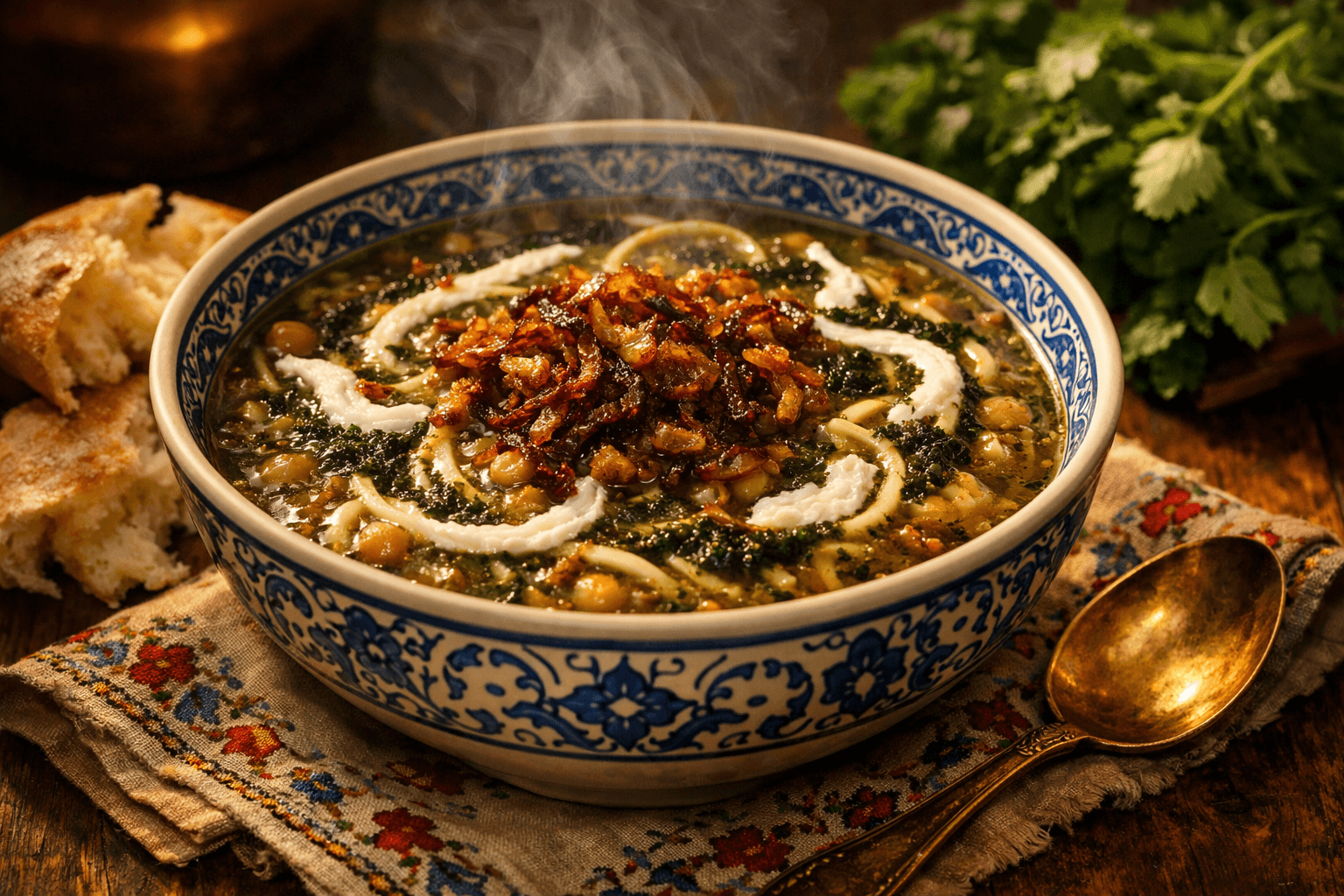
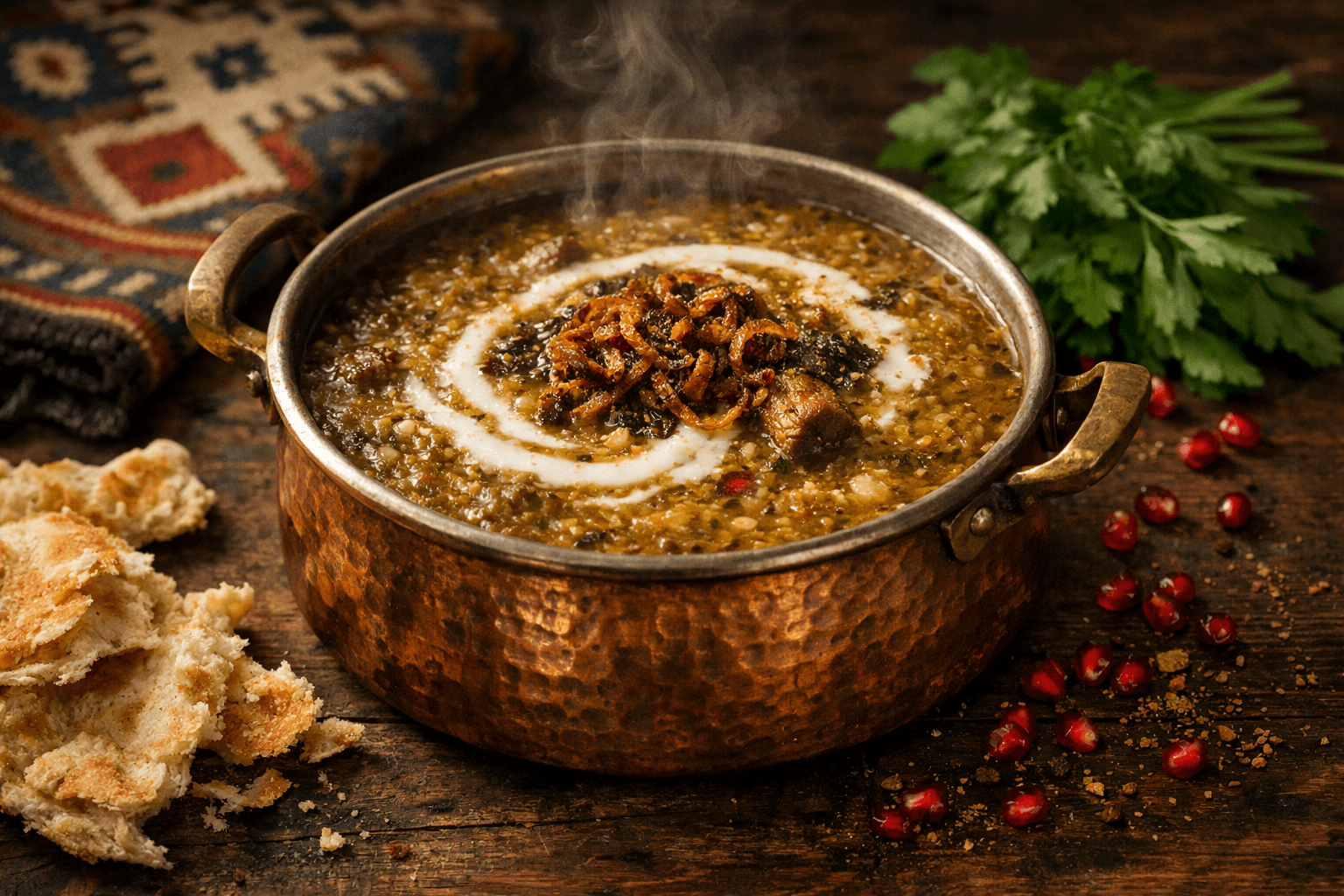
Ladle soup into wide bowls. Drizzle kashk in swirls, add a mound of crispy onions, and drizzle mint butter over everything. Serve immediately with bread.
Serve with all toppings
Ladle soup into wide bowls. Drizzle kashk in swirls, add a mound of crispy onions, and drizzle mint butter over everything. Serve immediately with bread.