
Dolmeh Barg Mo (Persian Stuffed Grape Leaves)

Dolmeh Barg Mo (Persian Stuffed Grape Leaves)

دلمه برگ مو

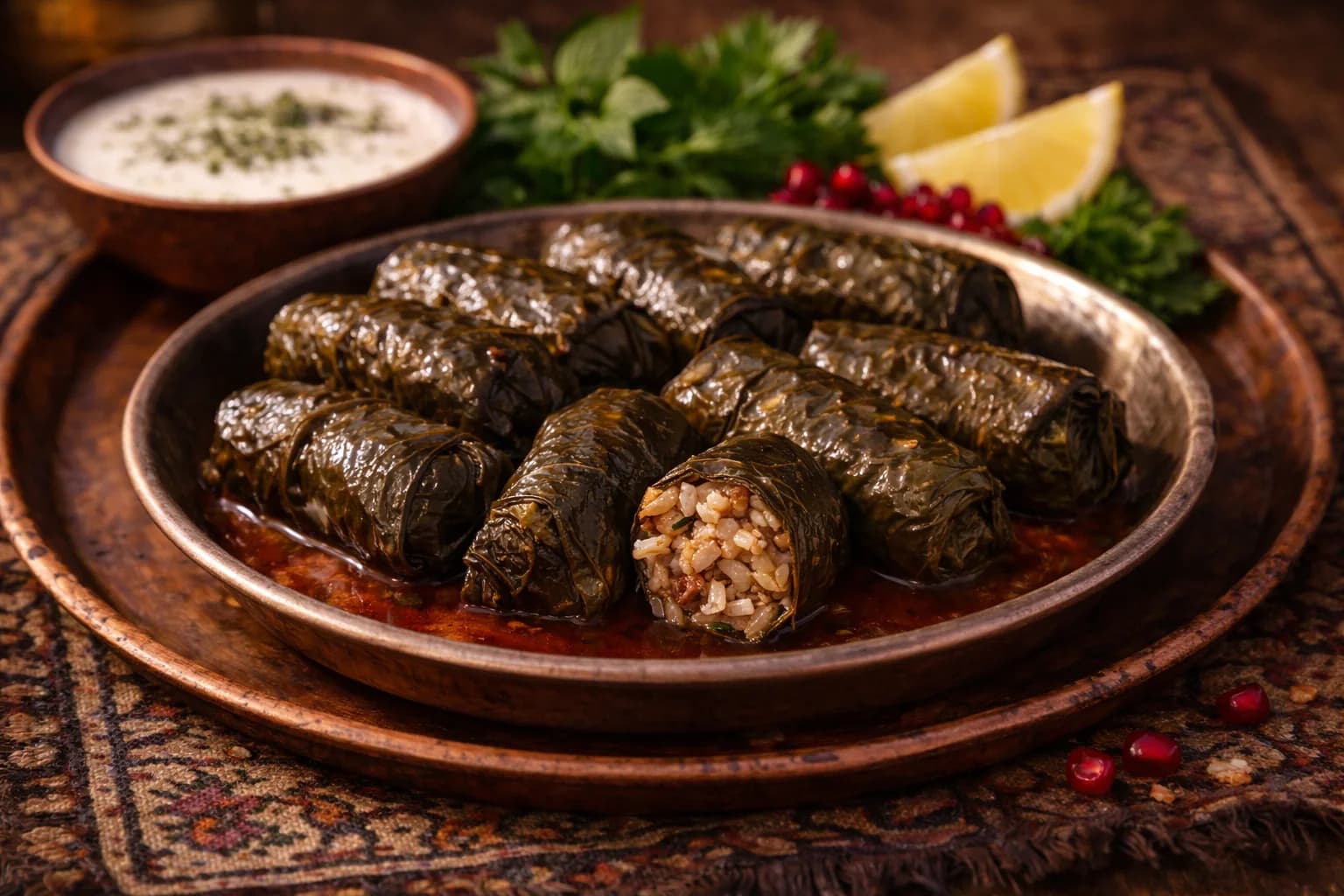
Tender grape leaves wrapped around a fragrant filling of rice, split peas, herbs, and often ground meat—tiny parcels of Persian flavor that burst with sweet-sour complexity. Unlike their Greek or Turkish cousins, Persian dolmeh are distinctively flavored with an abundance of fresh herbs, warm spices, and a sweet-sour braising liquid that penetrates each roll. Traditionally made in large batches for special occasions, each painstakingly rolled leaf represents love and patience. The result is utterly addictive—tender, tangy, aromatic, and impossible to eat just one.

dolmehVorbereitung: 75 MinKochen: 90 MinintermediateFür 8

Kultureller Hinweis

Dolmeh (from the Turkish 'dolma,' meaning 'stuffed') is beloved throughout the Middle East, but Persian dolmeh are distinctive for their abundant fresh herbs and sweet-sour braising sauce. In Iran, dolmeh are made for special occasions, family gatherings, and religious holidays. The rolling is often a communal activity—mothers, daughters, and aunts gathered around a table, rolling and chatting. A platter of dolmeh represents hours of labor and love, which is why they're considered special-occasion food. The sweet-sour flavor profile—achieved with grape or pomegranate molasses and lemon—is quintessentially Persian.

Kritische Momente

  • Soaking grape leaves to reduce saltiness
  • Partially cooking split peas (not fully)
  • Rolling snug but not too tight
  • Achieving proper sweet-sour balance in braising liquid
  • Low, slow cooking until rice is fully cooked
1
VORBEREITUNG30 Min

Prepare the grape leaves

If using jarred grape leaves, remove them from the jar and carefully separate the leaves—they're delicate. Rinse in cold water to remove excess brine. Place in a large bowl and cover with boiling water. Let soak for 20-30 minutes to soften and reduce saltiness. Drain and rinse again. If using fresh grape leaves, blanch in boiling water for 2-3 minutes until pliable, then rinse in cold water.

Leaves are soft, pliable, and less salty
GeruchMild, slightly tangy grape leaf aroma
TexturSoft and flexible, not brittle or tough

Kritischer Schritt

Proper preparation of grape leaves is essential. Unsoaked jarred leaves are too salty and stiff. The hot water soak removes excess brine and softens them for rolling.

Save any torn or very small leaves—they'll line the bottom of the pot to prevent sticking. You need about 50 nice leaves for rolling plus extras for the pot bottom.

Häufige Fehler

  • Not soaking long enough (too salty, too stiff)
  • Tearing leaves when separating (be gentle)
  • Using leaves straight from jar (overwhelmingly salty)
2
VORBEREITUNG20 Min

Prepare the split peas

Rinse the split peas and place in a small pot. Cover with water, bring to a boil, then simmer for 15-20 minutes until partially cooked—tender but still holding their shape. They'll finish cooking in the dolmeh. Drain and set aside.

Split peas are slightly tender but not mushy
MediumSimmer
GeruchCooking legumes
KlangSimmering
TexturTender but with slight bite—not fully soft
Don't fully cook the split peas—they'll continue cooking during braising. Overcooked split peas will become mushy in the finished dolmeh.
3
VORBEREITUNG15 Min

Prepare the filling

Heat 30ml oil in a skillet over medium heat. Add the diced onions and cook for 8-10 minutes until softened and lightly golden. Add turmeric and cook 1 minute. Transfer to a large mixing bowl. Add the rinsed rice (uncooked), partially cooked split peas, ground meat (if using), all the chopped herbs, cinnamon, cumin (if using), salt, and pepper. Mix thoroughly with your hands until everything is evenly combined.

Uniform mixture of rice, herbs, split peas, and meat; fragrant and colorful
GeruchHerbaceous with warm spices
TexturMixed thoroughly; slightly moist from herbs

Kritischer Schritt

The filling must be thoroughly mixed so every dolmeh has the same flavor. The rice is added raw—it will cook during braising, absorbing the delicious liquid.

Taste a tiny bit of the raw filling (or cook a spoonful) to check seasoning. It should be well-seasoned since flavor will distribute through the rice as it cooks.
4
VORBEREITUNG10 Min

Prepare the grape leaves for rolling

Lay out the soaked grape leaves on a clean work surface. Remove any thick stems by cutting a small V-shape at the base of each leaf where the stem meets the leaf. Lay each leaf flat, smooth side down (vein side up). Sort leaves by size—larger ones for rolling, smaller or torn ones for lining the pot.

Leaves laid flat with stems removed, sorted by size
TexturLeaves are smooth and pliable
The smooth, shiny side should face outward on the finished dolmeh. Rolling with the vein side up ensures this.
5
VORBEREITUNG45 Min

Roll the dolmeh

Place a grape leaf vein-side up with the stem end toward you. Place about 1 tablespoon of filling (more for larger leaves, less for smaller) in a horizontal line near the stem end. Fold the bottom of the leaf up over the filling, then fold in both sides toward the center. Roll away from you, tucking the sides in as you go, to create a snug cylinder about the size of your finger. Don't roll too tight—the rice needs room to expand. Repeat with remaining leaves and filling.

Neat, finger-sized cylinders; snug but not tight
GeruchHerby filling
TexturFirm but with slight give when squeezed

Kritischer Schritt

The rolling technique is essential. Too tight and the rice can't expand, causing bursting. Too loose and they fall apart. Aim for snug but with some give.

Work at a comfortable pace—this is meditative work. Place finished dolmeh seam-side down. If a leaf tears, just use another leaf to patch it.

Häufige Fehler

  • Rolling too tight (rice expands and bursts the leaf)
  • Too much filling (won't close properly)
  • Not folding sides in (filling escapes during cooking)
6
KOCHEN10 Min

Arrange dolmeh in pot

Line the bottom of a large heavy pot with torn grape leaves, potato slices, or a layer of onion slices—this prevents sticking. Arrange the rolled dolmeh seam-side down in tight concentric circles, packing them snugly in a single layer. Build additional layers on top if needed, offsetting the dolmeh like bricks. They should be packed fairly tightly so they don't unroll during cooking.

Neat concentric circles of dolmeh packed snugly; multiple layers if needed
GeruchGrape leaves and herbs
TexturFirmly packed but not crushed

Kritischer Schritt

Tight packing prevents the dolmeh from unrolling during cooking. The bottom layer protection prevents burning. Seam-side down keeps them sealed.

Some cooks place an inverted plate on top of the dolmeh before adding liquid to keep them submerged and compact.
7
KOCHEN5 Min

Prepare the braising liquid

In a bowl, whisk together the tomato paste, grape or pomegranate molasses, lemon juice, sugar, remaining 30ml oil, and 500ml water. Taste and adjust the sweet-sour balance—it should be noticeably tangy and slightly sweet. Pour this mixture over the dolmeh.

Reddish-brown, tangy-sweet liquid
GeruchTangy, sweet, tomatoey
TexturLiquid pourable consistency

Kritischer Schritt

The sweet-sour braising liquid is what makes Persian dolmeh distinctive. It should be assertively flavored—the taste mellows and penetrates the dolmeh during cooking.

Adjust the sweet-sour balance to your preference. Some families prefer more sour, others sweeter. The flavors will meld and mellow during cooking.
8
KOCHEN85 Min

Cook the dolmeh

The liquid should come about two-thirds up the dolmeh—add more water if needed. Place an inverted heat-safe plate on top of the dolmeh to keep them submerged. Cover the pot. Bring to a gentle boil, then reduce to a low simmer. Cook for 75-90 minutes until the rice is fully cooked and the dolmeh are tender.

Dolmeh are tender; rice inside is fully cooked; liquid has reduced and thickened
LowGentle simmer
GeruchSweet-sour, herby, deeply aromatic
KlangGentle simmering
TexturDolmeh are soft when pierced; rice is tender

Kritischer Schritt

Low, slow cooking allows the rice to cook through and absorb the braising liquid. The liquid should reduce to a thick, glossy sauce. Check periodically and add water if the pot is drying out.

Check halfway through cooking. If the liquid has reduced too much, add a splash of water. The dolmeh should be moist, not dry.
Kontrollpunkt: Carefully cut one dolmeh open to check that the rice is fully cooked—no hard center.
9
FERTIGSTELLEN20 Min

Rest and serve

Remove from heat and let rest for 15-20 minutes with the lid on. This allows the dolmeh to firm up slightly and makes them easier to handle. Carefully remove from the pot—they're delicate. Arrange on a platter. Spoon the reduced braising liquid over the top as a glaze.

Glossy dolmeh with thick, tangy-sweet glaze
GeruchDeeply aromatic—herbs, sweet-sour, warmth
TexturTender but holding their shape
Dolmeh can be served warm, at room temperature, or cold. Many prefer them at room temperature or chilled, when the flavors have fully melded.
10
FERTIGSTELLEN

Serve

Serve warm, at room temperature, or cold. Traditionally accompanied by yogurt, torshi (pickles), and fresh bread. Dolmeh are often part of a larger spread and can be eaten as appetizers or a main course.

Beautiful platter of glistening dolmeh, perhaps garnished with fresh herbs
Dolmeh are excellent make-ahead food—the flavor actually improves after a day in the refrigerator.

Ruhezeit Erforderlich

15 Min - Allows dolmeh to firm up; easier to handle

Extras

Ausstattung

large pot with lidlarge mixing bowlheavy plate for weightStandard

Im Voraus Zubereiten

  • Dolmeh are excellent make-ahead.
  • Keep refrigerated for up to 5 days; flavor improves overnight.
  • Can be frozen for up to 3 months—freeze before or after cooking.
  • Thaw in refrigerator overnight.

Reheat gently in a covered pan with a splash of water, or microwave.

Also delicious served cold or at room temperature.

Servieren Mit

🍚Not typically served with rice—they contain rice

Beilagen

  • Plain yogurt or mast-o-khiar
  • Torshi (pickled vegetables)
  • Fresh bread
  • Sabzi khordan
  • Part of an appetizer spread

Getränke

  • Doogh
  • Black tea

Ersatzstoffe

grape leavesNo true substitute for the distinctive flavor and texture. In a pinch, blanched cabbage leaves or Swiss chard can be used, but the dish will be different.
grape molassesPomegranate molasses works well (more tart). Can substitute 3 tbsp brown sugar + 1 tbsp balsamic vinegar.
split peasYellow lentils can substitute but cook faster—add near the end of filling prep. Some families use only rice.
fresh herbsFrozen Persian herb mix (sabzi dolmeh) is available at Persian groceries. Dried herbs don't work well for this dish.

Skalierung

This recipe is already scaled for a large batch—dolmeh are labor-intensive and traditionally made in quantity. Scales up easily; just roll more. Leftovers keep well and actually improve overnight as the flavors meld. Freezes excellently before or after cooking.

Quelle

Traditionell · Traditional Persian cuisine

Dolmeh is found throughout the Middle East and Mediterranean, but Persian versions are distinguished by their herb-heavy filling and sweet-sour braising sauce. A labor of love traditionally made for special gatherings and celebrations.

Ähnliche Rezepte

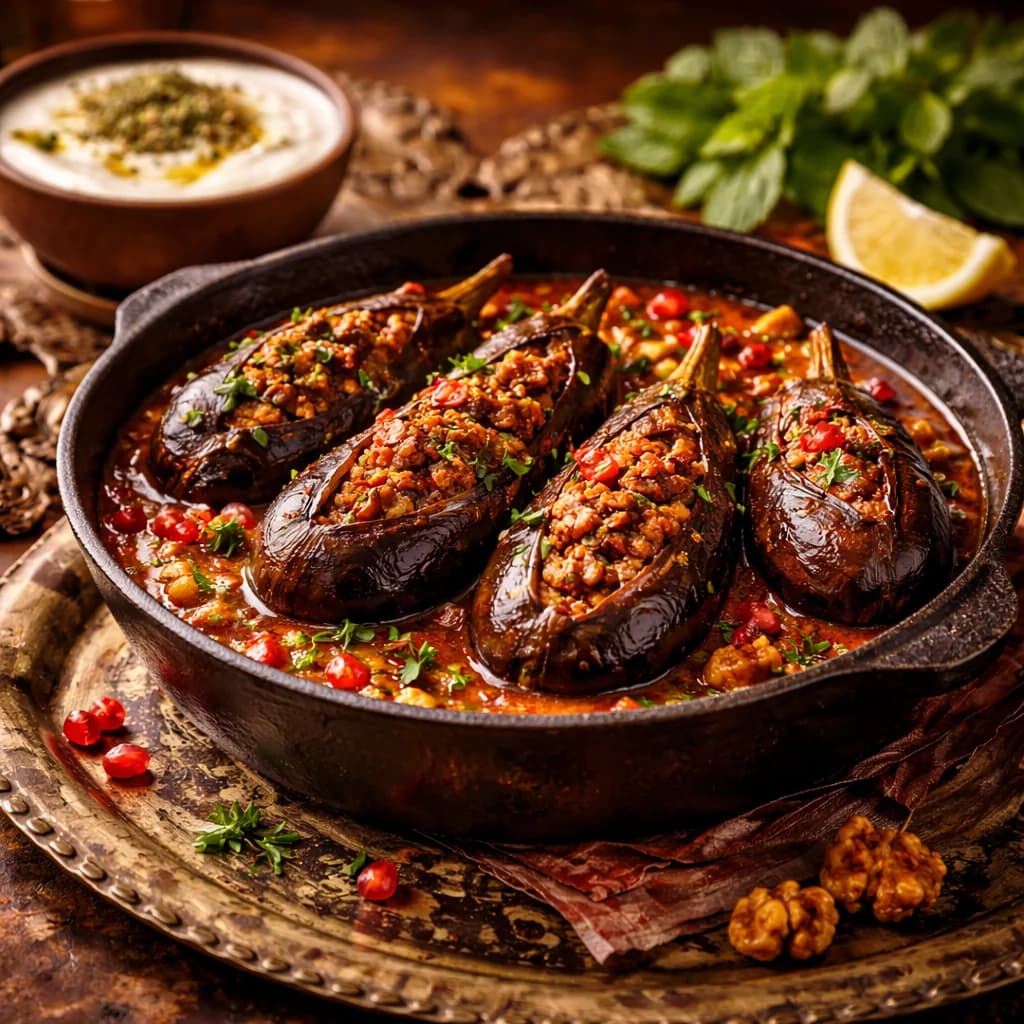
Dolmeh Bademjan (Persian Stuffed Eggplant)

Dolmeh Bademjan (Persian Stuffed Eggplant)

Small, tender eggplants hollowed and filled with an aromatic mixture of rice, herbs, split peas, and meat, then braised until the eggplant becomes silky and yielding. These elegant parcels showcase the Persian mastery of eggplant—the vegetable absorbs the sweet-sour braising liquid while the filling cooks to aromatic perfection inside. More refined than cabbage dolmeh and more substantial than grape leaves, stuffed eggplants are a centerpiece dish worthy of special occasions.

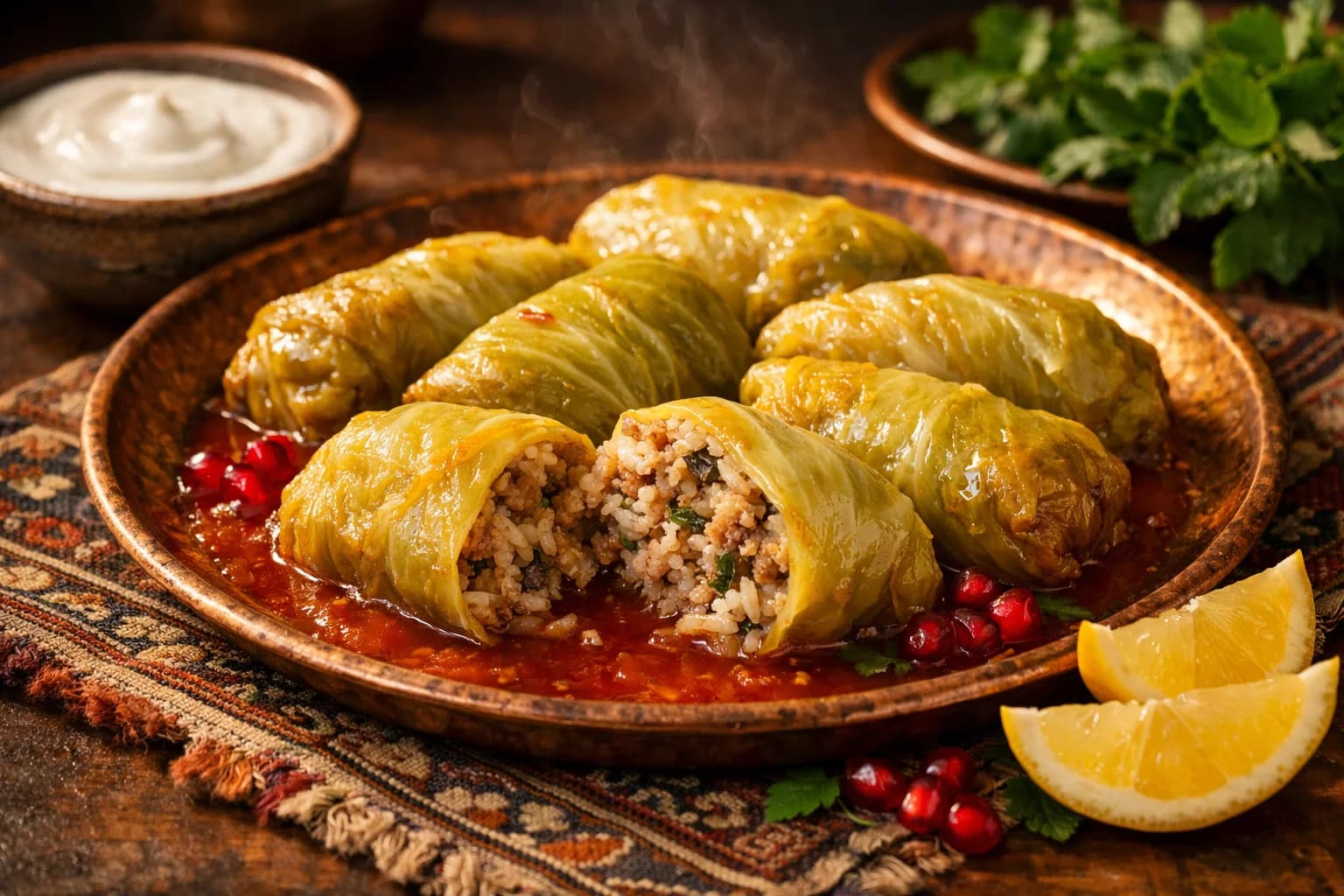
Dolmeh Barg Kalam (Persian Stuffed Cabbage Leaves)

Dolmeh Barg Kalam (Persian Stuffed Cabbage Leaves)

Large, tender cabbage leaves wrapped around an aromatic filling of rice, herbs, split peas, and meat, then braised in a sweet-sour tomato sauce until meltingly soft. These generous parcels are easier to roll than grape leaves and yield larger, more substantial portions—perfect for a hearty main course. The cabbage becomes silky and sweet during cooking, its mild flavor absorbing the tangy braising liquid beautifully. A beloved winter comfort food when cabbages are at their peak.

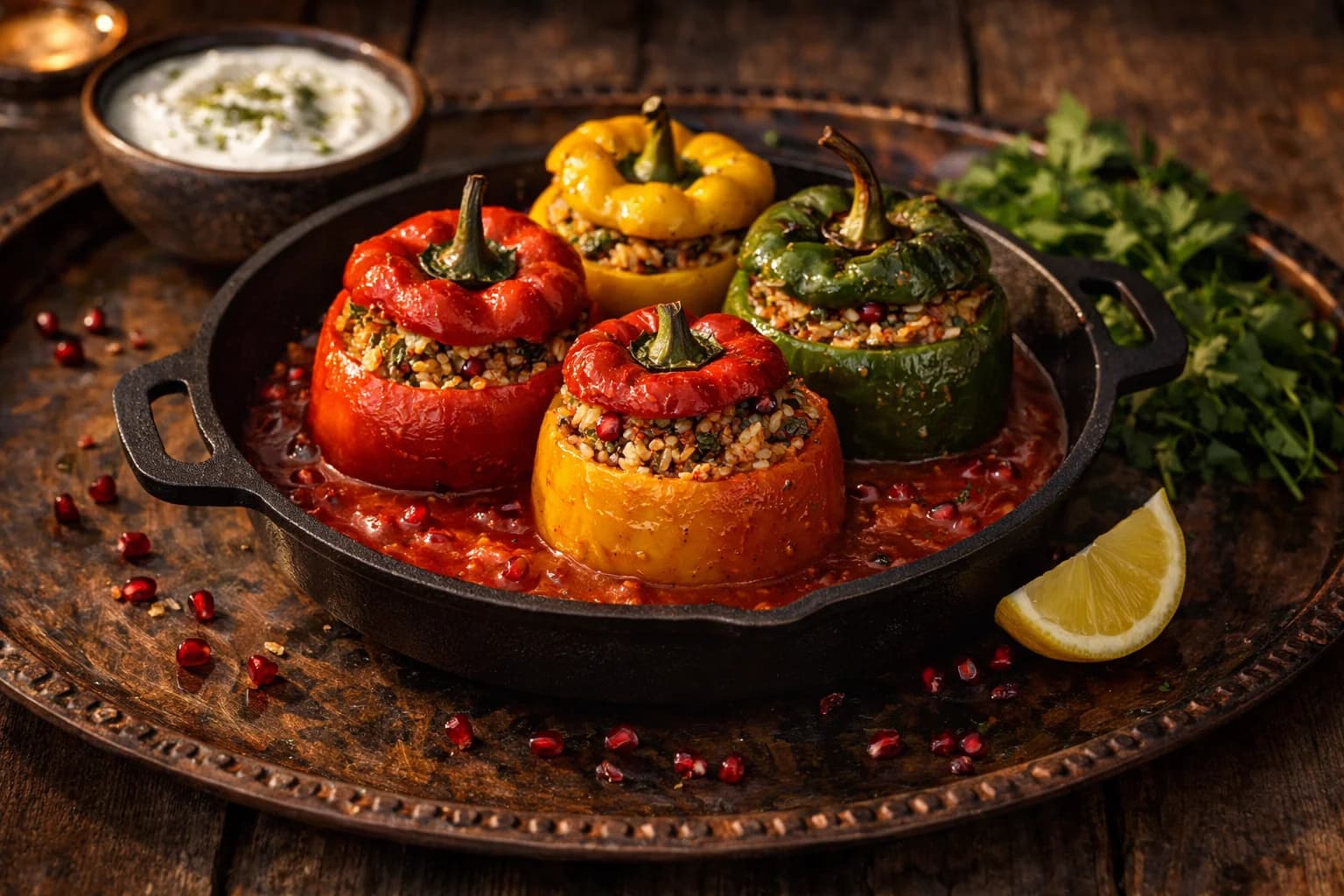
Dolmeh Felfel (Persian Stuffed Bell Peppers)

Dolmeh Felfel (Persian Stuffed Bell Peppers)

Sweet bell peppers hollowed and filled with an aromatic mixture of rice, herbs, split peas, and meat, then braised in a tangy tomato sauce until tender and deeply flavored. These colorful stuffed peppers are larger and more substantial than grape leaf dolmeh, making them perfect as a main course. The peppers become silky-soft during cooking, their natural sweetness playing against the tangy sauce and savory filling. A beautiful centerpiece dish that's impressive yet comforting.