
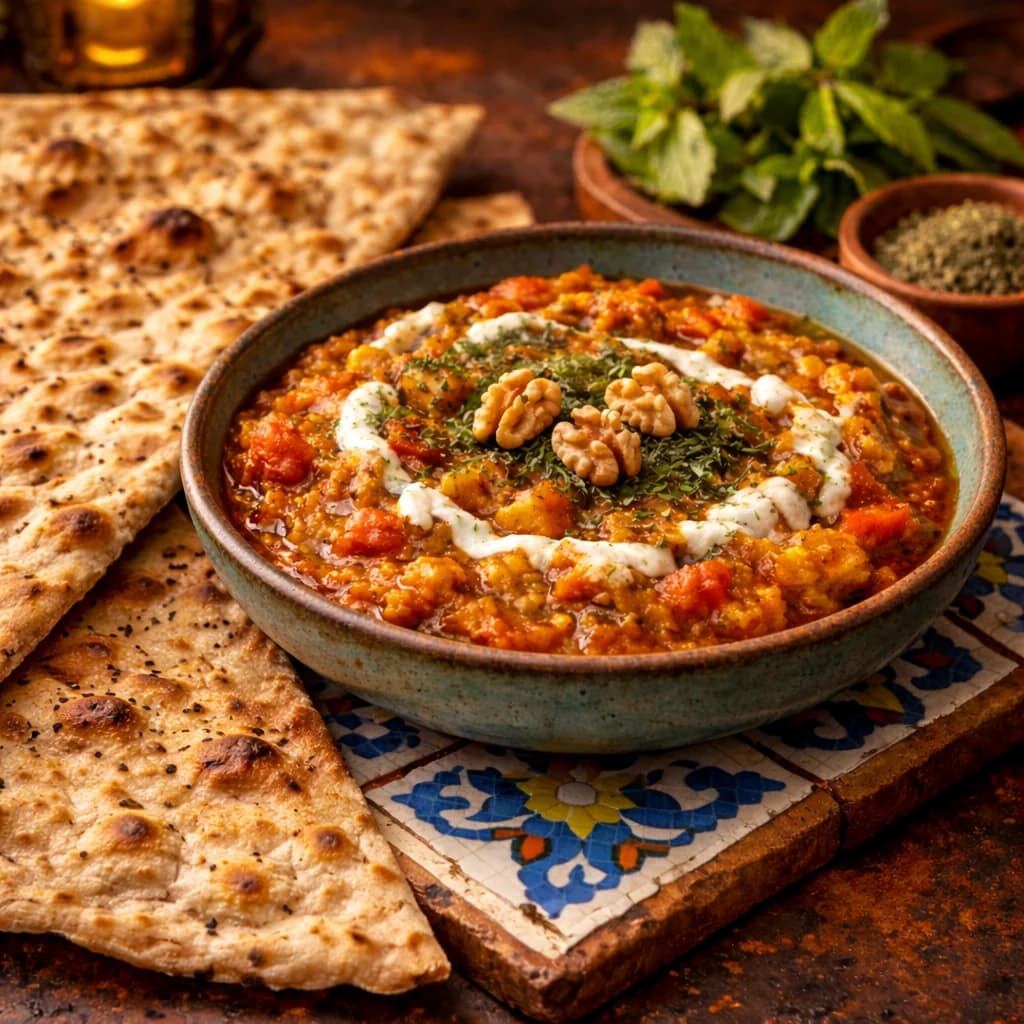
Mirza Ghasemi (Smoky Eggplant with Tomato and Garlic)

Mirza Ghasemi (Smoky Eggplant with Tomato and Garlic)

میرزا قاسمی

A magnificent smoky eggplant dish from the lush Caspian region—fire-charred eggplant mashed with tomatoes, an audacious amount of garlic, and eggs that are gently stirred in to create a rich, creamy texture. The name honors Mirza Ghasemi, a 19th-century nobleman from Gilan, and the dish captures the bold, garlicky, smoky flavors beloved in northern Persian cuisine. Served with warm bread, it's utterly addictive.

appetizerVorbereitung: 15 MinKochen: 50 MineasyFür 6

Kultureller Hinweis- Gilan

Mirza Ghasemi is the pride of Gilan province, the lush, rice-growing region along the Caspian Sea. Gilani cuisine is known for bold flavors—lots of garlic, sour elements, and smoky preparations. The dish is named after Mirza Ghasemi, a 19th-century aristocrat who either created or championed this dish. It's traditionally made by charring eggplants directly over wood fire, which gives an incomparable smokiness. Served as an appetizer scooped up with fresh bread, it's utterly addictive. The generous garlic is intentional and essential—if you think 10 cloves is too much, you haven't had authentic Mirza Ghasemi.

Kritische Momente

  • Charring eggplant directly over flame until completely soft and smoky
  • Using generous garlic (don't reduce the amount)
  • Cooking tomatoes until reduced and concentrated
  • Gently incorporating eggs for creamy texture, not scrambling
1
VORBEREITUNG20 Min

Char the eggplants

Place whole eggplants directly over a gas flame on your stovetop, or on a very hot grill. Using tongs, turn them every 2-3 minutes until the skin is completely charred and blackened on all sides, and the flesh is utterly soft—collapsed and almost deflated. This takes 15-20 minutes per eggplant depending on size. The eggplant should feel very soft when squeezed with tongs.

Skin completely blackened and papery; eggplant collapsed and soft; steam escaping from splits
HighDirect flame
GeruchIntensely smoky, sweet charred eggplant—the signature aroma
KlangHissing and occasional popping as moisture escapes
TexturCompletely soft when pressed with tongs; no firm spots

Kritischer Schritt

The smoky flavor from direct flame charring is what defines Mirza Ghasemi. Oven roasting doesn't achieve the same deep smokiness. The eggplant must be completely soft—undercooked eggplant will be bitter and won't mash properly.

If you don't have a gas stove, use a very hot grill or broiler set as close as possible to the element. Turn frequently. Some cooks use a kitchen torch to supplement.

Häufige Fehler

  • Not charring enough (missing the smokiness)
  • Not cooking until fully soft (bitter, won't mash)
  • Oven roasting without direct flame (less smoky)
2
VORBEREITUNG15 Min

Cool and peel the eggplants

Transfer charred eggplants to a colander set over a bowl. Let cool for 10 minutes. When cool enough to handle, peel off and discard the blackened skin—it should slip off easily. Let the flesh drain for another 5 minutes, then roughly chop or mash with a fork. Don't make it too smooth—some texture is traditional.

Pale, smoky flesh with visible texture; charred bits are okay and add flavor
GeruchIntense smokiness concentrated in the flesh
TexturSoft, jammy, slightly fibrous
Some charred skin bits mixed in are fine and add smokiness. Don't obsess over removing every speck. Drain well—excess liquid makes the dish watery.
3
VORBEREITUNG5 Min

Prepare the tomatoes

Cut tomatoes in half and grate on the large holes of a box grater, discarding the skin. Alternatively, peel and roughly chop, or use canned crushed tomatoes. You should have about 400ml of tomato pulp.

Fresh tomato pulp with some texture
GeruchFresh, acidic tomato
TexturPulpy, not smooth
Grating tomatoes is a common Persian technique—it creates perfect texture and the skin stays behind in your hand
4
KOCHEN3 Min

Sauté the garlic

Heat oil or butter in a large skillet over medium heat. Add the minced garlic and turmeric. Sauté for 1-2 minutes until garlic is fragrant and just starting to turn golden. Don't let it brown too much—garlic becomes bitter when overcooked.

Garlic is pale golden and sizzling; turmeric has colored the oil yellow
Medium165°C / 325°F
GeruchFragrant garlic with turmeric—aromatic, not burnt
KlangGentle sizzling
TexturGarlic is softened but not crispy

Kritischer Schritt

Gilani cuisine is defined by its generous garlic. The garlic should be fragrant and lightly golden, not brown or burnt. Burnt garlic is bitter and will ruin the dish.

If using both oil and butter, start with oil and add butter after—this prevents butter from burning.

Häufige Fehler

  • Cooking garlic too long (becomes bitter)
  • Heat too high (garlic burns quickly)
  • Not using enough garlic (not authentic)
5
KOCHEN12 Min

Add tomatoes and cook down

Add the grated tomatoes and tomato paste (if using) to the garlic. Stir well. Cook over medium heat for 10-12 minutes, stirring occasionally, until the tomatoes have broken down and the mixture has thickened and darkened slightly. The raw tomato smell should be replaced by a rich, cooked tomato aroma.

Tomatoes have broken down and reduced; mixture is thicker and darker orange-red; oil may separate at edges
Medium165°C / 325°F
GeruchCooked tomatoes with garlic—rich and sweet, not raw or acidic
KlangBubbling and occasional sputtering
TexturThickened, saucy consistency

Kritischer Schritt

Cooking the tomatoes down concentrates their flavor and removes excess liquid. Undercooked tomatoes taste raw and acidic. The mixture should be thick enough that a spoon drawn through leaves a trail.

Stir occasionally to prevent sticking. The tomatoes should reduce by about one-third.
6
KOCHEN10 Min

Add the eggplant

Add the mashed eggplant to the tomato mixture. Stir well to combine. Season with salt and pepper. Cook for 8-10 minutes, stirring frequently, allowing the flavors to meld and any remaining liquid to evaporate. The mixture should be thick and cohesive.

Uniform mixture of eggplant and tomato; smokiness visible in darker flecks; thick consistency
Medium165°C / 325°F
GeruchSmoky eggplant with tomato and garlic—irresistible
KlangBubbling
TexturThick enough to mound on a spoon
The eggplant will release some liquid as it cooks—let this evaporate. The final mixture should be thick, not soupy.
7
KOCHEN4 Min

Add the eggs

Reduce heat to medium-low. Lightly beat the eggs and pour over the eggplant mixture. Using a spatula, gently stir and fold the eggs into the mixture—don't scramble them aggressively. Cook for 3-4 minutes, stirring gently, until the eggs are just set and have created a creamy, rich texture throughout. The eggs should bind the mixture, not form distinct curds.

Eggs have set and created a creamy, cohesive texture; mixture is rich and glossy; no visible raw egg
Medium-Low150°C / 300°F
GeruchEggs cooking into the smoky mixture
KlangQuiet sizzling
TexturCreamy, rich, spoonable—not wet, not dry

Kritischer Schritt

The eggs transform the texture from chunky to luscious and creamy. Gentle stirring creates a silky texture. Aggressive scrambling creates dry, distinct egg curds, which is not the goal.

Think of it as gently incorporating, not scrambling. The eggs should meld into the mixture, creating richness without being identifiable as scrambled eggs.

Häufige Fehler

  • Heat too high (eggs become rubbery)
  • Stirring too aggressively (scrambled egg texture)
  • Overcooking eggs (dry, not creamy)
  • Not cooking eggs enough (wet, raw texture)
8
FERTIGSTELLEN2 Min

Adjust seasoning and serve

Taste and adjust salt and pepper. Transfer to a shallow serving dish. Mirza Ghasemi is traditionally served warm or at room temperature, spread on a plate and scooped up with fresh bread. It's also excellent alongside rice.

Rich, smoky mixture spread in a shallow dish; thick and scoopable
GeruchSmoky, garlicky, tomatoey—complex and appetizing
TexturCreamy, thick, spreadable
Let it rest for 5 minutes before serving—the flavors continue to meld and it sets slightly.
9
FERTIGSTELLEN

Traditional presentation

Spread the Mirza Ghasemi on a flat plate or shallow bowl. Optionally, make a small well in the center and add a drizzle of oil or a pat of butter. Serve with plenty of warm bread—lavash, sangak, or barbari. Each diner tears off bread and scoops the mixture.

Rustic, generous portion spread on a plate; warm bread alongside; glistening with oil
In Gilan, this is often served as part of a larger spread with other dishes. It's also wonderful as a main course with saffron rice.

Extras

Ausstattung

gas stove or grillgroße PfannetongsStandard

Im Voraus Zubereiten

  • Can be made up to 3 days ahead and refrigerated.
  • The smokiness and garlic actually intensify.
  • Reheat gently over low heat, adding a splash of water if needed.
  • Some prefer it at room temperature.

Reheat gently in a pan over low heat, stirring frequently.

Add a tablespoon of water if too thick.

Can also be served at room temperature.

Servieren Mit

🍚Chelow, Kateh

Beilagen

  • Fresh lavash, sangak, or barbari bread (essential)
  • Sabzi khordan
  • Torshi
  • Mast-o-khiar
  • Other appetizers (kashk-e bademjan, borani)

Getränke

  • Doogh
  • Black tea
  • Beer (non-traditional but excellent)

Ersatzstoffe

eggplantItalian or globe eggplant work best. Japanese eggplant works but has less flesh. No true substitute—eggplant is essential.
fresh tomatoesCanned crushed tomatoes (400g) work well, especially in winter when fresh tomatoes lack flavor.
garlicDo not reduce the garlic—it's the soul of this dish. If you must, 6 cloves is the absolute minimum.
eggsCan be omitted for vegan version. No substitute that replicates the creamy texture.

Skalierung

Scales easily. Maintain the generous garlic-to-eggplant ratio—this dish should be assertively garlicky. For large gatherings, roast eggplants in batches or on multiple sheet pans. The dish reheats well.

Quelle

Traditionell · Traditional Gilani cuisine

A signature dish of Gilan province on the Caspian Sea coast. Named after Mirza Ghasemi, a nobleman who reportedly invented or popularized the dish. It exemplifies the bold, garlicky cooking style of northern Iran.

Ähnliche Rezepte

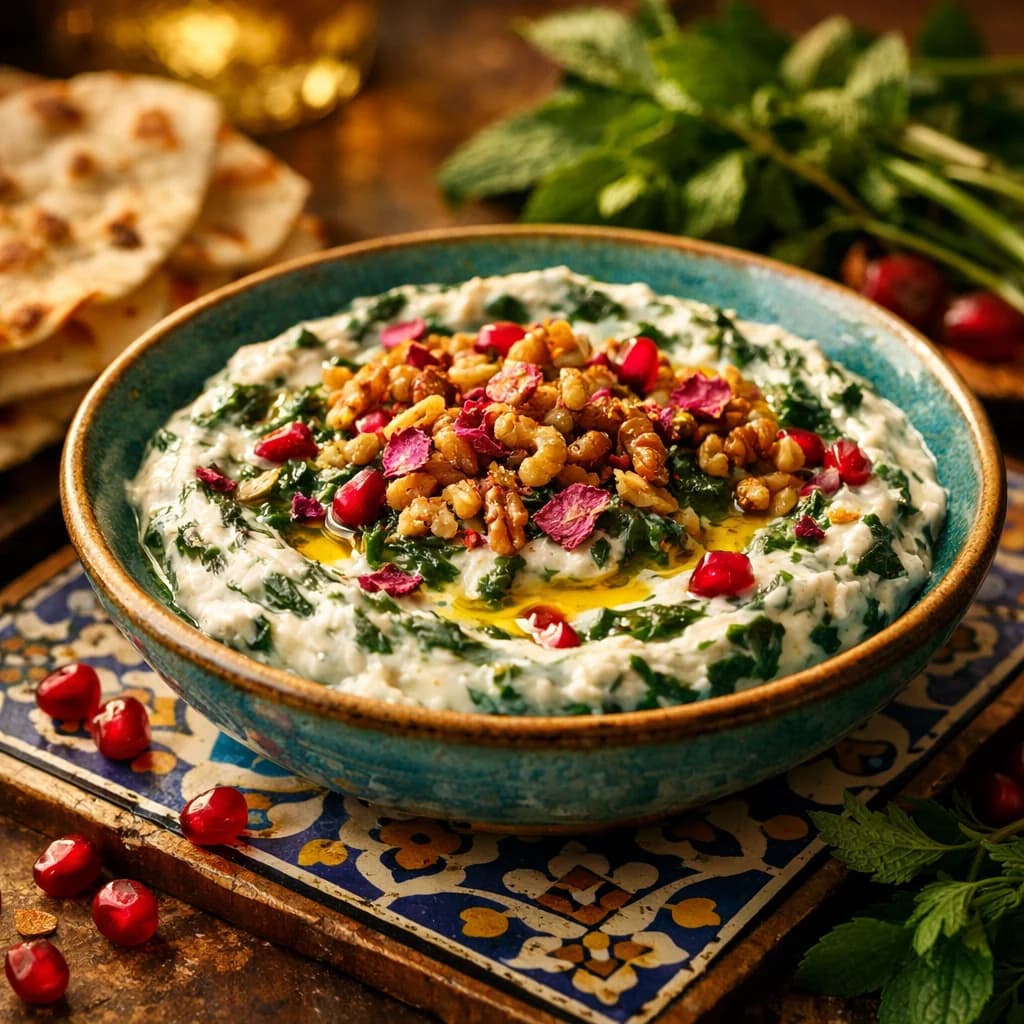
Borani Esfenaj (Persian Spinach Yogurt Dip)

Borani Esfenaj (Persian Spinach Yogurt Dip)

A vibrant, verdant dip of garlicky sautéed spinach folded into thick, tangy yogurt—cool, creamy, and deeply satisfying. The spinach is cooked with generous garlic until silky, then combined with yogurt and crowned with toasted walnuts, sometimes dried rose petals, and a drizzle of olive oil. Named after the legendary Persian queen Pourandokht (Buran), borani represents the elegant simplicity of Persian mezze—humble ingredients elevated through technique and balance.

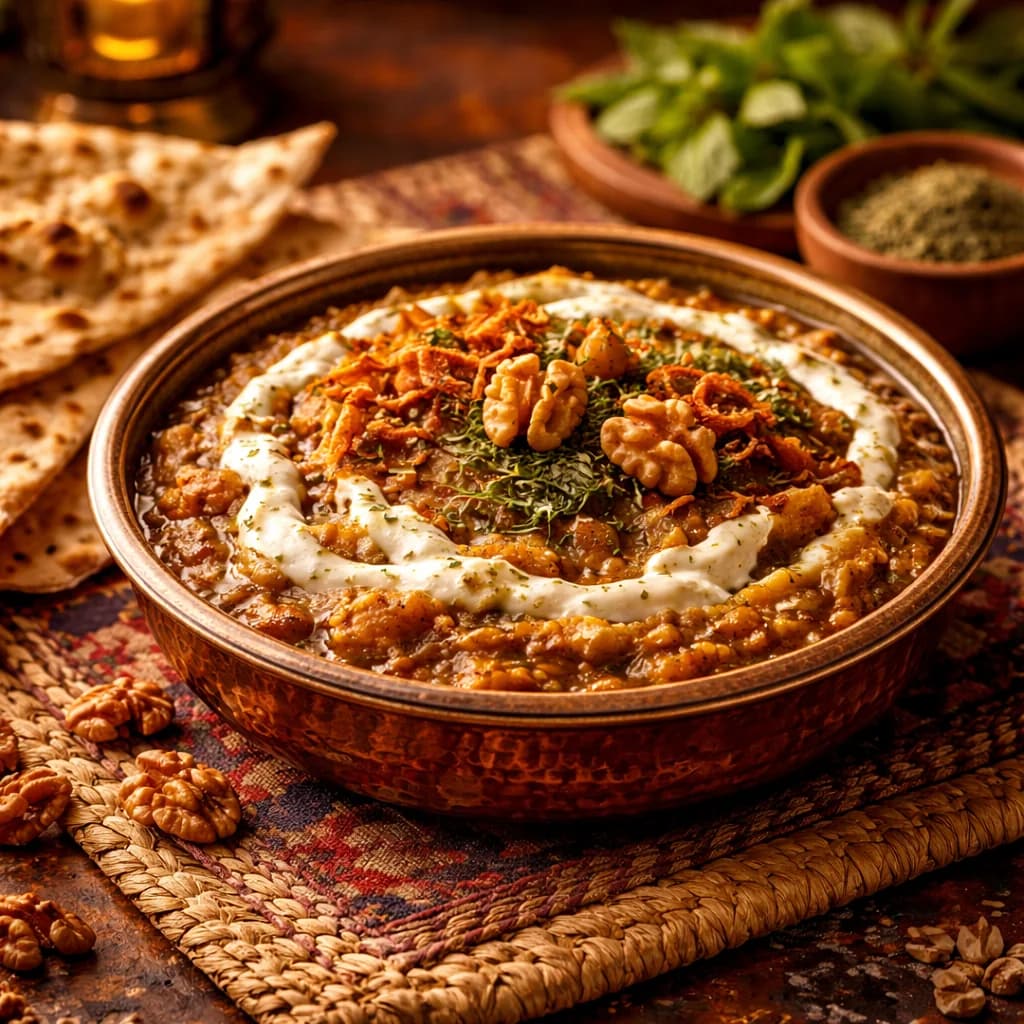
Kashk-e Bademjan (Eggplant with Kashk)

Kashk-e Bademjan (Eggplant with Kashk)

A velvety, tangy eggplant dip crowned with crispy fried onions, toasted walnuts, and fragrant dried mint—Persian mezze at its most elegant. The star ingredient is kashk, a fermented whey product that adds a distinctive tangy, slightly funky depth unlike anything else. Silky roasted eggplant is combined with sautéed onions, garlic, and generous swirls of kashk, then topped with a dramatic garnish of deeply caramelized onions. Complex, addictive, and uniquely Persian.

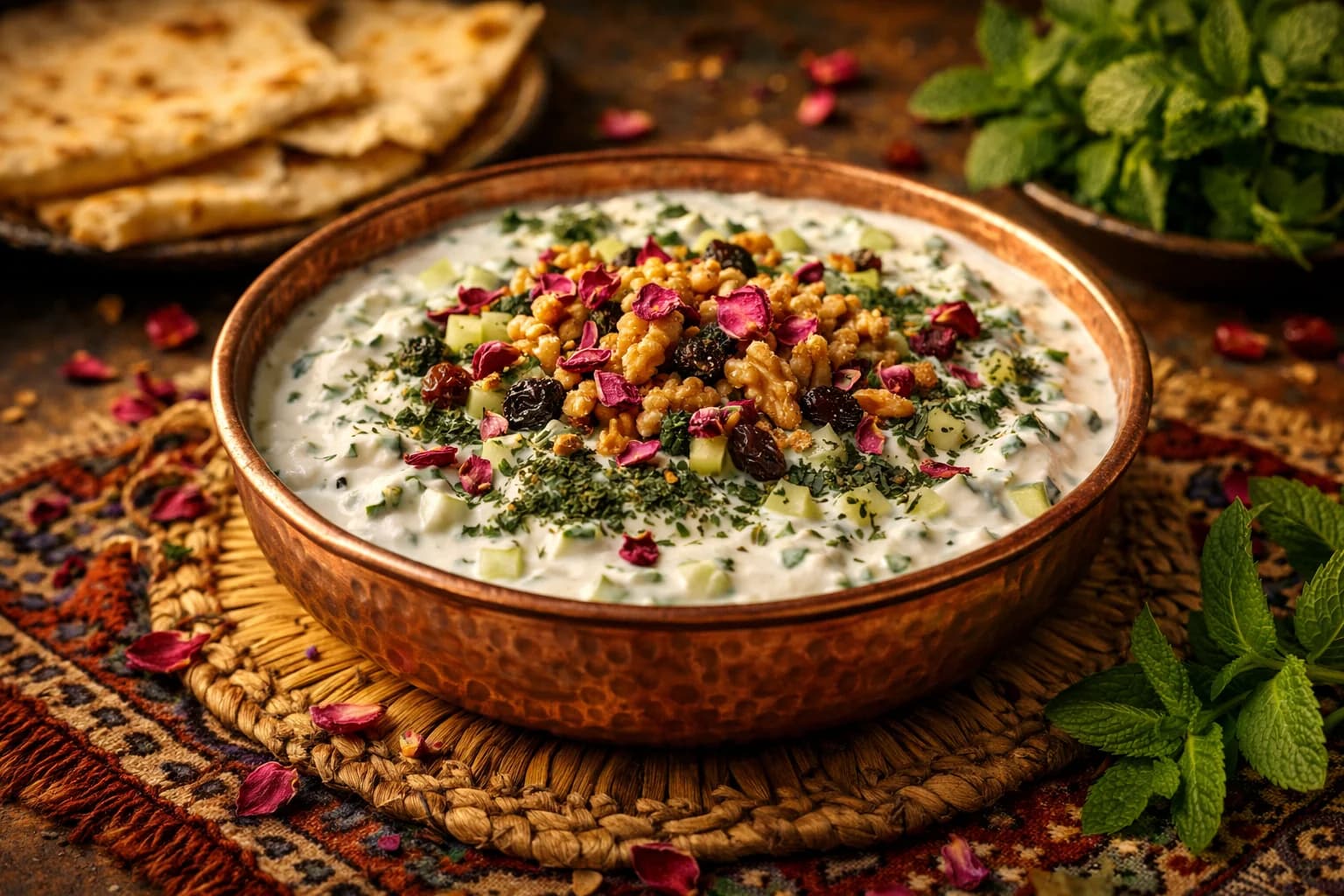
Mast-o-Khiar (Persian Cucumber Yogurt)

Mast-o-Khiar (Persian Cucumber Yogurt)

The essential Persian yogurt dip—cool, creamy yogurt studded with crisp cucumber, fragrant dried mint, and often enriched with walnuts, raisins, and rose petals. Unlike Greek tzatziki, Persian mast-o-khiar is thicker, more aromatic, and often includes surprising sweet elements that create a uniquely Persian flavor profile. Found at every Persian table from simple family dinners to elaborate celebrations, this refreshing dip is the perfect cooling counterpoint to rich stews and smoky kebabs.