
Kritische Momente
- •Orangenschalen mehrfach blanchieren, um Bitterkeit zu entfernen
- •Schalen kandieren bis durchscheinend, ohne Sirup zu karamellisieren
- •Berberitzen sehr kurz bei niedriger Hitze sautieren
- •Richtiges Schichten der juwelenartigen Elemente
Reis waschen und einweichen
Reis in eine große Schüssel geben. Mit kaltem Wasser auffüllen, kräftig schwenken und abgießen. Diesen Vorgang 5–6 Mal wiederholen, bis das Wasser fast klar ist. Salz in lauwarmem Wasser auflösen, Reis hinzufügen und mindestens 1 Stunde (bis zu 3 Stunden) einweichen.
Safran aufblühen lassen
Safranfäden mit einer Prise Zucker im Mörser mahlen. In eine kleine Schüssel geben, heißes Wasser hinzufügen. Abdecken und mindestens 30 Minuten ziehen lassen.
Orangenschalen vorbereiten
Mit einem Sparschäler oder scharfen Messer die Orangenschale in Streifen abziehen und dabei so wenig weißes Mark wie möglich mitnehmen. Die Schale in sehr dünne Julienne-Streifen schneiden.
Kritischer Schritt
Das weiße Mark ist bitter und würde den Geschmack der kandierten Schalen ruinieren. Zeit nehmen, es zu entfernen, oder dünn genug schneiden, um minimales Mark einzuschließen.
Häufige Fehler
- •Zu viel weißes Mark (bittere kandierte Schalen)
- •Streifen zu dick (zäh, kandiert nicht richtig)
- •Ungleichmäßiges Schneiden (inkonsistente Textur)
Orangenschalen blanchieren
Orangenschalenstreifen in einen kleinen Topf geben, mit kaltem Wasser bedecken. Zum Kochen bringen, dann abgießen. Diesen Blanchiervorgang noch 2 Mal wiederholen (insgesamt 3 Mal). Dadurch wird die Bitterkeit der Schalen entfernt.
Kritischer Schritt
Mehrfaches Blanchieren entfernt die bitteren Verbindungen aus der Schale. Wenn Blanchierschritte übersprungen werden, resultiert es in bitteren kandierten Schalen, die die zarte Süße des Gerichts ruinieren.
Häufige Fehler
- •Nur einmal blanchieren (immer noch bitter)
- •Zwischen den Blanchierschritten nicht vollständig abgießen
Orangenschalen kandieren
In demselben Topf Zucker mit Wasser mischen. Zum Kochen bringen und Zucker auflösen. Blanchierte Orangenschalen hinzufügen. Hitze auf niedrig reduzieren und 25–30 Minuten unter gelegentlichem Rühren köcheln lassen, bis die Schalen durchscheinend sind und der Sirup eingedickt ist.
Kritischer Schritt
Richtiges Kandieren verwandelt die Schalen in süße, juwelartige Streifen. Zu kurzes Kochen lässt sie zäh; zu langes Kochen macht sie hart und karamellisiert.
Kandierte Schalen fertigstellen
Kandierte Schalen mit einem Schaumlöffel aus dem Sirup nehmen und auf Backpapier zum Abkühlen ausbreiten. Den Orangensirup aufbewahren – er wird zum Aromatisieren des Reises verwendet. Die Schalen werden beim Abkühlen etwas fester.
Karotten vorbereiten (falls verwendet)
Karotten schälen und in dünne Streichholzstäbchen ähnlich wie die Orangenschalen julienieren. In einer kleinen Pfanne Butter schmelzen, Karotten und Zucker hinzufügen. Bei niedriger bis mittlerer Hitze 8–10 Minuten sautieren, bis die Karotten zart und leicht karamellisiert sind.
Nüsse rösten
In einer trockenen Pfanne bei niedriger bis mittlerer Hitze gehobelte Mandeln 3–4 Minuten unter ständigem Rühren rösten, bis sie hellgolden sind. Auf einen Teller geben. Pistazien separat 2–3 Minuten rösten (sie verbrennen schneller). Beiseitelegen.
Häufige Fehler
- •Hitze zu hoch (Nüsse verbrennen schnell)
- •Nicht rühren (ungleichmäßiges Rösten)
- •Zusammen rösten (Pistazien verbrennen, bevor Mandeln fertig sind)
Berberitzen vorbereiten
Berberitzen von Stielen reinigen. Kurz abspülen und trocken schütteln. In einer kleinen Pfanne Butter bei niedriger bis mittlerer Hitze schmelzen. Berberitzen hinzufügen und 2 Minuten sanft sautieren, bis sie sich aufgebläht haben. Zucker hinzufügen, rühren bis er sich auflöst. Sofort vom Herd nehmen.
Kritischer Schritt
Berberitzen verbrennen äußerst leicht, sobald Zucker hinzugefügt wird. Niedrige Hitze und ständige Aufmerksamkeit sind unerlässlich. Verbrannte Berberitzen sind bitter und ruinieren das Gericht.
Häufige Fehler
- •Hitze zu hoch (sofortiges Verbrennen)
- •Weggehen (verbrennt in Sekunden)
- •Zu viel Zucker (zu süß, verdeckt die Säure)
Reis vorkochen
Wasser mit Salz zum rollenden Kochen bringen. Eingeweichten Reis abgießen und ins kochende Wasser geben. 5–7 Minuten bissfest kochen – weiches Äußeres mit kleinem festem Kern.
Kritischer Schritt
Richtiges Vorkochen ist die Grundlage für lockeren persischen Reis. Häufig testen.
Reis abgießen
Reis sofort in ein feines Sieb abgießen. Kurz mit lauwarmem Wasser abspülen. Vorsichtig schütteln zum Abtropfen.
Tahdig vorbereiten und Reis schichten
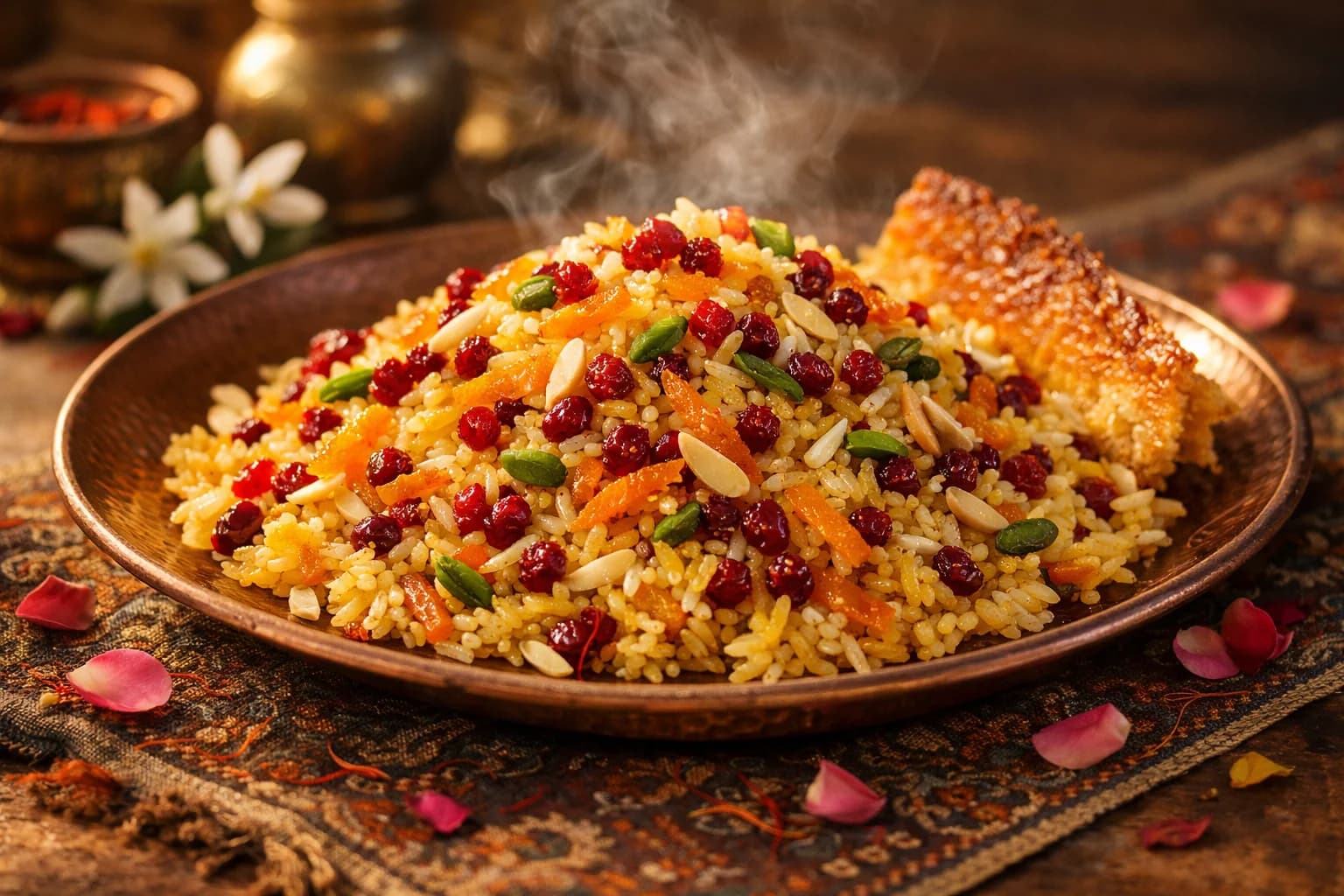
In einem beschichteten Topf Öl mit Safranwasser mischen. Parboiled Reis mit Safranwasser mischen und am Boden für den Tahdig verteilen. Schichten aus weißem Reis abwechselnd mit den Juwelengarnituren hinzufügen: kandierte Orange, Karotten, Berberitzen und Nüsse zwischen den Schichten verteilen. Zwischen den Schichten reservierten Orangensirup träufeln. Zu einer Pyramide aufbauen. 5–6 Dampflöcher stechen.
Kritischer Schritt
Das Schichten verteilt die juwelenartigen Elemente gleichmäßig und erzeugt das spektakuläre Erscheinungsbild beim Servieren. Etwas von jeder Garnitur für die abschließende Dekoration reservieren.
Aromaten und Butter hinzufügen
Kardamom (und Zimt, falls verwendet) in Rosenwasser und Orangenblütenwasser auflösen. Über den Reis träufeln. Restliche Butter schmelzen und obenauf träufeln. Die aromatischen Wasser werden den Reis beim Dämpfen parfümieren.
Reis dämpfen
Topf bei mittlerer bis hoher Hitze ohne Deckel 3–4 Minuten erhitzen, bis Dampf aufsteigt. Deckel mit einem sauberen Küchentuch umwickeln, fest auf den Topf legen. Hitze auf niedrigste Stufe reduzieren. 45–50 Minuten dämpfen.
Kritischer Schritt
Richtiges Dämpfen gewährleistet lockeren Reis und knusprigen Tahdig. Das Tuch saugt Kondenswasser auf. Deckel nicht anheben.
Ruhen lassen und stürzen
Vom Herd nehmen und 5 Minuten ruhen lassen. Deckel abnehmen. Reis vorsichtig mit einer Gabel lockern, dabei die Juwelenebenen leicht vermischen. Auf eine große Servierplatte schöpfen und ein geschichtetes Erscheinungsbild erhalten. Tahdig stürzen und in Stücke brechen.
Abschließende Garnitur
Reservierte kandierte Orangenschalen, Berberitzen, Mandeln und Pistazien dekorativ auf dem Reis anrichten. Restliches Safranwasser in Streifen für Farbe darüber träufeln. Die Garnitur sollte üppig und schön sein – dies ist ein Festgericht. Tahdigstücke um die Platte anrichten.
Ruhezeit Erforderlich
5 Min - Lässt den Tahdig sauber lösen