Baklava (Persian-Style Layered Nut Pastry)

Baklava (Persian-Style Layered Nut Pastry)

باقلوا

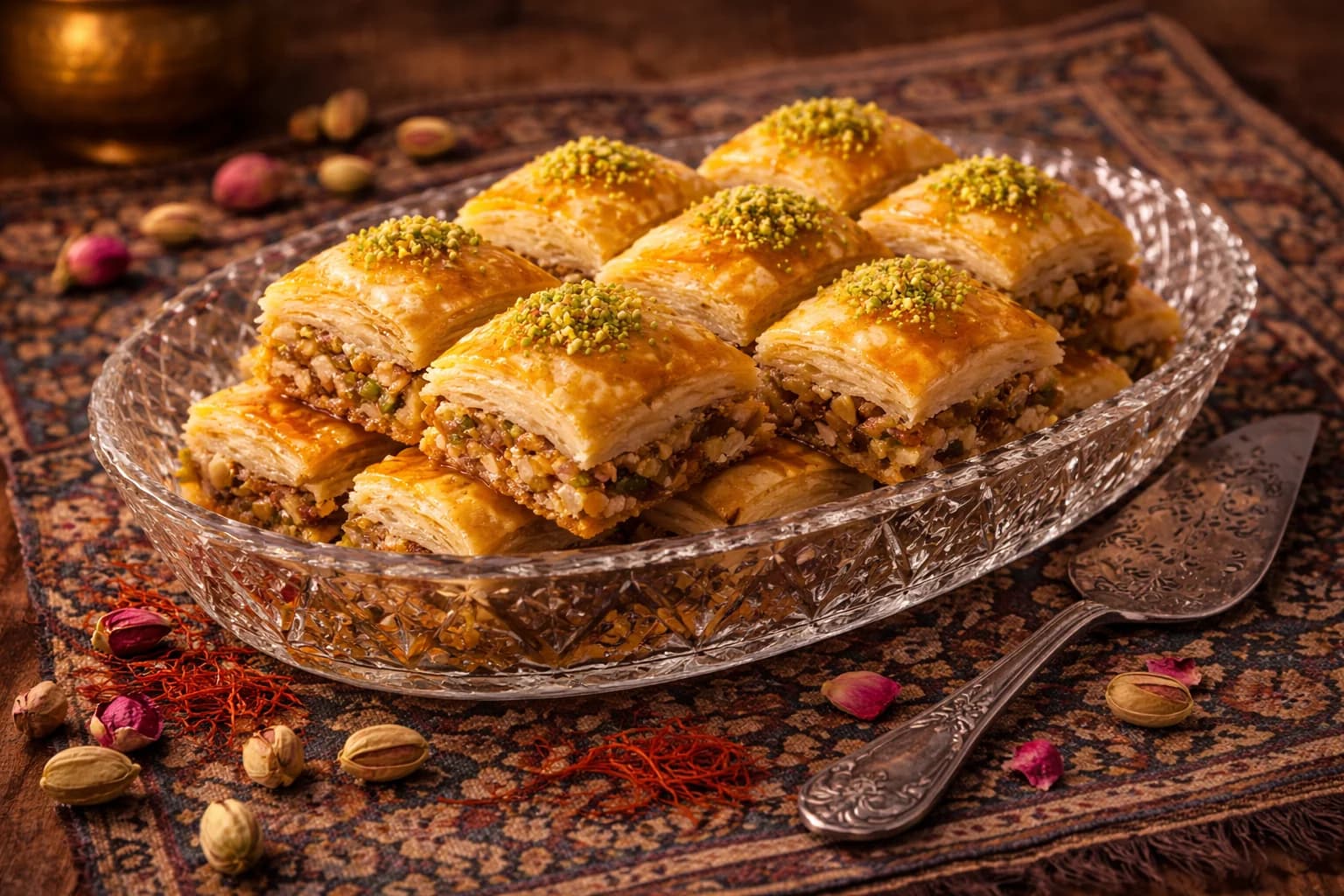
Delicate layers of paper-thin phyllo pastry filled with fragrant ground nuts, baked to golden crispness, and soaked in a saffron-rosewater syrup—Persian baklava is more refined and aromatic than its regional cousins. The Persian version distinguishes itself with generous saffron, rosewater, and cardamom, and often features a combination of pistachios and almonds rather than walnuts alone. Cut into elegant diamond shapes and decorated with ground pistachios, this is the jewel of Persian pastry-making, served at weddings, Nowruz, and whenever celebration calls for something extraordinary.

dessertPréparation: 45 minCuisson: 50 minintermediatePour 24

Note culturelle

Baklava (baghlava in Persian) is the crown jewel of Persian pastries, reserved for the most special occasions—Nowruz, weddings, engagements, and religious holidays. Persian baklava differs from Turkish or Greek versions through its distinctive aromatics: generous saffron in the syrup, abundant rosewater, and cardamom in the filling. The cities of Yazd, Tabriz, and Qazvin each have their own famous styles. Yazdi baklava is particularly renowned for its delicacy and generous saffron. In Iran, baklava is often given as a gift—beautifully boxed and presented when visiting someone's home or celebrating good news. The diamond shape is traditional, representing prosperity, though some families cut squares or triangles.

Moments Critiques

  • Syrup must be COOL when added to HOT baklava
  • Each phyllo sheet must be buttered
  • Nuts ground but not to a paste
  • Must cut before baking (not after)
  • Bake until deep golden-brown (not underdone)
1
PRÉPARATION25 min

Prepare the saffron and syrup

Grind the saffron with a pinch of sugar and bloom in 2 tablespoons hot water for at least 15 minutes. In a medium saucepan, combine 400g sugar, 300ml water, and lemon juice. Heat over medium heat, stirring until sugar dissolves. Bring to a boil, then simmer for 10 minutes without stirring. Remove from heat, stir in the bloomed saffron and rosewater. Let cool completely—the syrup must be cool when poured over hot baklava.

Golden syrup from saffron; slightly thickened; clear
MediumSimmer for 10 minutes
OdeurSaffron and rosewater—heady and floral
SonBubbling then quieting
TextureSyrupy consistency; coats spoon lightly

Étape Critique

The syrup must be completely cool when added to hot baklava—this creates the proper absorption and texture. Hot syrup on hot baklava = soggy disaster. Also, the saffron color should be vibrant.

Make the syrup first so it has time to cool. Refrigerate if short on time. The lemon juice prevents crystallization.
2
PRÉPARATION8 min

Prepare the nut filling

In a food processor, pulse the pistachios and almonds until finely ground but not a paste—you want texture, not nut butter. Some small pieces are desirable. Transfer to a bowl and mix with 75g sugar and cardamom until evenly combined.

Finely ground nuts with some small pieces; pale green from pistachios; fragrant with cardamom
OdeurNutty with cardamom
SonProcessor pulsing
TextureFine but not pasty; slightly gritty

Étape Critique

Over-processing creates nut butter which won't layer properly and becomes greasy. Pulse in short bursts and check frequently. Some texture is essential.

Process in batches if needed. Freeze nuts briefly before processing to prevent them from becoming oily.
3
PRÉPARATION10 min

Prepare phyllo and butter

Preheat oven to 165°C (325°F). Melt the butter and let it cool slightly. Unroll the phyllo and cover with a damp (not wet) kitchen towel to prevent drying. Brush a 9x13 inch baking pan generously with melted butter.

Phyllo covered and moist; pan well-buttered
OdeurMelted butter
TexturePhyllo is pliable, not dry or cracked

Étape Critique

Phyllo dries out within minutes when exposed to air, becoming brittle and impossible to work with. Keep it covered at all times except when actively taking a sheet.

Work quickly but carefully. Have everything ready before uncovering the phyllo. If a sheet tears, just patch it—it will be hidden by other layers.
4
PRÉPARATION10 min

Layer the bottom phyllo

Place one phyllo sheet in the prepared pan, letting excess hang over edges (you'll trim later). Brush generously with melted butter. Repeat with 7-8 more sheets, brushing each with butter. These buttered layers form the crispy bottom.

8 stacked phyllo sheets, each glistening with butter; edges overhanging
OdeurButter on phyllo
SonBrush strokes
TextureSheets are flat and butter-soaked

Étape Critique

Each sheet must be buttered—this creates the crispy, flaky layers. Unbuttered sheets stick together and become tough. Generous butter is the key to good baklava.

Brush all the way to the edges. If phyllo tears, just layer another sheet—it won't show. Work from center outward when brushing.
5
PRÉPARATION3 min

Add the nut filling

Spread half of the nut mixture evenly over the phyllo layers, creating a uniform layer. Press down gently.

Even layer of ground nuts covering entire surface
OdeurCardamom and nuts
TextureEven distribution; no bare spots
An even layer ensures every piece has the same nut-to-pastry ratio.
6
PRÉPARATION6 min

Add middle phyllo layers

Layer 4-5 more phyllo sheets over the nuts, brushing each with butter. This creates the middle layer.

Nuts covered with buttered phyllo; surface is flat
OdeurButter
TextureSmooth layered surface
7
PRÉPARATION12 min

Add remaining nuts and top layers

Spread the remaining nut mixture evenly over the middle phyllo layers. Top with 8-10 more phyllo sheets, brushing each generously with butter. Brush the top sheet very generously. Tuck or trim overhanging edges.

Golden-topped baklava ready for cutting; top glistening with butter
OdeurRich butter
TextureSmooth, flat top
The top layer gets the most butter—it's what people see and creates the beautiful golden crust.
8
PRÉPARATION8 min

Cut before baking

Using a very sharp knife, cut the baklava into diamond shapes: first cut parallel lines about 4-5cm apart, then cut diagonal lines at an angle to create diamonds. Cut all the way through to the bottom. This must be done before baking.

Clean diamond cuts through all layers; traditional pattern
SonKnife cutting through layers
TextureClean cuts revealing layers

Étape Critique

Baklava MUST be cut before baking—cutting after baking shatters the crispy layers. The pre-cut lines allow syrup to penetrate and the pieces to separate cleanly.

Use your sharpest knife. Wipe the blade between cuts if it gets sticky. Traditional diamonds are about 5cm across. Some families place a whole clove in each piece (remove before eating).
9
CUISSON50 min

Bake until golden

Bake in preheated oven at 165°C (325°F) for 45-55 minutes until the top is deep golden-brown and the layers are crispy. The baklava should be evenly colored with no pale spots. Rotate pan halfway through for even browning.

Deep golden-brown top; layers visible at cut edges; crispy appearance
165°C / 325°F
OdeurToasted butter and nuts—irresistible
SonQuiet sizzling
TextureVisibly crispy; layers have puffed slightly

Étape Critique

Underbaking results in soggy, undercooked baklava. The layers must be fully cooked and crispy before syrup is added. Better slightly over than under. The color should be deep gold, not pale.

Lower temperature ensures the middle cooks through without burning the top. If top is browning too fast, cover loosely with foil.
Point de contrôle: Check at 40 minutes. If browning unevenly, rotate pan. Continue until evenly deep golden.
10
FINITION5 min

Add the cool syrup

Remove hot baklava from oven. Immediately pour the COOL syrup evenly over the HOT baklava, making sure it gets into all the cuts. You'll hear a satisfying sizzle. The syrup will be absorbed as it cools. Use all the syrup.

Syrup pooling then absorbing into cuts; baklava glistening
OdeurSaffron-rosewater meeting hot pastry—incredibly fragrant
SonSizzling as cool syrup hits hot pastry
TextureSyrup quickly absorbing

Étape Critique

The temperature contrast is essential: COOL syrup + HOT baklava = proper absorption and crispy-yet-moist texture. Same temperature = soggy baklava. This cannot be corrected.

Pour slowly and evenly, making sure syrup runs into all the cuts. Some will pool on top—it will absorb as it sits.
11
FINITION240 min

Cool and garnish

Let the baklava cool completely in the pan—at least 4 hours or overnight. The syrup will fully absorb and the layers will set. Once cool, sprinkle the top with ground pistachios for the traditional Persian finish.

Glossy, golden baklava with green pistachio garnish; syrup fully absorbed
OdeurSaffron, rosewater, nuts, butter
TextureFirm but yielding; syrup absorbed into layers
Resist cutting and eating immediately—the baklava improves significantly after resting. The flavors meld and the texture becomes perfect.
12
FINITION5 min

Serve

Use a sharp spatula to lift individual pieces from the pan. Arrange on a serving platter or in paper cups for gifting. Store uncovered at room temperature for up to 1 week.

Diamond-shaped pieces with distinct crispy layers, glistening with syrup, topped with green pistachios
OdeurPersian aromatics—saffron, rose, cardamom, butter
SonCrispy crunch when bitten
TextureCrispy layers, chewy nut filling, sweet syrup
Do not refrigerate—refrigeration makes baklava soggy. Keep at room temperature, uncovered or loosely covered. In humid climates, eat within a few days.

Repos Requis

240 min - Syrup must fully absorb; flavors meld; texture sets

Extras

Équipement

9x13 baking panpastry brushsharp knifemedium saucepanrobot culinairestandard

Préparer à l'Avance

  • Baklava keeps at room temperature for 1 week, loosely covered.
  • Do NOT refrigerate—it becomes soggy.
  • Can be frozen (unbaked, before syrup) for up to 2 months.
  • Best after resting 4-24 hours.

Not typically reheated.

If desired, warm briefly in 150°C oven for 5 minutes.

Serve at room temperature.

Servir Avec

Accompagnements

  • Served alone as dessert
  • Part of a Persian pastry platter
  • With fresh fruit

Boissons

  • Hot Persian tea (essential)
  • Turkish coffee
  • Cold water

Substitutions

phylloMust be phyllo dough (filo). Cannot substitute puff pastry—completely different result. Kataifi (shredded phyllo) is a different dessert.
pistachiosWalnuts or almonds alone work well (see variations). The green color is lost but flavor is still excellent.
saffronFor authentic Persian baklava, saffron is essential. Can omit for a more generic Middle Eastern style, but the flavor and color will differ.
rosewaterEssential for Persian style. Orange blossom water creates a different but acceptable variation. Do not omit entirely.

Mise à l'échelle

This recipe fills a standard 9x13 inch pan (about 24 pieces). Can be made in larger quantities using multiple pans or a half-sheet pan. The syrup-to-pastry ratio is important—too little syrup results in dry baklava, too much makes it soggy. Baklava keeps well, making it ideal for advance preparation.

Source

Traditionnel · Traditional Persian cuisine

While baklava exists throughout the Middle East and Mediterranean, the Persian version (baghlava) is distinguished by its aromatics—saffron, rosewater, and cardamom. The cities of Yazd, Tabriz, and Qazvin are particularly famous for their baklava traditions.

Recettes similaires

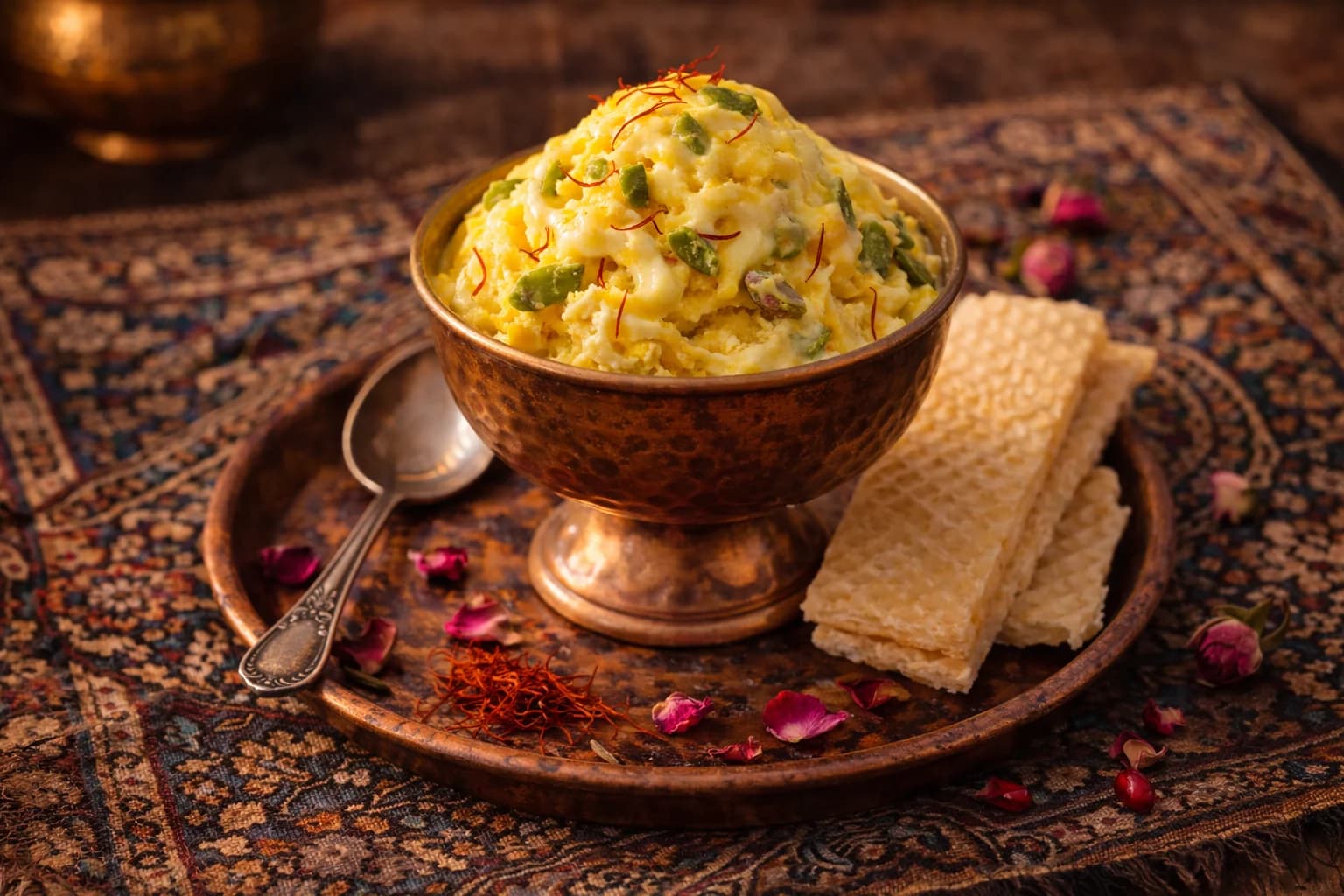
Bastani Sonnati (Persian Saffron Ice Cream)

Bastani Sonnati (Persian Saffron Ice Cream)

The legendary Persian ice cream—a luxurious frozen cream perfumed with saffron and rosewater, studded with pistachios, and threaded with frozen ribbons of clotted cream. Unlike any Western ice cream, bastani sonnati has a distinctive chewy, stretchy texture from salep (orchid root powder) and an intoxicating fragrance that captures the essence of Persian sweets. Traditionally served pressed between crispy wafers or alongside faloodeh, this golden ice cream is the crown jewel of Persian frozen desserts.

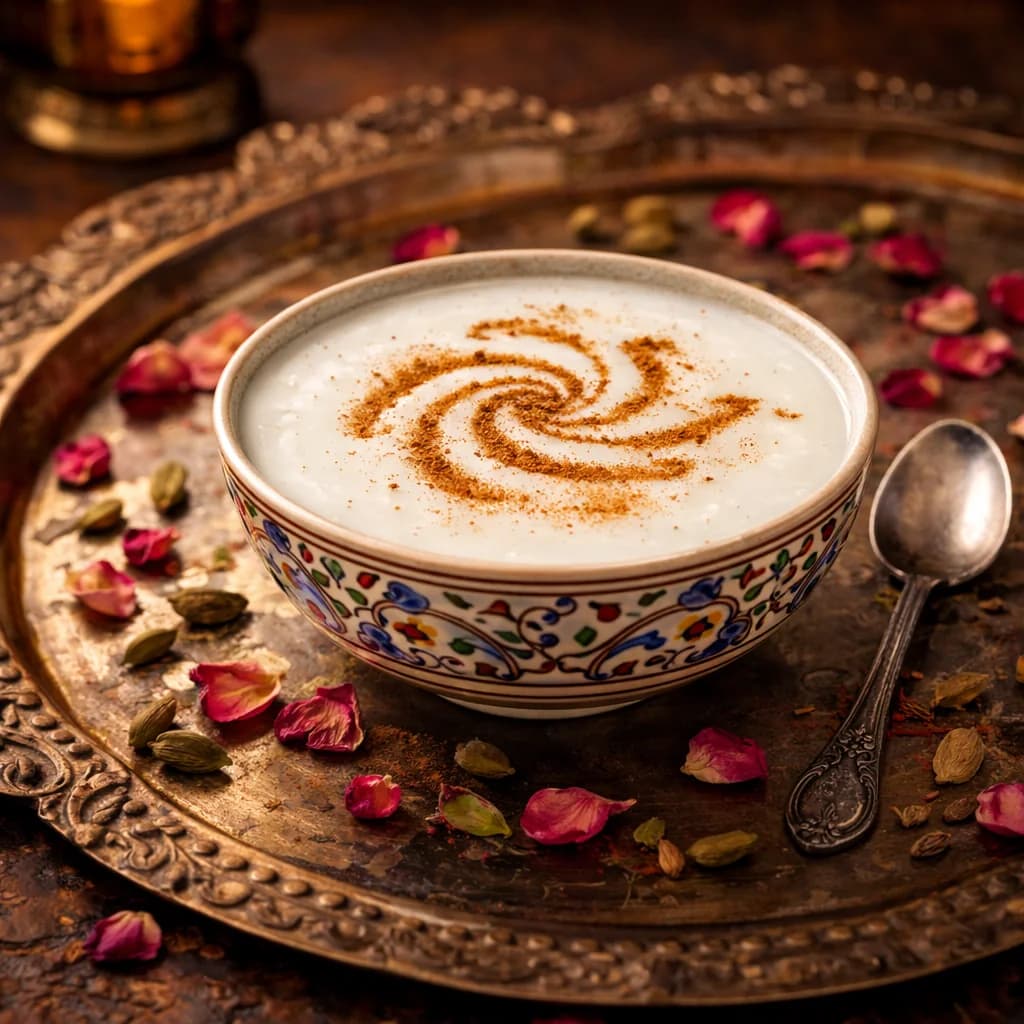
Fereni (Persian Rice Flour Pudding)

Fereni (Persian Rice Flour Pudding)

A silky-smooth, pure white pudding made from rice flour, perfumed with rosewater and cardamom, and decorated with a dusting of cinnamon—the most delicate and elegant of Persian desserts. Unlike sholeh zard's golden richness, fereni is subtle, creamy, and light, with a texture like panna cotta or blancmange. Served chilled in small portions, it's the perfect ending to a heavy meal. The contrast of snowy white pudding with cinnamon swirls is visually stunning and distinctly Persian.

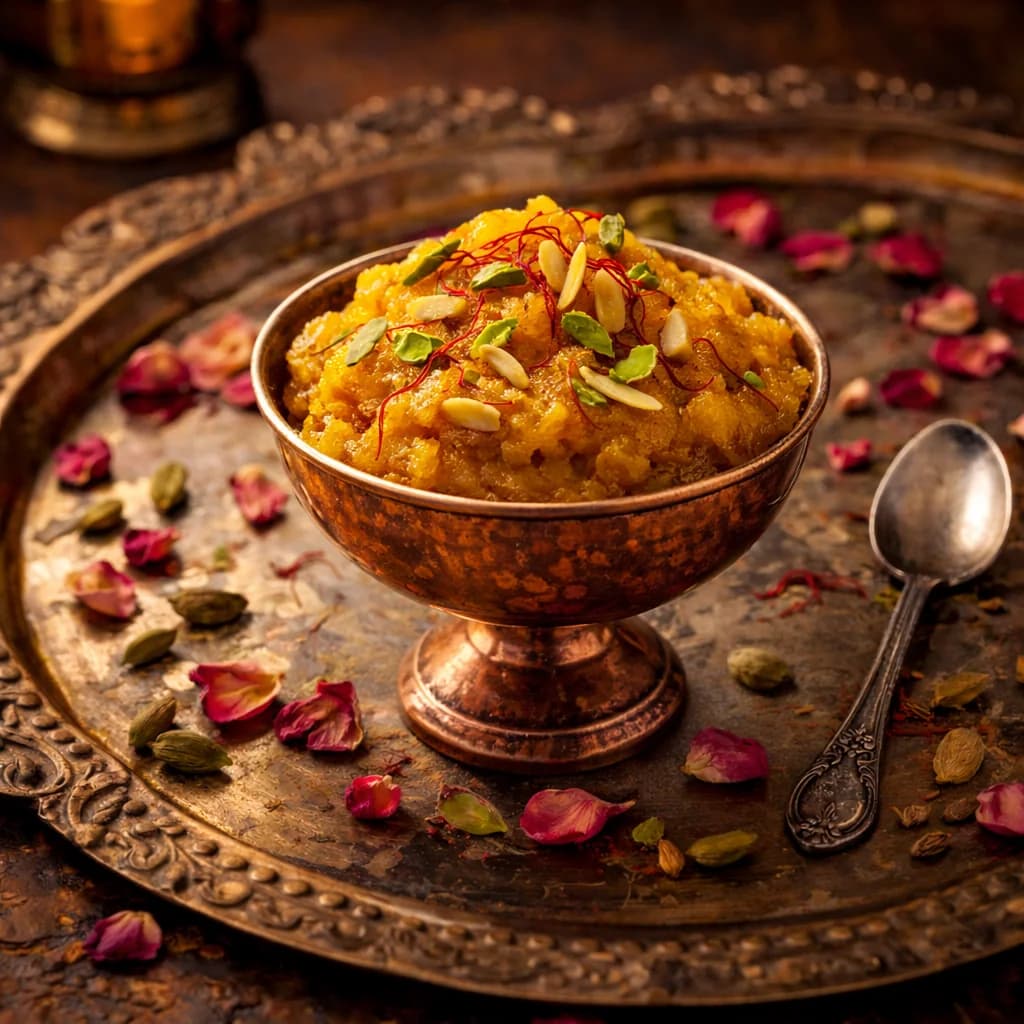
Halva (Persian Saffron Flour Halva)

Halva (Persian Saffron Flour Halva)

A rich, aromatic confection of toasted flour cooked with butter, infused with saffron and rosewater, then sweetened with fragrant syrup—Persian halva is unlike any other version you may know. This dense, spoonable sweet is deeply connected to Persian religious and cultural life, prepared for memorial services, religious holidays, and sacred occasions. The slow toasting of flour in butter creates a distinctive nutty flavor, while saffron and rosewater provide the unmistakable Persian perfume. Decorated with almonds and pistachios, halva is both a comfort food and a spiritual offering.