

Moments Critiques
- •Préparer une pâte lisse avant la cuisson (empêche les grumeaux)
- •Fouetter constamment pendant la cuisson
- •Cuire à la bonne épaisseur (nape la cuillère, laisse une trace)
- •Ajouter l'eau de rose hors du feu
- •Passer au tamis pour la texture la plus soyeuse
Préparer la pâte de farine de riz
Dans un bol moyen, délayer la farine de riz avec un peu de lait froid pour obtenir une pâte parfaitement lisse sans grumeaux. Cette pâte empêche la formation de grumeaux pendant la cuisson.
Étape Critique
Commencer par une pâte froide empêche les grumeaux. La farine de riz forme des grumeaux instantanément dans un liquide chaud. Cette technique assure un pudding soyeux et lisse.
Chauffer le reste du lait
Verser le reste du lait dans une casserole à fond épais de taille moyenne. Ajouter le sucre et la cardamome. Chauffer à feu moyen en remuant de temps en temps jusqu'à dissolution du sucre et que le lait soit chaud sans bouillir – petites bulles au bord.
Ajouter la pâte de farine de riz
Réduire le feu à moyen-doux. Tout en fouettant constamment le lait chaud, verser la pâte de farine de riz en filet régulier. Continuer à fouetter en versant pour empêcher la formation de grumeaux.
Étape Critique
Un fouettage constant lors de l'ajout de la pâte empêche les grumeaux. Verser en filet régulier, pas d'un coup. C'est le moment où les grumeaux se forment si on ne fait pas attention.
Cuire jusqu'à épaississement
Cuire à feu moyen-doux en fouettant constamment jusqu'à ce que le mélange épaississe à la consistance d'une crème épaisse ou d'un pudding léger. Il doit naper le dos d'une cuillère et laisser une trace quand on passe le doigt dessus. Ne pas cesser de fouetter – le mélange peut attacher ou former des grumeaux.
Étape Critique
Le pudding doit épaissir suffisamment pour se figer en refroidissant, mais pas trop pour devenir collant. Le test de la cuillère est fiable. Un fouettage constant empêche les grumeaux et l'attachement au fond.
Erreurs Courantes
- •Ne pas fouetter constamment (grumeaux, attachement au fond)
- •Cuisson insuffisante (ne se fige pas correctement)
- •Cuisson excessive (trop épais, texture collante)
Ajouter l'eau de rose
Retirer du feu. Incorporer l'eau de rose. Le parfum va magnifiquement s'épanouir. Goûter et ajuster la douceur ou l'eau de rose au besoin.
Étape Critique
Ajouter l'eau de rose hors du feu préserve son arôme floral délicat. L'ajouter pendant la cuisson ferait s'évaporer le parfum.
Passer au tamis (facultatif mais recommandé)
Pour la texture la plus soyeuse, verser le pudding à travers une passoire fine dans un bol ou un pichet propre en poussant légèrement. Cela élimine les petits grumeaux et assure une onctuosité parfaite.
Répartir dans les bols
Verser le pudding chaud dans des bols individuels, de petits verres ou des ramequins. Les portions persanes traditionnelles sont modestes. Lisser doucement les surfaces.
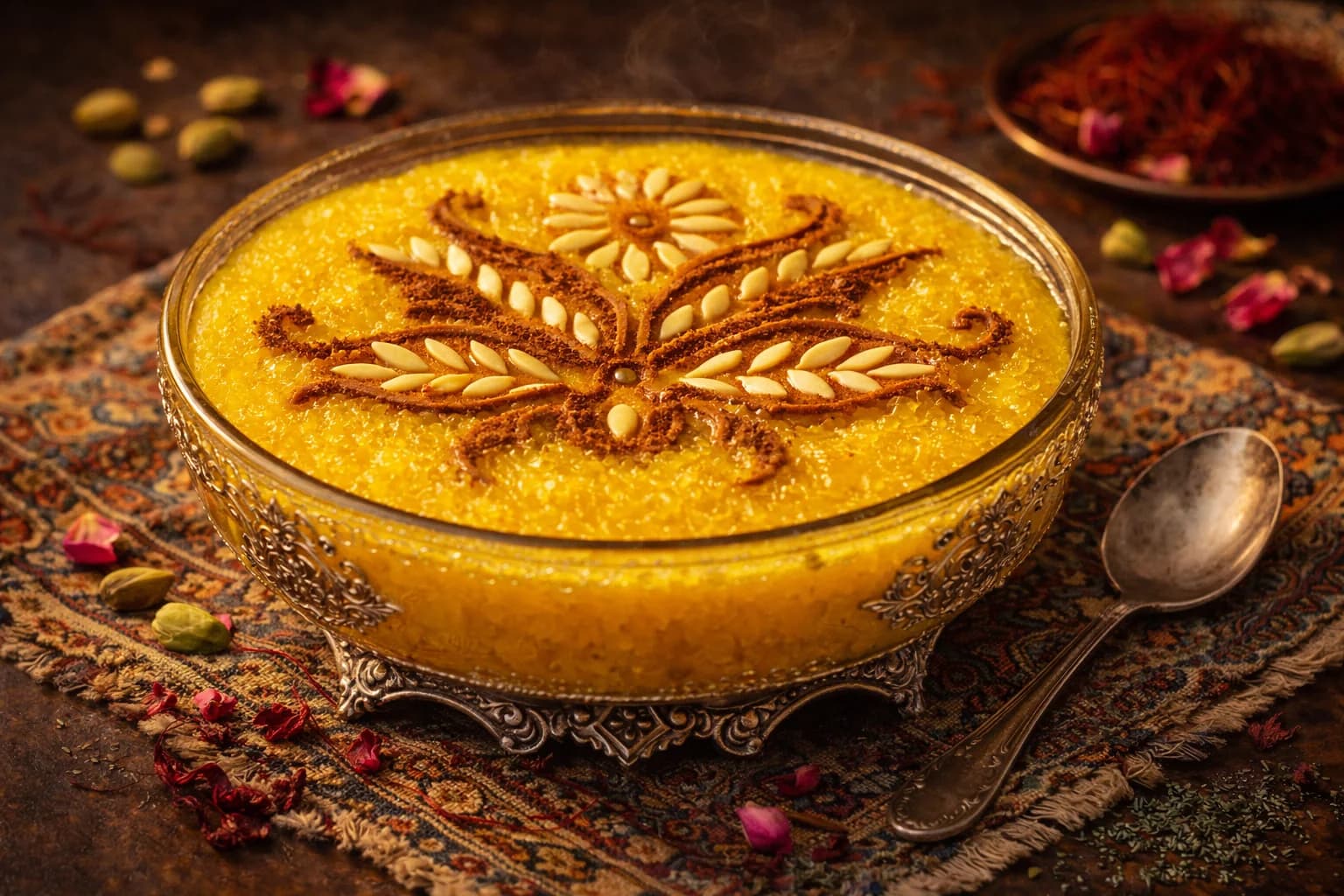
Décorer avec la cannelle et les noix
Pendant que la surface est encore légèrement tiède, décorer chaque bol : saupoudrer de cannelle en motifs décoratifs (spirales, formes géométriques ou simple poudrage) et disposer des bâtonnets de pistache et des amandes effilées dessus. Parsemer de pétales de roses séchés si utilisés.
Réfrigérer et servir
Couvrir chaque bol de film alimentaire (ou poser le film directement sur la surface pour empêcher la formation d'une peau) et réfrigérer au moins 3 heures ou toute la nuit, jusqu'à ce que le pudding soit complètement pris et bien frais. Servir froid.
Repos Requis
180 min - Doit refroidir pour se figer ; se sert au mieux très froid