
Sholeh Zard (Persian Saffron Rice Pudding)

Sholeh Zard (Persian Saffron Rice Pudding)

شله زرد

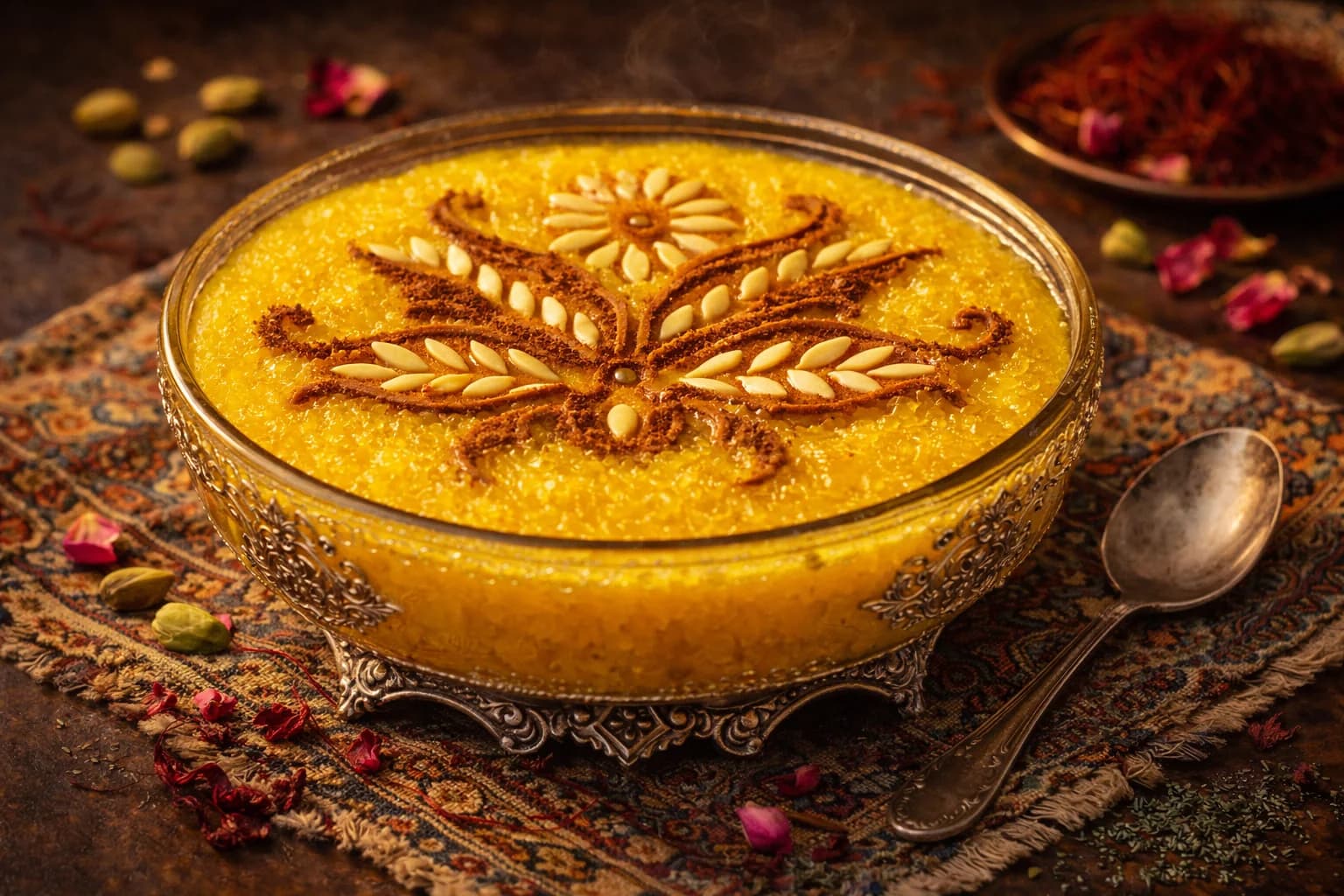
A luminous golden pudding of slow-cooked rice infused with generous saffron and rosewater, decorated with intricate patterns of cinnamon and slivered almonds. This is the most spiritually significant dessert in Persian cuisine—prepared as nazri (religious offering) to fulfill vows, share blessings, and commemorate sacred occasions. The name means 'yellow flame,' referring to its brilliant saffron color. Made in enormous quantities and distributed to neighbors, strangers, and those in need, sholeh zard represents Persian hospitality and devotion at their most generous.

dessertPréparation: 20 minCuisson: 150 mineasyPour 12

Note culturelle

Sholeh zard holds profound spiritual significance in Persian culture. It is the quintessential nazri—food prepared as a religious offering when making a vow (nazr) to God, expressing gratitude for answered prayers, or commemorating sacred occasions, especially during Muharram (the mourning month for Imam Hussain). Making sholeh zard is an act of devotion: families prepare enormous quantities and distribute bowls to neighbors, strangers, and the needy. Accepting sholeh zard is considered a blessing, and refusing is impolite. The brilliant saffron color represents light and spirituality. The intricate cinnamon decorations—often featuring religious phrases or geometric patterns—transform each bowl into edible art. Beyond its religious role, sholeh zard appears at celebrations, weddings, and whenever sharing abundance.

Moments Critiques

  • Blooming saffron properly for color and flavor
  • Cooking rice until completely broken down (not individual grains)
  • Long, slow cooking to proper thick consistency
  • Adding rosewater off heat to preserve aroma
  • Traditional decoration with cinnamon and nuts
1
PRÉPARATION5 min

Rinse the rice

Place the rice in a fine-mesh strainer and rinse under cold running water until the water runs clear—this removes excess starch. This typically takes 3-4 rinses. Drain well.

Water runs clear; rice is clean and wet
OdeurClean rice
SonRunning water
TextureIndividual grains, not clumpy
Thorough rinsing removes starch that would make the pudding gluey rather than creamy.
2
PRÉPARATION15 min

Bloom the saffron

Grind the saffron threads with a pinch of sugar using a mortar and pestle until powdered. Place in a small bowl and add 100ml hot (not boiling) water. Let steep for at least 15 minutes—the water will turn deep orange-gold. This is your bloomed saffron.

Deep orange-gold liquid; saffron fully dissolved
OdeurIntense saffron aroma—floral, honey-like
TextureLiquid is deeply colored throughout

Étape Critique

Blooming extracts maximum color and flavor from the expensive saffron. Grinding ensures even distribution. The deep golden color is essential to sholeh zard's identity.

Use genuine saffron—the color and aroma are irreplaceable. Cheap substitutes don't provide the authentic flavor or spiritual significance.
3
CUISSON55 min

Cook the rice until very soft

Place the rinsed rice and 2500ml water in a large heavy pot. Add cardamom pods if using. Bring to a boil, then reduce to a medium simmer. Cook uncovered for 45-60 minutes, stirring occasionally, until the rice is completely soft and broken down—almost porridge-like. The grains should be very soft and the mixture somewhat thick.

Rice is very soft, broken down; mixture is thick and porridge-like
MediumSteady simmer
OdeurCooking rice with cardamom
SonBubbling
TextureRice grains are mushy, not individual

Étape Critique

The rice must be completely broken down—this is not a rice pudding with distinct grains. It should be soft and almost dissolved, creating a smooth, thick base.

Stir occasionally to prevent sticking. Add more water if needed—the rice should be swimming in liquid at first, then gradually thicken.
4
CUISSON10 min

Add sugar and butter

Add the sugar and butter to the pot. Stir until both are completely dissolved and incorporated. The mixture will become glossier and slightly thinner as the sugar dissolves.

Sugar dissolved; mixture is glossy; butter incorporated
Medium-LowGentle simmer
OdeurSweet, buttery
SonGentle bubbling
TextureSmooth, slightly thinner from dissolved sugar
Stir continuously until sugar is fully dissolved—undissolved sugar creates a grainy texture.
5
CUISSON55 min

Add saffron and continue cooking

Pour in the bloomed saffron, including any sediment. Stir well—the pudding will turn a beautiful golden-yellow. Continue cooking over low heat for another 45-60 minutes, stirring frequently, until the pudding is very thick and pulls away from the sides of the pot slightly. It should coat a spoon heavily.

Brilliant golden-yellow color; very thick consistency; coats spoon heavily
LowVery gentle simmer
OdeurSaffron perfume—intensely floral and aromatic
SonThick bubbling, almost plopping
TextureHeavy, thick, coats spoon and doesn't run off easily

Étape Critique

The long, slow cooking concentrates flavors and develops the characteristic thick texture. The saffron color should be brilliant gold. Too thin and it won't set properly; too thick and it becomes gluey.

Stir frequently during this stage—the thick mixture burns easily. Scrape the bottom and sides of the pot. The consistency should be like thick porridge.

Erreurs Courantes

  • Not cooking long enough (too thin, doesn't set)
  • Not stirring enough (burns on bottom)
  • Too high heat (scorches)
6
CUISSON3 min

Add rosewater

Remove from heat. Stir in the rosewater—the fragrance will bloom beautifully. Taste and adjust sweetness if desired. Remove and discard cardamom pods if you can find them.

Fragrant, golden pudding
OdeurIntense rosewater joining saffron—heady, perfumed, unmistakably Persian
TextureThick, glossy pudding

Étape Critique

Adding rosewater off heat preserves its delicate floral aroma. Adding while cooking would dissipate the fragrance. The combination of saffron and rosewater is the signature of Persian sweets.

Use high-quality Persian rosewater—the aroma should be intense but not artificial. Start with 80ml if unsure; you can always add more.
7
FINITION10 min

Portion into serving bowls

Ladle the hot pudding into individual serving bowls or one large shallow serving dish. Traditional portions are quite generous—about 150-200ml per bowl. Smooth the tops with the back of a spoon.

Golden pudding in bowls with smooth, flat tops
OdeurSaffron and rosewater perfume
TextureThick enough to mound slightly in bowls
Work while the pudding is still hot—it's easier to pour and smooth. It will set as it cools.
8
FINITION15 min

Decorate with cinnamon and nuts

While the surface is still slightly warm (so decorations adhere), create traditional decorations: use cinnamon to draw geometric patterns, write religious phrases (like 'Ya Hussain'), or create simple designs like diamonds, circles, or stars. Arrange slivered almonds and pistachios in decorative patterns—radiating from center, around edges, or as part of the cinnamon design.

Intricate brown cinnamon patterns on golden surface; white almonds and green pistachios creating contrast
OdeurCinnamon joining saffron-rosewater
TextureDecorations rest on slightly tacky surface

Étape Critique

The decoration is not merely aesthetic—it's an integral part of sholeh zard's identity and often carries religious significance. Traditional patterns transform simple pudding into an offering.

Use a small spoon or even a paper cone (like decorating a cake) to create fine cinnamon lines. Simple geometric patterns are traditional. The decoration should be beautiful but doesn't need to be perfect—it's made with devotion.
9
FINITION120 min

Cool and serve

Let cool to room temperature, then refrigerate for at least 2 hours until fully set and chilled. Sholeh zard is traditionally served cold or at room temperature. Cover with plastic wrap once fully cooled to prevent a skin from forming.

Set, firm pudding with decorations intact; slightly more solid when chilled
OdeurSaffron-rosewater aroma
TextureFirm, spoonable, not liquid
Sholeh zard improves after chilling overnight—the flavors meld beautifully. It keeps refrigerated for up to a week.

Repos Requis

120 min - Must chill for pudding to set properly; flavor improves overnight

Extras

Équipement

grande marmite lourdewooden spoonserving bowlsstandard

Préparer à l'Avance

  • Ideal make-ahead dessert.
  • Prepare 1-3 days before serving.
  • Keeps refrigerated for up to 1 week.
  • Flavor actually improves after a day.
  • Cover once decorations are set to prevent drying.

Traditionally served cold.

Can be served at room temperature.

Do not heat—changes texture.

Servir Avec

Accompagnements

  • Served alone as dessert or nazri

Boissons

  • Hot Persian tea (essential)
  • Cold water

Substitutions

saffronNo substitute—saffron is essential and irreplaceable for sholeh zard. The color, flavor, and spiritual significance all require genuine saffron. Don't attempt with turmeric or food coloring.
rosewaterMust be high-quality rosewater (not rose extract or flavoring). Persian or Lebanese brands are best. The floral aroma is essential.
basmati riceOther long-grain rice works but basmati has the best fragrance and breaks down most smoothly. Jasmine rice is acceptable.
butterGhee is traditional in some families and adds nuttier flavor. Coconut oil for dairy-free version.

Mise à l'échelle

Traditionally made in very large batches—this recipe is already sized for sharing. Scales up easily for larger gatherings; some families make batches with 2-3kg of rice for religious occasions. The long cooking time makes small batches impractical. Keeps well refrigerated for up to a week.

Source

Traditionnel · Traditional Persian cuisine

One of the oldest and most sacred Persian desserts, with roots in pre-Islamic Persia and strong associations with Shia religious practice. Traditionally prepared for Imam Hussain's commemoration (Muharram), religious vows (nazr), and moments of gratitude or petition.

Recettes similaires

Halva (Persian Saffron Flour Halva)

Halva (Persian Saffron Flour Halva)

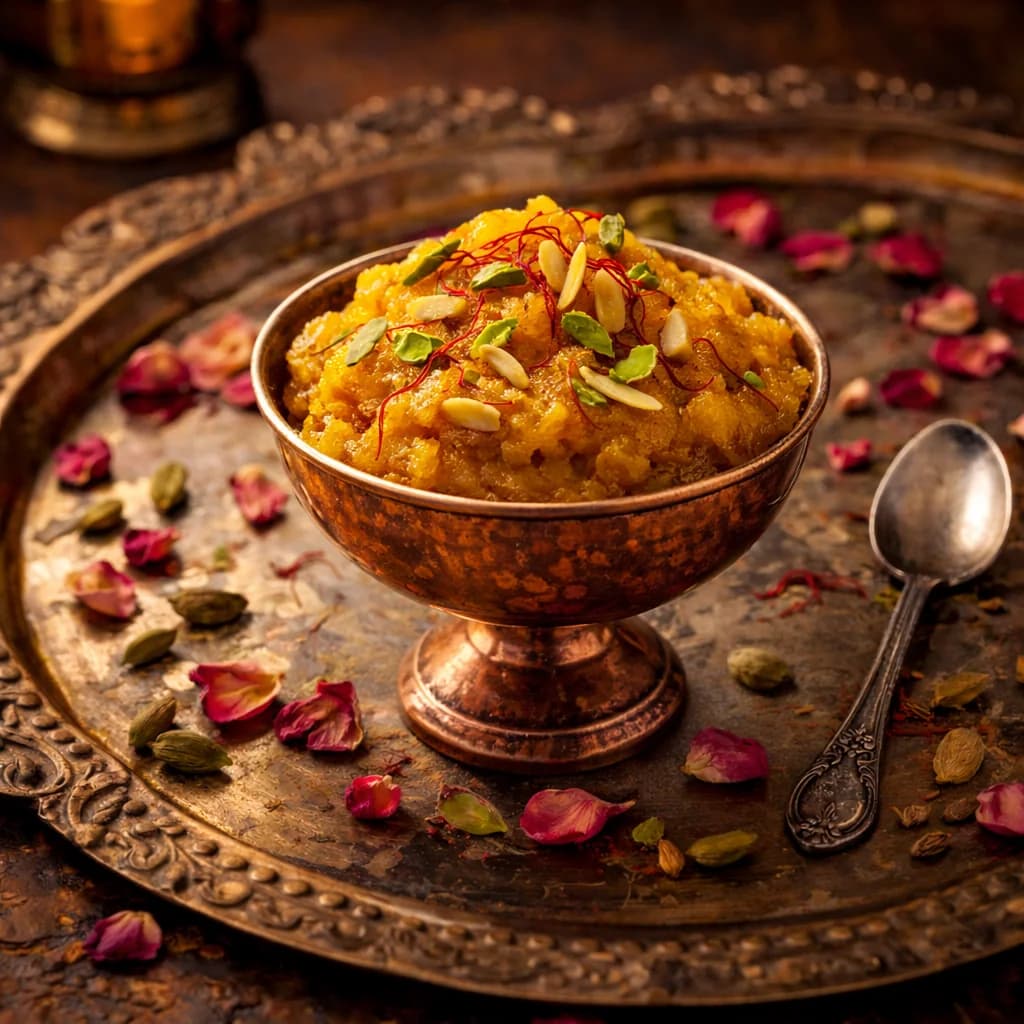
A rich, aromatic confection of toasted flour cooked with butter, infused with saffron and rosewater, then sweetened with fragrant syrup—Persian halva is unlike any other version you may know. This dense, spoonable sweet is deeply connected to Persian religious and cultural life, prepared for memorial services, religious holidays, and sacred occasions. The slow toasting of flour in butter creates a distinctive nutty flavor, while saffron and rosewater provide the unmistakable Persian perfume. Decorated with almonds and pistachios, halva is both a comfort food and a spiritual offering.

Bastani Sonnati (Persian Saffron Ice Cream)

Bastani Sonnati (Persian Saffron Ice Cream)

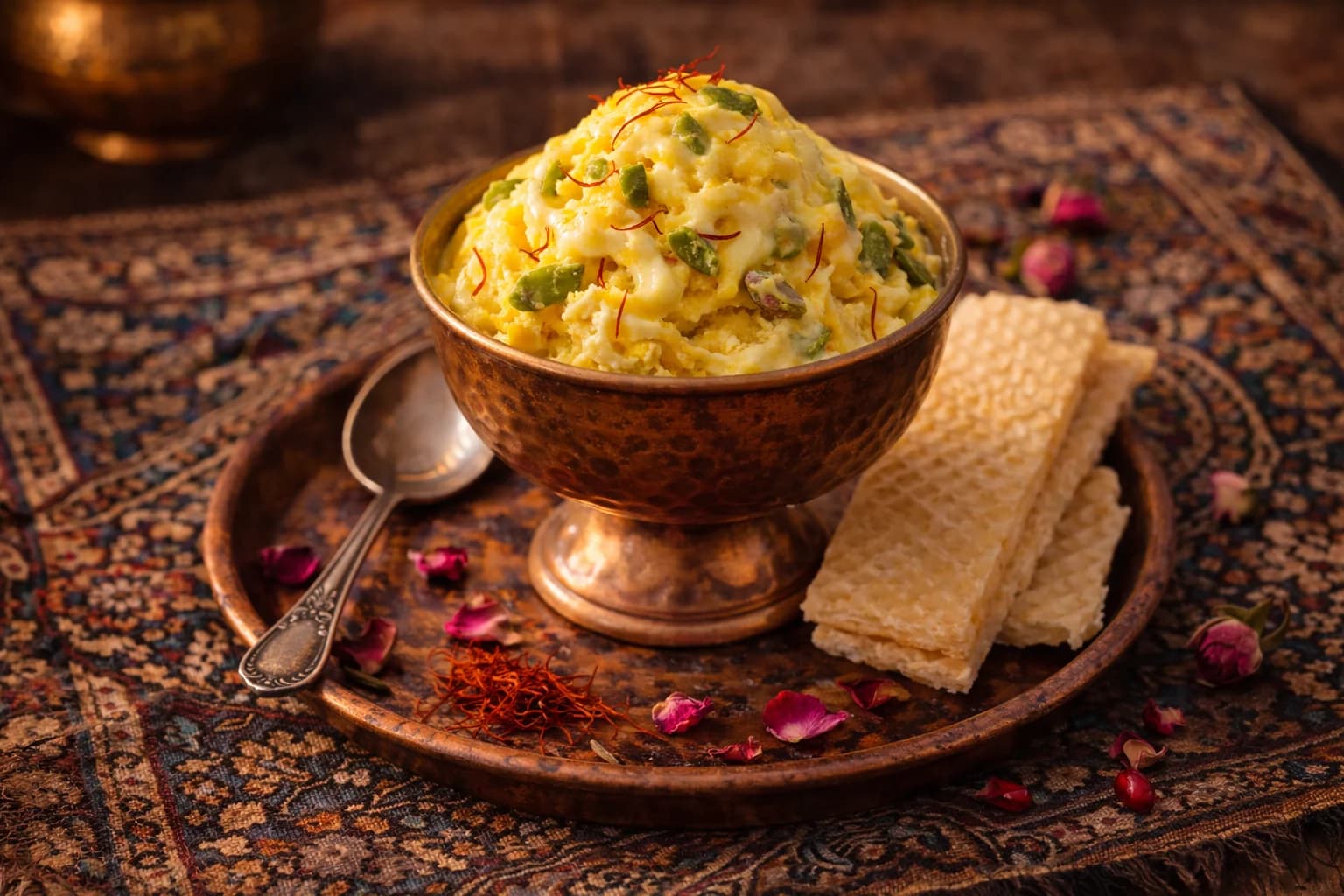
The legendary Persian ice cream—a luxurious frozen cream perfumed with saffron and rosewater, studded with pistachios, and threaded with frozen ribbons of clotted cream. Unlike any Western ice cream, bastani sonnati has a distinctive chewy, stretchy texture from salep (orchid root powder) and an intoxicating fragrance that captures the essence of Persian sweets. Traditionally served pressed between crispy wafers or alongside faloodeh, this golden ice cream is the crown jewel of Persian frozen desserts.

Fereni (Persian Rice Flour Pudding)

Fereni (Persian Rice Flour Pudding)

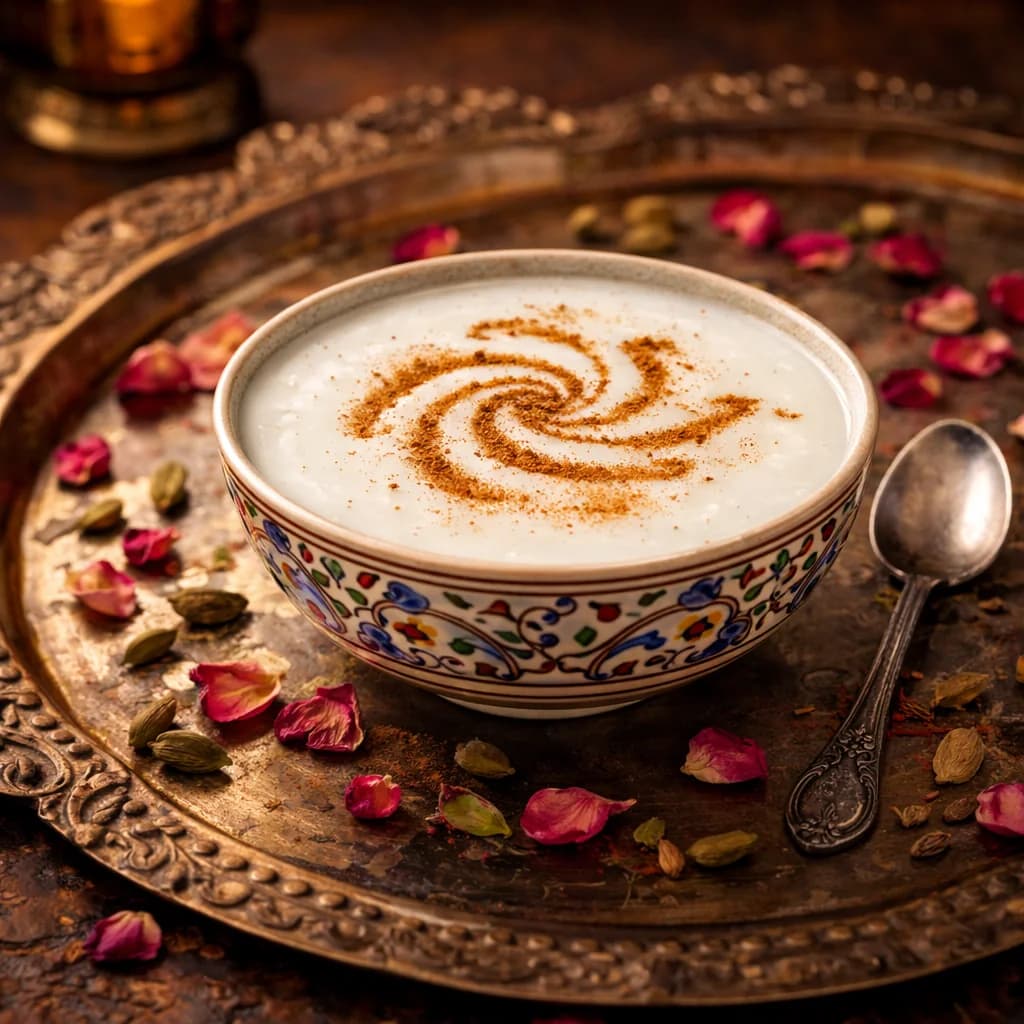
A silky-smooth, pure white pudding made from rice flour, perfumed with rosewater and cardamom, and decorated with a dusting of cinnamon—the most delicate and elegant of Persian desserts. Unlike sholeh zard's golden richness, fereni is subtle, creamy, and light, with a texture like panna cotta or blancmange. Served chilled in small portions, it's the perfect ending to a heavy meal. The contrast of snowy white pudding with cinnamon swirls is visually stunning and distinctly Persian.