
Moments Critiques
- •Blanchir correctement les feuilles de chou (souples mais pas pâteuses)
- •Amincir les côtes épaisses pour faciliter le roulage
- •Rouler serré mais laisser de la place pour le gonflement du riz
- •Obtenir le bon équilibre aigre-doux de la sauce
- •Cuisson lente jusqu'à ce que le riz soit entièrement cuit
Préparer les feuilles de chou
Porter un très grand faitout d'eau salée à ébullition. Pendant ce temps, évider le chou en découpant un trou conique profond autour du trognon. Plonger délicatement le chou entier dans l'eau bouillante. Au fur et à mesure que les feuilles extérieures ramollissent (2 à 3 minutes), les détacher délicatement à l'aide d'une pince et les transférer dans une passoire. Continuer jusqu'à obtenir 10 à 12 grandes feuilles souples. Réserver le cœur du chou pour un autre usage.
Étape Critique
Des feuilles correctement blanchies sont indispensables — elles doivent être assez souples pour être roulées sans se fissurer mais pas trop molles au point de se défaire. La méthode consistant à les détacher au fur et à mesure qu'elles ramollissent assure un blanchiment parfait pour chaque feuille.
Erreurs Courantes
- •Blanchir toutes les feuilles en même temps (cuisson inégale)
- •Blanchiment insuffisant (les feuilles se fissurent au roulage)
- •Blanchiment excessif (les feuilles se défont)
Parer les feuilles de chou
Une fois refroidies, étaler chaque feuille à plat. Avec un couteau bien aiguisé, amincir la côte centrale épaisse — ne pas la retirer entièrement, juste réduire son épaisseur pour que la feuille soit plus plate et se roule plus facilement.
Préparer les pois cassés
Rincer les pois cassés et les mettre dans une petite casserole. Couvrir d'eau, porter à ébullition, puis laisser mijoter 15 à 18 minutes jusqu'à ce qu'ils soient partiellement cuits — tendres mais gardant encore leur forme. Égoutter et réserver.
Faire revenir les oignons et préparer la farce
Chauffer l'huile dans une poêle à feu moyen. Ajouter les oignons coupés en dés et cuire 8 à 10 minutes jusqu'à ce qu'ils soient fondants et légèrement dorés. Ajouter le curcuma et cuire 1 minute. Transférer dans un grand saladier. Ajouter le riz rincé (cru), les pois cassés partiellement cuits, la viande hachée (si utilisée), toutes les herbes ciselées, la cannelle, l'advieh (si utilisé), le sel et le poivre. Mélanger soigneusement avec les mains jusqu'à obtenir un mélange homogène.
Étape Critique
La farce doit être soigneusement mélangée pour que chaque dolmeh ait un goût homogène. Le riz est cru — il cuira pendant le braisage.
Rouler les dolmeh
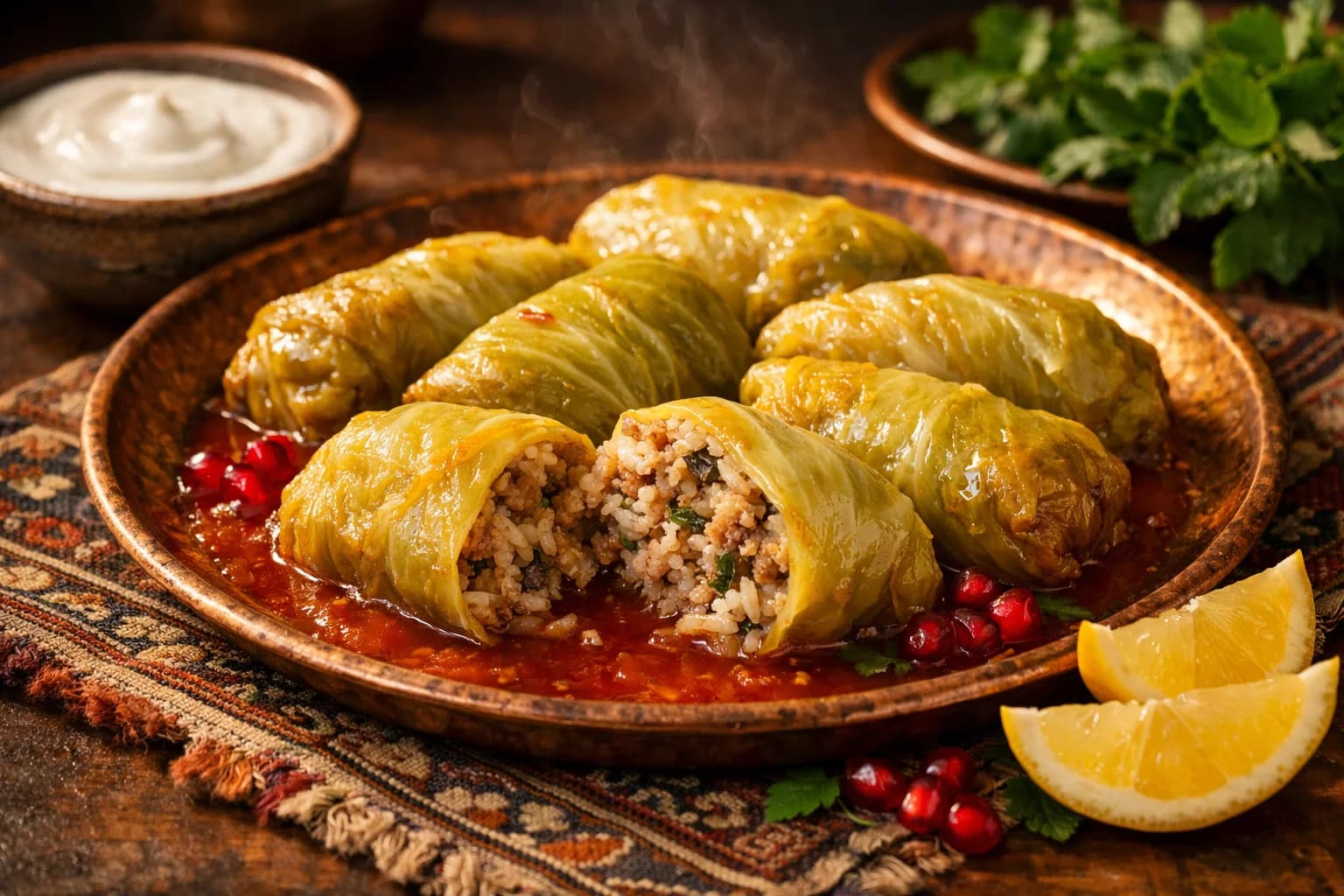
Poser une feuille de chou à plat, le côté de la tige vers vous. Placer environ 2 à 3 cuillères à soupe de farce en ligne horizontale près du bord de la tige (davantage pour les feuilles plus grandes). Replier le bas de la feuille par-dessus la farce, rabattre les deux côtés vers le centre, puis rouler en s'éloignant de vous pour former un cylindre bien serré. Les rouleaux doivent avoir environ la taille d'un petit poing. Répéter avec les feuilles et la farce restantes.
Étape Critique
Rouler de manière serrée mais pas trop — le riz a besoin de place pour gonfler. Replier les côtés empêche la farce de s'échapper pendant la cuisson.
Préparer la sauce
Dans un bol, fouetter ensemble le concentré de tomates, les tomates concassées, la mélasse de raisin ou de grenade, le jus de citron, le sucre et l'eau. Goûter et ajuster l'équilibre aigre-doux — elle doit être acidulée avec une douceur compensatrice.
Étape Critique
La sauce aigre-douce définit le dolmeh persan. Elle doit être bien relevée — le goût s'adoucit pendant la cuisson.
Disposer les dolmeh dans la marmite
Verser un filet d'huile au fond d'une grande marmite lourde. Tapisser le fond de feuilles de chou déchirées ou de tranches de pommes de terre pour empêcher l'adhérence. Disposer les dolmeh roulés jointure vers le bas en une seule couche bien serrée. S'il y a plus d'une couche, les décaler comme des briques.
Braiser les dolmeh
Verser la sauce sur les dolmeh — elle doit arriver environ aux deux tiers des rouleaux. Ajouter de l'eau si nécessaire. Poser une assiette résistante à la chaleur retournée par-dessus pour les maintenir immergés. Couvrir la marmite. Porter à frémissement doux, puis réduire à feu doux. Cuire 75 à 90 minutes jusqu'à ce que le chou soit très tendre et le riz à l'intérieur entièrement cuit.
Étape Critique
Une cuisson lente et douce est indispensable pour que le riz cuise à cœur et que le chou devienne tendre. La sauce doit réduire et épaissir en glaçage.
Laisser reposer et servir
Retirer du feu et laisser reposer 15 minutes couvercle en place. Transférer délicatement les dolmeh sur un plat de service. Napper de sauce réduite en guise de glaçage. Servir chaud avec du riz et du yaourt.
Repos Requis
15 min - Permet aux dolmeh de raffermir ; plus faciles à manipuler