
Dolmeh Felfel (Persian Stuffed Bell Peppers)

Dolmeh Felfel (Persian Stuffed Bell Peppers)

دلمه فلفل

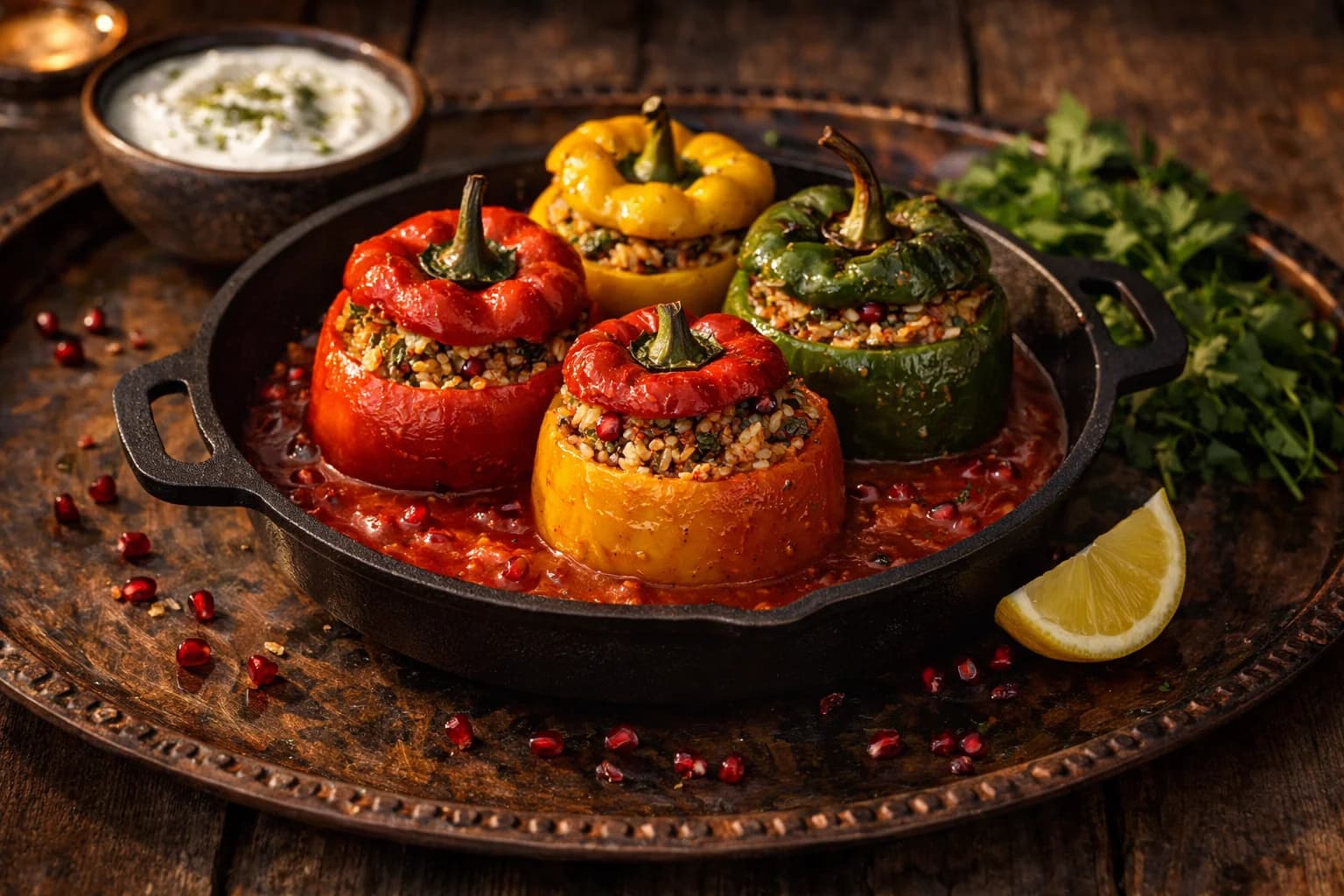
Sweet bell peppers hollowed and filled with an aromatic mixture of rice, herbs, split peas, and meat, then braised in a tangy tomato sauce until tender and deeply flavored. These colorful stuffed peppers are larger and more substantial than grape leaf dolmeh, making them perfect as a main course. The peppers become silky-soft during cooking, their natural sweetness playing against the tangy sauce and savory filling. A beautiful centerpiece dish that's impressive yet comforting.

dolmehPréparation: 40 minCuisson: 75 mineasyPour 6

Note culturelle

Dolmeh felfel is everyday Persian comfort food—simpler and more substantial than the labor-intensive grape leaf version. Bell peppers are stuffed with the same aromatic rice-herb-meat filling and braised in the characteristic sweet-sour tomato sauce. The dish is popular for family dinners, often made when peppers are abundant and cheap in summer. Using a mix of red, yellow, and green peppers creates a beautiful presentation. Unlike some other cuisines' stuffed peppers, the Persian version emphasizes fresh herbs and the tangy braising sauce that makes Persian dolmeh distinctive.

Moments Critiques

  • Leaving room for rice expansion when stuffing
  • Achieving proper sweet-sour balance in sauce
  • Low, slow cooking until rice is fully cooked
  • Not overcooking (peppers fall apart)
1
PRÉPARATION10 min

Prepare the peppers

Wash the peppers. Cut off the tops (about 2cm down) to create lids—set these aside. Remove the seeds and white membranes from inside each pepper. Trim the bottom slightly if needed so the peppers can stand upright, but don't cut through to create a hole.

Hollow peppers that stand upright; lids reserved
OdeurFresh bell pepper
TextureFirm, fresh peppers
Choose peppers with flat bottoms that stand upright. If a pepper won't stand, slice a tiny bit off the bottom—but don't cut through. The tops will be used as lids during cooking.
2
PRÉPARATION20 min

Partially cook the split peas

If using split peas, rinse and simmer in water for 15-20 minutes until partially tender but still firm. Drain and set aside.

Split peas are slightly tender but hold their shape
MediumSimmer
OdeurCooking legumes
SonSimmering
TexturePartially cooked—not mushy
The split peas will finish cooking inside the peppers, so don't fully cook them now.
3
PRÉPARATION12 min

Sauté the onions

Heat 45ml oil in a skillet over medium heat. Add the diced onions and cook for 8-10 minutes until softened and lightly golden. Add turmeric and cook 1 minute until fragrant. Remove from heat and let cool slightly.

Onions are golden and soft; yellow from turmeric
Medium165°C / 325°F
OdeurSautéing onions with turmeric
SonSizzling
TextureOnions are soft
4
PRÉPARATION8 min

Make the filling

In a large bowl, combine the sautéed onions, rinsed rice (raw), partially cooked split peas, ground meat (if using), all the chopped herbs, cinnamon, cumin (if using), salt, and pepper. Mix thoroughly with your hands until evenly combined. The mixture should be well-seasoned and fragrant.

Uniform, colorful mixture of rice, herbs, meat, and split peas
OdeurHerbaceous, warmly spiced
TextureWell-combined, slightly moist from herbs

Étape Critique

Thorough mixing ensures even flavor in every pepper. The raw rice will cook inside the peppers, absorbing the delicious braising liquid.

Taste a small amount of the filling (cook a spoonful if using raw meat) to check seasoning before stuffing.
5
PRÉPARATION10 min

Stuff the peppers

Fill each pepper with the filling mixture, pressing gently to pack but leaving about 1cm of space at the top—the rice will expand during cooking. Don't overfill. Place the reserved pepper tops back on as lids.

Peppers filled to 1cm below the rim, lids in place
OdeurHerby filling
TextureFirmly but not tightly packed

Étape Critique

Leave room for rice expansion. Overfilled peppers may burst or the filling will push out. The lids help keep moisture in and prevent the top from drying out.

If you have extra filling, it can be wrapped in any spare grape leaves or cabbage leaves, or cooked separately in a small dish.
6
CUISSON5 min

Prepare the sauce

In a bowl, whisk together the tomato paste, crushed tomatoes, lemon juice, sugar, and 400ml water. Taste and adjust the sweet-sour balance—it should be tangy with a hint of sweetness.

Smooth, red-orange sauce
OdeurTangy, tomatoey
TexturePourable sauce consistency

Étape Critique

The sweet-sour sauce is essential to Persian dolmeh. Taste and adjust—it should be noticeably tangy with balancing sweetness. The flavors will mellow during cooking.

The balance should lean slightly sour—it will become more balanced as the peppers cook and release their sweetness.
7
CUISSON5 min

Arrange peppers in pot

Drizzle remaining 15ml oil in the bottom of a large pot. Stand the stuffed peppers upright in the pot, packing them snugly so they support each other. Pour the sauce around (not over) the peppers—it should come about halfway up.

Peppers standing upright, snugly packed, sauce surrounding them
OdeurTangy tomato sauce
Pack the peppers snugly so they support each other and stay upright during cooking. If you have gaps, fill with small potatoes or onion quarters.
8
CUISSON70 min

Braise the stuffed peppers

Bring to a gentle boil over medium heat. Reduce heat to low, cover tightly, and simmer for 60-75 minutes until the peppers are very tender and the rice inside is fully cooked. Check occasionally—add water if the sauce has reduced too much. Baste the peppers with sauce once or twice during cooking.

Peppers are very soft, slightly collapsed; rice is fully cooked when tested
LowGentle simmer
OdeurRich, sweet-sour, deeply aromatic
SonGentle simmering
TexturePeppers yield easily when pressed; feel soft

Étape Critique

Low, slow cooking allows the rice inside to cook through while the peppers become tender. The sauce should reduce to a thick, glossy coating. Test by carefully cutting into one pepper to check that rice is fully cooked.

If the tops start to brown too much, place a piece of foil loosely over the pot.
Point de contrôle: After 60 minutes, carefully check one pepper—the rice should be tender throughout, no hard core.
9
FINITION12 min

Rest and serve

Remove from heat and let rest for 10 minutes. Carefully transfer the peppers to a serving platter using a large spoon, keeping them upright. Spoon the reduced sauce over and around the peppers. Serve warm.

Tender, glossy peppers on a platter, surrounded by thick tangy sauce
OdeurRich, sweet-sour, herby
TextureSoft peppers, glossy sauce
Handle gently—the peppers are very soft and can fall apart. A large spoon or spatula works better than tongs.

Repos Requis

10 min - Allows peppers to firm up slightly; easier to handle

Extras

Équipement

large pot with lidlarge mixing bowlstandard

Préparer à l'Avance

  • Can be made a day ahead and refrigerated in the cooking liquid.
  • Flavor improves overnight.
  • Reheat gently in the pot with the sauce.
  • Can also be frozen for up to 2 months.

Reheat gently in the sauce over low heat, covered.

Or microwave individual peppers.

Can also be served at room temperature.

Servir Avec

🍚Chelow (essential), Zereshk polo (festive)

Accompagnements

  • Plain yogurt or mast-o-khiar
  • Salad Shirazi
  • Torshi (pickles)
  • Sabzi khordan

Boissons

  • Doogh
  • Black tea

Substitutions

bell peppersAny color works—mix for visual appeal. Cubanelle or Italian frying peppers work well. Poblano peppers for slight heat.
split peasYellow lentils can substitute (add to filling uncooked—they'll cook faster). Can also omit entirely.
ground meatGround chicken or turkey work but are leaner. Omit for vegetarian version.
crushed tomatoesFresh tomatoes, grated (4 medium), work in summer. Tomato passata also works.

Mise à l'échelle

Each pepper is a serving, so scale by number of peppers. The filling recipe makes enough for about 6-8 medium peppers. Choose peppers that can stand upright for even cooking. Can be made in larger batches—just use a bigger pot.

Source

Traditionnel · Traditional Persian cuisine

One of the easier dolmeh to prepare—no delicate rolling required. Popular home cooking throughout Iran, often made with whatever peppers are available. The sweet-sour tomato sauce is distinctively Persian.

Recettes similaires

Dolmeh Barg Kalam (Persian Stuffed Cabbage Leaves)

Dolmeh Barg Kalam (Persian Stuffed Cabbage Leaves)

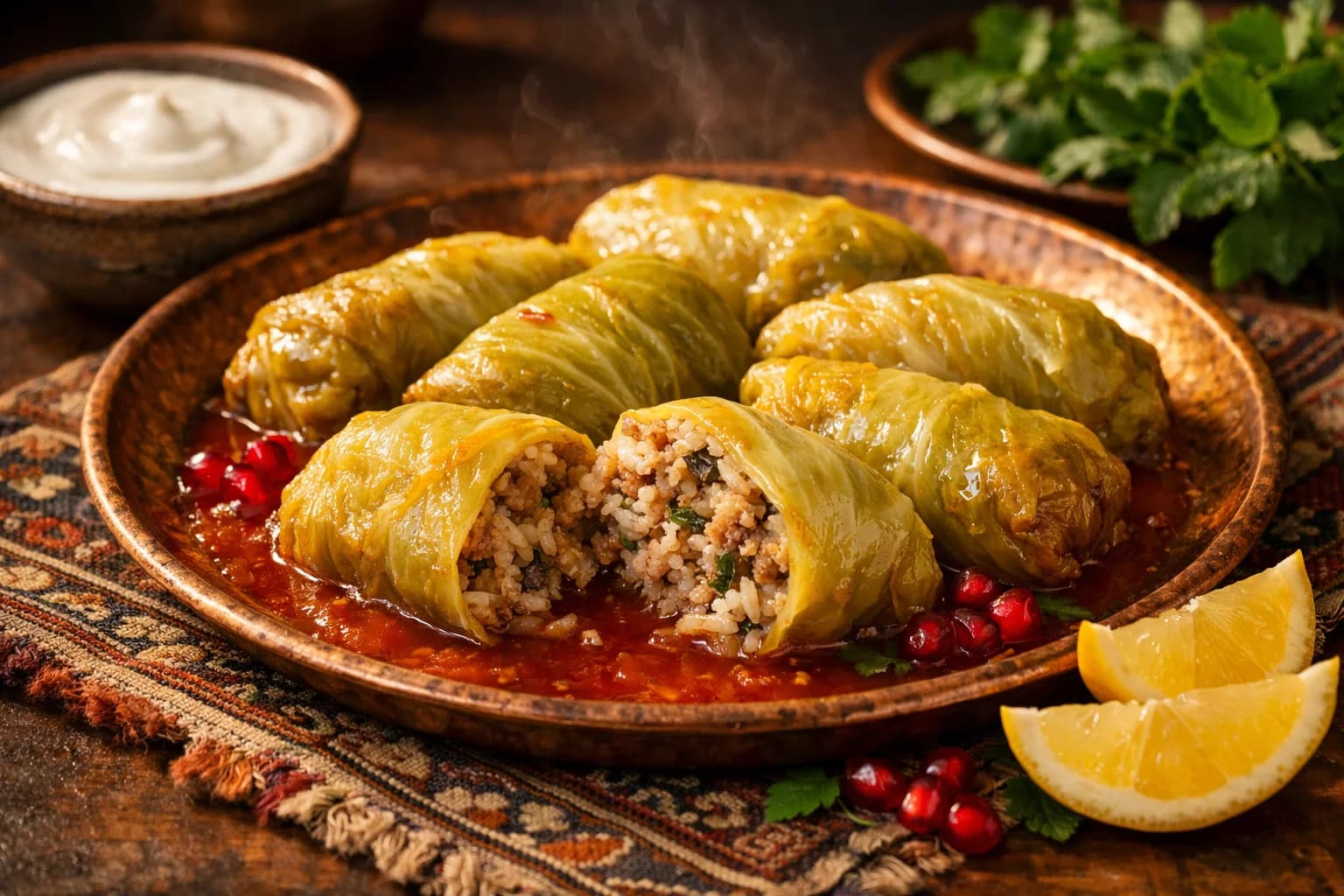
Large, tender cabbage leaves wrapped around an aromatic filling of rice, herbs, split peas, and meat, then braised in a sweet-sour tomato sauce until meltingly soft. These generous parcels are easier to roll than grape leaves and yield larger, more substantial portions—perfect for a hearty main course. The cabbage becomes silky and sweet during cooking, its mild flavor absorbing the tangy braising liquid beautifully. A beloved winter comfort food when cabbages are at their peak.

Dolmeh Bademjan (Persian Stuffed Eggplant)

Dolmeh Bademjan (Persian Stuffed Eggplant)

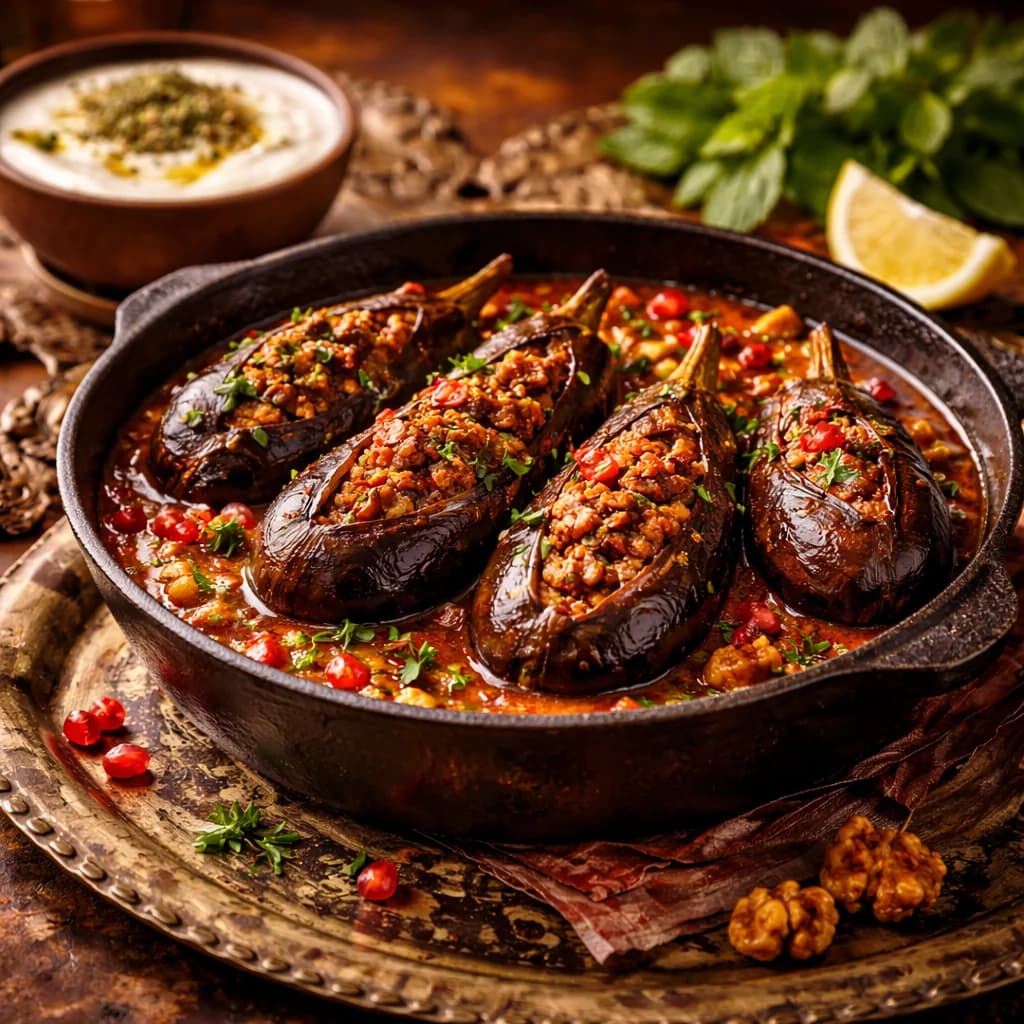
Small, tender eggplants hollowed and filled with an aromatic mixture of rice, herbs, split peas, and meat, then braised until the eggplant becomes silky and yielding. These elegant parcels showcase the Persian mastery of eggplant—the vegetable absorbs the sweet-sour braising liquid while the filling cooks to aromatic perfection inside. More refined than cabbage dolmeh and more substantial than grape leaves, stuffed eggplants are a centerpiece dish worthy of special occasions.

Dolmeh Barg Mo (Persian Stuffed Grape Leaves)

Dolmeh Barg Mo (Persian Stuffed Grape Leaves)

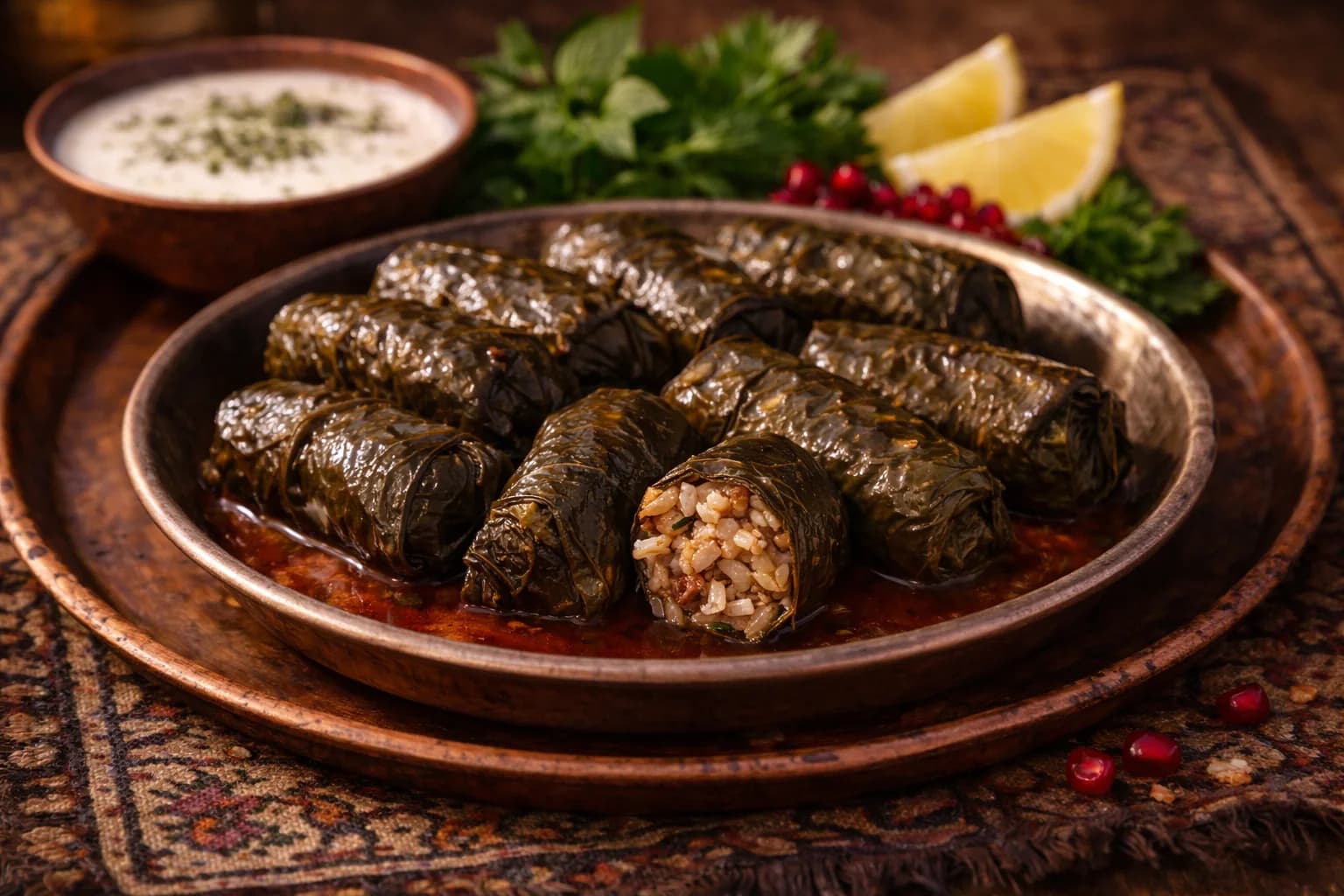
Tender grape leaves wrapped around a fragrant filling of rice, split peas, herbs, and often ground meat—tiny parcels of Persian flavor that burst with sweet-sour complexity. Unlike their Greek or Turkish cousins, Persian dolmeh are distinctively flavored with an abundance of fresh herbs, warm spices, and a sweet-sour braising liquid that penetrates each roll. Traditionally made in large batches for special occasions, each painstakingly rolled leaf represents love and patience. The result is utterly addictive—tender, tangy, aromatic, and impossible to eat just one.