
Khoresh-e Kangar (Persian Cardoon Stew)

Khoresh-e Kangar (Persian Cardoon Stew)

خورشت کنگر

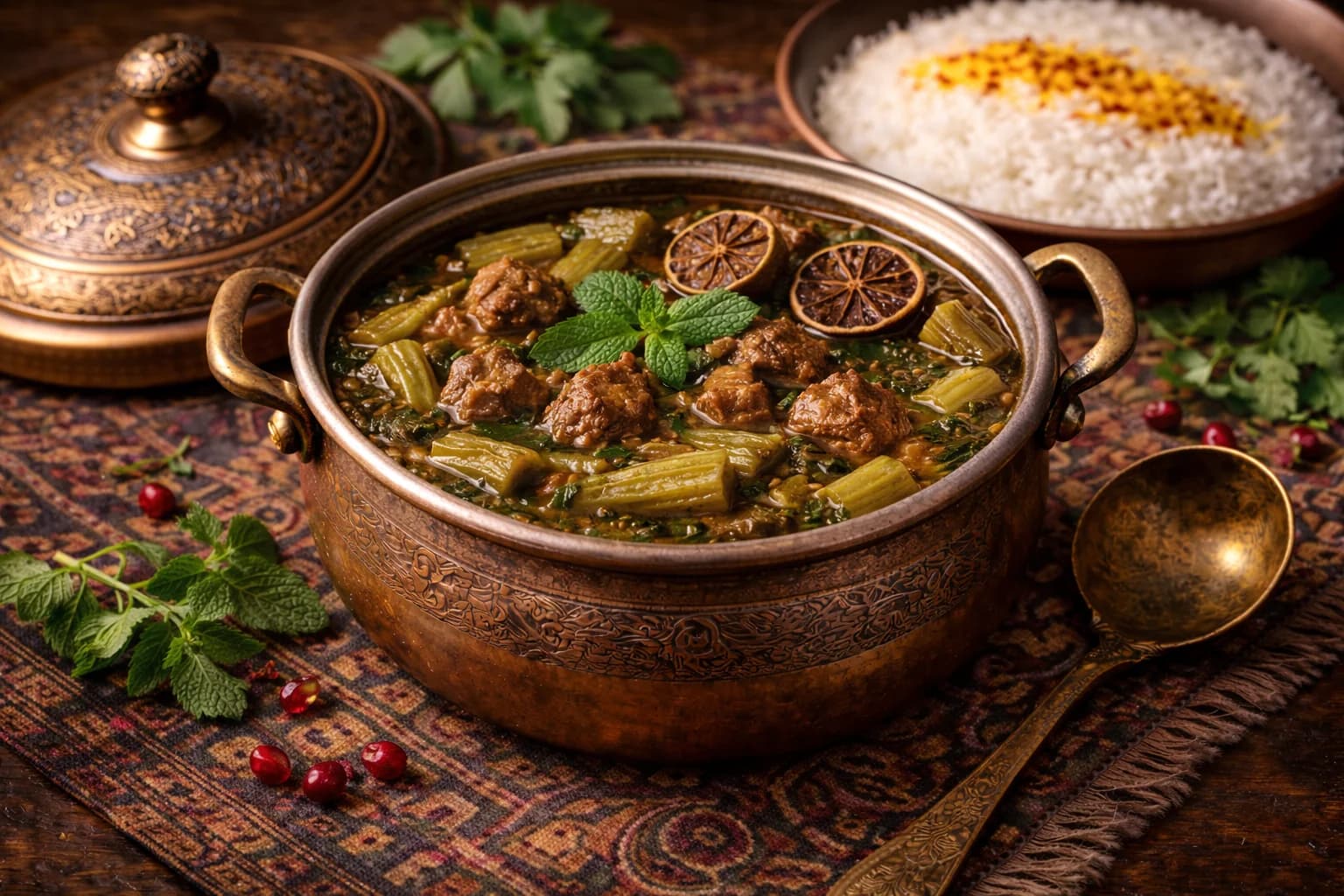
An elegant Kermanshah specialty where tender cardoon stalks simmer in a delicate, herb-flecked sauce with succulent lamb, brightened by dried Persian limes and fresh mint. This refined springtime stew showcases cardoons—a thistle relative with an artichoke-like flavor—in a lighter, more aromatic sauce than typical Persian stews. A true regional treasure.

stewPréparation: 40 minCuisson: 100 minintermediatePour 6

Note culturelle- Kermanshah

Khoresh-e kangar holds a special place in Kermanshah cuisine, appearing each spring when cardoons are in season. Wild cardoons (kangar-e kuhi) are foraged from the hillsides of western Iran, and their arrival marks a celebrated moment in the culinary calendar. This seasonal stew is lighter and more delicate than many Persian stews.

Moments Critiques

  • Peeling cardoons thoroughly to remove all strings
  • Keeping cut cardoons in acidulated water to prevent browning
  • Adding fresh mint at the end for brightness
1
PRÉPARATION5 min

Bloom the saffron

If using saffron, grind threads with a pinch of sugar using a mortar and pestle. Transfer to a small bowl, add 3 tbsp hot (not boiling) water, cover, and steep for at least 20 minutes.

Deep ruby-red liquid with intense color
OdeurHoney-floral saffron aroma developing
Saffron is optional but traditional in the Isfahani version—it adds elegance and golden color
En attendant: Prepare cardoons while saffron blooms
2
PRÉPARATION2 min

Prepare acidulated water

Fill a large bowl with cold water and add the juice of 1 lemon. This acidulated water prevents cardoons from browning once cut.

Bowl of water with lemon juice mixed in
OdeurFresh lemon aroma
Have this ready before you start cutting—cardoons oxidize very quickly, like artichokes
3
PRÉPARATION25 min

Trim and prepare the cardoons

Working with one stalk at a time: Remove any leaves. Using a vegetable peeler or paring knife, peel the stringy outer layer from each stalk (like peeling celery, but more thoroughly). Cut into 5cm pieces and immediately drop into the acidulated water. Repeat with all stalks. The cardoons will wait in the water while you prepare other ingredients.

Pale, peeled cardoon pieces submerged in lemony water; no brown oxidation
OdeurMild, artichoke-like aroma from cut cardoons
TexturePeeled stalks feel smooth, not stringy

Étape Critique

Cardoons have tough, fibrous strings on the outer surface that become unpleasant when cooked. Thorough peeling is essential. The acidulated water prevents browning—brown cardoons look unappetizing and can taste bitter.

Wear gloves if you have sensitive skin—cardoon sap can be irritating. Pull the strings off like you would with celery.

Erreurs Courantes

  • Not peeling thoroughly (stringy, tough texture)
  • Letting cut pieces sit without acid (turn brown)
  • Cutting pieces too small (fall apart during cooking)
Point de contrôle: All pieces should be pale and submerged; no browning visible
4
PRÉPARATION12 min

Blanch the cardoons (optional but recommended)

Bring a pot of salted water to boil. Drain cardoons from acidulated water and blanch for 8-10 minutes until slightly tender but still firm. Drain and set aside. This step reduces bitterness and ensures even cooking.

Cardoons are slightly translucent, yield slightly when pressed but still have firmness
HighBoiling water
OdeurMild, vegetal aroma
SonRolling boil
TexturePieces yield to pressure but aren't mushy
If using artichoke hearts instead, skip this step—they don't need blanching

Erreurs Courantes

  • Over-blanching (cardoons become mushy)
  • Under-blanching (remain bitter and tough)
Point de contrôle: A knife should pierce cardoon with slight resistance
5
PRÉPARATION8 min

Chop the herbs

Finely chop the mint and parsley. If using dried mint, set aside—it will be added differently.

Finely chopped bright green herbs
OdeurBright, fresh mint and parsley fragrance
Fresh mint is essential to this dish's character—it's the signature herb of this stew
6
CUISSON12 min

Brown the onions

Heat oil in a large heavy pot over medium-high heat. Add diced onion and cook until golden brown, about 10-12 minutes, stirring occasionally.

Onions are golden with some caramelized edges
Medium-High190°C / 375°F
OdeurSweet, caramelized onion aroma
SonSteady sizzling
7
CUISSON8 min

Add turmeric and brown the meat

Add turmeric and stir for 30 seconds. Increase heat to high, add meat cubes, and brown well on at least two sides, about 6-8 minutes total.

Meat has golden-brown crust; turmeric has colored everything warmly
High230°C / 450°F
OdeurSearing meat with earthy turmeric
SonStrong sizzling; meat releases when properly seared
TextureMeat releases easily from pot
8
CUISSON90 min

Add liquid and dried limes

Add water or stock, salt, and pepper. Pierce each dried lime 3-4 times with a knife and add to the pot. Bring to a boil, then reduce heat to low. Cover and simmer for 1.5 hours until meat is very tender.

Liquid has turned golden; dried limes are softening
LowGentle simmer ~120°C / 250°F
OdeurTangy dried lime aroma developing in the broth
SonGentle, occasional bubbles
TextureMeat is starting to yield to a fork
Point de contrôle: Meat should be partially tender before adding cardoons
9
CUISSON35 min

Add cardoons and herbs

Add blanched cardoons (or artichoke hearts if substituting) to the pot. Add chopped parsley and half the mint (reserve rest for finishing). If using dried mint, add 1 tbsp now. Stir gently to combine. Cover and simmer for another 30-35 minutes.

Cardoons are very tender; herbs have melded into sauce; broth is aromatic and slightly green-tinged
LowGentle simmer
OdeurMint and dried lime aromas prominent; herbaceous and tangy
SonGentle bubbling
TextureCardoons are completely tender when pierced
Cardoons should be fork-tender—they take longer than you might expect. If using artichoke hearts, they cook faster (about 20 minutes).
Point de contrôle: Cardoons should be completely tender with no resistance
10
FINITION10 min

Add saffron and remaining mint, adjust seasoning

Stir in bloomed saffron (if using), remaining fresh mint, and juice of the second lemon. Taste and adjust salt, pepper, and sourness. The stew should be notably tangy and aromatic with mint. If too sour, add the optional sugar. Remove from heat, cover, and let rest for 10 minutes.

Sauce has golden saffron hue; fresh mint is visible; lighter colored than many stews
OdeurBright mint, saffron, and lemon lifted by tangy dried lime
TextureSauce is light and brothy, not thick

Étape Critique

The fresh mint added at the end provides brightness that cooking would diminish. This final addition is what gives the stew its characteristic fresh, springlike character.

This stew is meant to be lighter and brothier than many Persian stews—don't reduce it too much

Erreurs Courantes

  • Adding all mint at beginning (loses freshness)
  • Under-seasoning with lemon (missing the bright tang)
  • Over-reducing sauce (should be light)
11
FINITION

Serve

Transfer to a serving dish. The stew should be lighter in color and brothier than most khoresh. Serve hot over chelow with tahdig. Dried limes can be left in or removed.

Light golden-green broth with tender cardoon pieces and meat; fresh mint flecks visible; elegant presentation
The lighter color and more delicate character distinguish this from heavier stews—it's meant to taste of spring

Repos Requis

10 min - Allows flavors to harmonize and mint to infuse

Extras

Équipement

grande marmite lourdelarge bowlstandard

Préparer à l'Avance

  • Meat base can be made 1 day ahead.
  • Add blanched cardoons and fresh herbs when reheating.
  • Cardoons don't hold as well as some vegetables—best served within 1-2 days.
  • If using artichoke hearts, freezes adequately for 2 months.

Reheat gently over low heat.

Add a squeeze of fresh lemon and some fresh mint to brighten.

Servir Avec

🍚Chelow (plain Persian steamed rice) with tahdig—simple rice complements this elegant stew

Accompagnements

  • Mast-o-khiar (cooling yogurt)
  • Sabzi khordan (fresh herb platter)
  • Shirazi salad

Boissons

  • Doogh
  • Black tea
  • Fresh mint tea

Substitutions

cardoonsArtichoke hearts are the best substitute—frozen or canned, drained. The flavor is similar (same plant family). Celery can work in a pinch but flavor is quite different.
dried limeZest of 2 limes + 3 tbsp lime juice, added in last 20 minutes. The unique fermented tang of dried limes is hard to replicate.
fresh mintDried mint (2 tbsp) can substitute but fresh is strongly preferred for this dish. Add dried mint during cooking, not at the end.
saffronCan be omitted—the dish is still delicious. The stew will be paler but the mint and dried lime carry the flavor.
lambBeef works but lamb is traditional. Chicken makes a lighter version.

Mise à l'échelle

Doubles well with 20 minutes extra cooking time. Cardoon preparation is the main time investment—scales linearly. Fresh cardoons don't freeze well; if using artichoke hearts, the finished stew freezes adequately for 2 months.

Source

Régional · Kermanshah and western Iran regional cooking

A beloved springtime dish in western Iran when wild cardoons (kangar) are foraged from the hills. In Kermanshah province, this seasonal stew is traditional home cooking. Artichoke hearts are a common substitute when cardoons aren't available.

Recettes similaires