Chai (Persian Tea Service)

Chai (Persian Tea Service)

چای

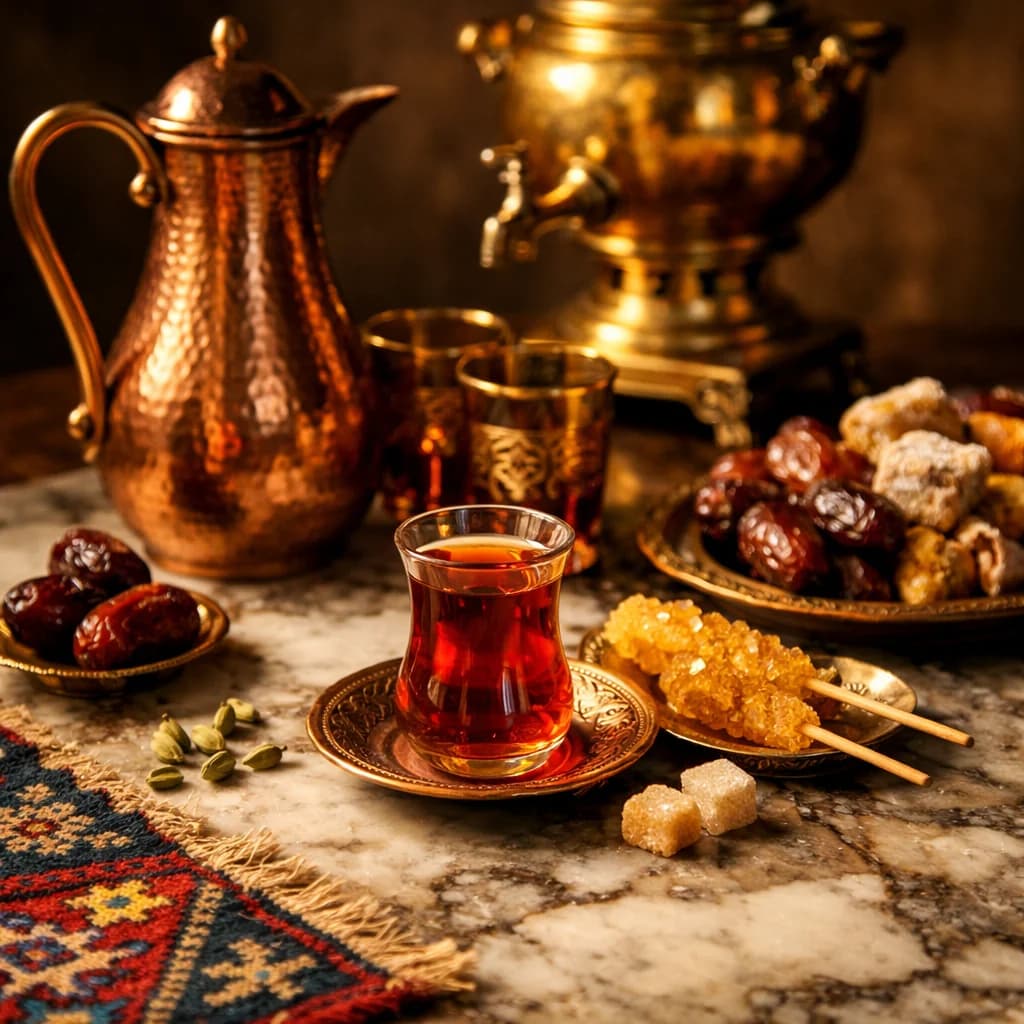
Tea is not merely a beverage in Iran—it is the very rhythm of daily life, the foundation of hospitality, and an art form unto itself. Persian tea service involves brewing strong black tea (traditionally in a two-tiered pot with a samovar) until it reaches a deep amber color, then diluting it to taste with hot water. Served in small, elegant glasses that showcase its jewel-like color, accompanied by rock sugar (nabat), sweets, and good conversation, Persian tea is offered to every guest and consumed throughout the day. The brewing method, the glassware, the accompaniments—all are integral to an experience that transcends simple tea-drinking.

beveragePréparation: 5 minCuisson: 20 mineasyPour 6

Note culturelle

Tea (chai) is the heartbeat of Persian hospitality and daily life. A guest cannot enter an Iranian home without being offered tea—refusing is considered impolite, and multiple glasses are expected. The traditional brewing method uses a samovar (a heated urn that keeps water perpetually hot) with a teapot perched on top to stay warm. The tea is brewed very strong, then each person dilutes their glass to preference with hot water from the samovar. This system keeps tea hot and fresh throughout extended gatherings, which can last hours. Tea is drunk in small, waisted glasses called 'estekaan' that showcase its amber color and allow it to cool to drinkable temperature quickly. The traditional way to drink tea is with nabat (rock sugar, often saffron-infused) or a sugar cube held between the teeth while sipping. Tea accompanies all Persian sweets and is offered constantly throughout the day—upon waking, with breakfast, mid-morning, after lunch, in the afternoon, after dinner, and before bed.

Moments Critiques

  • Using enough tea for strong concentrate
  • Water at full boil (not just hot)
  • Long steeping time (15-20 minutes)
  • Proper color ('por-rang'—full color)
  • Diluting to individual preference
1
PRÉPARATION3 min

Warm the teapot

Boil water in a kettle. Rinse the teapot with a small amount of boiling water to warm it—this helps the tea brew properly. Discard the rinse water.

Steam rising from warmed teapot
SonWater swirling in pot
TexturePot is warm to touch
A warm pot ensures the water temperature stays high for proper extraction. Cold pot = poor tea.
2
PRÉPARATION1 min

Add tea leaves

Add the loose-leaf tea to the warmed pot. If using cardamom or rose petals, add them now. The amount seems generous—this is intentional. Persian tea concentrate is very strong.

Generous amount of tea leaves in pot
OdeurDry tea leaves—earthy, slightly smoky
TextureDry, loose leaves

Étape Critique

Persian tea is brewed strong and diluted to taste. If you use the amount typical for Western tea, the concentrate will be too weak. Use the full amount specified.

Traditional Persian tea is a blend, often Ceylon-based. Earl Grey (with bergamot) is also popular. Avoid flavored teas with artificial additives.
3
CUISSON17 min

Add water and steep

Pour 400ml of freshly boiling water over the tea leaves. The water must be at a full boil—not just hot. Cover the teapot. If using a samovar, place the teapot on top to keep warm. Otherwise, wrap in a tea cozy or towel. Steep for 15-20 minutes.

Tea steeping; gradually darkening to deep amber
High100°C / 212°F—full boiling
OdeurTea aroma developing—rich, slightly tannic

Étape Critique

Persian tea requires longer steeping than Western methods—this creates the strong concentrate that defines the style. The resulting 'dam' (essence) should be deep amber, almost brown.

The longer steep doesn't create bitterness because the tea will be diluted. Traditional samovar brewing can go even longer, with the teapot perpetually warm on top of the samovar.
4
CUISSON2 min

Check the color

After steeping, check the tea's color by holding a glass of undiluted tea to the light. It should be deep amber to dark mahogany—this is 'dam-kesh' (drawn essence). The color indicates strength. If too light, steep longer.

Deep amber to mahogany color when held to light
OdeurRich, developed tea aroma

Étape Critique

The color is the indicator of proper concentration. Iranians judge tea quality by its color—it should have 'rang' (color). Pale tea is considered inferior.

The term 'kam-rang' (light color) describes weak tea—avoid this. 'Por-rang' (full color) is the goal.
5
FINITION2 min

Prepare the glasses

Set out traditional tea glasses (estekaan). Have a kettle or samovar of hot water ready for diluting. Place nabat (rock sugar), sugar cubes, or a sugar bowl alongside.

Small waisted glasses arranged; sugar ready
Traditional estekaan glasses are small (100-120ml), waisted in shape, and made of clear glass to showcase the tea's color. They sit in metal or porcelain holders (zarfs) to protect fingers from heat.
6
FINITION3 min

Serve to individual taste

Pour tea concentrate into each glass, filling about one-third to half. Then add hot water to dilute to the drinker's preference. Those who prefer 'por-rang' (strong/dark) get more concentrate; those who prefer 'kam-rang' (light) get more water. Serve immediately while hot.

Amber-red tea in glass; color varies by strength preference
OdeurFresh, aromatic tea
SonPouring liquid
TextureVery hot

Étape Critique

The dilution is individual—always ask or know your guest's preference. Serving tea too strong or too weak is a faux pas. The host adjusts each glass.

When in doubt, pour concentrate and hot water separately and let guests adjust themselves. Some people like their tea very strong, others quite light.
7
FINITION2 min

Serve with sugar and accompaniments

Serve with nabat (rock sugar) or sugar cubes. The traditional method is to hold the sugar between the front teeth and sip tea through it, allowing the sugar to dissolve slowly. Alternatively, stir sugar into the tea. Offer Persian sweets alongside.

Glass of amber tea with golden nabat beside it; plate of sweets
OdeurTea aroma with sweet accompaniments
SonSipping
TextureHot tea; crystalline sugar
Nabat (Persian rock sugar) is often infused with saffron, adding color and subtle flavor. The teeth-holding method allows you to control sweetness with each sip. Lime slices are also traditional—squeeze a bit into tea for brightness.
8
FINITION0

Continue service

Persian tea service is ongoing—the teapot stays warm on the samovar (or is refreshed), and guests are offered refills continuously. When a guest places their empty glass upside down on the saucer, they're indicating they've had enough.

Warm teapot ready for refills; convivial atmosphere
OdeurContinuous tea aroma
SonConversation
It's traditional to offer at least 2-3 glasses—accepting only one is barely polite. The host should never let a guest's glass remain empty for long.

Repos Requis

15 min - Tea must steep long enough to develop full strength and color

Extras

Équipement

teapot and kettle or samovartea glasses estekaantea strainerstandard

Servir Avec

Accompagnements

  • Gaz (Persian nougat)
  • Sohan (saffron brittle)
  • Baklava
  • Nan-e nokhodchi (chickpea cookies)
  • Fresh or dried fruit
  • Any Persian sweet

Boissons

  • Served as the beverage itself

Substitutions

loose leaf teaMust be loose-leaf—tea bags produce inferior results and are considered inappropriate for proper Persian tea service. Ceylon tea is most traditional. Earl Grey (with bergamot) is popular. Darjeeling works but is lighter. Avoid strongly flavored or herbal teas.
samovarA traditional samovar is not essential but keeps tea perfectly hot for hours. A teapot with a tea cozy, or a teapot on a warming plate, substitutes adequately. Electric samovars are available and convenient.
nabatPersian rock sugar, often saffron-infused. Regular sugar cubes substitute. Some use honey. The traditional teeth-method only works with hard sugar that dissolves slowly.
estekaan glassesTraditional glasses are essential for the authentic experience but any small, heat-resistant clear glass works. The small size ensures tea is drunk hot—large mugs aren't appropriate.

Mise à l'échelle

The concentrate method allows flexible scaling—make a strong pot and dilute each glass individually. For larger gatherings, a samovar keeps water hot indefinitely while the teapot stays warm on top. Persian tea is served continuously throughout any gathering, so prepare to brew multiple pots.

Source

Traditionnel · Traditional Persian culture

Tea arrived in Iran in the 15th century via the Silk Road and quickly became central to Persian culture. The traditional samovar brewing method creates the characteristic strong concentrate diluted to individual taste—a method that keeps tea hot and fresh throughout extended gatherings.

Recettes similaires

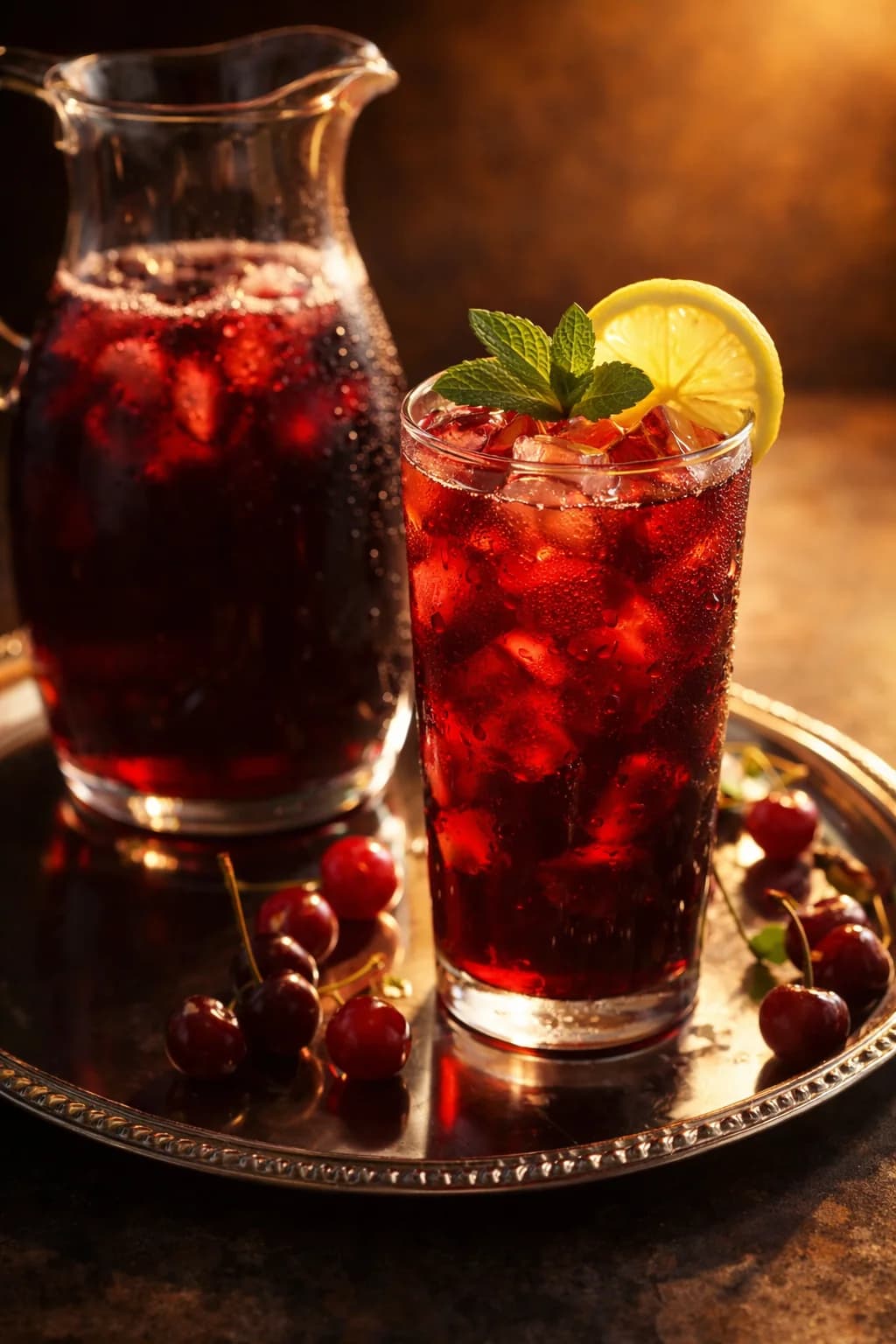
Sharbat Albaloo (Persian Sour Cherry Syrup)

Sharbat Albaloo (Persian Sour Cherry Syrup)

A jewel-toned syrup made from tart sour cherries, their ruby juice transformed into a concentrated elixir that captures the essence of Persian summer. Diluted with ice water, sharbat albaloo becomes a stunningly beautiful drink—deep garnet red, intensely fruity, and perfectly balanced between sweet and tart. Beyond drinking, this versatile syrup is the traditional topping for faloodeh, drizzled over the icy rose water noodles for a stunning pink-red contrast. The brief summer season when sour cherries are available makes this syrup precious—families preserve summer's bounty in these jeweled jars to enjoy year-round.

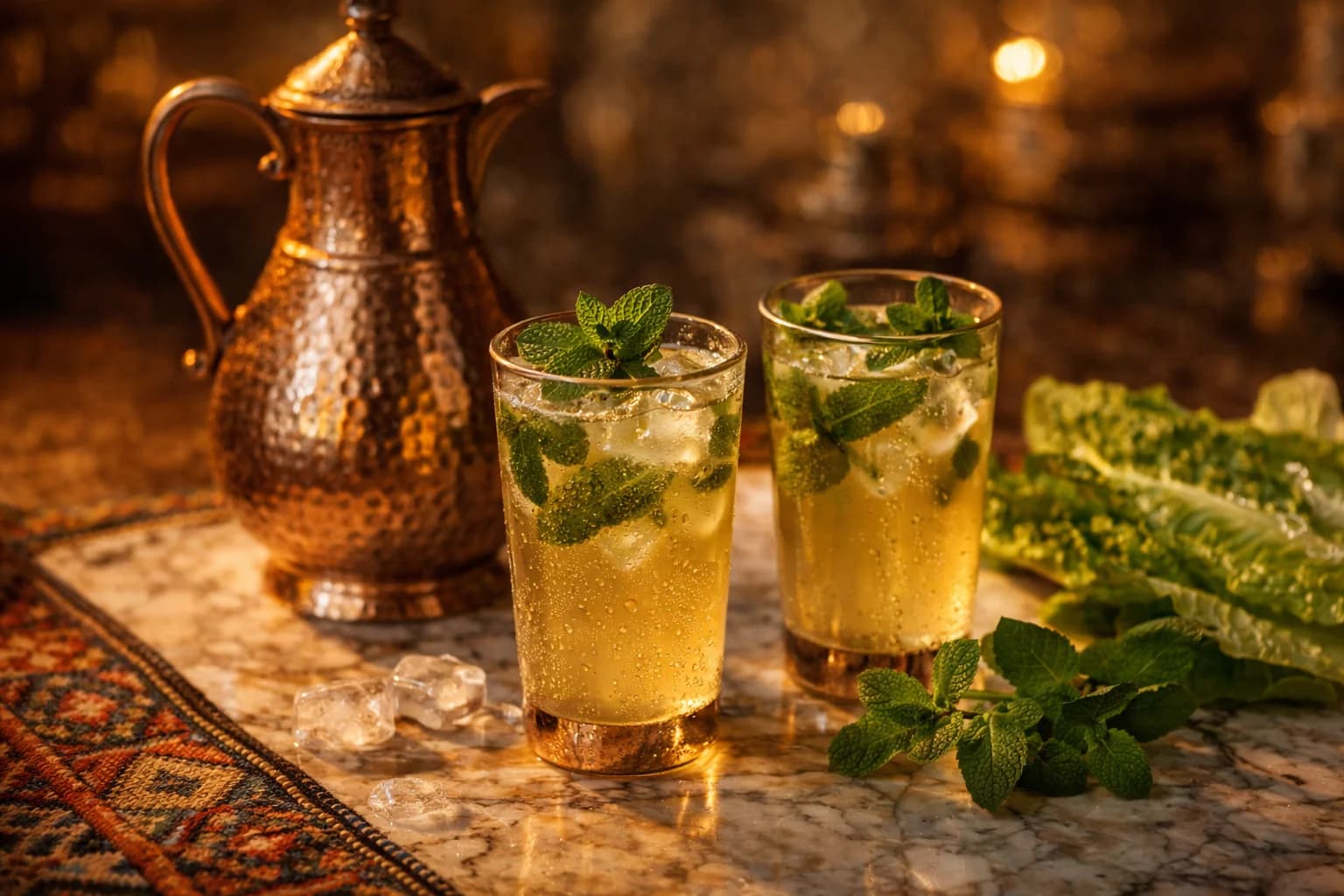
Sharbat Sekanjabin (Persian Mint and Vinegar Syrup)

Sharbat Sekanjabin (Persian Mint and Vinegar Syrup)

An ancient Persian elixir dating back over 2,000 years—a concentrated syrup of honey (or sugar), vinegar, and fresh mint that's diluted with cold water to create one of the world's most refreshing drinks. The name comes from 'serke' (vinegar) and 'anjabin' (honey), revealing its original ingredients. This sweet-sour-minty drink was prized in ancient Persia as both refreshment and medicine, believed to aid digestion, cool the body, and restore balance. Today, sekanjabin remains beloved, especially during Nowruz when it's served with crispy romaine lettuce leaves for dipping—a tradition as old as Persian civilization itself.

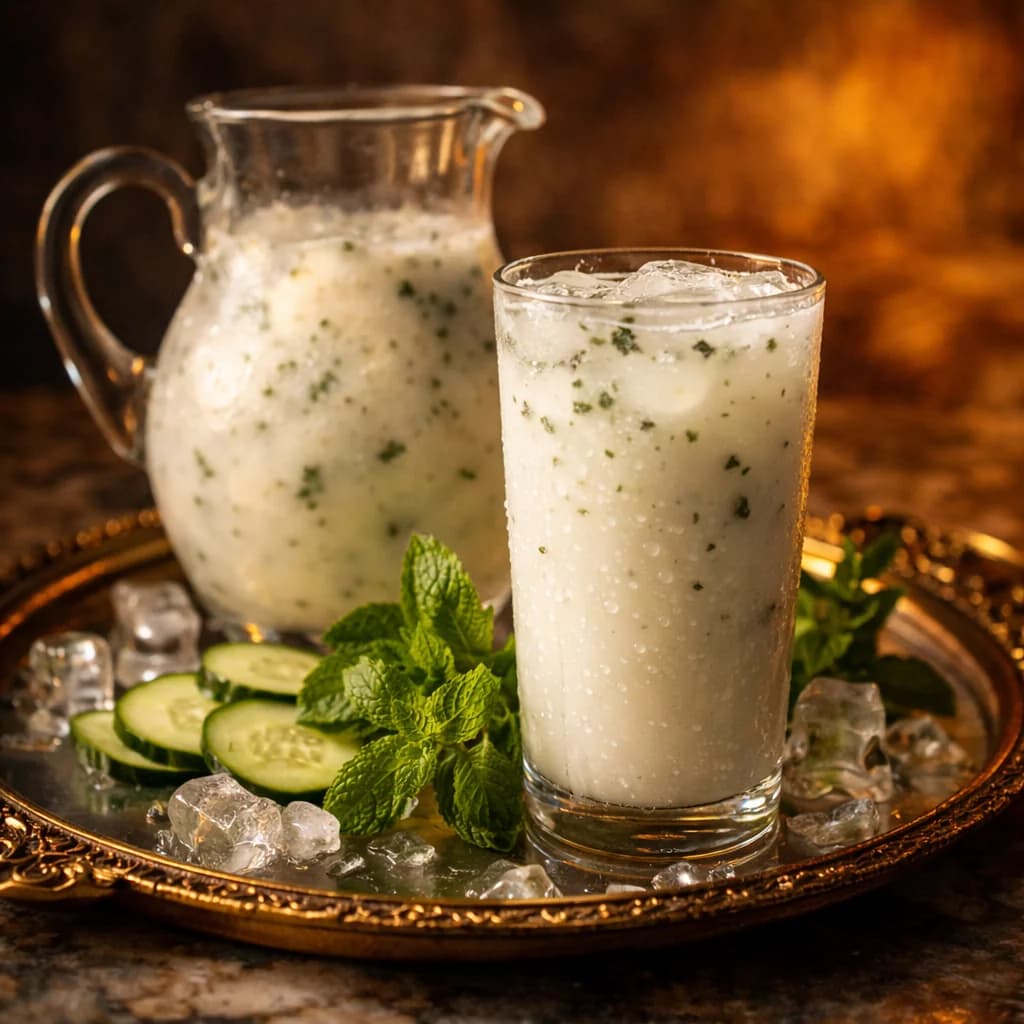
Doogh (Persian Yogurt Drink)

Doogh (Persian Yogurt Drink)

The quintessential Persian beverage—a refreshing, tangy, effervescent drink of yogurt, water, salt, and dried mint that accompanies nearly every Persian meal. Doogh is the perfect counterpoint to rich, flavorful Persian cuisine: its cool tanginess cuts through the richness of kebabs, its salt replenishes what's lost in summer heat, and its probiotics aid digestion. Whether homemade or from one of Iran's beloved commercial brands, doogh is as essential to the Persian table as bread itself. The slight fizz of traditionally fermented doogh or modern carbonated versions adds an extra dimension of refreshment.