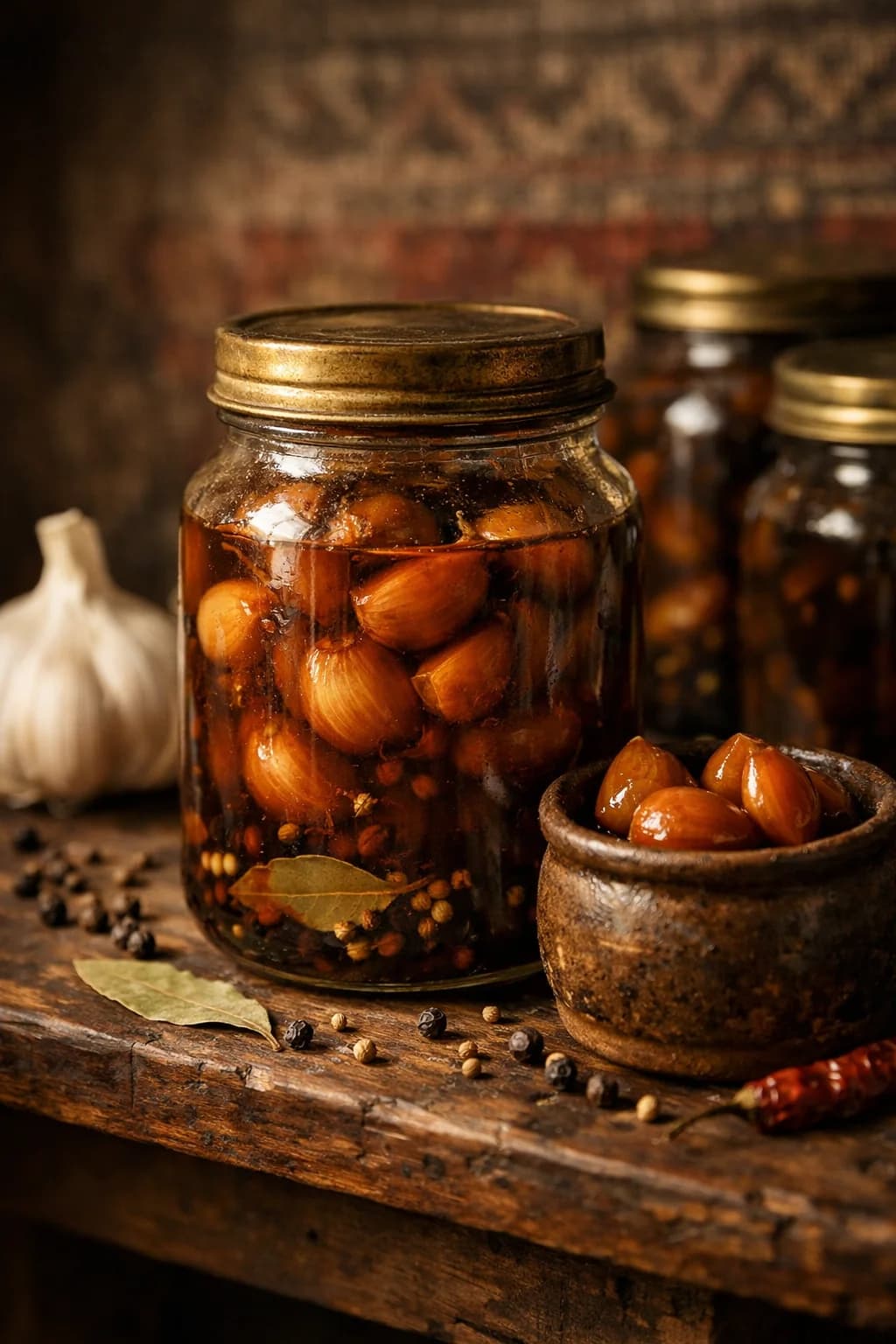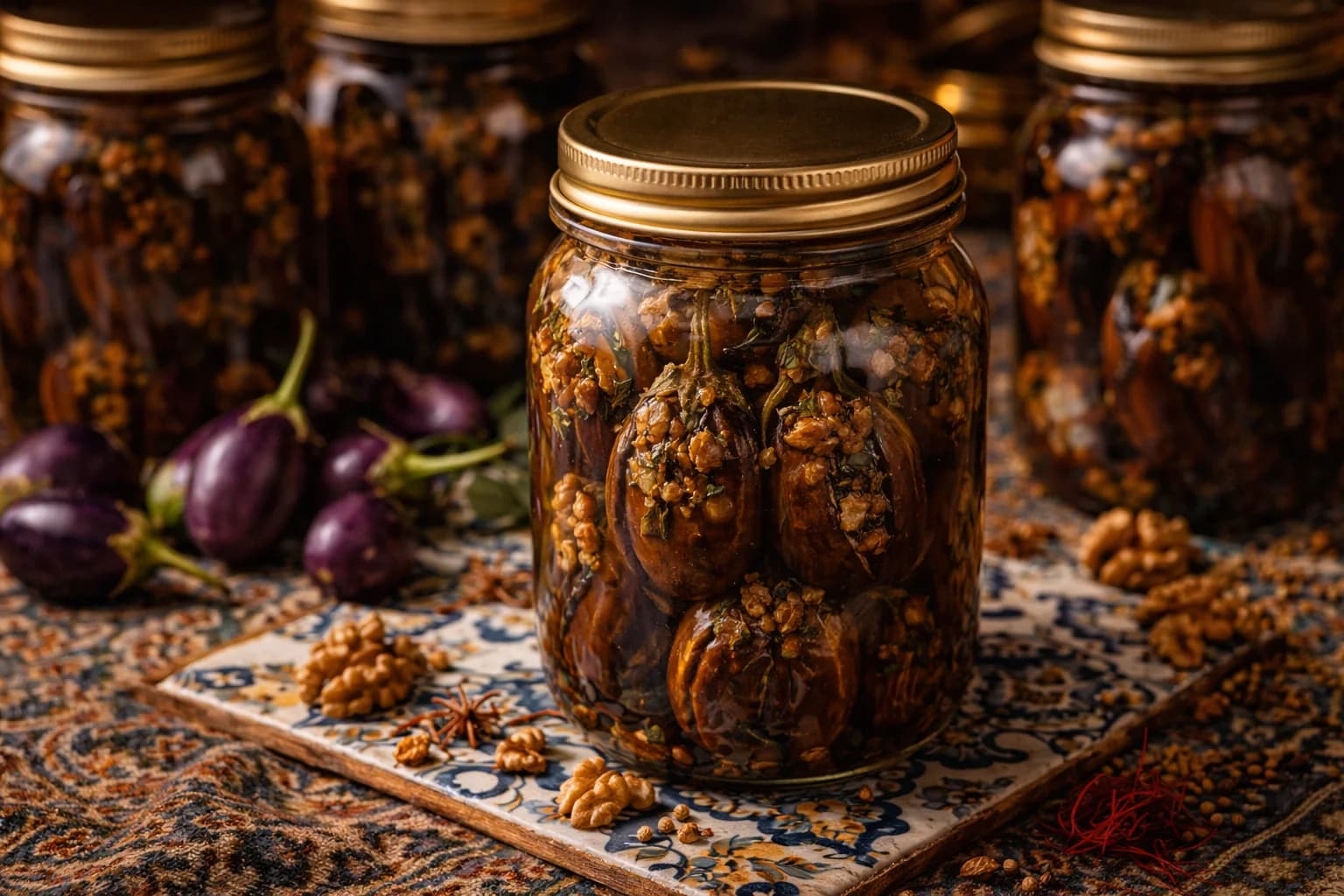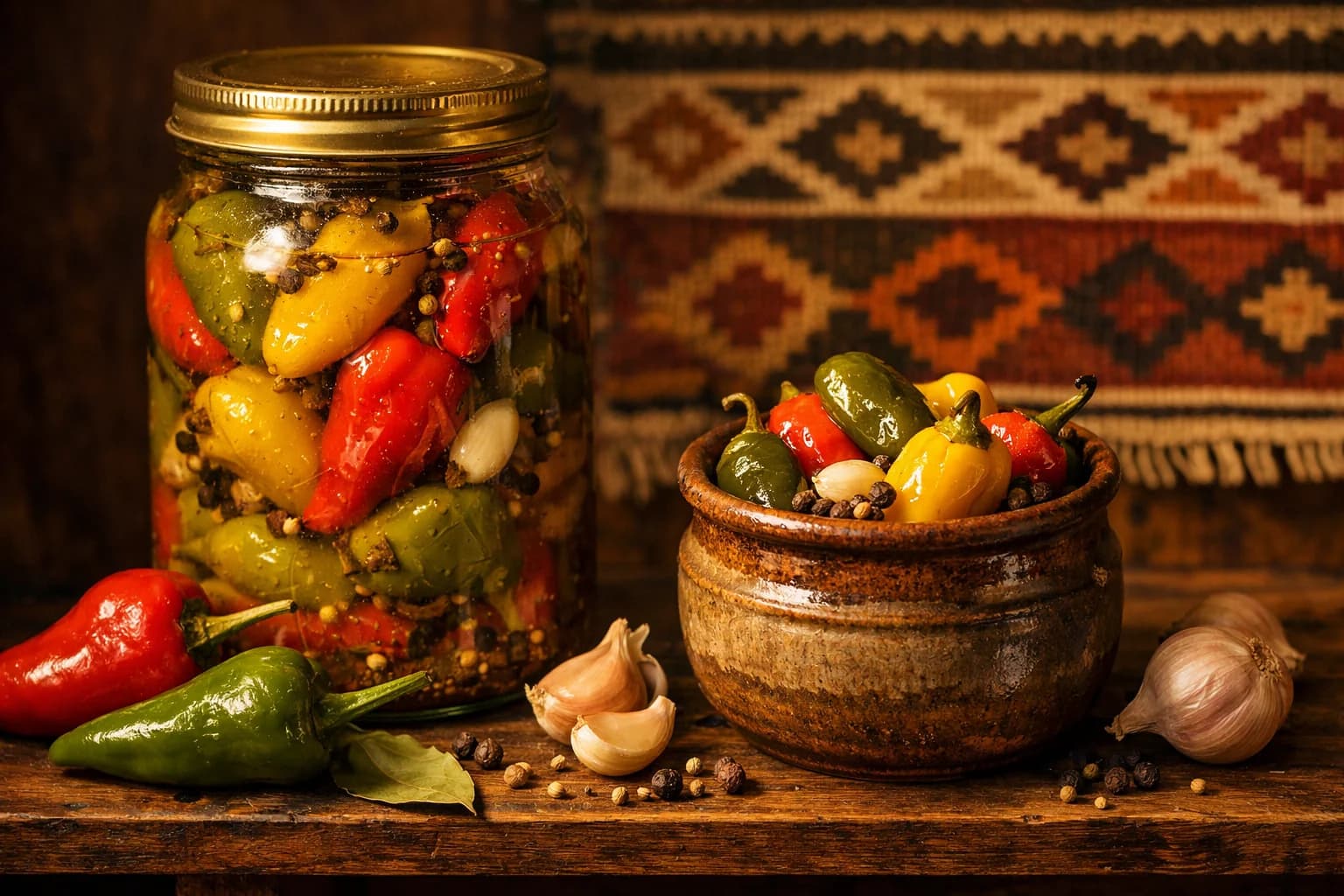

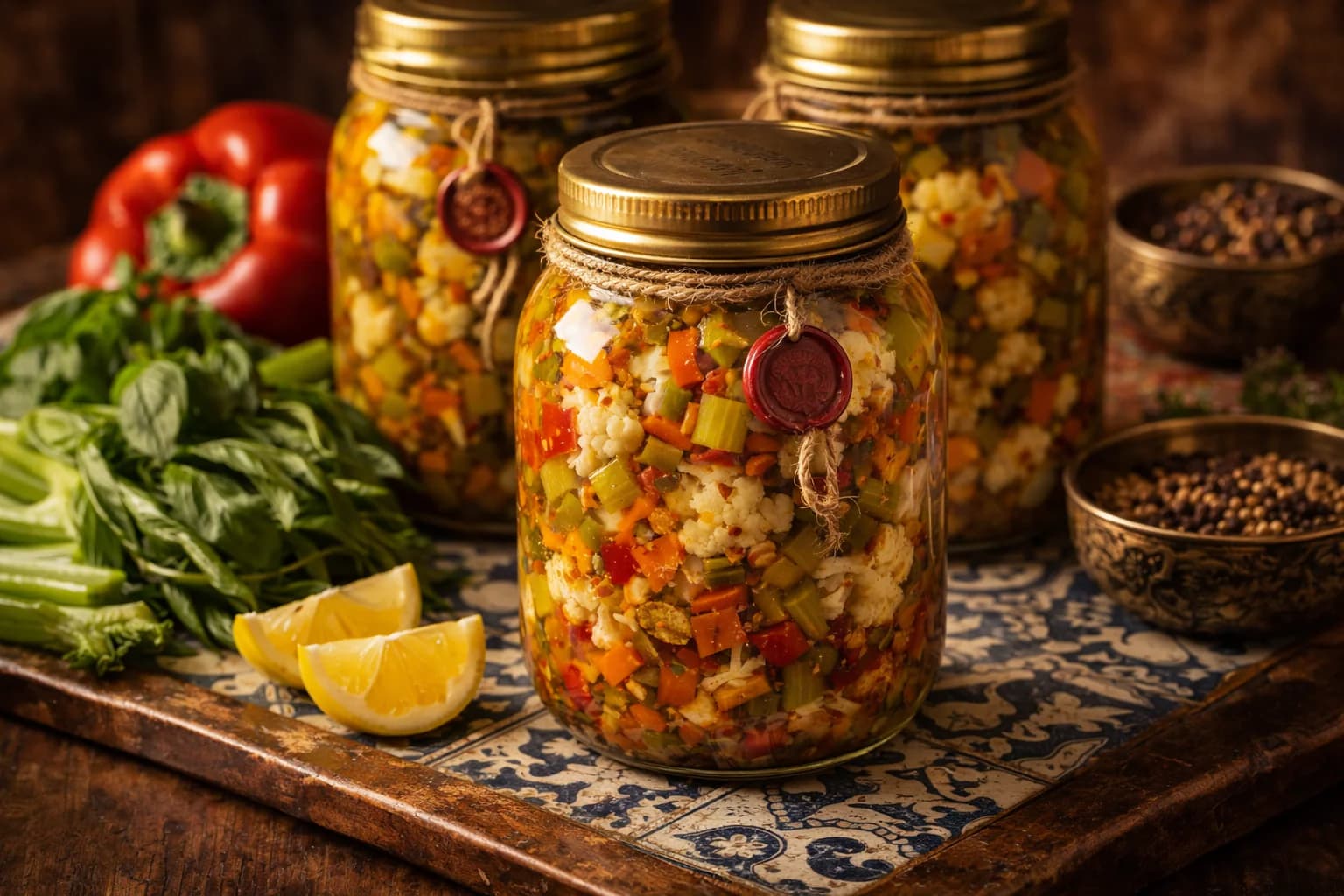
Moments Critiques
- •Sécher minutieusement tous les légumes (pas d'eau !)
- •Blanchir brièvement les légumes durs (encore fermes)
- •Immersion complète dans le vinaigre
- •Utiliser du vinaigre à au moins 5 % d'acidité
- •Stockage frais et sombre pour la maturation
Saler l'aubergine
Couper l'aubergine en dés. Placer dans une passoire, saupoudrer de sel et mélanger, puis laisser égoutter 30 minutes. Cela retire l'amertume et l'excès d'humidité. Rincer brièvement et sécher en tamponnant.
Préparer tous les légumes
Couper le chou-fleur en petits bouquets. Peler les carottes et couper en petits morceaux ou bâtonnets. Trancher le céleri en morceaux. Couper les poivrons en morceaux. Parer les haricots verts et les couper. Peler le navet et couper en petits morceaux. Tous les morceaux doivent être à peu près de taille uniforme pour un marinage régulier.
Étape Critique
Une taille uniforme assure que tous les légumes marinent au même rythme. Trop gros, ils ne marineront pas à cœur ; trop petits, ils deviendront pâteux.
Blanchir les légumes durs
Porter une grande marmite d'eau salée à ébullition. Blanchir les légumes les plus durs (chou-fleur, carottes, haricots verts, navet) — juste jusqu'à légèrement ramollis mais encore très fermes (ils continueront de ramollir dans le vinaigre). Égoutter immédiatement et étaler sur un torchon propre pour refroidir et sécher complètement.
Étape Critique
Le blanchiment supprime l'activité enzymatique qui peut causer des saveurs indésirables et ramollit les légumes juste assez pour que le vinaigre pénètre. Un blanchiment excessif donne un torshi pâteux. Les légumes doivent être encore assez fermes.
Sécher minutieusement les légumes
Étaler tous les légumes (blanchis et crus) sur des torchons propres. Laisser sécher à l'air au moins 30 minutes, ou bien sécher en tamponnant. Les légumes doivent être complètement secs avant la mise en bocal — toute eau dilue le vinaigre et peut causer la détérioration.
Étape Critique
L'eau est l'ennemi d'un marinage réussi. L'humidité piégée dans le bocal dilue l'acidité du vinaigre et peut permettre la croissance de moisissures ou bactéries. La patience ici assure un torshi durable.
Préparer les aromates et épices
Peler les gousses d'ail et les laisser entières ou couper les grosses en deux. Hacher grossièrement les herbes fraîches. Dans un petit bol, combiner le golpar, la nigelle, les graines de coriandre, les grains de poivre, les feuilles de fenugrec séchées (si utilisées) et le curcuma (si utilisé). Écraser légèrement les graines de coriandre.
Disposer les légumes en couches dans les bocaux
Dans des bocaux en verre propres et stérilisés, disposer les légumes en couches en intercalant avec les gousses d'ail et les herbes fraîches, et en saupoudrant du mélange d'épices entre les couches. Tasser fermement sans écraser. Laisser environ 3 cm d'espace en haut de chaque bocal.
Étape Critique
La disposition en couches distribue les saveurs uniformément. Un tassement ferme empêche les légumes de flotter au-dessus du vinaigre (les légumes exposés peuvent moisir). L'espace en haut permet l'expansion.
Ajouter le sel et le vinaigre
Répartir le sel restant entre les bocaux en le saupoudrant sur la couche supérieure. Verser le vinaigre sur les légumes, en s'assurant de les couvrir complètement d'au moins 2 cm. Presser les légumes pour libérer les bulles d'air. Tous les légumes doivent être immergés.
Étape Critique
L'immersion complète est indispensable — tout légume au-dessus de la ligne de vinaigre peut moisir. L'acidité du vinaigre (minimum 5 %) est ce qui conserve les légumes et empêche la détérioration.
Erreurs Courantes
- •Ne pas utiliser assez de vinaigre (légumes non couverts)
- •Utiliser du vinaigre à moins de 5 % d'acidité (ne conserve pas correctement)
Sceller et stocker
Essuyer les bords des bocaux avec un torchon sec. Fermer hermétiquement. Conserver dans un endroit frais et sombre (garde-manger, cave ou placard sombre). Le torshi sera prêt à manger en 3-4 semaines mais s'améliore considérablement avec l'âge — 6 mois à un an est idéal.
Étape Critique
Un stockage frais et sombre est indispensable pour une maturation correcte et la préservation des couleurs. La lumière peut dégrader couleurs et saveurs. Le torshi a besoin de temps pour se développer — la précipitation donne un produit inférieur.
Laisser mûrir et servir
Laisser le torshi mûrir au moins 3-4 semaines avant ouverture. Pour la meilleure saveur, attendre 2-3 mois ou plus — un torshi bien fait s'améliore jusqu'à un an. Une fois ouvert, réfrigérer. Servir comme condiment aux côtés du riz, des ragoûts, des kebabs et de tout repas persan.
Repos Requis
30240 min - Minimum 3-4 semaines de maturation ; meilleur à 2-3+ mois pour un développement complet des saveurs