
Critical Moments
- •Rinsing barley to remove excess starch
- •Cooking barley and legumes until fully tender
- •Achieving proper pottage consistency
- •Frying onions until truly crispy
Soak the legumes
If using dried chickpeas and white beans, place them in separate bowls and cover with cold water by at least 8cm. Soak for at least 1 hour, preferably overnight. Rinse and drain before using.
Soak the legumes
If using dried chickpeas and white beans, place them in separate bowls and cover with cold water by at least 8cm. Soak for at least 1 hour, preferably overnight. Rinse and drain before using.
Rinse the barley
Place pearl barley in a fine-mesh strainer and rinse under cold water for 1-2 minutes, stirring with your hand. This removes excess starch and prevents the soup from becoming gluey.
Rinse the barley
Place pearl barley in a fine-mesh strainer and rinse under cold water for 1-2 minutes, stirring with your hand. This removes excess starch and prevents the soup from becoming gluey.
Chop the herbs
Wash all herbs thoroughly. Finely chop the parsley, cilantro, chives, and dill. Roughly chop the spinach. Keep herbs together—they'll be added at the same time.
Chop the herbs
Wash all herbs thoroughly. Finely chop the parsley, cilantro, chives, and dill. Roughly chop the spinach. Keep herbs together—they'll be added at the same time.
Sauté the aromatics
Heat 45ml oil in a large stockpot over medium heat. Add the diced onion and sauté for 8-10 minutes until golden. Add garlic, turmeric, and cumin (if using). Stir for 1 minute until fragrant.
Sauté the aromatics
Heat 45ml oil in a large stockpot over medium heat. Add the diced onion and sauté for 8-10 minutes until golden. Add garlic, turmeric, and cumin (if using). Stir for 1 minute until fragrant.
Add barley, legumes, and liquid
Add the rinsed barley, drained chickpeas, white beans (if using), and lentils to the pot. Add 2500ml water or stock. Bring to a boil, then reduce to a gentle simmer. Skim any foam that rises to the surface.
Add barley, legumes, and liquid
Add the rinsed barley, drained chickpeas, white beans (if using), and lentils to the pot. Add 2500ml water or stock. Bring to a boil, then reduce to a gentle simmer. Skim any foam that rises to the surface.
Simmer until barley and legumes are tender
Simmer uncovered for 50-60 minutes until the barley is tender and the chickpeas are cooked through. Stir occasionally to prevent sticking. Add more water if needed—the soup should remain somewhat brothy at this stage. Season with salt halfway through.
Critical Step
The barley and chickpeas must be fully tender before adding herbs. Undercooked barley is unpleasantly chewy. Test by eating a few grains—they should be tender throughout with a pleasant chew.
Simmer until barley and legumes are tender
Simmer uncovered for 50-60 minutes until the barley is tender and the chickpeas are cooked through. Stir occasionally to prevent sticking. Add more water if needed—the soup should remain somewhat brothy at this stage. Season with salt halfway through.
Critical Step
The barley and chickpeas must be fully tender before adding herbs. Undercooked barley is unpleasantly chewy. Test by eating a few grains—they should be tender throughout with a pleasant chew.
Add the herbs
Add all the chopped herbs to the pot. Stir well to incorporate. The soup will become green. Continue simmering for 20-25 minutes, allowing the herbs to cook down and meld with the soup.
Add the herbs
Add all the chopped herbs to the pot. Stir well to incorporate. The soup will become green. Continue simmering for 20-25 minutes, allowing the herbs to cook down and meld with the soup.
Adjust consistency and seasoning
The soup should be thick like a pottage but still spoonable—thicker than a brothy soup but not gluey. Add water to thin if needed. Taste and adjust salt generously—the soup needs assertive seasoning. Add pepper.
Adjust consistency and seasoning
The soup should be thick like a pottage but still spoonable—thicker than a brothy soup but not gluey. Add water to thin if needed. Taste and adjust salt generously—the soup needs assertive seasoning. Add pepper.
Fry the onion topping
Heat 45ml oil in a large skillet over medium-high heat. Add the 2 thinly sliced onions. Fry, stirring frequently, for 15-18 minutes until deeply golden brown and crispy. Remove to paper towels and season with a pinch of salt.
Fry the onion topping
Heat 45ml oil in a large skillet over medium-high heat. Add the 2 thinly sliced onions. Fry, stirring frequently, for 15-18 minutes until deeply golden brown and crispy. Remove to paper towels and season with a pinch of salt.
Fry the mint in butter
Melt butter in a small skillet over medium heat. When foaming subsides, add the dried mint. Swirl for 30-45 seconds until fragrant. Remove from heat immediately—mint burns quickly.
Fry the mint in butter
Melt butter in a small skillet over medium heat. When foaming subsides, add the dried mint. Swirl for 30-45 seconds until fragrant. Remove from heat immediately—mint burns quickly.
Serve with traditional toppings
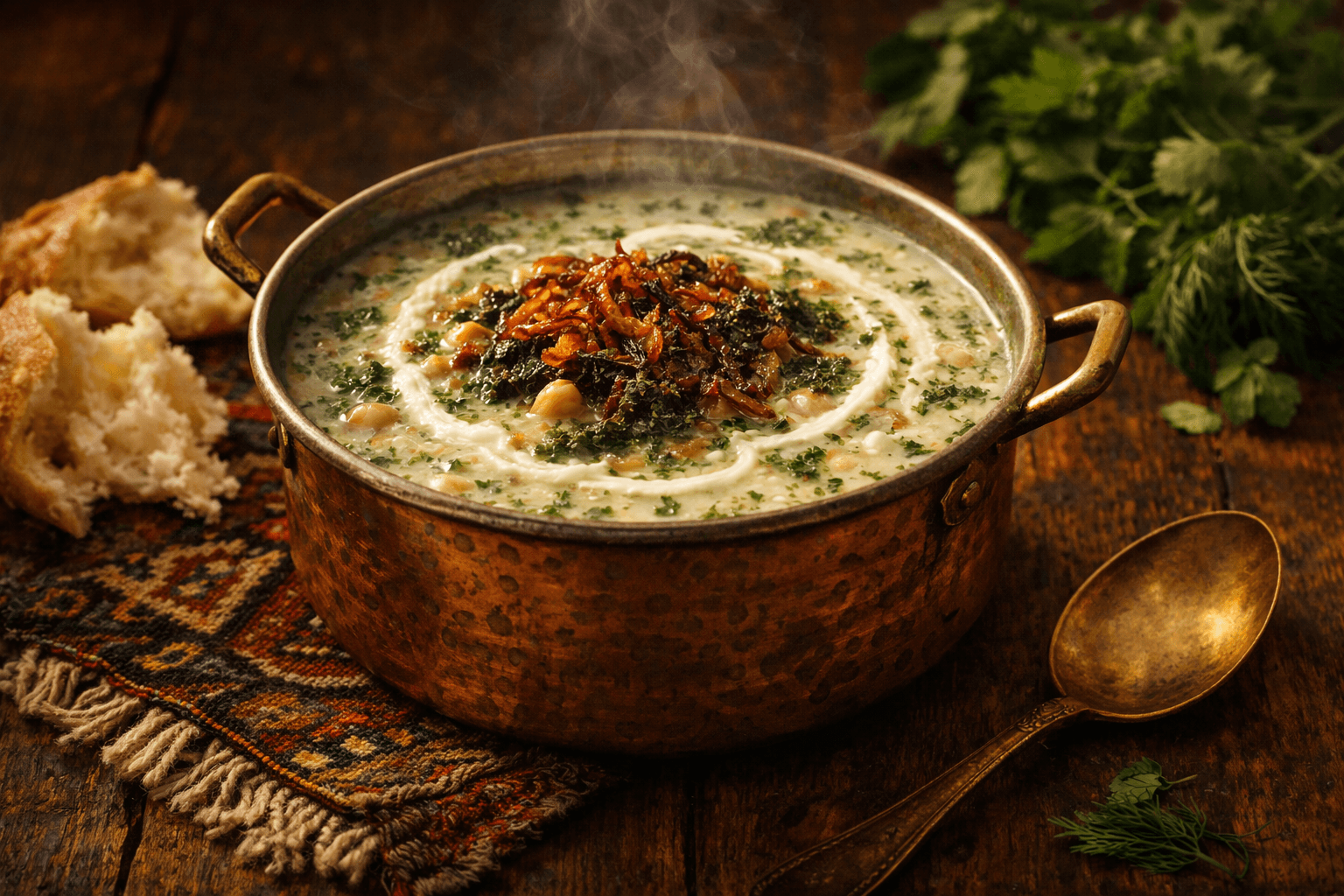
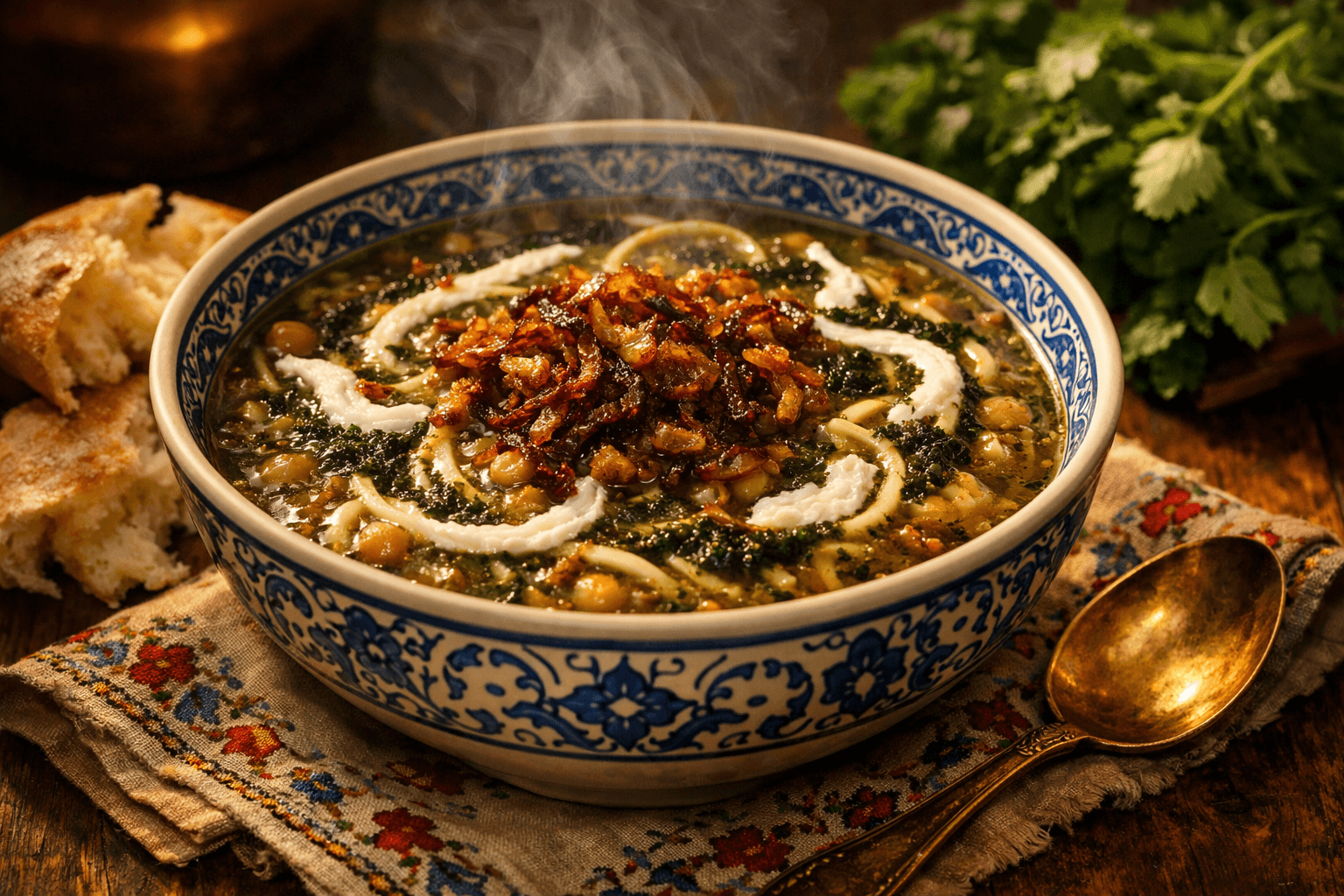
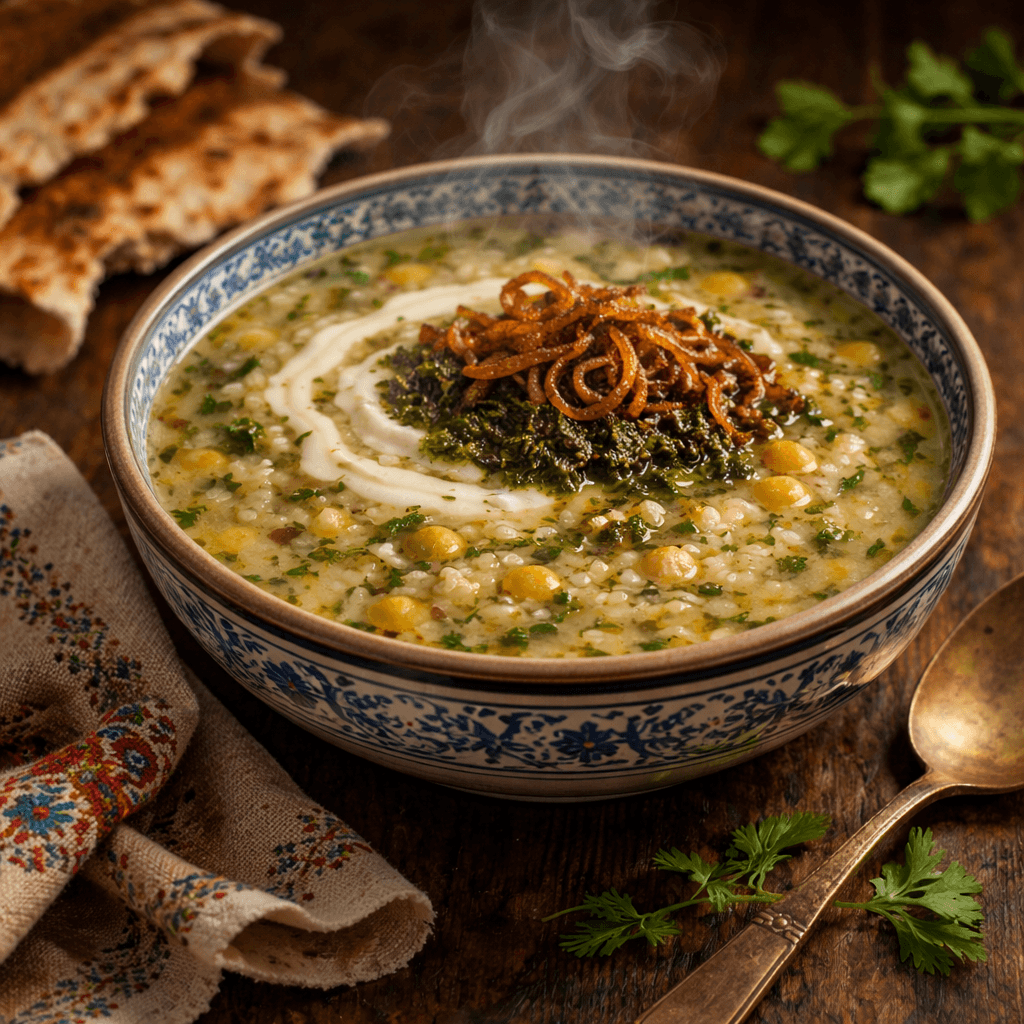
Ladle the hot soup into wide bowls. For each bowl: drizzle kashk in a decorative swirl pattern, add a generous mound of crispy fried onions in the center, and drizzle the mint butter over everything. Serve immediately with bread.
Serve with traditional toppings
Ladle the hot soup into wide bowls. For each bowl: drizzle kashk in a decorative swirl pattern, add a generous mound of crispy fried onions in the center, and drizzle the mint butter over everything. Serve immediately with bread.