
Kritische Momente
- •Safran richtig aufblühen lassen
- •Mehl bis zu tiefem Goldbraun rösten (nicht zu wenig oder zu viel)
- •Sirup warm halten, bevor er hinzugefügt wird
- •Während des gesamten Prozesses ständig rühren
- •Nach dem Sirup auf die richtige Konsistenz kochen
Safran aufblühen lassen
Die Safranfäden mit einer Prise Zucker im Mörser mahlen, bis sie zu Pulver werden. In eine kleine Schüssel geben, heißes Wasser hinzufügen und mindestens 15 Minuten ziehen lassen. Die Flüssigkeit sollte tief orange-golden sein.
Kritischer Schritt
Richtiges Aufblühen des Safrans extrahiert maximale Farbe und Geschmack. Das verleiht der Halva ihre goldene Farbe und ihr charakteristisches Aroma.
Zuckersirup herstellen
In einem mittelgroßen Topf Zucker und Wasser verrühren. Bei mittlerer Hitze rühren, bis sich der Zucker vollständig aufgelöst hat. Aufkochen, dann Hitze reduzieren und 5 Minuten ohne Rühren köcheln lassen. Vom Herd nehmen und Rosenwasser einrühren. Beiseite stellen.
Mehl in Butter rösten
In einer großen schweren Pfanne oder einem breiten Topf die Butter bei mittlerer Hitze schmelzen. Das Mehl auf einmal hinzufügen und sofort umrühren, um es zu verbinden. Bei mittlerer bis mittelniedrigerer Hitze unter ständigem Rühren mit einem Holzlöffel 25–35 Minuten kochen. Die Mischung durchläuft Phasen: blass und pastös → beige → golden → tief goldbraun. Man möchte ein reiches Goldbraun mit tiefem Nussaroma.
Kritischer Schritt
Das ist das Herzstück der Halvazubereitung. Das Mehl muss lange genug rösten, um tiefen Nussgeschmack zu entwickeln und den rohen Geschmack zu eliminieren. Zu kurz = pastöser, roher Geschmack. Zu lang = verbrannt und bitter. Ständiges Rühren verhindert heiße Stellen und Verbrennen.
Häufige Fehler
- •Zu hohe Hitze (verbrennt, bevor es durchgegart ist)
- •Nicht ständig rühren (ungleichmäßiges Garen, Verbrennen)
- •Zu früh aufhören (roher Mehlgeschmack)
- •Zu dunkel werden lassen (bitterer Geschmack)
Safran und Kardamom hinzufügen
Wenn das Mehl die richtige goldbraune Farbe erreicht hat, Hitze auf niedrig reduzieren. Den aufgeblühten Safran (einschließlich der gesamten Flüssigkeit) und gemahlenen Kardamom hinzufügen. Gut umrühren, um den Safran gleichmäßig zu verteilen – die Mischung nimmt eine wunderschöne goldene Farbe mit Orangetönen an.
Den Sirup hinzufügen
Den warmen Rosenwassersirup vorsichtig in die Mehlmischung gießen und dabei ständig rühren. Die Mischung wird kräftig blubbern und dampfen – auf Spritzer achten. Bei niedriger Hitze 5–8 Minuten weiterrühren, während der Sirup absorbiert wird. Die Halva wird sich zu einer dicken, glänzenden Masse zusammenfügen, die sich von den Seiten der Pfanne löst.
Kritischer Schritt
Der Sirup muss vollständig absorbiert werden und die Halva zur richtigen Konsistenz gekocht werden. Zu feucht = hält Form nicht. Zu trocken = bröckelig. Sie sollte dick und löffelbar sein und sich sauber von der Pfanne lösen.
Häufige Fehler
- •Kalter Sirup (stockt und wird klumpig)
- •Beim Hinzufügen des Sirups nicht rühren (Klumpen entstehen)
- •Nach dem Sirup zu wenig kochen (zu feucht)
- •Zu lange kochen (zu trocken und bröckelig)
Formen und dekorieren
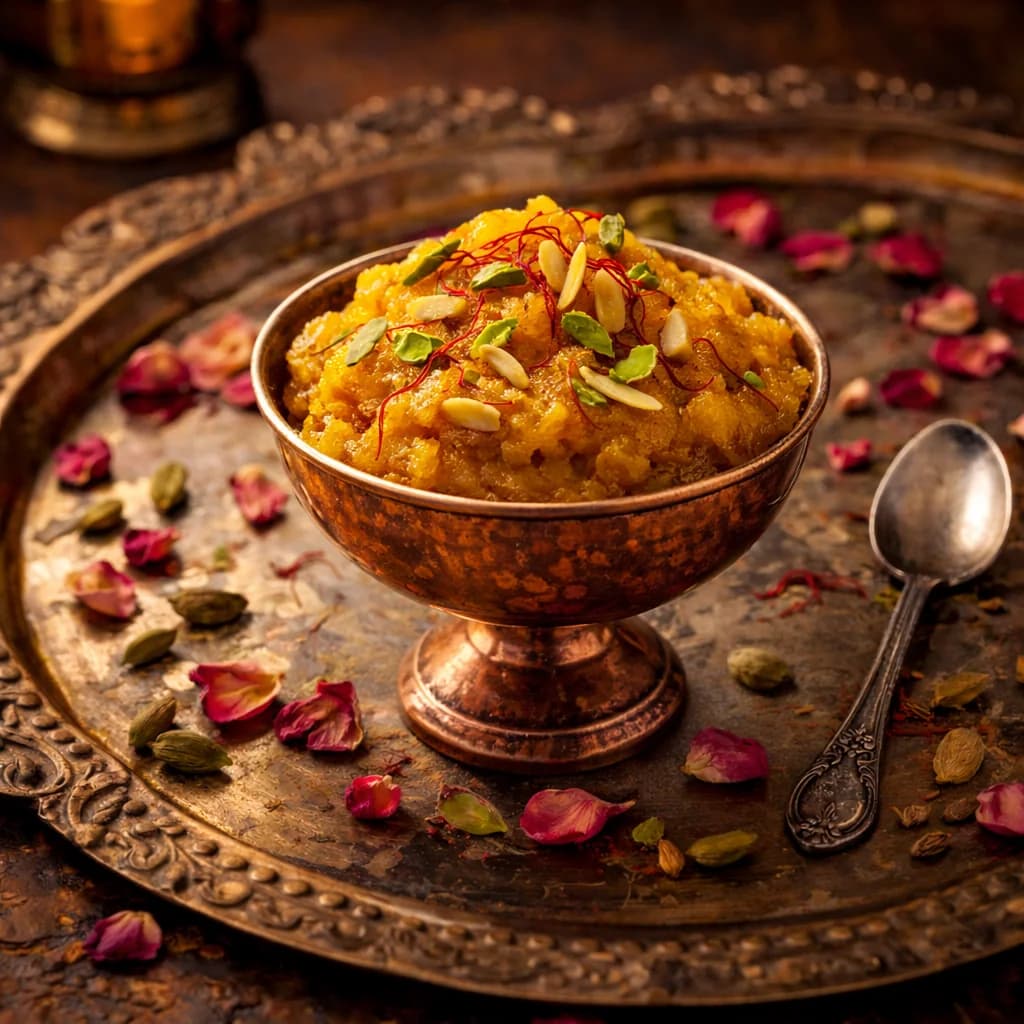
Die heiße Halva auf eine Servierplatte übertragen, in der Mitte anhäufen oder in einer gleichmäßigen Schicht verteilen. Noch warm mit dem Rücken eines in Wasser getauchten Löffels die Oberfläche glätten. Mit Mandelblättchen und Pistazien dekorieren und sie sanft in die Oberfläche drücken. Rosenblütenblätter verstreuen, falls verwendet.
Abkühlen und servieren
Die Halva auf Raumtemperatur abkühlen lassen – etwa 1 Stunde. Sie wird fester, bleibt aber weich und löffelbar. In Rauten oder Stücke schneiden oder mit einem Löffel schöpfen. Halva kann bei Raumtemperatur oder leicht warm serviert werden.
Ruhezeit Erforderlich
60 Min - Halva muss abkühlen und setzen; bleibt weich, aber schneidbar