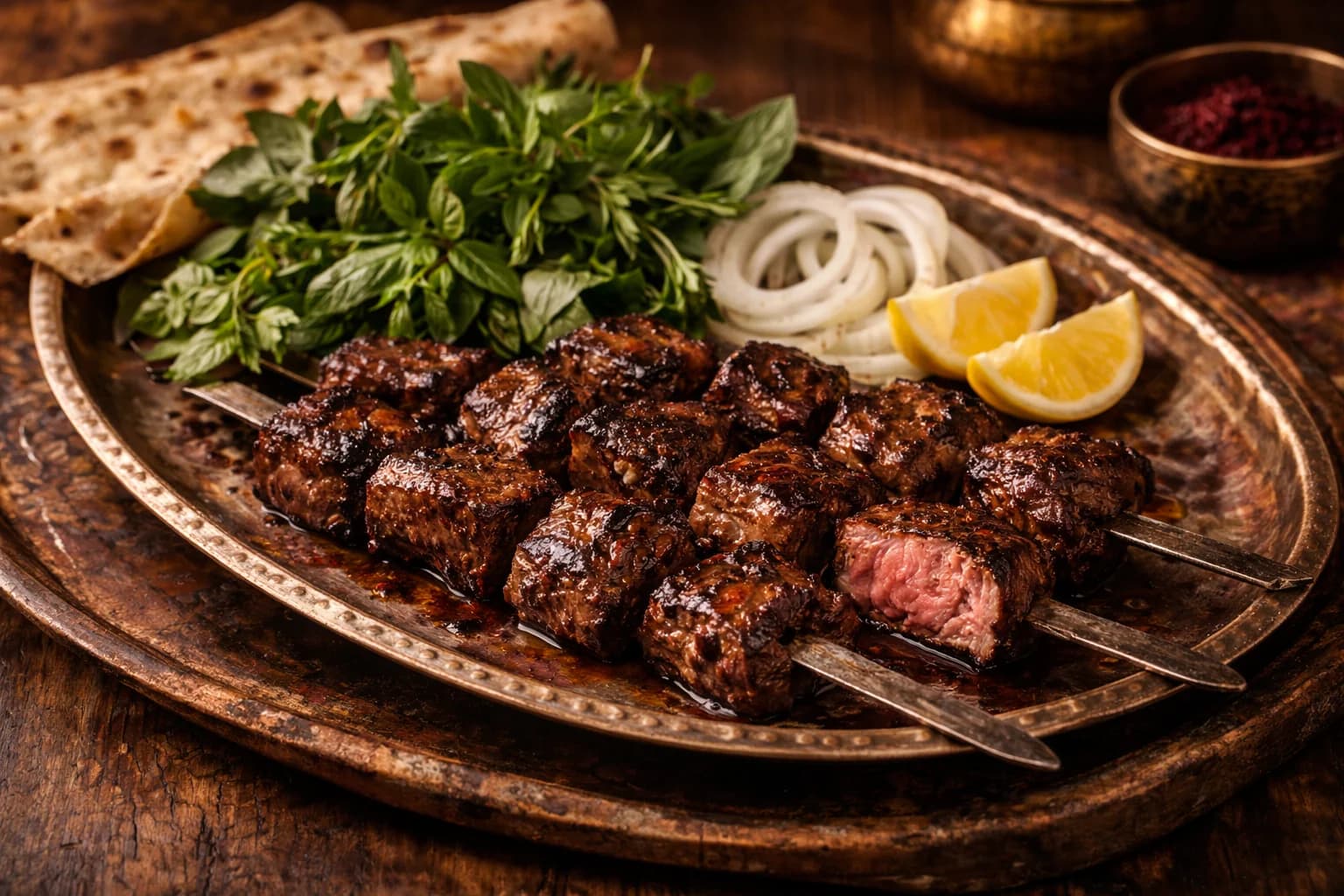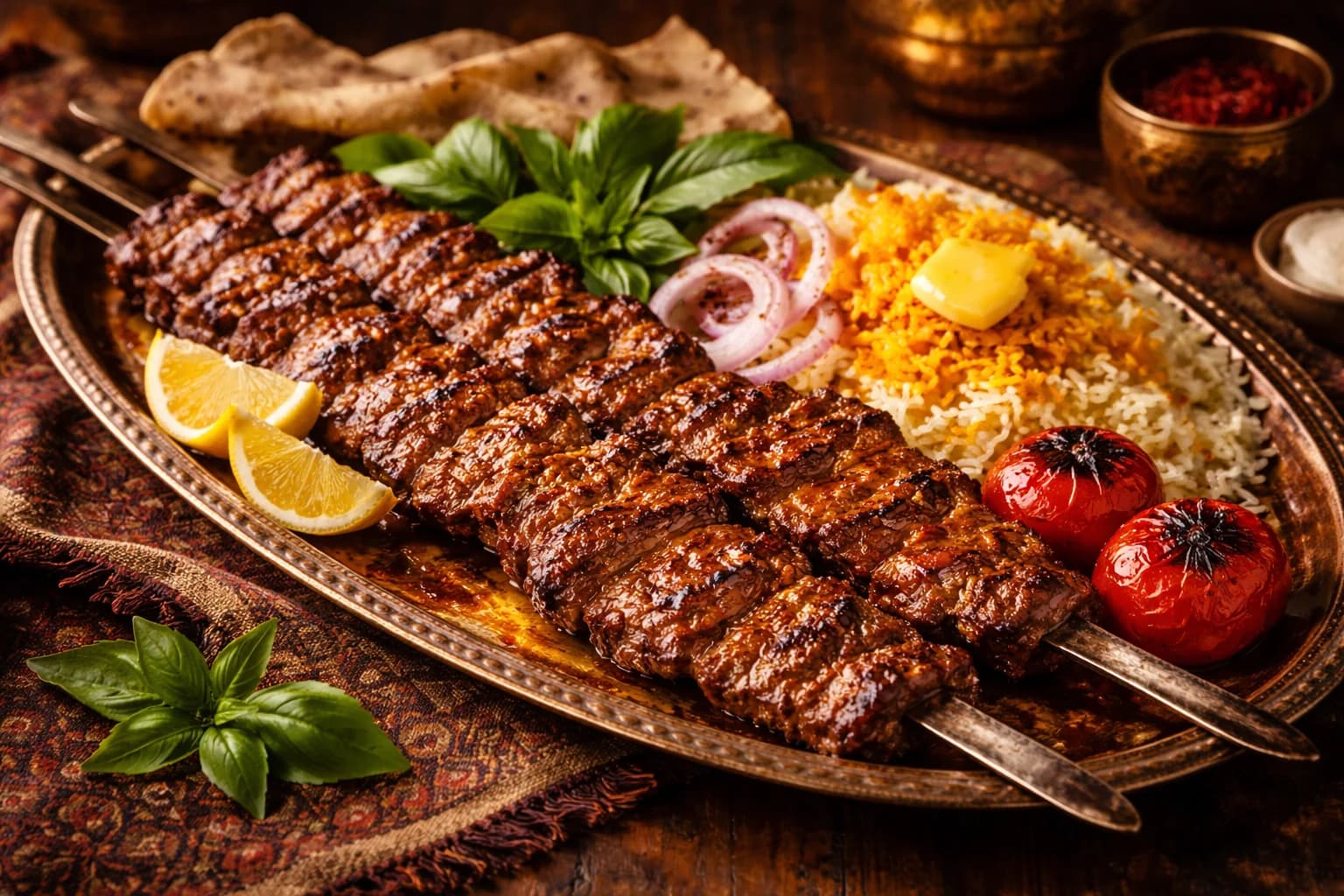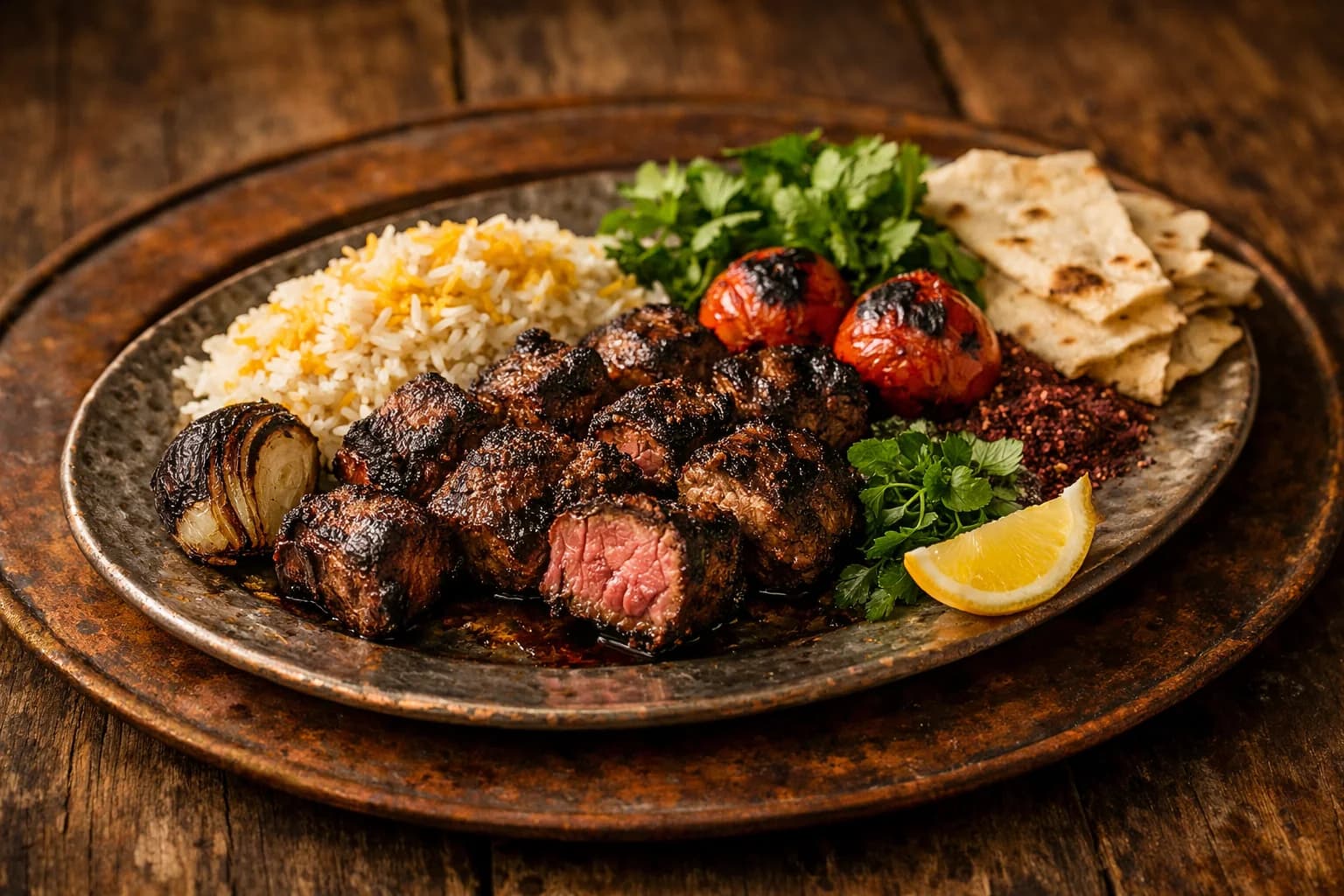

Kritische Momente
- •Frisch gewolftes Fleisch mit 20% Fett
- •Zwiebel vollständig trocken ausdrücken
- •8–10 Minuten kneten, bis klebrig und pastenähnlich
- •Fleischmischung mindestens 2 Stunden ruhen lassen
- •Sehr heißer Grill
- •Richtiges Formen auf flachen Spießen ohne Lufteinschlüsse
Das Fleisch auswählen und vorbereiten
Für beste Ergebnisse mit ganzen Stücken beginnen: Lammschulter und Rinderschulter. In Stücke schneiden und zu Hause mit einem Fleischwolf mit mittlerer Scheibe (6 mm) wolfen. Für eine seidigere Textur zweimal wolfen. Alternativ den Metzger bitten, frisches Fleisch mit 20% Fettgehalt zu wolfen. Das Fleisch sollte sehr kalt, aber nicht gefroren sein.
Kritischer Schritt
Frisches Wolfen ist der größte Einzelfaktor bei der Koobideh-Qualität. Supermarkt-Hackfleisch ist oft zu mager und zu alt, was trockene, krümelige Kebabs ergibt. Der Fettgehalt (20%) ist unerlässlich für Saftigkeit und dafür, dass das Fleisch am Spieß haftet.
Häufige Fehler
- •Bereits gemahlenes Fleisch verwenden (zu trocken, haftet nicht)
- •Fleisch zu mager (krümelige, trockene Kebabs)
- •Fleisch nicht kalt genug (Fett verschmiert, bindet nicht)
Die geriebene Zwiebel vorbereiten
Die Zwiebel schälen und auf der feinen Seite einer Kastenreibe reiben. Die geriebene Zwiebel in ein feines Sieb oder ein Mulltuch legen und so viel Flüssigkeit wie möglich ausdrücken – das ist entscheidend. Mindestens 60 ml Flüssigkeit sollten extrahiert werden. Die Zwiebel sollte fast trocken sein.
Kritischer Schritt
Überschüssige Zwiebelflüssigkeit ist die häufigste Ursache dafür, dass Koobideh von den Spießen fällt. Die Flüssigkeit verhindert, dass die Fleischproteine richtig binden. Gründliches Ausdrücken der Zwiebel ist unverzichtbar.
Häufige Fehler
- •Nicht genug ausdrücken (Fleisch haftet nicht an Spießen)
- •Hacken statt reiben (ungleichmäßige Verteilung)
- •Zu viel Zwiebel (überwältigt den Fleischgeschmack)
Safran aufblühen lassen
Safranfäden mit einer Prise Zucker im Mörser mahlen. Heißes Wasser zugeben und mindestens 20 Minuten ziehen lassen. Dies wird mit geschmolzener Butter für das Bestreichen vermischt.
Die Fleischmischung kombinieren und kneten
In einer großen Schüssel das Hackfleisch, die ausgedrückte Zwiebel, Salz, Pfeffer, Kurkuma (falls verwendet), Sumach (falls verwendet) und Natron (falls verwendet) mischen. Gründlich mit den Händen verrühren. Dann beginnen zu kneten: das Fleisch über sich selbst falten, fest hineindrücken und wiederholen. Kräftig 8–10 Minuten kneten, bis die Mischung glatt, klebrig und zusammenhängend ist – fast pastenähnlich.
Kritischer Schritt
Das Kneten entwickelt die Fleischproteine (Myosin), die wie Klebstoff wirken, die Mischung binden und dazu bringen, an den Spießen zu haften. Zu wenig geknetetes Fleisch fällt beim Grillen ab. Dies ist die Technik, die dem Koobideh seine seidig-glatte Textur verleiht.
Häufige Fehler
- •Zu wenig kneten (Fleisch fällt von den Spießen)
- •Nicht gleichmäßig mischen (ungleichmäßige Textur)
- •Fleisch zu warm (Fett verschmiert statt zu binden)
Die Fleischmischung ruhen lassen
Die Schüssel mit Frischhaltefolie abdecken und mindestens 2 Stunden, vorzugsweise über Nacht, im Kühlschrank ruhen lassen. Diese Ruhezeit erlaubt den Proteinen, sich weiter zu entwickeln, und macht die Mischung leichter auf Spieße zu formen.
Kritischer Schritt
Das Ruhen lässt das Salz die Proteine weiter abbauen und ermöglicht der Mischung, kalt zu werden und sich zu festigen. Kaltes Fleisch lässt sich viel leichter auf Spieße formen und behält seine Form beim Grillen besser.
Die Safranbuttersauce vorbereiten
Die Butter schmelzen und mit dem aufgebrühten Safranwasser mischen. Warm halten zum Bestreichen während des Grillens.
Den Grill vorbereiten
Den Holzkohlegrill anzünden und die Kohlen abbrennen lassen, bis sie mit weißer Asche bedeckt sind und rot glühen – ca. 30 Minuten. Die Kohlen gleichmäßig verteilen. Der Grill sollte sehr heiß sein. Bei einem Gasgrill 15 Minuten auf höchster Stufe vorheizen. Den Grillrost 5–8 cm über den Kohlen positionieren.
Kritischer Schritt
Koobideh erfordert intensive Hitze, um die Außenseite schnell anzubraten und das Innere saftig zu halten. Unzureichende Hitze bedeutet, dass der Kebab dämpft statt zu rösten, was zu grauem, trockenem Fleisch führt.
Häufige Fehler
- •Grill nicht heiß genug (trockene, graue Kebabs)
- •Kohlen nicht bereit (schwarze Stellen = nicht bereit)
- •Rost zu weit von den Kohlen (brät nicht richtig an)
Die Kebabs auf die Spieße formen
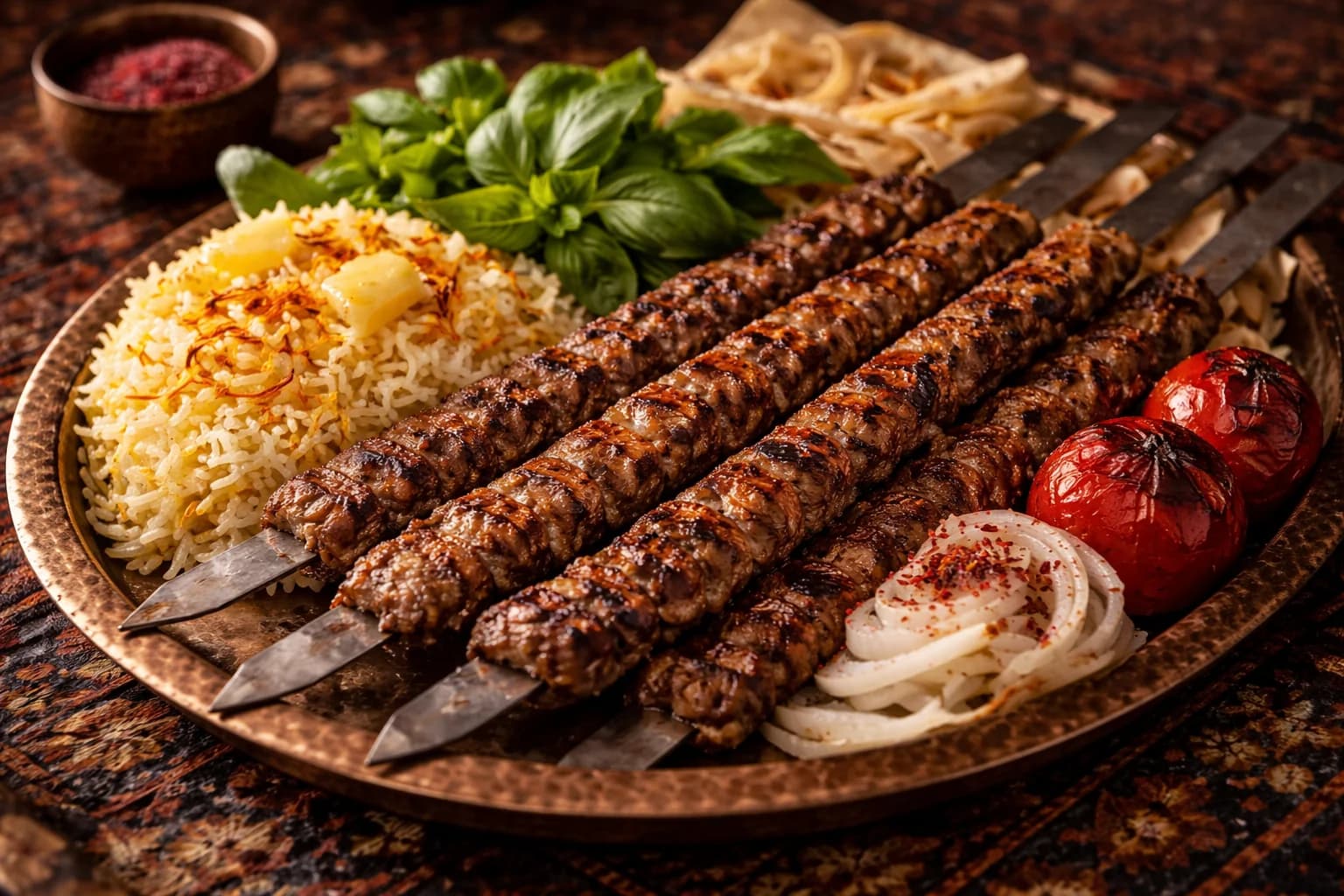
Fleisch aus dem Kühlschrank nehmen. Die flachen Metallspieße leicht einölen. Ca. 100–120 g Fleischmischung nehmen (ungefähr so groß wie ein großes Ei) und zu einer Kugel formen. Die Kugel auf den Spieß drücken und dann mit nassen Händen zu einer langen, flachen ovalen Form von ca. 20 cm Länge, 3 cm Breite und 1,5 cm Dicke formen. Das Fleisch sollte leichte Rillen von den Fingern haben. Sicherstellen, dass das Fleisch fest am Spieß haftet und keine Lufteinschlüsse vorhanden sind.
Kritischer Schritt
Richtiges Formen sorgt für gleichmäßiges Garen und verhindert das Herunterfallen. Flache Spieße (keine runden) sind unerlässlich – runde Spieße lassen das Fleisch rotieren. Gleichmäßige Dicke sorgt für gleichmäßiges Garen. Lufteinschlüsse lassen den Kebab herunterfallen.
Häufige Fehler
- •Runde Spieße verwenden (Fleisch rotiert)
- •Zu dick formen (gart nicht durch)
- •Lufteinschlüsse zwischen Fleisch und Spieß (fällt ab)
- •Fleisch zu warm beim Formen (fällt auseinander)
Die Kebabs grillen
Die Spieße auf den heißen Grill legen, schwebend mit den Enden auf dem Grillrand oder auf Ziegelsteinen ruhend, damit die Kebabs über den Kohlen hängen, ohne den Rost zu berühren. Die erste Seite 3–4 Minuten grillen, bis sie angeröstet ist und sich das Fleisch von Kontaktpunkten löst. Vorsichtig mit den Spieß-Griffen wenden. Die zweite Seite weitere 3–4 Minuten grillen.
Kritischer Schritt
Hohe Hitze brät die Außenseite schnell an und schließt die Säfte ein. Der Kebab sollte rösten, aber nicht austrocknen. Das Timing hängt von der Hitzeintensität ab – den Kebab beobachten, nicht nur die Uhr.
Häufige Fehler
- •Zu früh wenden (Fleisch klebt, reißt)
- •Hitze zu niedrig (keine Röststellen, trockenes Fleisch)
- •Kebab berührt den Rost direkt (klebt, ungleichmäßiges Garen)
- •Übergaren (trocken, zäh)
Mit Safranbuttersauce bestreichen
Nach dem Wenden die gegarte Seite großzügig mit Safranbuttersauce bestreichen. Kurz vor dem Abnehmen vom Grill die andere Seite bestreichen. Die Butter sollte zischen und einen glänzenden, goldenen Überzug erzeugen.
Die Tomaten grillen
Tomatenhälften mit der Schnittseite nach unten auf den Grill legen. 3–4 Minuten grillen, bis sie angeröstet und leicht weich sind, aber noch ihre Form behalten. Wenden und weitere 2 Minuten grillen. Mit Salz würzen.
Kurz ruhen lassen und servieren
Die Kebabs vom Grill nehmen und 1–2 Minuten ruhen lassen. Zum Servieren: ein Stück Lavash-Brot auf jeden Teller legen, den Spieß darauflegen. Das Brot verwenden, um den Kebab zu greifen, während der Spieß herausgezogen wird – das Brot fängt alle Säfte auf. Sofort mit gegrillten Tomaten, roher Zwiebel mit Sumach und Chelow (Safranreis) servieren.
Ruhezeit Erforderlich
2 Min - Brief rest allows juices to redistribute; longer rest not needed for ground meat