
Kritische Momente
- •Bräunung mit Zitronenwasser verhindern
- •Schalen und Kerne für Pektin aufbewahren
- •Mit Zucker mazerieren (mindestens 4 Stunden)
- •Langes, langsames Kochen für Farbverwandlung
- •Kalteplattentest für Garprobe
- •Rosenwasser abseits der Hitze hinzufügen
Quitten vorbereiten
Die Quitten gut waschen und den flaumigen Belag von der Schale abreiben. Quitten schälen (Schalen und Kerne aufbewahren), vierteln und den harten Kern entfernen. In etwa 1 cm dicke Scheiben oder Stücke schneiden. Sofort in eine Schüssel mit Wasser und der Hälfte des Zitronensafts geben, um Bräunung zu verhindern.
Kritischer Schritt
Quitten oxidieren (bräunen) schnell nach dem Schneiden – das Zitronenwasser verhindert dies. Schalen und Kerne enthalten Pektin, das beim Eindicken der Konfitüre hilft, also aufbewahren.
Häufige Fehler
- •Nicht schnell genug arbeiten (Bräunung)
- •Schalen und Kerne wegwerfen (enthalten Pektin)
Pektinbrühe aus Resten herstellen
Quittenschalen und -kerne in einem kleinen Topf mit Wasser köcheln lassen, bis die Flüssigkeit auf die Hälfte reduziert und leicht sirupartig ist. Abseihen und diese pektinreiche Flüssigkeit aufbewahren; Feststoffe entsorgen.
Mit Zucker mazerieren
Die Quittenscheiben abtropfen lassen und in einen großen schweren Topf geben. Zucker und verbleibenden Zitronensaft hinzufügen. Die Frucht gleichmäßig wenden. Zugedeckt bei Raumtemperatur mindestens 4 Stunden oder über Nacht im Kühlschrank mazerieren lassen. Der Zucker zieht Feuchtigkeit aus den Quitten.
Kritischer Schritt
Das Mazerieren zieht Feuchtigkeit aus der Frucht, schafft einen Sirup und hilft der Frucht, Zucker gleichmäßig aufzunehmen. Dieser Schritt ergibt eine Konfitüre mit besserer Textur als das einfache Kochen von Früchten in Sirup.
Kochen beginnen
Wasser, die reservierte Pektinbrühe und angedrückte Kardamomkapseln (und Vanilleschote falls verwendet) in den Topf mit den mazerierten Quitten geben. Bei mittlerer bis hoher Hitze zum Kochen bringen und dabei rühren, um verbleibenden Zucker aufzulösen. Auf mittlere-niedrige Hitze reduzieren und sanft köcheln lassen.
Langsam kochen bis zur Verwandlung
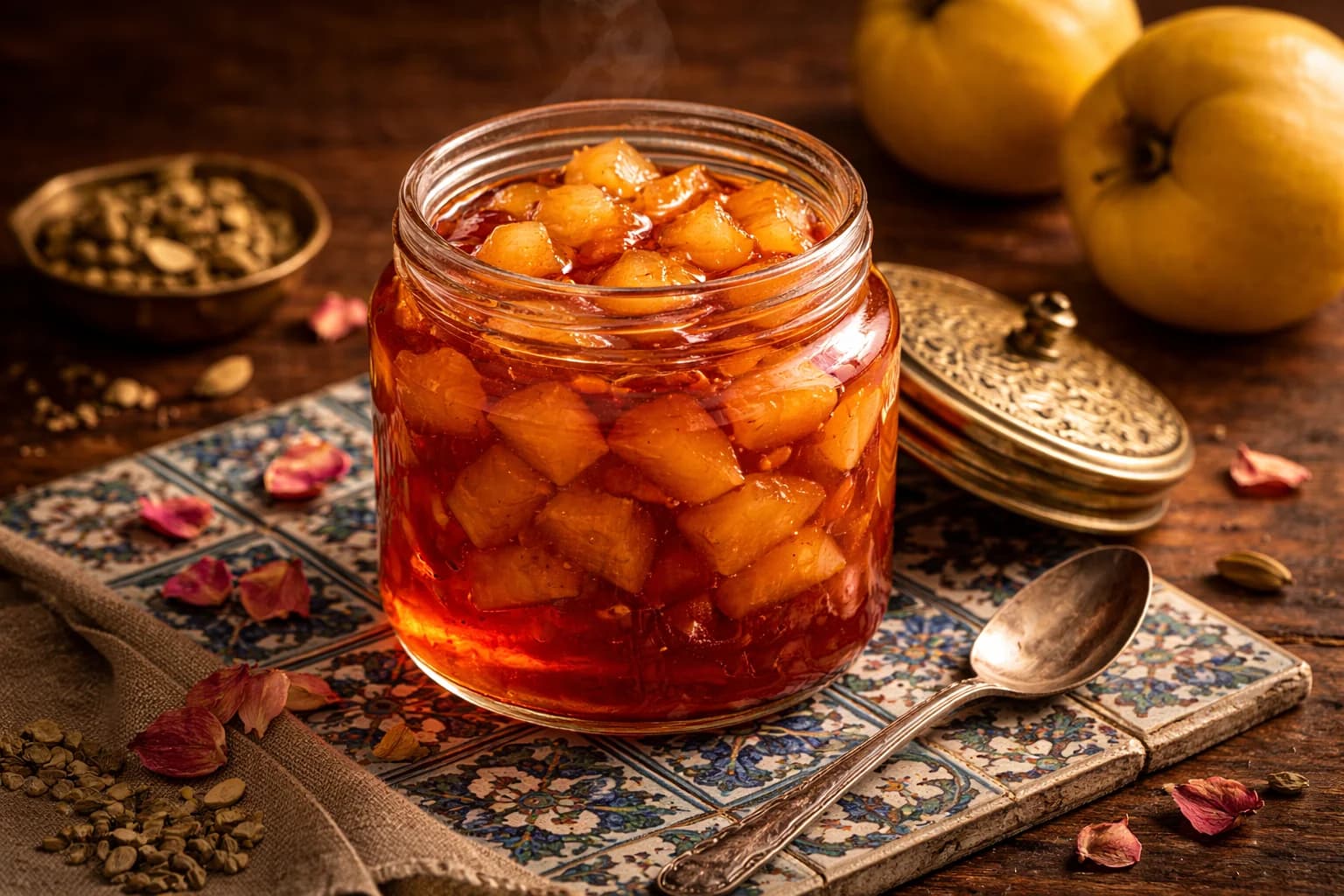
Weiter sanft köcheln lassen, gelegentlich umrühren. Die Quitten verwandeln sich allmählich: erst weich werdend, dann durchscheinend, und schließlich von blassgelb zu bernstein zu tiefem Rubinrot. Der Sirup dickt ein und die Frucht wird zart, bleibt aber intakt.
Kritischer Schritt
Die Farbverwandlung ist die Magie der Quittenkonserve – sie entsteht durch langes, langsames Kochen, wenn die Gerbstoffe der Frucht mit der Hitze reagieren. Eile verhindert die Farbentwicklung. Die endgültige Farbe soll tiefes Bernstein bis Rubin sein.
Garprobe durchführen
Die Konfitüre prüfen: einen kleinen Löffel auf einem kalten Teller kühlen und drücken – wenn sie faltet und ihre Form hält, ist sie fertig. Die Frucht soll überall zart sein (mit einer Gabel testen) und der Sirup soll einen Löffel dick beschichten.
Kritischer Schritt
Zu wenig eingekochte Konfitüre ist dünnflüssig und dickt nicht richtig ein. Zu viel eingekocht wird zu dick und die Frucht kann matschig werden. Der Kalteplattentest ist zuverlässig.
Rosenwasser und Safran hinzufügen
Von der Hitze nehmen. Rosenwasser und aufgeblühten Safran (falls verwendet) einrühren. Die blumigen Noten sollen vorhanden, aber nicht überwältigend sein. Abschmecken und anpassen – bei Bedarf mehr Rosenwasser hinzufügen. Kardamomkapseln und Vanilleschote herausnehmen, sofern auffindbar.
Kritischer Schritt
Das Hinzufügen von Rosenwasser abseits der Hitze bewahrt sein zartes Aroma. Zu früh hinzugefügt würden die Blumennoten verkochen.
Konfitüre einkochen
Die heiße Konfitüre in saubere, sterilisierte Glasgläser füllen und dabei 1 cm Abstand zum Rand lassen. Ränder sauber wischen und fest verschließen. Für Langzeitlagerung im kochenden Wasserbad einkochen. Andernfalls abkühlen lassen und kühlen.
Ruhen lassen und servieren
Die Konfitüre mindestens einige Tage ruhen lassen, bevor sie serviert wird – der Geschmack entwickelt sich weiter. Bei Raumtemperatur mit frischem Brot und Butter, zum Tee, über Joghurt, Speiseeis oder Reispudding servieren. Nach dem Öffnen kühlen und innerhalb von 2–3 Monaten aufbrauchen.
Ruhezeit Erforderlich
4320 Min - Aromen entwickeln sich und verbinden sich über mehrere Tage; am besten nach mindestens einer Woche