
Moraba-ye Gol (Persian Rose Petal Preserve)

Moraba-ye Gol (Persian Rose Petal Preserve)

مربای گل

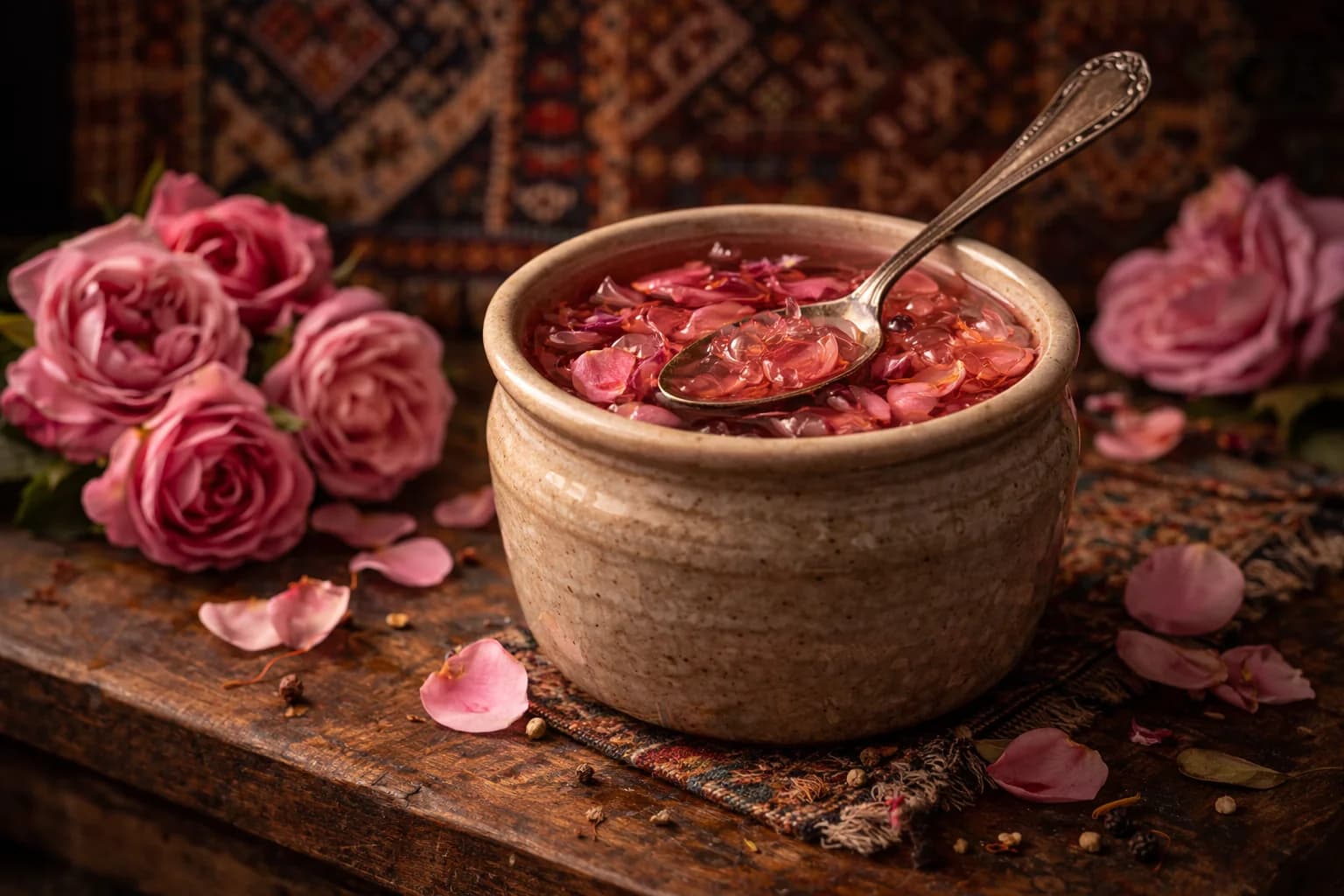
Delicate rose petals suspended in a blush-pink syrup, impossibly fragrant and achingly beautiful—moraba-ye gol is poetry in a jar. This ethereal preserve captures the essence of Persian gardens in late spring, when damask roses bloom in profusion and the air is heavy with their perfume. Each petal is carefully prepared and slowly candied until translucent and silken, the syrup becoming infused with pure rose essence. Served sparingly—a spoonful is a meditation—moraba-ye gol is the most romantic of all Persian preserves, given as gifts between lovers and offered to honored guests. Making it is an act of devotion; eating it is an experience of transcendence.

jamVorbereitung: 90 MinKochen: 45 MinadvancedFür 32

Kultureller Hinweis

Moraba-ye gol represents the pinnacle of Persian preserve-making—it requires the finest ingredients, considerable skill, and above all, patience. The preserve can only be made during the brief rose season in late spring, when damask roses (gol-e mohammadi) are in bloom. The city of Kashan is particularly famous for its rose cultivation and rose products. In Persian culture, roses symbolize love and beauty, and rose petal preserve carries these associations—it's traditionally given as a romantic gift or offered to show special esteem. The delicate pink color and intoxicating fragrance make it almost too beautiful to eat. Serving moraba-ye gol is a gesture of hospitality at the highest level; making it is a labor of love that connects the maker to centuries of Persian tradition. The process of preparing each petal by hand is meditative, and many consider the making as valuable as the eating.

Kritische Momente

  • Using highly fragrant, unsprayed roses
  • Trimming the bitter white base from every petal
  • Thorough drying of petals
  • Massaging with sugar and lemon to extract oils
  • Gentle, low-heat cooking to preserve color and fragrance
  • Adding rosewater off heat
1
VORBEREITUNG20 Min

Select and harvest the roses

Choose roses that are highly fragrant—damask roses are ideal, but any strongly scented, unsprayed rose works. Harvest in the morning after dew has dried but before the heat of the day diminishes the fragrance. Use roses at peak bloom, not overblown or past their prime. You'll need about 8-10 cups of loosely packed petals.

Fresh, fragrant, unblemished rose petals
GeruchIntense, heady rose perfume
TexturSilky, fresh petals

Kritischer Schritt

The quality of the roses determines everything. Unscented roses produce a preserve that looks pretty but tastes of nothing. The roses MUST be unsprayed—pesticides concentrate in preserves.

Grocery store roses are usually unscented and treated with pesticides—don't use them. Farmers markets, your own garden, or friends' gardens are good sources. Organic roses are ideal.

Häufige Fehler

  • Using unscented roses (no flavor)
  • Using roses treated with pesticides (toxic)
  • Using roses past peak bloom (bitter, less fragrant)
2
VORBEREITUNG45 Min

Prepare the petals

Gently pull petals from the roses. Using scissors, trim off the white or pale base of each petal—this part is bitter and must be removed. Inspect each petal and discard any that are damaged, discolored, or have insects. Place prepared petals in a large bowl.

Trimmed petals with no white base; uniform color
GeruchIntensifying rose fragrance as petals are handled
KlangScissors snipping
TexturSilky petals

Kritischer Schritt

The white base of rose petals contains bitter compounds that will ruin the preserve. Every single petal must be trimmed. This is the most time-consuming step but cannot be skipped.

Work with clean, dry hands. This step is meditative—put on music and take your time. The fragrance is its own reward. Have a helper if making large batches.
3
VORBEREITUNG20 Min

Wash and dry the petals

Gently rinse the prepared petals in cold water to remove any dust or tiny insects. Spread on clean kitchen towels and pat gently dry, or use a salad spinner on the gentlest setting. The petals must be completely dry before proceeding—any water will dilute the preserve.

Clean, dry petals spread on towels
GeruchFresh rose
TexturCompletely dry, not damp

Kritischer Schritt

Water is the enemy of proper preserve-making. Wet petals will make the syrup thin and can promote spoilage. Take time to dry them thoroughly.

You can prepare petals the night before and leave them to air dry overnight, covered loosely with a towel.
4
VORBEREITUNG180 Min

Macerate with sugar and lemon

Place the dry petals in a large bowl. Add 200g of the sugar (reserving the rest) and all the lemon juice. Using your hands, gently massage the sugar and lemon into the petals for 5 minutes. This releases the rose oils and begins to break down the petals. Cover and let macerate for 2-4 hours or overnight.

Petals becoming darker, releasing fragrant pink liquid
GeruchIntense rose essence releasing
KlangGentle massaging sounds
TexturPetals becoming silky and slightly wilted

Kritischer Schritt

Massaging the petals with sugar and lemon extracts their essential oils and begins the preservation process. The lemon juice also helps maintain the pink color (without it, the preserve turns brown).

The massaging should be gentle but thorough. You'll see the petals darken and liquid form. The longer maceration develops more flavor.
5
KOCHEN10 Min

Make the syrup

In a large heavy pot, combine the remaining 400g sugar with the water. Heat over medium, stirring until sugar dissolves completely. Add the crushed cardamom pods if using. Bring to a boil, then reduce to a simmer and cook for 5 minutes until slightly thickened.

Clear syrup, slightly thickened
MediumSimmer after initial boil
GeruchHot sugar syrup, cardamom
KlangBubbling
TexturSyrupy consistency
6
KOCHEN35 Min

Add the petals and cook gently

Add the macerated rose petals with all their liquid to the syrup. Stir gently to combine. Reduce heat to low and simmer gently for 30-40 minutes, stirring occasionally. The petals will become translucent and the syrup will turn a beautiful blush-pink color. The syrup should thicken to coat a spoon.

Translucent petals in blush-pink syrup; syrup thickening
LowGentle simmer
GeruchIntense rose essence—intoxicating
KlangGentle bubbling
TexturSyrup gradually thickening

Kritischer Schritt

Gentle cooking preserves the color and fragrance. High heat destroys the delicate rose oils and can turn the preserve brown. Low and slow is essential.

The color should be a beautiful blush pink. If it's darkening too much, the heat is too high. The petals will be silky and almost transparent when done.
Kontrollpunkt: After 20 min: petals becoming translucent, syrup pink. After 30-40 min: petals fully translucent, syrup thick and fragrant.
7
KOCHEN5 Min

Test for doneness

Test the preserve: the syrup should coat a spoon thickly and drip slowly. Do the cold plate test—a drop should wrinkle when pushed. The petals should be completely translucent and silky. The color should be a delicate pink.

Translucent petals; thick, glossy pink syrup
GeruchPure rose essence
KlangThick, slow bubbling
TexturSyrup sheets off spoon; petals are silky
The preserve thickens more as it cools. If the syrup is too thin, cook a few more minutes. If it's too thick, add a tablespoon of water.
8
FERTIGSTELLEN2 Min

Add rosewater

Remove from heat. Stir in the rosewater to intensify the rose flavor. The preserve should be intensely fragrant. Remove cardamom pods if you can find them.

Glistening, aromatic preserve
GeruchRosewater amplifying the fresh rose—transcendent

Kritischer Schritt

Adding rosewater off heat preserves its volatile aromatic compounds. This final addition deepens and rounds out the rose flavor.

Good quality Persian or Lebanese rosewater makes a significant difference. The rosewater and the fresh petals together create layered rose flavor.
9
FERTIGSTELLEN10 Min

Jar the preserve

Ladle the hot preserve into small, clean, sterilized glass jars. Small jars are traditional—this is a precious preserve meant to be savored sparingly. Leave 1cm headspace. Wipe rims and seal tightly.

Beautiful blush-pink preserve with visible translucent petals
GeruchIntense rose
KlangLids sealing
Small jars (100-200ml) are ideal—this preserve is served in small quantities and is often given as a gift. The petals should be visible through the glass.
10
FERTIGSTELLEN1440 Min

Rest and serve

Let the preserve cool completely and rest for at least a day—the flavors develop further. Serve very sparingly—a spoonful is an experience. Moraba-ye gol is served with bread and butter, stirred into tea, or used to top special desserts. Once opened, refrigerate and use within 2 months.

Delicate pink preserve, glistening, with translucent petals visible
GeruchPure rose essence—the scent of Persian gardens
TexturThick syrup; silky, tender petals
Present this preserve in your most beautiful dish—it deserves the honor. A small jar makes an extraordinary gift. In tea, a spoonful transforms the cup into a rose garden.

Ruhezeit Erforderlich

1440 Min - Flavors develop and meld; best after at least a day

Extras

Ausstattung

großer schwerer Topfglass jars with lidsscissorslarge bowlwooden spoonStandard

Im Voraus Zubereiten

  • Moraba-ye gol must be made during rose season (late spring).
  • It keeps for 6 months to a year properly sealed in a cool, dark place.
  • Once opened, refrigerate and use within 2 months.

N/A—served at room temperature or cold

Servieren Mit

Beilagen

  • A spoonful in tea
  • With fresh bread and clotted cream
  • Over ice cream
  • To top rice pudding
  • As a gift or romantic gesture

Getränke

  • Persian tea (essential)
  • A spoonful stirred into hot tea is traditional

Ersatzstoffe

rose petalsNo substitute—this preserve is entirely about the roses. Must be fragrant, unsprayed roses. Damask roses are ideal; any highly fragrant garden rose works. NEVER use florist roses (treated with pesticides).
lemon juiceEssential for color and flavor. Without it, the preserve turns brown. Don't substitute.
rosewaterEssential for intensifying the rose flavor. Must be high-quality. Don't substitute with rose extract.
colorThe blush-pink color comes from the petals themselves and is preserved by the lemon juice. Some add a drop of natural food coloring if the color fades; traditional recipes do not.

Skalierung

This recipe makes approximately 750ml of preserve. The recipe is labor-intensive regardless of scale—each petal must be prepared individually. Rose petals are delicate and the preserve is precious; small batches are traditional. Make during rose season (late spring) when fragrant roses are available.

Quelle

Traditionell · Traditional Persian cuisine

Rose petal preserve has been made in Persia for centuries, especially in rose-growing regions like Kashan and Shiraz. The damask rose (Rosa damascena) is prized for its intense fragrance and is also used to make rosewater and rose oil. This preserve represents the height of Persian culinary refinement.

Ähnliche Rezepte

Moraba-ye Beh (Persian Quince Preserve)

Moraba-ye Beh (Persian Quince Preserve)

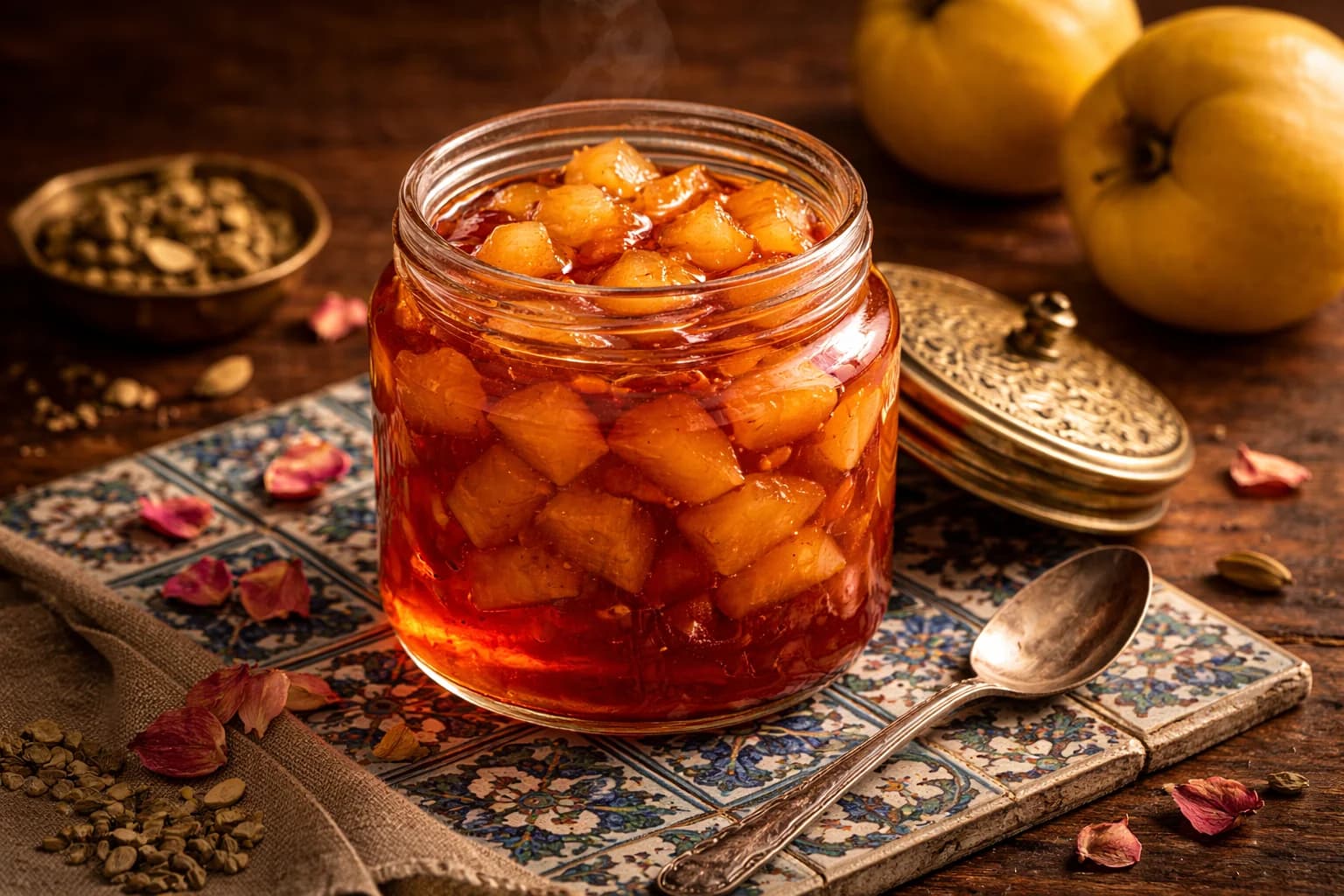
Golden, jewel-like pieces of quince suspended in a fragrant, ruby-tinged syrup perfumed with cardamom and rosewater—moraba-ye beh is the queen of Persian preserves. The humble quince, rock-hard and astringent when raw, transforms through slow cooking into something magical: tender, translucent, and deeply honeyed, with a flavor that's part apple, part pear, and entirely its own. This ancient preserve captures autumn's fleeting quince season in jars of amber sweetness, to be spooned over bread at breakfast, served alongside tea, or used to crown rice puddings. The process requires patience, but the result is extraordinary.

Moraba-ye Albaloo (Persian Sour Cherry Preserve)

Moraba-ye Albaloo (Persian Sour Cherry Preserve)

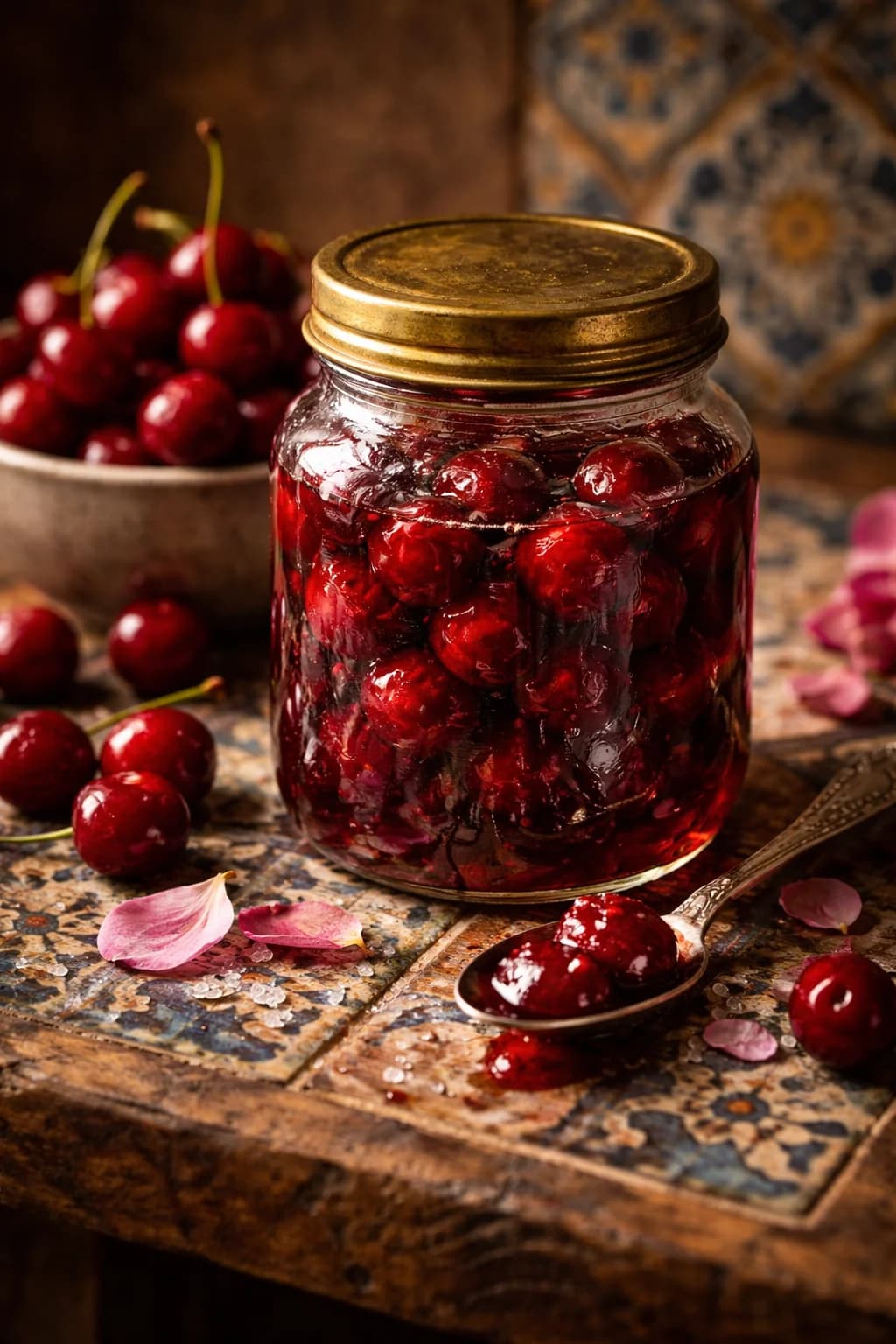
Jewel-like whole sour cherries suspended in a garnet-red syrup, delicately perfumed with cardamom and a whisper of rosewater—moraba-ye albaloo is summer captured in a jar. Unlike the syrup (sharbat) that uses cherry juice, this preserve keeps the cherries whole and plump, each one a burst of sweet-tart intensity. The brief sour cherry season in early summer is a time of frenzied preserving, as families transform the fleeting fruit into jars of ruby treasure to enjoy year-round. Spooned over bread at breakfast or used to crown rice puddings and ice cream, moraba-ye albaloo is one of Persia's most beloved preserves.

Moraba-ye Havij (Persian Carrot Preserve)

Moraba-ye Havij (Persian Carrot Preserve)

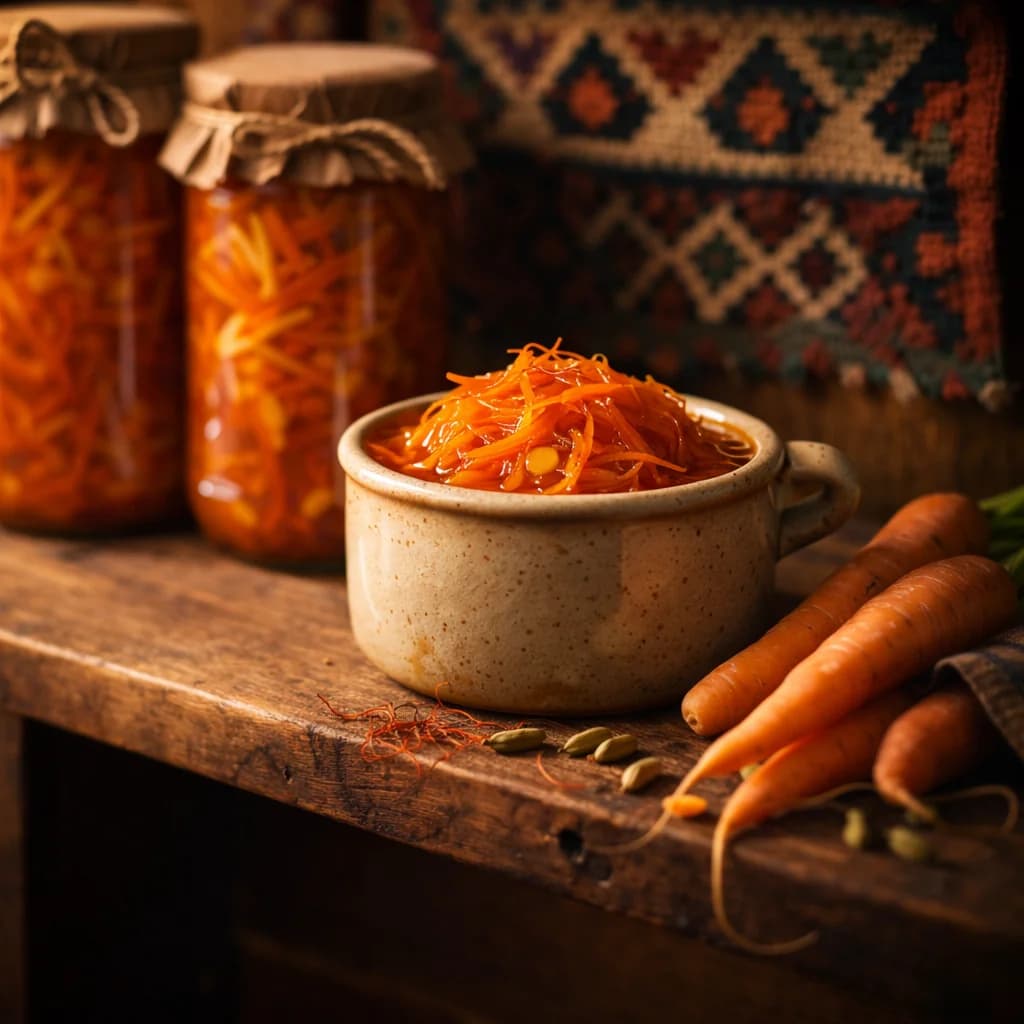
Tender slivers of carrot suspended in a golden, fragrant syrup scented with cardamom, rosewater, and saffron—moraba-ye havij transforms the humble carrot into something unexpectedly elegant. This traditional preserve showcases the Persian genius for turning simple ingredients into luxurious sweets. The carrots are cut into delicate julienne strips or decorative shapes, then slowly candied until translucent and jewel-like. The result is subtly sweet with a pleasant, gentle chew, the carrot's natural earthiness balanced by floral aromatics. A jar of moraba-ye havij on the breakfast table, glowing orange-gold in the morning light, is one of Persian cuisine's quiet pleasures.