
Kritische Momente
- •Ausreichend Tee für ein starkes Konzentrat verwenden
- •Wasser muss sprudelnd kochen (nicht nur heiß sein)
- •Lange Ziehzeit (15–20 Minuten)
- •Richtige Farbe ('Por-rang' – volle Farbe)
- •Nach individuellem Geschmack verdünnen
Teekanne vorwärmen
Wasser in einem Wasserkocher zum Kochen bringen. Die Teekanne mit einer kleinen Menge kochenden Wassers ausspülen, um sie vorzuwärmen – das sorgt für richtiges Aufbrühen. Das Spülwasser wegschütten.
Teeblätter hinzufügen
Den loseblättrigen Tee in die vorgewärmte Kanne geben. Wenn Kardamom oder Rosenblütenblätter verwendet werden, jetzt hinzufügen. Die Menge erscheint großzügig – das ist beabsichtigt. Persisches Teekonzentrat ist sehr kräftig.
Kritischer Schritt
Persischer Tee wird stark gebrüht und nach Geschmack verdünnt. Wenn die für westlichen Tee übliche Menge verwendet wird, ist das Konzentrat zu schwach. Die volle angegebene Menge verwenden.
Wasser hinzufügen und ziehen lassen
Frisch kochendes Wasser über die Teeblätter gießen. Das Wasser muss sprudelnd kochen – nicht nur heiß sein. Die Teekanne abdecken. Bei einem Samowar die Kanne oben draufstellen. Andernfalls in ein Teekörbchen oder ein Handtuch einwickeln. Mindestens 15–20 Minuten ziehen lassen.
Kritischer Schritt
Persischer Tee braucht eine längere Ziehzeit als westliche Methoden – dadurch entsteht das starke Konzentrat, das diesen Stil definiert. Der entstehende 'Dam' (Essenz) sollte tiefbernsteinfarben, fast braun sein.
Farbe überprüfen
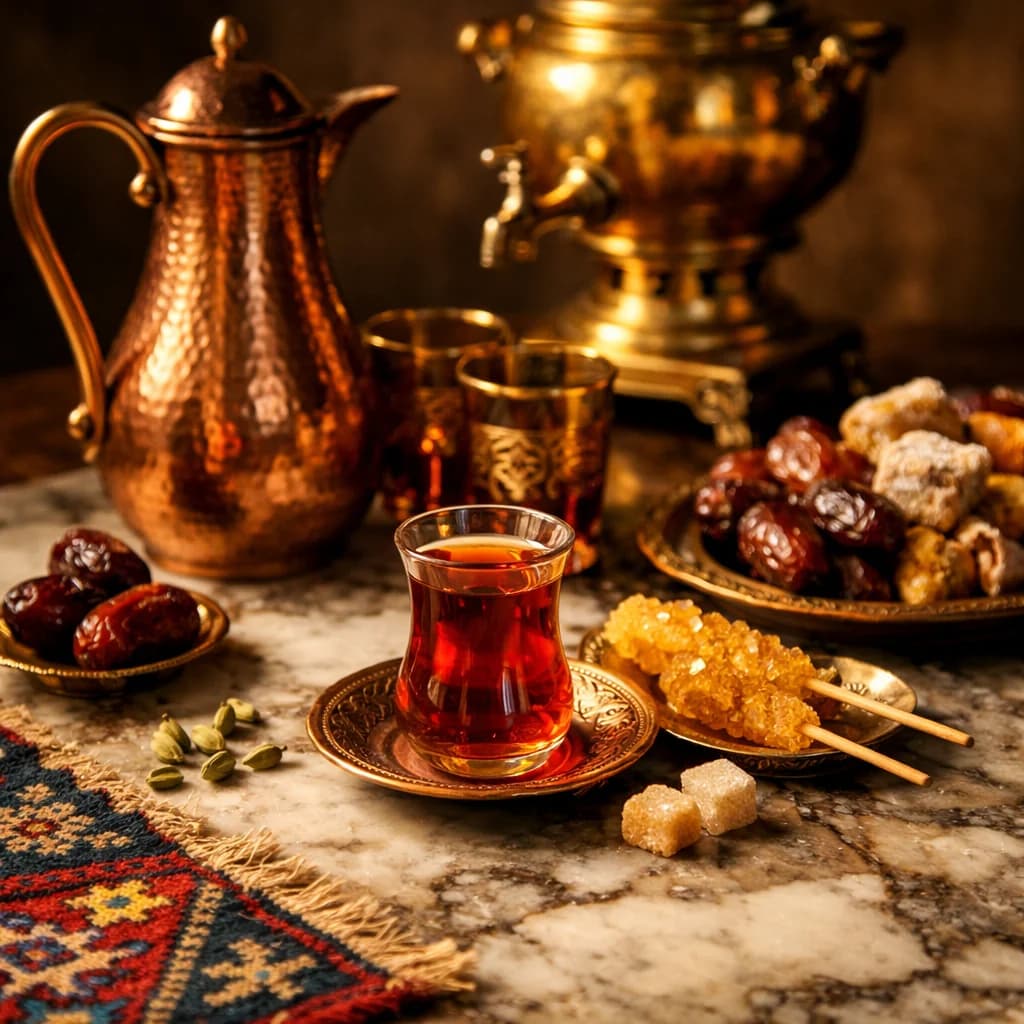
Nach dem Ziehen die Farbe des Tees prüfen, indem ein Glas unverdünnten Tees gegen das Licht gehalten wird. Er sollte tiefbernsteinfarben bis dunkelмахagonifarben sein – das ist 'Dam-kesh' (gezogene Essenz). Die Farbe zeigt die Stärke an. Wenn zu hell, länger ziehen lassen.
Kritischer Schritt
Die Farbe ist der Indikator für die richtige Konzentration. Iraner beurteilen Teequalität nach der Farbe – er sollte 'Rang' (Farbe) haben. Blasser Tee gilt als minderwertig.
Gläser vorbereiten
Traditionelle Teegläser (Estekaan) bereitstellen. Einen Wasserkocher oder Samowar mit heißem Wasser zum Verdünnen parat haben. Nabat (Kandiszucker), Zuckerwürfel oder eine Zuckerschale dazustellen.
Nach individuellem Geschmack servieren
Teekonzentrat in jedes Glas gießen, etwa ein Drittel bis zur Hälfte füllen. Dann heißes Wasser hinzufügen, um nach dem Geschmack des Trinkers zu verdünnen. Wer 'Por-rang' (stark/dunkel) bevorzugt, bekommt mehr Konzentrat; wer 'Kam-rang' (hell) mag, bekommt mehr Wasser. Sofort heiß servieren.
Kritischer Schritt
Die Verdünnung ist individuell – immer nach der Präferenz des Gastes fragen oder diese kennen. Tee zu stark oder zu schwach zu servieren ist ein Fauxpas. Der Gastgeber stellt jedes Glas einzeln ein.
Mit Zucker und Begleitung servieren
Mit Nabat (Kandiszucker) oder Zuckerwürfeln servieren. Die traditionelle Methode ist, den Zucker zwischen die Vorderzähne zu klemmen und den Tee hindurchzuschlürfen, sodass der Zucker sich langsam auflöst. Alternativ den Zucker in den Tee einrühren. Persische Süßigkeiten dazu anbieten.
Bewirtung fortsetzen
Der persische Teeservice ist ein fortlaufender Prozess – die Teekanne bleibt auf dem Samowar warm (oder wird erneuert), und den Gästen werden kontinuierlich Nachfüllungen angeboten. Wenn ein Gast sein leeres Glas umgedreht auf die Untertasse stellt, signalisiert er damit, dass er genug hat.
Ruhezeit Erforderlich
15 Min - Tee muss lange genug ziehen, um volle Stärke und Farbe zu entwickeln